
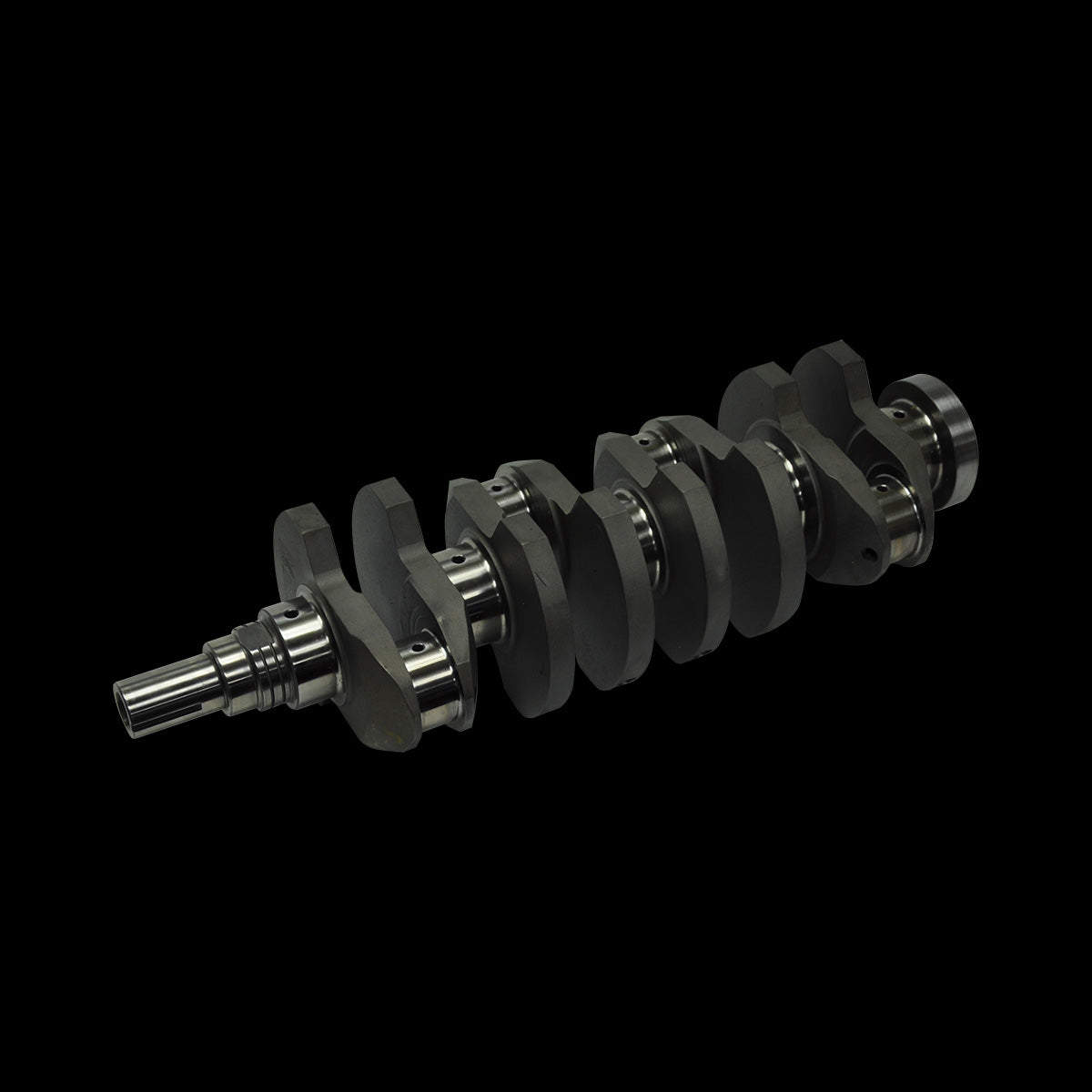
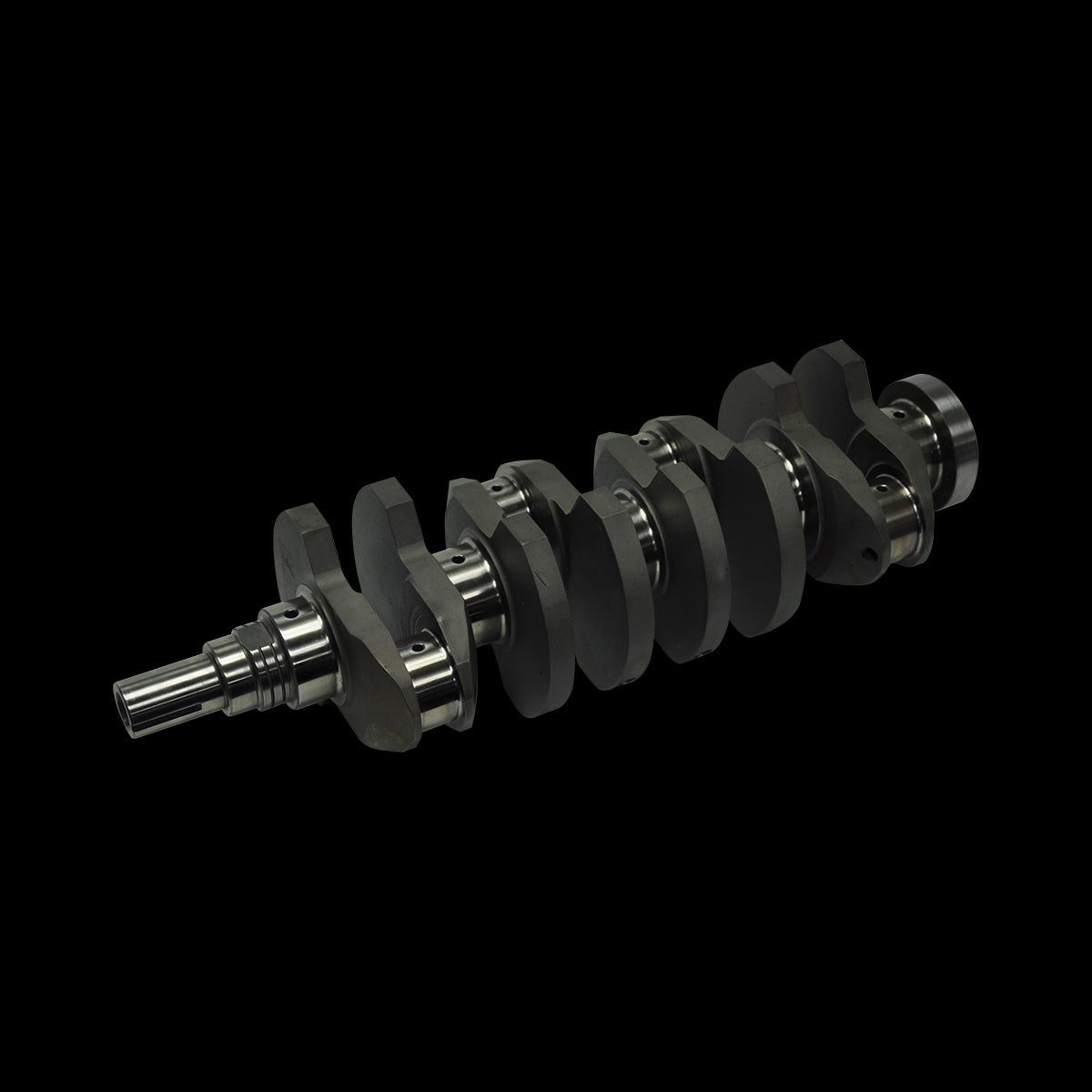
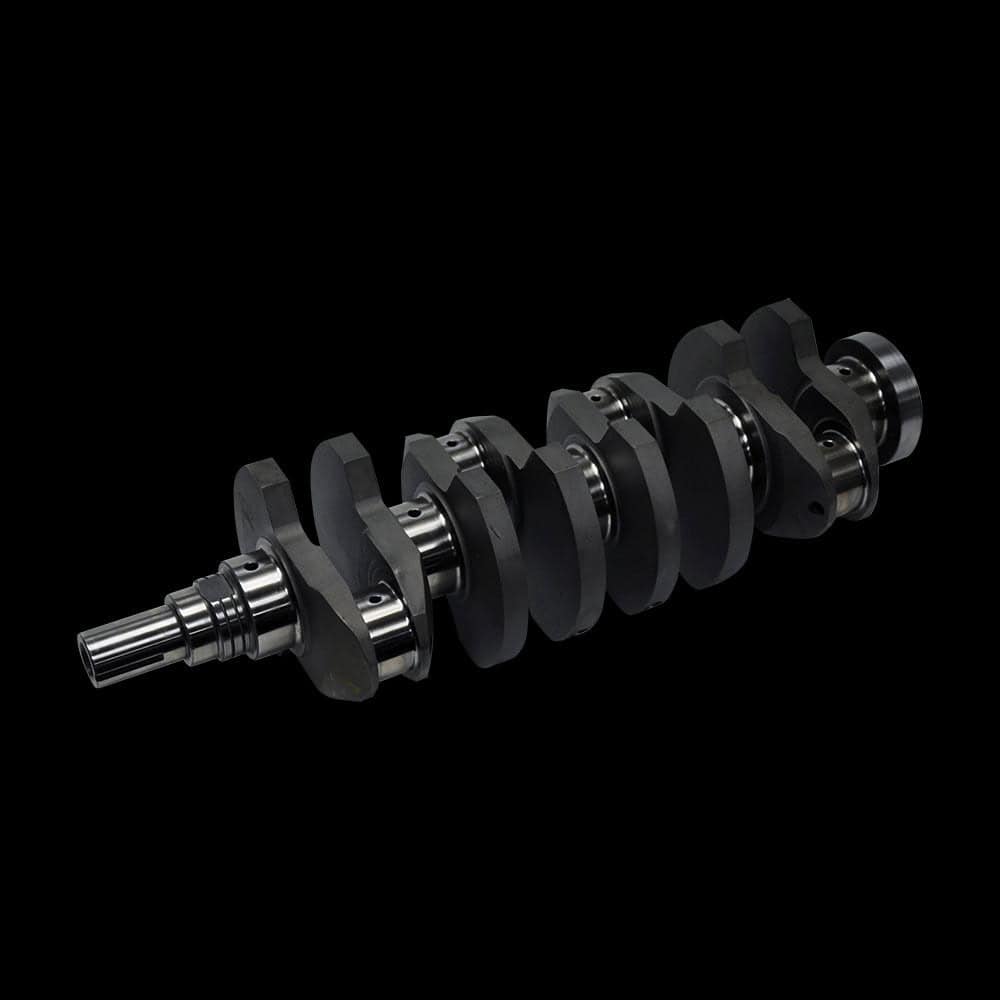
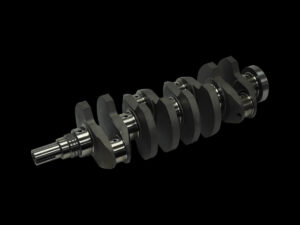
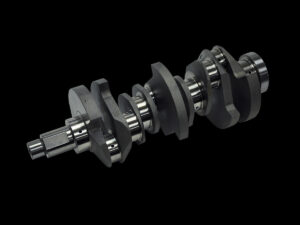
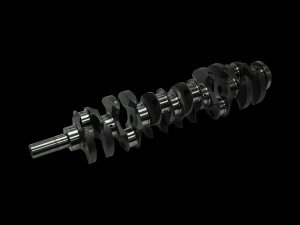
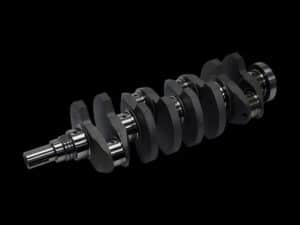
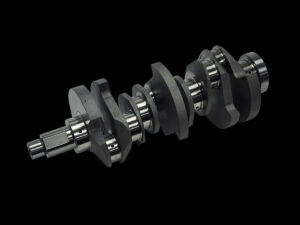
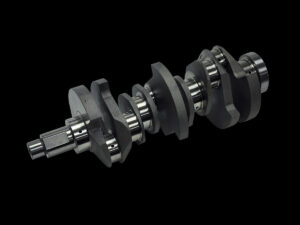
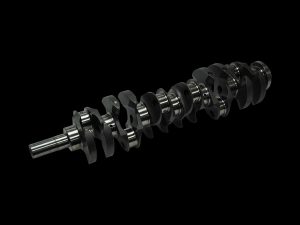
In the realm of forced induction and high-RPM performance, the crankshaft is the foundation upon which power is built and reliability is tested. For the legendary Mitsubishi 4G63 engine—a powerhouse that dominated rally stages and defined an era of turbocharged performance—the factory 7-bolt crankshaft presents a critical limitation for builders chasing extreme horsepower. The Brian Crower BC5101 4340 Billet Crankshaft is the definitive engineering solution. Designed specifically for the 4G63 7-bolt platform with a substantial 94mm stroke, this component transcends the concept of an upgrade; it is a complete re-engineering of the engine’s rotating assembly core. Crafted from premium 4340 chromoly billet steel, precision-machined to aerospace tolerances, and finished with advanced surface treatments, the BC5101 is engineered not merely to withstand abuse, but to actively enable and sustain power levels that render OEM and even many forged aftermarket crankshafts obsolete.
Material Science and Engineering: The 4340 Billet Advantage
The choice of material is the first and most critical divergence from stock. The BC5101 is machined from a solid billet of SAE 4340 chromoly nickel-chromium-molybdenum steel. Unlike a forging, which is shaped under immense pressure, a billet part is carved from a homogeneous block of material that has been pre-conditioned to a specific grain structure. This allows Brian Crower’s engineers to precisely orient the grain flow in the most stressed areas—particularly around the rod journal fillet radii and main journal oiling passages—maximizing tensile strength and fatigue resistance. The 4340 alloy itself offers an exceptional balance of strength, toughness, and hardenability. After machining to its final dimensions, the BC5101 undergoes a rigorous heat-treating and cryogenic stabilization process. This deep freeze cycle transforms retained austenite into martensite, relieving internal stresses and creating a dimensionally stable component that resists distortion under extreme thermal cycling, a common point of failure in less sophisticated cranks. For a deeper dive into the metallurgical demands of high-stress engine components, resources like Engine Labs’ analysis on performance materials provide valuable context.
Precision Machining and Critical Design Specifications
Every machining operation on the BC5101 is performed with a power-adder-specific purpose. The 94mm stroke is a key performance figure, increasing displacement when paired with the appropriate bore and rods, directly impacting torque production. The rod and main journals are precision-ground and micro-polished to a mirror finish, measured to within 0.0001″ of nominal size. This reduces friction, improves oil film retention, and extends bearing life. Crucially, the oil passages are fully cross-drilled and chamfered. This design ensures positive oiling to the rod bearings at high RPM, where centrifugal force can starve traditional blind-drilled journals. The fillet radii at the junction of the journal and cheek are generously rolled and radiused, eliminating stress concentrators that are the primary initiation points for fatigue cracks in high-load applications.
Performance Dynamics and Rotating Assembly Synergy
Installing the BC5101 crankshaft fundamentally changes the engine’s mechanical personality and capability. The increased 94mm stroke alters the piston’s motion profile, potentially improving volumetric efficiency at certain RPM ranges. However, the true performance gain lies in its immutable structural integrity. By eliminating flex and harmonic distortion, the crankshaft allows the engine to maintain precise ignition timing and valve events under boost, which directly translates to consistent power delivery. It forms the heart of a balanced rotating assembly. For optimal results, it must be paired with Brian Crower’s matching 4340 I-beam or H-beam connecting rods (BC6255/BC6256 series) and appropriate pistons. The assembly should be balanced as a unit—crank, rods, pistons, pins, and dampener—to neutral balance. This minimizes destructive harmonics, allowing the engine to safely achieve and sustain an 8,500+ RPM threshold, a realm where the factory 7-bolt crankshaft is a severe liability.
Key Benefits and Application Advantages
- Unmatched Durability: 4340 billet construction and cryogenic treatment provide ultimate resistance to fatigue, twisting, and harmonic failure under extreme boost and RPM.
- Increased Stroke & Displacement: The 94mm stroke enables a significant displacement increase over stock (approx. 2.2L+), building a broader, stronger torque curve.
- Superior High-RPM Oiling: Fully cross-drilled and chamfered oil passages guarantee critical bearing lubrication, preventing spun bearings during sustained high-load operation.
- Foundational for High HP: The essential core component for builds targeting 800+ horsepower, providing the platform necessary for large turbochargers and aggressive tunes.
- Direct OEM Replacement Fitment: Designed as a true drop-in component for the 7-bolt engine block, utilizing standard main and rod bearings for simplified assembly.
Vehicle Fitment: 4G63 7-Bolt Platform Specificity
The BC5101 is engineered explicitly for the Mitsubishi 4G63 engine utilizing the 7-bolt main cap configuration. This precise fitment is critical, as crankshafts are not interchangeable between the earlier 6-bolt and later 7-bolt engines due to differences in main journal diameter, thrust bearing location, and flywheel bolt pattern. This crankshaft is the correct and necessary upgrade for the following applications:
Mitsubishi Eclipse GS-T & GSX (1992-1999) – All 2G DSM models equipped with the 7-bolt 4G63 engine (typically late 1992 and all 1993-1999 production).
Mitsubishi Eclipse Spyder GS-T (1996-1999) – The convertible platform sharing the same 7-bolt drivetrain.
Mitsubishi Lancer Evolution VIII & IX (2003-2007) – All USDM and JDM Evolution models within these generations, which exclusively use the 7-bolt 4G63 design.
Compatible 7-Bolt Engine Swaps – This crankshaft is also the core for any build utilizing a 7-bolt 4G63 block, regardless of the chassis it is installed in.
Technical Specifications: BC5101 Crankshaft
| Part Number | BC5101 |
| Engine Application | Mitsubishi 4G63 (7-Bolt) |
| Construction Material | SAE 4340 Chromoly Billet Steel |
| Stroke | 94mm |
| Main Journal Diameter | Standard 7-Bolt OEM Size |
| Rod Journal Diameter | Standard 4G63 OEM Size |
| Oiling System | Fully Cross-Drilled & Chamfered |
| Surface Finish | Micro-Polished Journals |
| Treatment | Heat-Treated & Cryogenically Stabilized |
| Recommended RPM Limit | 9,000+ (with proper supporting assembly) |
The Brian Crower BC5101 is not a part you purchase for a modest power increase. It is the cornerstone investment for a serious, no-compromise 4G63 build destined for the upper echelons of performance. It addresses the inherent weaknesses of the factory 7-bolt crankshaft with absolute authority, providing the unyielding foundation required for monumental horsepower, relentless boost pressure, and repeated high-RPM punishment. When your build parameters exceed the realm of bolt-ons and enter the domain of forced induction extremism, the BC5101 4340 Billet Crankshaft is the non-negotiable first component on the list.
Reviews
There are no reviews yet.