
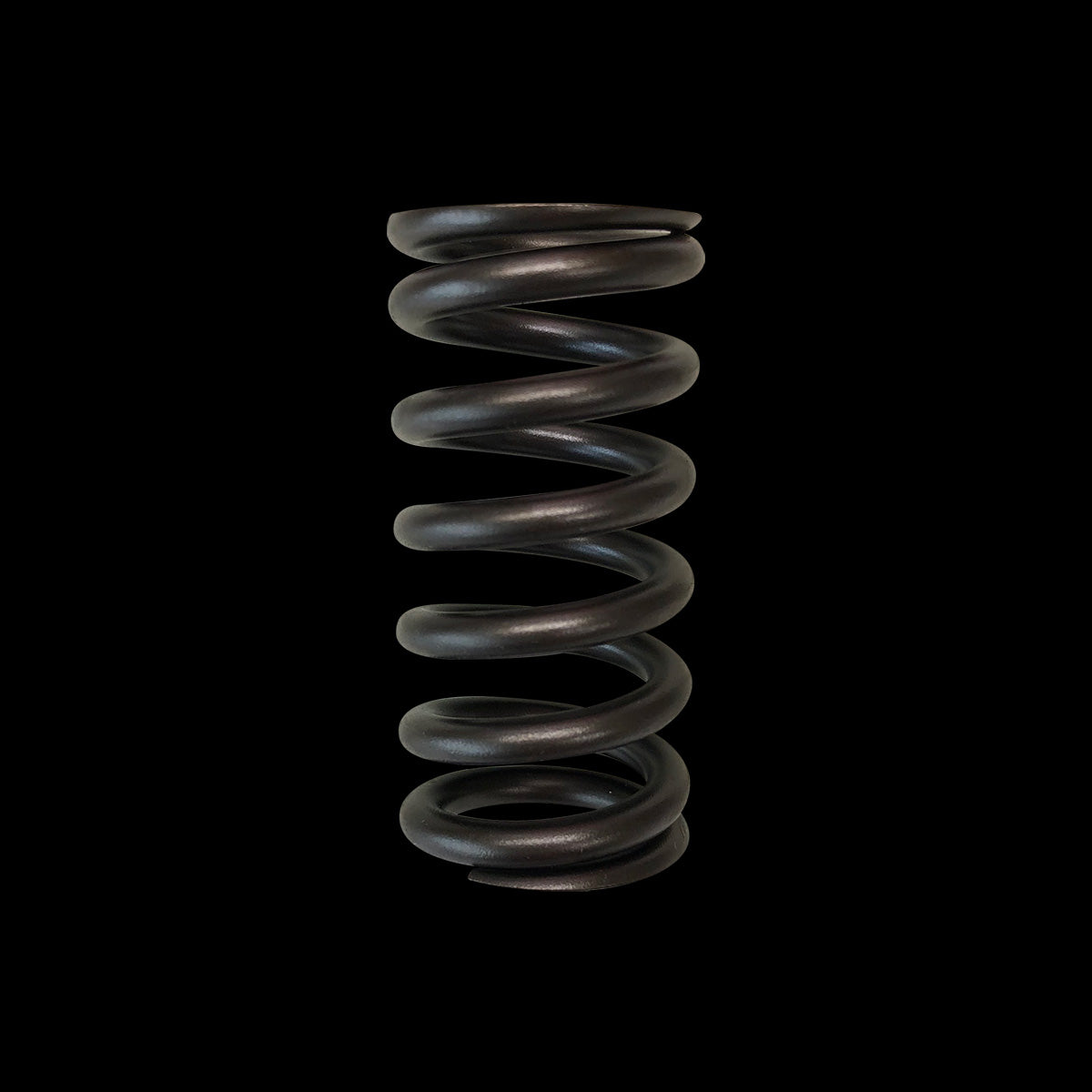
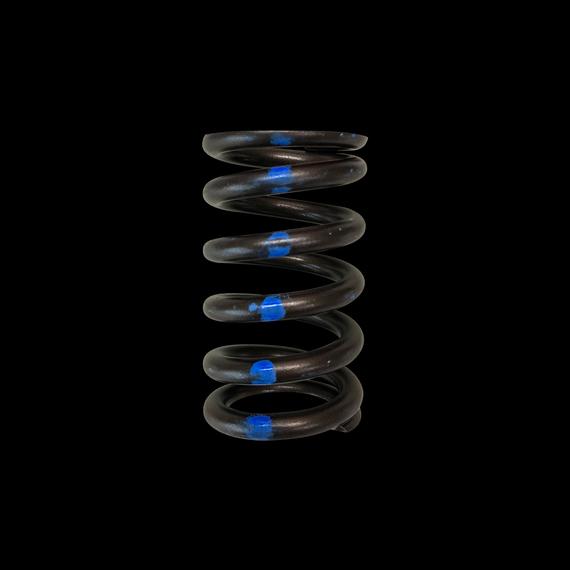
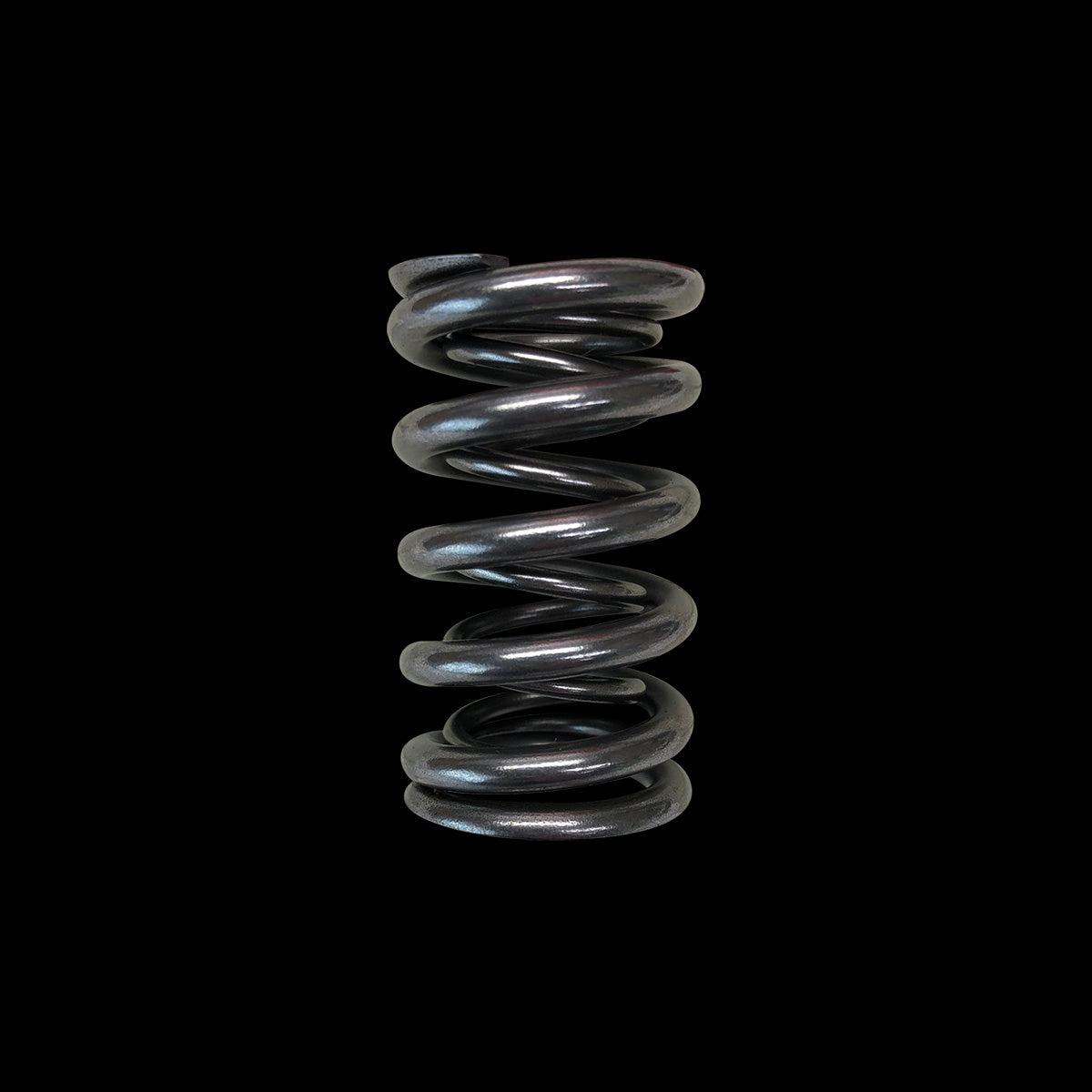
Engineering Uncompromised High-RPM Stability: The BC1350-1 Single Valve Spring
In the realm of high-performance naturally aspirated engines, few powerplants have demonstrated as much potential as the Toyota 2ZZ-GE. Its legendary Lift (VVTL-i) system unlocks a ferocious top-end power band, but this capability is fundamentally gated by the valvetrain’s mechanical integrity. The stock valve springs, while adequate for factory redlines, become the critical point of failure when pursuing sustained operation beyond 7,000 RPM or increased valve lift from aggressive camshaft profiles. The BC1350-1 Single Valve Spring from Brian Crower is not a mere replacement; it is a purpose-engineered component designed to transform the valvetrain from a system liability into a bastion of reliability. Engineered with a precise 80lbs of seat pressure and a meticulously calculated rate, this spring eliminates valve float, ensures precise valve event timing, and provides the foundation for extracting every last horsepower from the 2ZZ-GE’s high-lift cam profile. For builders targeting reliable power at 8,500 RPM and beyond, this spring is the non-negotiable first step in valvetrain preparation.
The Critical Role of Valve Springs in High-Output 2ZZ-GE Engines
Valve springs are deceptively simple components tasked with an extraordinarily complex job. They must close the valve against inertia at astonishing speeds, maintain contact between the cam lobe and follower to control valve motion, and dampen harmonics that can lead to catastrophic resonance. In the 2ZZ-GE, the transition into the high-lift cam profile at approximately 6,200 RPM subjects the stock springs to exponentially greater stress. The increased lift and faster ramp rates demand a spring that can store and release more energy without surging or losing control. Failure here manifests as valve float—where the spring fails to close the valve in time for the next combustion cycle—leading to immediate power loss, valve-to-piston contact, and potential engine destruction. The BC1350-1 is engineered with a superior spring rate and harmonic damping characteristics specifically to manage the intense accelerations and decelerations of high-RPM, high-lift operation, ensuring the cam profile’s design intent is executed flawlessly, cycle after cycle.
- Eradicates Valve Float: Provides 80lbs of seat pressure and increased open pressure to positively control the valve at RPMs exceeding 8,500, preventing loss of power and catastrophic engine failure.
- Enables Aggressive Cam Profiles: The foundation necessary for installing high-lift, fast-ramp aftermarket camshafts, ensuring the valvetrain can follow the cam’s designed lift curve without separation.
- Enhances Valve Timing Accuracy: Maintains consistent seat pressure across the operational temperature range, ensuring repeatable valve opening and closing events for optimal volumetric efficiency.
- Superior Fatigue Resistance: Manufactured from premium chrome-silicon alloy wire and shot-peened for durability, offering exceptional resistance to stress relaxation and heat cycling compared to OEM springs.
- Direct OEM-Dimension Fitment: Engineered to drop into the factory spring seats and retainer locations, simplifying installation while providing a massive performance upgrade.
Precision Specifications and Technical Data
The performance of the BC1350-1 is defined by its exacting physical and mechanical specifications. Brian Crower’s engineering targets a balance between maximum control and minimal mass, optimizing every dimension for the 2ZZ-GE’s specific valvetrain geometry. The chrome-silicon material (SAE 9254) is chosen for its excellent high-cycle fatigue strength and temperature resistance, critical in a cylinder head environment. Each spring is shot-peened, a process that induces compressive stress on the surface to inhibit crack propagation, significantly extending service life under high-stress conditions. The precise coil bind height is calculated to ensure full lift is achieved with a safety margin, preventing the spring from becoming a solid column of metal at maximum valve lift—a condition that transmits immense shock loads through the valvetrain. These are not generic springs; they are a calibrated solution.
| Specification | BC1350-1 Metric | Performance Significance |
|---|---|---|
| Part Number | BC1350-1 | Brian Crower’s designated component for 2ZZ-GE Inlet/Exhaust. |
| Seat Pressure | 80 lbs @ 1.160″ | The force closing the valve. Critical for preventing float at low lift/high RPM. |
| Open Pressure | ~210 lbs (at max lift) | The force at full lift. Controls valve acceleration on the closing side of the cam lobe. |
| Spring Rate | ~318 lbs/in | Stiffness. Higher rate provides greater force increase per inch of compression for high-lift cams. |
| Outer Diameter (OD) | 1.260″ | Ensures direct fitment into factory cylinder head spring pockets without machining. |
| Wire Diameter | 0.162″ | Contributes to spring rate and mass. Optimized for balance of strength and reduced inertia. |
| Coil Bind Height | 0.950″ | The height at which coils touch. Must be less than (valve lift + installed height) with a safety margin. |
Vehicle Fitment and Application Guidelines
The BC1350-1 Single Valve Spring is engineered as a direct-fit performance upgrade for all applications of the Toyota 2ZZ-GE engine. Proper installation is critical and must include checking for coil bind, verifying installed height with supplied shims (if necessary), and ensuring the matching retainers and locks are used. These springs are designed to work with the factory valve retainers and locks, but for maximum security in extreme applications, pairing them with matching Brian Crower titanium retainers (BC1355) is recommended to maintain the optimized mass balance of the valvetrain.
Primary Vehicle Fitment: This component is specified for the 1.8-liter 2ZZ-GE engine found in:
Toyota Celica GT-S (2000-2005), Toyota Corolla/Matrix XRS (2003-2006), Toyota Lotus Elise/Exige (Series 1 & 2), Pontiac Vibe GT (2003-2006). It is suitable for both intake and exhaust valves in these applications. For comprehensive builds involving aftermarket camshafts, always verify the camshaft’s lift and duration specs against the spring’s coil bind height and pressure requirements. As explored in technical resources on valvetrain dynamics, such as this analysis on valve float and spring resonance, correct spring selection is the cornerstone of a stable valvetrain.
Installation Considerations and Synergistic Components
Installing the BC1350-1 springs requires a methodical approach. The cylinder head must be secured in a manner that allows the valve to be depressed safely using a quality spring compressor. It is imperative to measure the installed height—the distance from the spring seat to the underside of the retainer with the valve closed. This height must be consistent across all valves and should match the spring’s design specification (typically 1.160″) to achieve the correct 80lbs seat pressure. Shims are used to adjust this height. Additionally, the coil bind clearance—the difference between the coil bind height (0.950″) and the installed height plus maximum valve lift—must be checked. A minimum of 0.060″ clearance is a safe rule of thumb. For builds pushing the absolute limits, these springs synergize perfectly with Brian Crower’s 2ZZ-GE camshaft profiles (BC0115, BC0116) and their proprietary PRO Series connecting rods and forged pistons, creating a fully integrated, balanced, and reliable high-RPM rotating assembly capable of handling sustained power output far beyond factory limitations.
Be the first to review “BC1350-1 – Valve Spring – Single (Toyota 2ZZGE) – 1 only”
| Make | Model | Year |
|---|---|---|
| Toyota | Celica | 2000 - 2006 |
| Toyota | Matrix | 2003 - 2008 |
Related products
Sale!
Original price was: $6.67.$5.80Current price is: $5.80.
Sale!
VALVE SPRINGS
Original price was: $6.67.$5.80Current price is: $5.80.
Sale!
Original price was: $19.11.$16.62Current price is: $16.62.
Sale!
Original price was: $19.69.$17.12Current price is: $17.12.
Sale!
Original price was: $6.87.$5.97Current price is: $5.97.
Sale!
Original price was: $19.69.$17.12Current price is: $17.12.
Sale!
Original price was: $6.67.$5.80Current price is: $5.80.
Reviews
There are no reviews yet.