
No products in the cart.
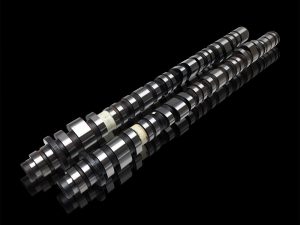
For the serious builder extracting every last ounce of power from the forced-induction heart of the Polaris Pro R, the factory valvetrain becomes the definitive bottleneck. The BC0981T Stage 2+ Forced Induction Camshafts from Brian Crower are not an upgrade; they are a fundamental re-engineering of the Pro R’s combustion cycle, engineered specifically for high-boost, high-RPM operation. Designed for dedicated turbo or supercharged applications running significant boost pressure and supporting modifications, these billet camshafts re-profile the engine’s breathing characteristics to manage explosive cylinder pressures, mitigate detonation, and convert forced induction’s thermal and volumetric potential into reliable, tractable horsepower. This is precision-machined leverage for the combustion event, transforming the Pro R from a powerful utility vehicle into a dominant force in performance UTV realms.
Engineering for Explosive Force: The Forced Induction Philosophy
Atmospheric and forced induction engines have diametrically opposed requirements. Where naturally aspirated engines seek to maximize volumetric efficiency through aggressive lift and duration, boosted engines must prioritize charge management and cylinder pressure control. The BC0981T profile is the result of this critical distinction. Its design focuses on optimizing the valve event timing to work in harmony with pressurized intake charge and elevated exhaust gas velocity.
Valve Timing Strategy Under Boost
The core of the BC0981T’s performance lies in its carefully calculated lobe separation angle (LSA) and duration. A wider LSA is employed to effectively separate the intense intake and exhaust pulses, reducing the chance of charge contamination and improving cylinder scavenging at high RPM. The duration is extended strategically, not for raw airflow at low lift, but to capitalize on the pressurized intake charge for a greater portion of the piston’s induction stroke, while providing ample time for the high-volume, high-velocity exhaust gases to exit. This controlled overlap period, when managed correctly with supporting turbocharger selection, can significantly enhance turbo spool response and reduce turbo lag, creating a more linear and explosive power band. The ramp rates and lift profiles are designed for stability with upgraded valve springs, ensuring precise valve control even at the elevated RPM limits where maximum boost pressure is achieved.
Technical Specifications & Design Pedigree
Manufactured from 8620 alloy steel billet, each BC0981T camshaft undergoes CNC precision machining, proprietary lobe profiling, and a critical thermal cycling process before a final super-finished surface treatment. This ensures not only dimensional perfection but also exceptional wear resistance and reduced friction. The specifications below define the exact valve event alteration over the stock Pro R camshafts, providing the quantitative blueprint for the power increase.
| Specification | Intake | Exhaust | Notes |
|---|---|---|---|
| Advertised Duration | 272° | 272° | Measured at 0.006″ lobe lift |
| Duration @ 0.050″ | 224° | 224° | Primary power calculation metric |
| Gross Valve Lift | 0.395″ | 0.395″ | With stock 1.0:1 rocker ratio |
| Lobe Separation Angle (LSA) | 112° | Critical for boosted charge management | |
| Installed Centerline | 108° ICL | 116° ECL | Recommends degreeing for optimal results |
Integrated System Benefits: Beyond Peak Power
The installation of the BC0981T camshafts necessitates a holistic approach to the Pro R’s engine management and supporting hardware. Their performance is unlocked within a properly configured system, yielding transformative benefits.
- Expanded High-RPM Power Band: Shifts the power curve upward, maintaining strong torque past the stock falling point and pulling decisively to a higher RPM limit, maximizing the efficiency of the turbocharger.
- Enhanced Boost Response & Reduced Lag: The exhaust timing profile helps accelerate turbine spool-up, translating to quicker throttle response and a more immediate connection between pedal input and acceleration.
- Improved Detonation Margin: By optimizing exhaust scavenging, these cams lower the effective cylinder temperature and reduce the tendency for residual exhaust gases to induce pre-ignition, a critical safety factor in high-boost engines.
- Increased Volumetric Efficiency Under Pressure: Maximizes the mass of air/fuel charge trapped in the cylinder during the compression stroke, directly translating to greater mean effective pressure and horsepower output per pound of boost.
- Platform for Extreme Power Levels: Provides the valvetrain foundation necessary to reliably support horsepower figures significantly beyond the limits of the factory or mild aftermarket camshafts, often exceeding 250+ horsepower with complementary modifications.
Mandatory Supporting Modifications & Installation Protocol
The BC0981T is a component for a built engine, not a standalone bolt-on. Its increased lift and aggressive ramp rates demand a fortified valvetrain. Installation of upgraded valve springs, titanium retainers, and hardened spring seats is an absolute requirement to prevent valve float and catastrophic failure. Given the precise installed centerline specifications, professionally degreeing the camshafts during installation is non-negotiable to achieve the intended timing and power delivery. This process ensures the camshaft events are synchronized perfectly with the piston’s position, a factor exponentially more critical under forced induction. Furthermore, these cams are designed for use with a fully optimized system: a high-flow intercooler, upgraded fuel system (injectors and pump), a tuned exhaust, and, most critically, professional ECU calibration. The engine management must be recalibrated to account for the altered airflow, ignition timing requirements, and potentially revised redline. For a deeper technical dive into the science behind camshaft design for forced induction, refer to this authoritative resource on forced induction camshaft fundamentals.
Vehicle Fitment & Application Notes
The BC0981T is a targeted application component with a strict fitment range. It is engineered exclusively for the 2.0L ProStar engine platform found in the following vehicle:
Vehicle Fitment: Polaris Pro R (All Models and Trims) – 2021, 2022, 2023, 2024 Model Years.
Application Note: This is a Stage 2+ component. Ideal application is in vehicles with an aftermarket turbocharger system or supercharger, running a minimum of 12+ PSI of boost, and equipped with all necessary supporting modifications (fuel, ignition, intercooling, engine management). It is not recommended for stock, naturally aspirated, or lightly boosted applications, as the low-RPM characteristics will be compromised for the sake of top-end power. Always verify engine model and management compatibility before purchase and installation.
Be the first to review “BC0981T – Polaris Pro R (21-up) Stage 2+ Forced Induction Camshafts (pair)”
| Make | Model | Year |
|---|---|---|
| Acura | RSX | 2002 - 2006 |
| Honda | Civic | 2001 - 2011 |
Related products
$4,694.84
Sale!
CLEARANCE / OVERSTOCK
CP7047 – Honda K20 or K24 CP Shelf Pistons w/All Hardware – K20 87.5mm x 8.7:1 / K24 87.5mm x 10:1
Original price was: $575.00.$500.00Current price is: $500.00.
CONNECTING RODS
BC6049 – Honda/Acura – ProH2k Stroker w/ARP2000 Fasteners 5.985″ C-to-C w/B16A Journal
$685.57
Sale!
K20A / K20Z - Pistons
CP9086 – Can-Am X3 (17-up) CP Pistons w/All Hardware – 75mm x 10:1 x 20mm Pin
Original price was: $575.00.$500.00Current price is: $500.00.
Reviews
There are no reviews yet.