
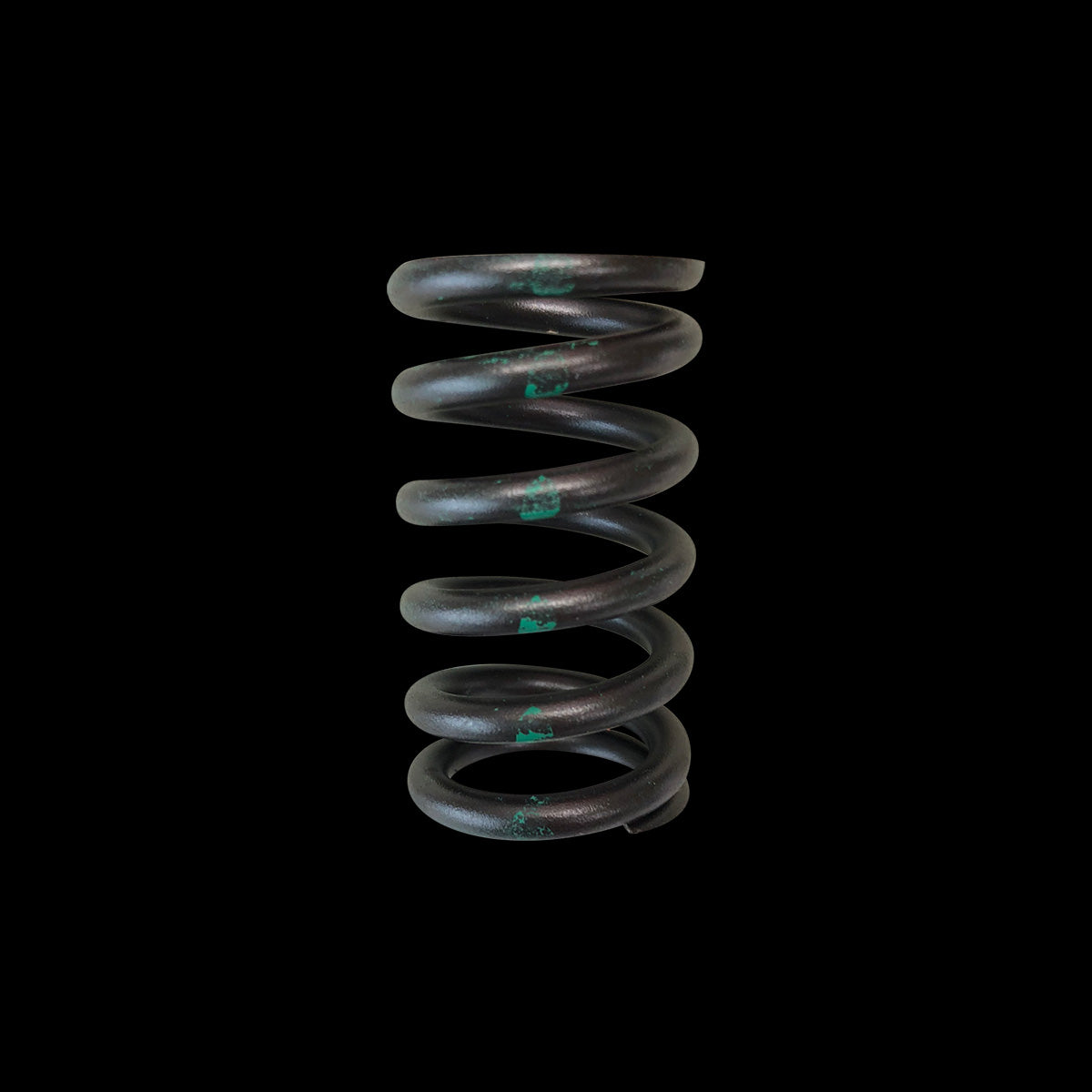
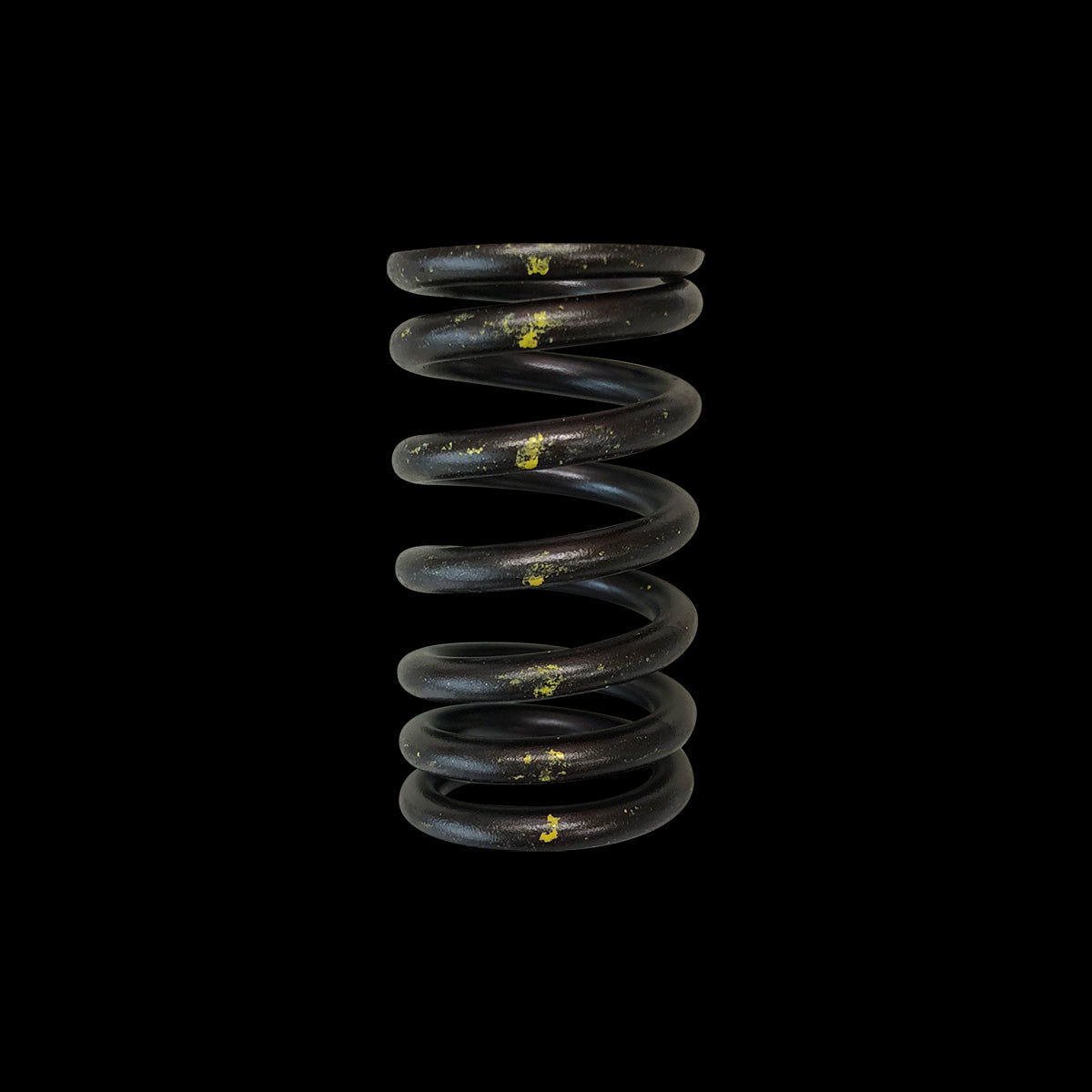
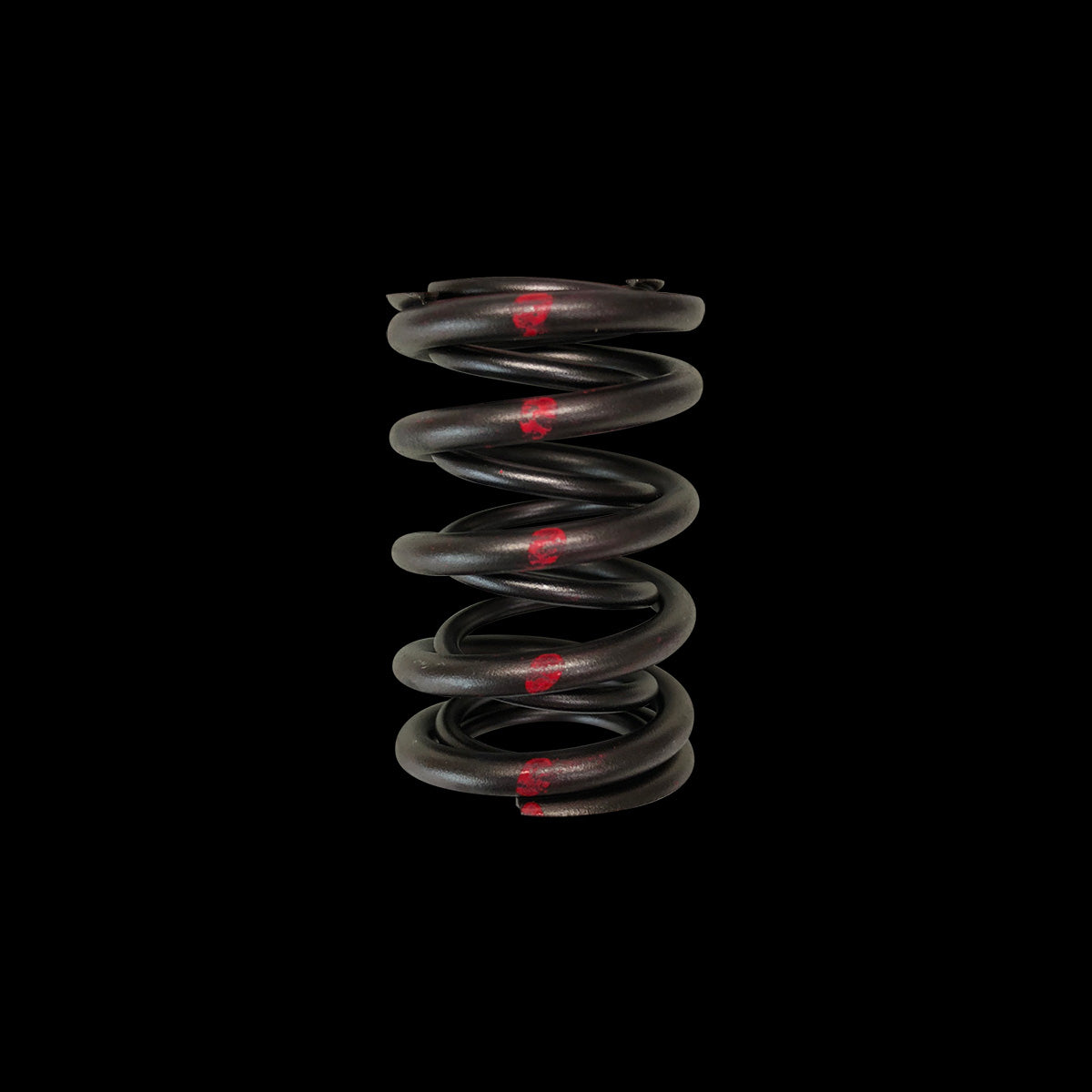
Engineering Superior Valve Control: The Brian Crower BC1130-1 Performance Valve Spring
In the critical calculus of high-performance engine building, the valve train is the final arbiter of power. Every ounce of cylinder pressure and volumetric efficiency you’ve painstakingly engineered is ultimately delivered by the precise, repeatable motion of the valves. For turbocharged powerplants like the Mitsubishi 4B11T and Hyundai G4KF, where elevated boost pressures and extended RPM ranges are the benchmarks of performance, the factory valve spring is a fundamental constraint. The Brian Crower BC1130-1 Performance Valve Spring is engineered as a direct, single-unit replacement to eliminate this bottleneck. This isn’t merely a “stronger spring”; it is a harmonically tuned component designed to provide absolute valve control, prevent costly float, and unlock the true stability of your valve train under extreme conditions. Forced induction and high-RPM builds demand a spring that can manage the exponential increase in valve acceleration forces, and the BC1130-1 is the definitive solution for the 4B11T (Lancer Evolution X) and G4KF (Genesis Coupe 2.0T) platforms.
The Physics of Failure: Why OEM Springs Limit Performance
The factory valve spring is engineered for a precise balance of longevity, noise, vibration, and harshness (NVH), and cost-effective operation within a conservative RPM envelope. When you introduce significant increases in boost pressure, valve lift (via aggressive camshafts), and engine speed, you expose three critical failure modes: spring surge, coil bind, and valve float. Spring surge is a resonant harmonic oscillation that occurs at specific RPMs, causing a loss of spring pressure and erratic valve motion. Coil bind is the catastrophic failure that occurs when the spring is compressed solid, destroying the spring, retainer, and often the valve itself. Valve float happens when the spring’s closing force is insufficient to overcome the inertia of the valvetrain at peak lift, causing the valve to momentarily separate from the cam lobe. The Brian Crower BC1130-1 is designed from the ground up to push these failure points far beyond the operational window of a modified engine, using advanced materials and geometry.
Technical Design & Material Superiority
Brian Crower builds the BC1130-1 using a proprietary, vacuum-remelted chrome-silicon alloy wire. This material is superior to standard OEM spring steel in every metric that matters for performance: higher fatigue strength, greater heat resistance, and improved ductility. The spring is manufactured using a precision shot-peening process, which bombards the surface with small media to create a uniform layer of compressive stress. This dramatically increases fatigue life by helping to prevent the initiation and propagation of cracks—a common failure point in cyclically loaded components. Furthermore, the springs undergo a specialized heat-treatment regimen that optimizes the grain structure of the alloy for consistent load retention over millions of cycles. The result is a component that doesn’t just have a higher seat pressure, but one that maintains that pressure predictably over the lifespan of your build.
- Eliminates Valve Float at High RPM: Provides significantly higher open pressure to slam the valve shut with authority, preventing separation from the cam lobe and ensuring precise timing.
- Prevents Harmonic Spring Surge: Engineered dampening characteristics and precise natural frequency push resonant points beyond the usable RPM range, maintaining consistent pressure.
- Enables Aggressive Cam Profiles: The increased pressure range safely accommodates higher-lift, longer-duration camshafts without risk of coil bind or rapid pressure loss.
- Maximizes Boost Tolerance: Higher seat pressure ensures the valve seals perfectly against the seat under extreme cylinder pressure, preventing reversion and power loss.
- Superior Durability & Consistency: Advanced chrome-silicon alloy and shot-peening deliver exceptional fatigue resistance for reliable performance in street, track, or strip applications.
Vehicle Fitment & Application Specifics
The Brian Crower BC1130-1 is engineered as a direct, drop-in replacement for the following applications. Critical installation notes: Always verify installed height and check for coil bind with your specific camshaft profile. It is highly recommended to use matching Brian Crower titanium retainers (e.g., BC1400 series) and hardened spring seats or shims to achieve the correct installed height and prevent wear.
Primary Applications:
Mitsubishi 4B11T Engine (2008-2015): Lancer Evolution X (All Models). This spring is essential for any build exceeding factory boost levels, especially when paired with upgraded turbochargers, E85 fuel, and aggressive tuning. It is compatible with both OEM and aftermarket camshafts, provided the lift does not exceed the spring’s maximum safe travel.
Hyundai G4KF Engine (2010-2016): Genesis Coupe 2.0T (BK Series). A critical upgrade for tuned Genesis Coupe platforms seeking to safely explore the 7,000+ RPM range and higher boost pressures, addressing a known weak point in the stock valvetrain under stress.
Installation Considerations & Valvetrain Geometry
Installing performance valve springs is a precision operation that demands attention to detail. Simply dropping in the BC1130-1 without validating your setup invites failure. The two most critical measurements are Installed Height and Coil Bind Clearance. Installed height is the spring’s height when the valve is closed and the retainer is secured. This directly determines the spring’s seat pressure. A height that is too tall yields insufficient pressure; too short can over-stress the spring. Always use a micrometer and height checker. Coil bind clearance is the minimum space between coils when the spring is fully compressed at maximum valve lift. A minimum of 0.060″ (1.5mm) of clearance is an absolute safety margin. For a deep dive into the principles of valvetrain dynamics and spring resonance theory, refer to this authoritative resource on valvetrain geometry and harmonics from Engine Builder Magazine.
Furthermore, the increased pressures of the BC1130-1 place higher loads on the camshaft lobes, lifters (or buckets), and retainers. It is strongly advised to pair these springs with a hardened valve spring seat/shim to prevent the spring from grinding into the aluminum cylinder head. The use of lightweight titanium retainers is also recommended to reduce the reciprocating mass that the spring must control, further enhancing stability at high RPM.
Complete Technical Specifications
| Specification | Metric Value | Imperial Value | Notes |
|---|---|---|---|
| Part Number | BC1130-1 (Sold as a Single Spring) | ||
| Outer Diameter (OD) | 29.0 mm | 1.142 in | Direct fit for OEM spring pocket. |
| Wire Diameter | 4.3 mm | 0.169 in | Proprietary chrome-silicon alloy. |
| Seat Pressure (Installed) | ~80 lbs | ~356 N | @ ~1.580″ installed height. Verify for your setup. |
| Open Pressure | ~200 lbs | ~890 N | @ 0.400″ lift. Provides robust control at peak lift. |
| Coil Bind Height | ~22.9 mm | ~0.902 in | Absolute minimum compressed height. |
| Maximum Safe Lift | Up to 12.5 mm | Up to 0.492 in | With proper installed height and 0.060″+ bind clearance. |
| Finish | Shot-Peened, Heat-Treated | ||
Be the first to review “BC1130-1 – Valve Spring – Single (Mitsubishi 4B11T Evo X, Hyundai G4KF Genesis) – 1 only”
| Make | Model | Year |
|---|---|---|
| Hyundai | Genesis Coupe | 2010 - 2016 |
| Mitsubishi | Lancer Evolution | 2008 - 2015 |
Related products
Sale!
VALVE SPRINGS
Original price was: $6.67.$5.80Current price is: $5.80.
Sale!
VALVE SPRINGS
Original price was: $6.67.$5.80Current price is: $5.80.
Sale!
VALVE SPRINGS
Original price was: $6.67.$5.80Current price is: $5.80.
Sale!
Original price was: $26.99.$23.47Current price is: $23.47.
Sale!
Original price was: $19.69.$17.12Current price is: $17.12.
Sale!
Original price was: $6.67.$5.80Current price is: $5.80.
Sale!
Original price was: $6.67.$5.80Current price is: $5.80.
Sale!
VALVE SPRINGS
Original price was: $6.67.$5.80Current price is: $5.80.
Reviews
There are no reviews yet.