
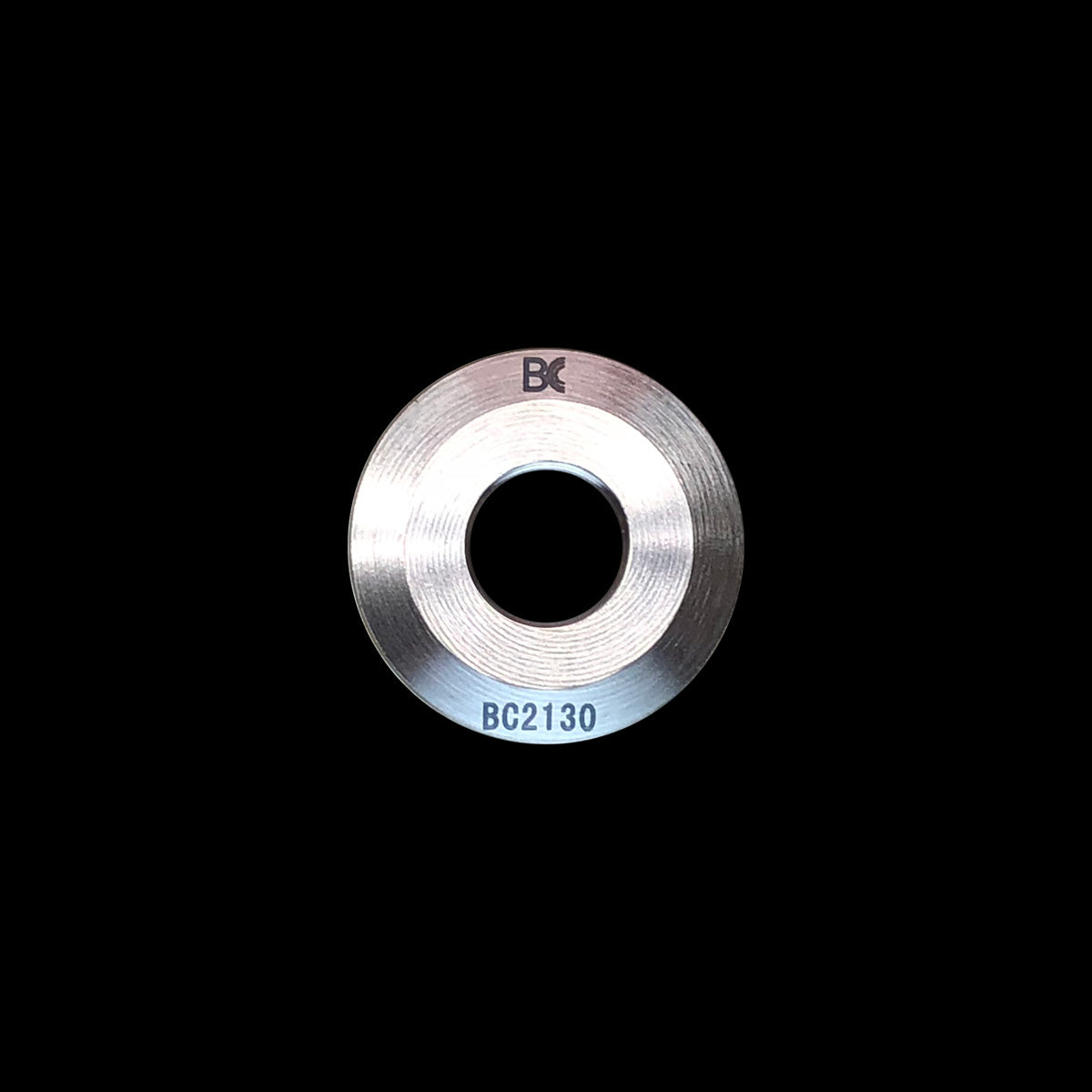
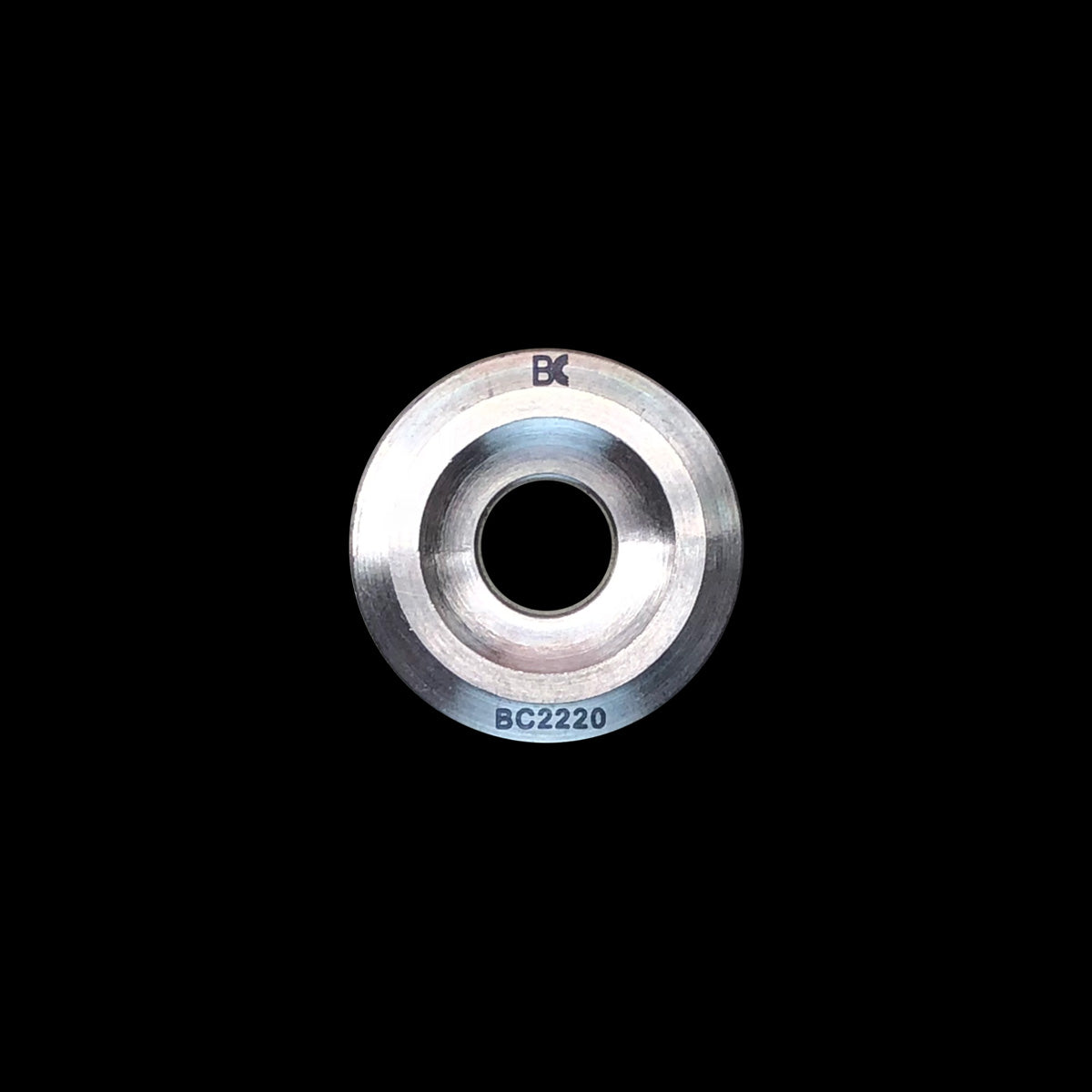
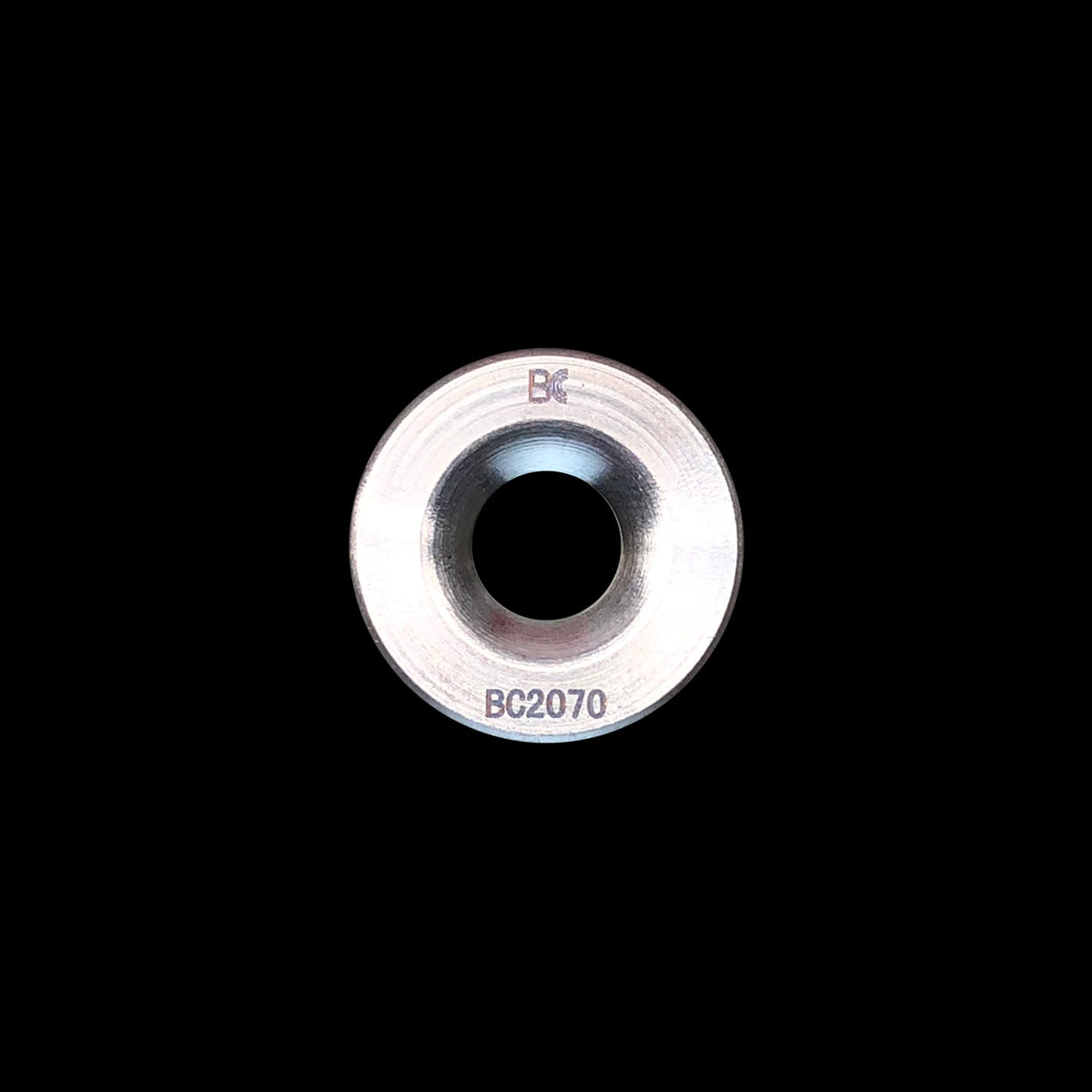
In the stratified realm of high-performance engine building, where every gram and every microsecond of valve event timing is contested, the valvetrain stands as the critical gateway to power and reliability. The BC2130-1 Titanium Retainer is not merely a replacement part; it is a calculated upgrade engineered for the specific, demanding environments of the Mitsubishi 4B11T (Lancer Evolution X) and Hyundai/Kia G4KF (Genesis Coupe 2.0T, Veloster Turbo) platforms. Designed as a singular, precision-machined component, this retainer serves as the fundamental linchpin in a stabilized valvetrain, directly enabling higher RPM limits, reducing parasitic loss, and providing the valvetrain integrity required for aggressive cam profiles and forced induction builds. Its existence is a direct response to the limitations of OEM powdered metal retainers, which become the weakest link when pursuing serious horsepower and rotational velocity.
Metallurgical Analysis & Engineering Precision
The core advantage of the BC2130-1 lies in its material composition: aerospace-grade 6AL-4V titanium. This alloy, a blend of 6% Aluminum and 4% Vanadium, represents the benchmark for high-strength, low-density applications in motorsport. Its selection over steel or aluminum is a non-negotiable for performance at this level.
- Mass Reduction & Inertial Management: Titanium’s primary benefit is its exceptional strength-to-weight ratio. The BC2130-1 retainer is approximately 50-60% lighter than a comparable OEM steel retainer. This drastic mass reduction at the top of the valve spring assembly lowers the reciprocating mass exponentially, which is critical for valvetrain stability. Reduced mass means lower inertial forces, allowing the valve spring to control the valve more effectively, especially during the critical closure phase at high RPM.
- Fatigue Strength & Durability: 6AL-4V titanium exhibits superior fatigue resistance compared to hardened steel, particularly in the high-cycle vibration environment of a valvetrain. It is inherently resistant to corrosion and maintains its tensile strength at elevated temperatures commonly found in turbocharged cylinder heads. Unlike some alloys that can become brittle, titanium retains a degree of desirable elasticity.
- Dimensional Stability & Machining Tolerance: Each BC2130-1 is CNC-machined to exacting tolerances, ensuring perfect concentricity and a consistent, precise lock groove profile. This eliminates runout and ensures even load distribution across the valve spring, preventing localized wear and premature spring failure. The machining process is calibrated to provide an optimal, lightweight profile without compromising the structural integrity of the retainer’s critical walls and groove.
For a deeper dive into the material science behind valvetrain components, refer to this technical resource on valvetrain dynamics and material selection from industry experts.
Valvetrain Dynamics & Performance Impact
Installing the BC2130-1 Titanium Retainer directly alters the physical dynamics of your valvetrain, yielding measurable performance gains. The effect is systemic, improving every aspect of valve control.
Enabling Higher RPM and Aggressive Cam Profiles
The OEM valvetrain in the 4B11T and G4KF engines is robust for stock applications but becomes a limiting factor beyond ~7,500 RPM or with significant camshaft upgrades. The reduced mass of the titanium retainer, often paired with lightweight valves and appropriate springs, lowers the valve’s natural frequency. This allows the engine to safely achieve a higher RPM ceiling before encountering valvetrain “float” – a condition where the spring cannot overcome the inertia of the valve assembly, leading to a loss of control, piston-to-valve contact, and catastrophic engine failure. For builders installing high-lift, fast-ramp camshafts, the BC2130-1 is mandatory. These cams exert drastically higher opening and closing velocities on the valvetrain, and the lightweight retainer is crucial for maintaining positive valve control throughout the aggressive lobe profile.
Reducing Parasitic Loss and Increasing Efficiency
Every component the camshaft lobe must accelerate and decelerate consumes energy. This is parasitic loss. By significantly reducing the mass at the top of the spring, the camshaft requires less work to open the valve. This freed-up horsepower, though small per valve, is cumulative across the cylinder head and is directly returned to the crankshaft. Furthermore, a stable, lightweight valvetrain experiences less harmonic distortion and heat buildup in the valve springs, preserving their seat pressure and rate over prolonged high-RPM operation, which is essential for endurance in track or competition environments.
Exact Vehicle Fitment & Compatibility
The BC2130-1 is engineered for a direct, interference-free fitment. Correct installation is paramount and requires matching components.
Primary Vehicle Applications:
- Mitsubishi: 2008-2015 Lancer Evolution X (Model: CT9A, chassis code referencing the 4B11T engine).
- Hyundai / Kia: 2010-2016 Genesis Coupe (BK) with the 2.0L Turbo Theta II G4KF engine. 2013-2017 Veloster Turbo (FS) with the G4KF engine. Also applicable to other Hyundai/Kia models utilizing the same Theta II G4KF long block.
Critical Compatibility Notes:
- Valve Stem Diameter: Designed specifically for the standard 5mm valve stem diameter used in both the 4B11T and G4KF cylinder heads.
- Spring Requirement: This is a retainer only. It is designed to be used with aftermarket beehive-style valve springs that feature a corresponding tapered design. It is NOT compatible with OEM dual-rate cylindrical springs or the OEM retainers. Using it with incorrect springs will result in failure.
- Lock Type: Utilizes standard, readily available 7-degree valve locks (keepers). Ensure locks are new and in good condition during assembly.
Technical Specifications
| Part Number | BC2130-1 |
| Material | Aerospace 6AL-4V Titanium Alloy |
| Finish | CNC Machined, Uncoated (Natural Titanium) |
| Valve Stem Diameter | 5.00mm |
| Lock Groove Angle | 7 Degrees |
| Spring Design Compatibility | Aftermarket Tapered (Beehive) Springs Only |
| Quantity | 1 Retainer (Sold Individually) |
Installation Guidelines & Maintenance Considerations
Precision installation is required to realize the benefits of this performance component. This is not a beginner-level maintenance item.
Installation Protocol: Valve spring and retainer installation must be performed with the cylinder head removed and securely mounted on a bench. Use a quality, dedicated valve spring compressor tool. Ensure the mating surfaces of the retainer, new locks, and valve stem are clean and free of oil. When compressing the spring, carefully place the locks into the retainer groove, ensuring they seat fully and evenly around the valve stem before slowly releasing compressor tension. Always verify installed height and seat pressure with the matching spring manufacturer’s specifications using the appropriate gauges.
Maintenance & Inspection: Titanium retainers are largely maintenance-free once installed correctly. However, during any subsequent cylinder head service, inspect each retainer for any signs of cracking, particularly in the lock groove area or the thin upper rim. Check for any unusual wear patterns that might indicate spring misalignment. Unlike steel, titanium can exhibit a “smearing” wear pattern under extreme distress rather than a clean fracture; be vigilant. The BC2130-1 is a component for the life of the engine build when used within its design parameters.
The BC2130-1 Titanium Retainer is the definitive choice for the serious 4B11T or G4KF builder moving beyond bolt-ons. It represents an investment in the mechanical integrity of the cylinder head, providing the foundational stability needed to harness the power of increased boost, aggressive cam timing, and elevated engine speeds. This is engineering applied directly to the limitation, transforming a potential failure point into a pillar of performance.
Be the first to review “BC2130-1 – Titanium Retainer – (Mitsubishi 4B11T Evo X, Hyundai G4KF Genesis) – 1 only”
| Make | Model | Year |
|---|---|---|
| Hyundai | Genesis Coupe | 2010 - 2016 |
| Mitsubishi | Lancer Evolution | 2008 - 2015 |
Related products
Sale!
Original price was: $14.23.$12.37Current price is: $12.37.
Sale!
Original price was: $14.23.$12.37Current price is: $12.37.
Sale!
Original price was: $14.23.$12.37Current price is: $12.37.
Sale!
Original price was: $14.23.$12.37Current price is: $12.37.
Sale!
Original price was: $6.87.$5.97Current price is: $5.97.
Sale!
Original price was: $14.23.$12.37Current price is: $12.37.
Sale!
Original price was: $14.23.$12.37Current price is: $12.37.
Sale!
Original price was: $6.87.$5.97Current price is: $5.97.
Reviews
There are no reviews yet.