
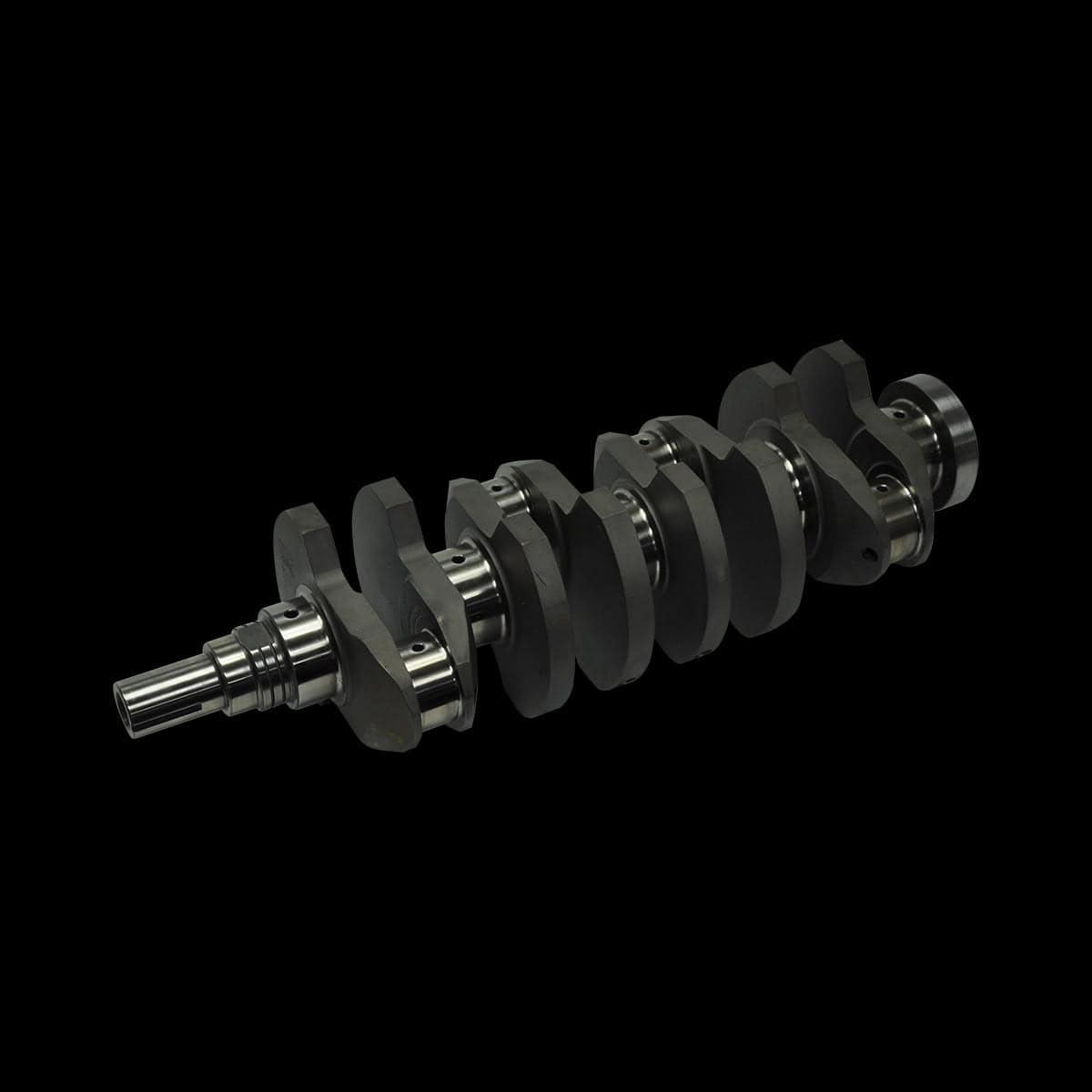
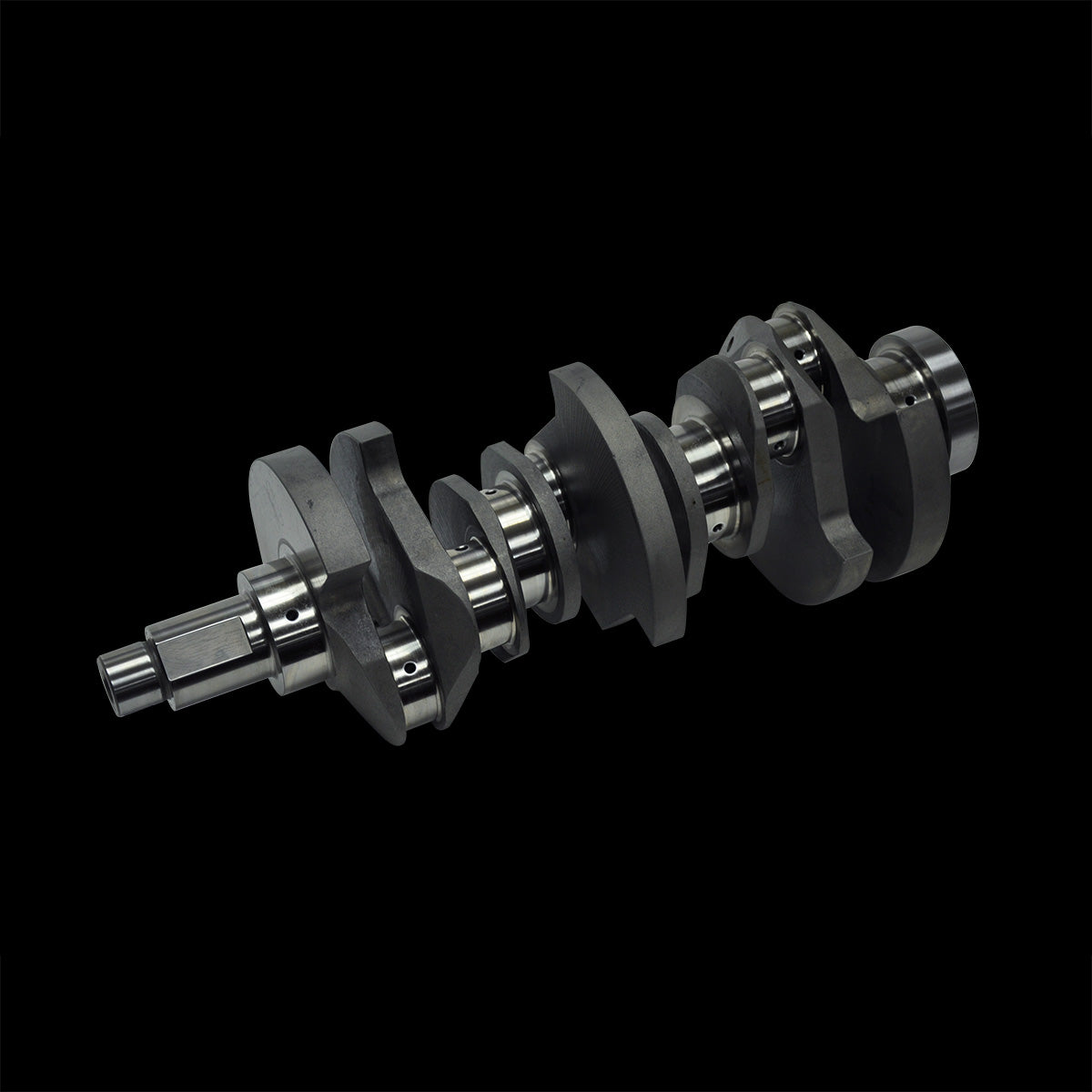
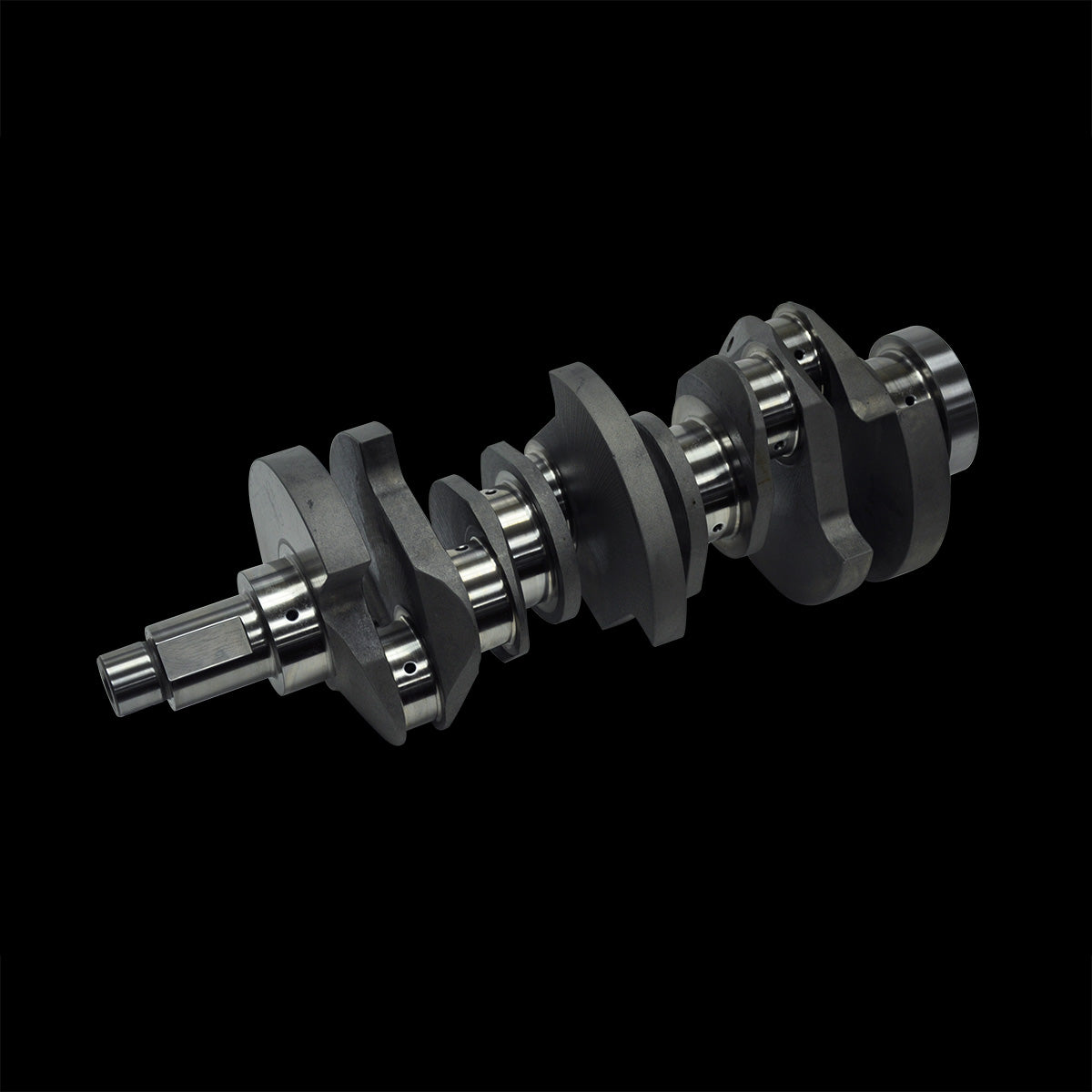
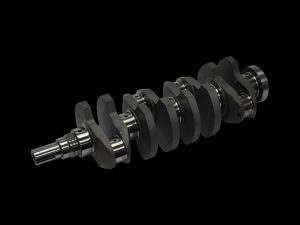
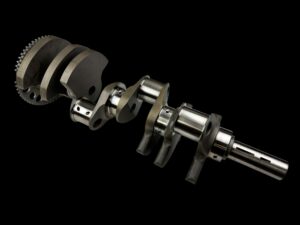
For the dedicated Honda builder seeking uncompromising rotational mass integrity and power potential, the BC5039 4340 billet crankshaft represents the definitive solution. Engineered specifically for the 1993-1996 H22A1 engine platform with its 50mm main bearing journals, this component transforms the foundation of your high-performance or racing build. Utilizing aerospace-grade 4340 chromoly steel, machined from a solid billet, and featuring a precision 100mm stroke, this crankshaft is designed to withstand the extreme forces of high-RPM operation, forced induction, and sustained competition use. It is not merely a replacement part; it is a strategic upgrade that recalibrates the engine’s entire dynamic character, offering unparalleled strength, perfect balance, and the dimensional accuracy required for maximum power output and longevity.
The Foundation of Extreme Performance: 4340 Billet Construction
At the core of the BC5039’s superiority is its material and manufacturing origin. Unlike forged or cast crankshafts, this unit is machined from a single, monolithic billet of SAE-4340 chromoly nickel steel. This process, while resource-intensive, eliminates the grain flow inconsistencies and potential subsurface flaws inherent in other methods. The billet process allows for optimal material grain orientation, resulting in a crankshaft with uniform density and strength in every vector. The 4340 alloy itself is renowned for its exceptional tensile strength, superb fatigue resistance, and remarkable toughness—a combination critical for components subject to complex torsional and bending loads. The crankshaft is then heat-treated and shot-peened to achieve a specific surface hardness and compressive stress layer, dramatically increasing its resistance to crack initiation and propagation. For a deeper technical understanding of material science in performance components, refer to this authoritative resource on alloy selection for motorsport applications.
Precision Engineering: 100mm Stroke & 50mm Main Journals
The BC5039 is meticulously engineered to the exact specifications required for the Honda H22A1 block. The 100mm (3.937-inch) stroke is held to a tolerance far exceeding OEM specifications, ensuring perfect piston positioning and deck height consistency across all cylinders. This precision is paramount for maintaining uniform compression ratios and optimizing quench area in the combustion chamber. The 50mm main bearing journals are precision-ground and micro-polished to a mirror-like surface finish (often sub-10 Ra). This ultra-smooth finish minimizes friction with the performance main bearings, reduces operating temperatures, and promotes superior oil film retention for hydrodynamic lubrication, even under extreme loads. Each counterweight is strategically sized and positioned for internal balancing, reducing harmonic vibrations that can destroy bearings and sap power.
Performance Benefits of the BC5039 Billet Crankshaft
Integrating this crankshaft into your H22A1 build delivers a cascade of performance and reliability advantages that are immediately apparent on the dyno and the track.
- Ultimate Tensile & Fatigue Strength: The 4340 billet construction provides a significantly higher safety margin than OEM or even premium forged cranks, essential for high-boost turbocharged, high-nitrous, or sustained high-RPM applications.
- Eliminated Resonant Vibration: Precision balancing at the component and assembly level ensures smoother operation, reducing stress on main and rod bearings, prolonging engine life, and allowing for more accurate tuning.
- Optimized Oil System Integrity: The precision-machined oil passages are deburred and polished to prevent oil starvation and ensure consistent, high-volume flow to critical bearings under all operating conditions.
- Foundation for Increased Displacement: The 100mm stroke, when paired with appropriate bore increases, is the cornerstone for building a larger-displacement H22, unlocking greater torque and horsepower potential.
- Dimensional Perfection: Machined on CNC equipment, every critical dimension—from journal diameters and widths to stroke and counterweight placement—is guaranteed, simplifying the build process and ensuring perfect piston-to-valve and rod-to-block clearance.
Vehicle Fitment & Application Specifications
Primary Application: This crankshaft is designed as a direct-fit performance replacement for the Honda H22A1 engine found in specific model years. Correct fitment is critical for proper oil clearances, bolt alignment, and harmonic balancer/sprocket engagement.
Compatible Vehicles/Engines:
- 1993-1996 Honda Prelude VTEC (H22A1 engine code – North American Market)
- Note: Always verify engine code. Later H22A4 engines and other variants may have different main journal sizes (55mm). The BC5039 is specifically for the 50mm main bearing design.
Installation Notes: Professional installation by a qualified engine builder is mandatory. This includes meticulous cleaning, verification of all main bearing clearances with plastigage, and final assembly balancing of the entire rotating assembly (crankshaft, pistons, rods, and flywheel/flexplate). Use of high-performance main and rod bearings matched to the final journal measurements is required.
Technical Specifications Table
| Specification | Detail |
|---|---|
| Part Number | BC5039 |
| Core Material | SAE 4340 Chromoly Steel Billet |
| Main Journal Diameter | 50.00 mm (Nominal) |
| Rod Journal Diameter | 45.00 mm (Typical for H-series) |
| Stroke | 100.00 mm (3.937 in) |
| Heat Treatment | Through-Hardened & Shot Peened |
| Balancing | Internally Balanced (Requires external assembly balancing) |
| Surface Finish | Micro-polished journals (≤ 10 Ra) |
| Designed Engine Fitment | 1993-1996 Honda H22A1 (50mm Main Journals) |
In conclusion, the BC5039 Billet Crankshaft is the definitive choice for builders who refuse to compromise on the structural heart of their Honda H22A1 engine. It translates advanced materials science and precision machining into tangible gains in reliability, power capacity, and engine smoothness. By selecting this component, you are not just assembling an engine; you are engineering a platform for extreme performance.
Be the first to review “BC5039 – Honda H22A1 (50mm Main – 1993-96) Crankshaft – 4340 Billet – 100mm Stroke”
| Make | Model | Year |
|---|---|---|
| Honda | Prelude | 1993 - 1996 |
Related products
$5,354.24
$5,851.73
$4,626.45
Reviews
There are no reviews yet.