
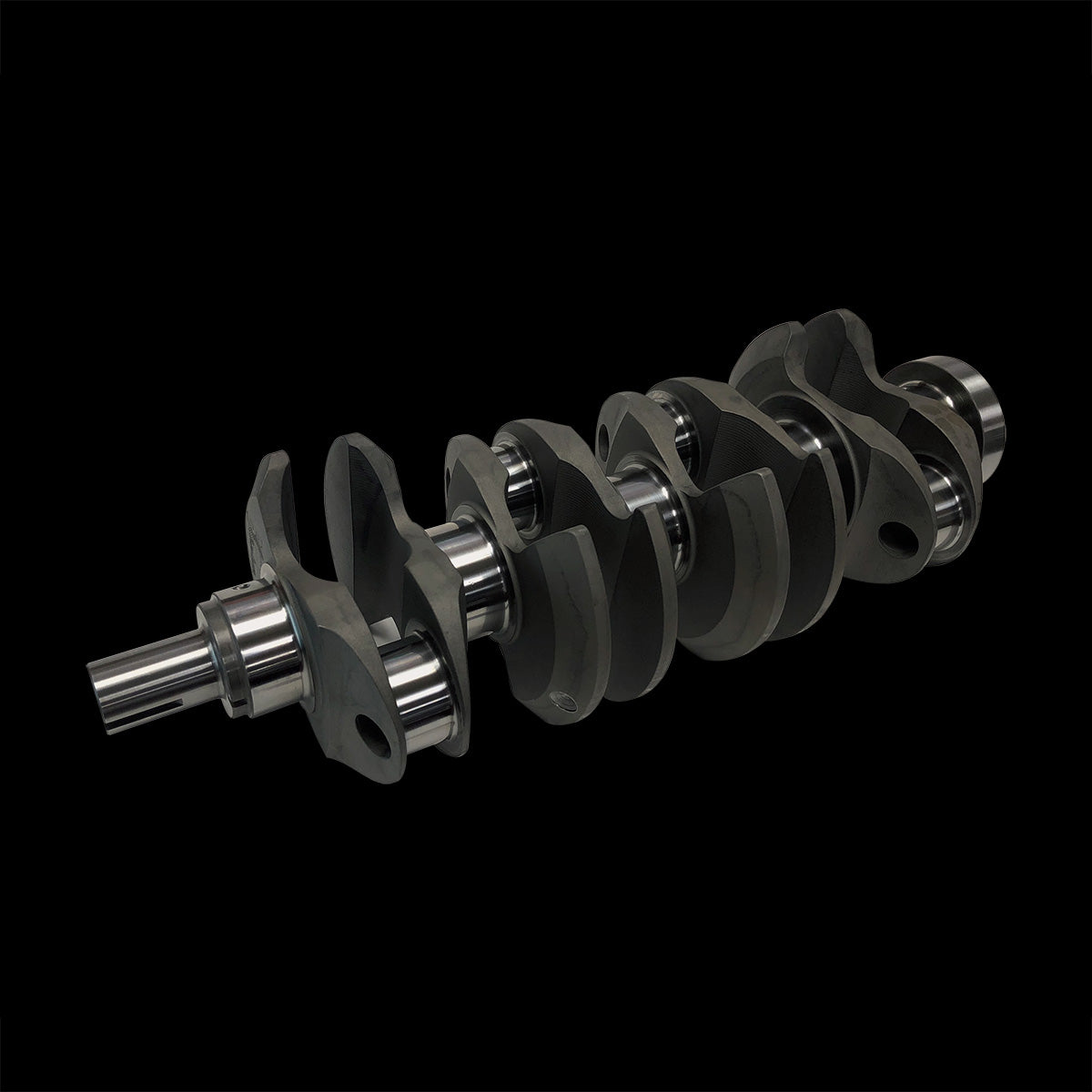
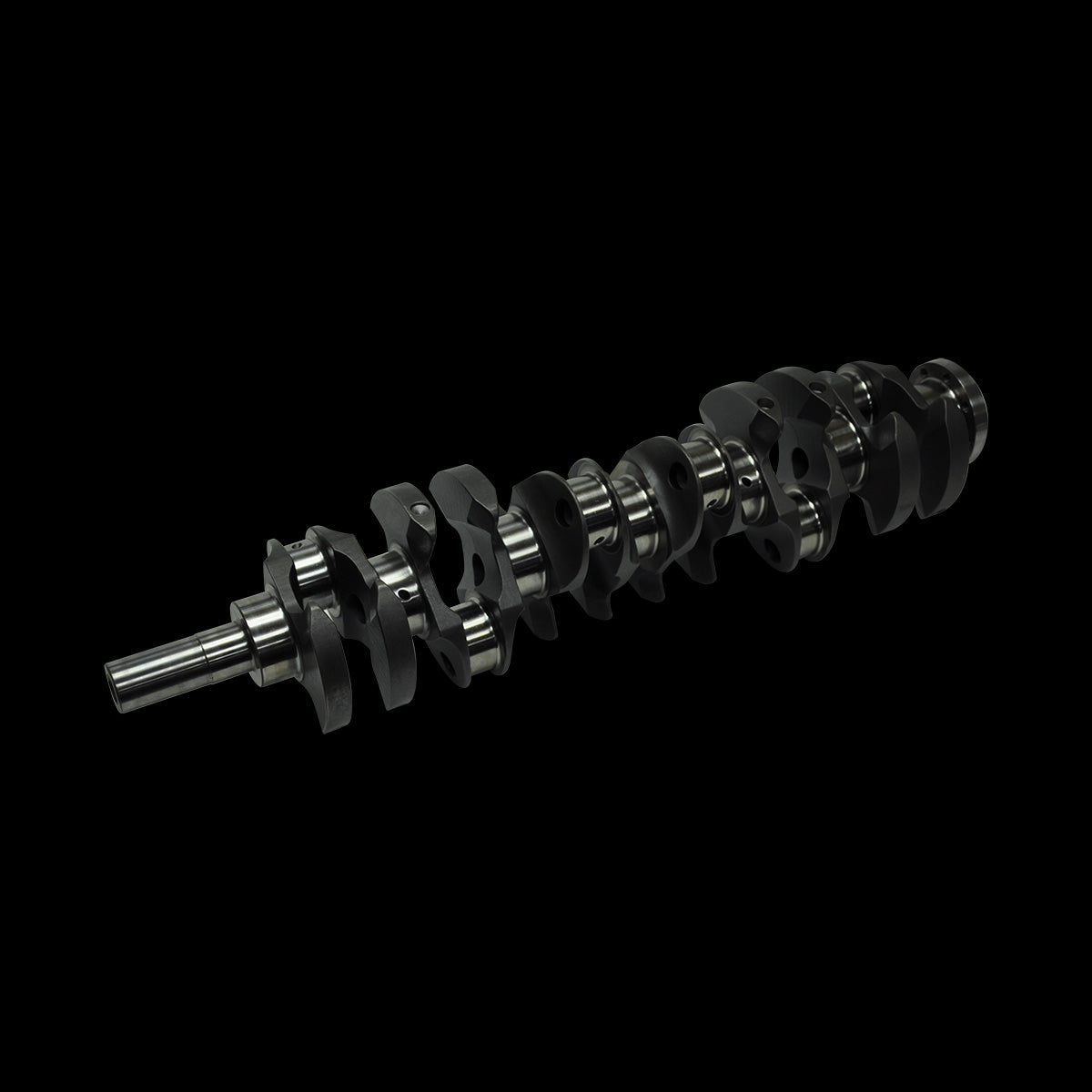
The Ultimate Foundation for Forced Induction Dominance: The BC5109LW Billet Crankshaft
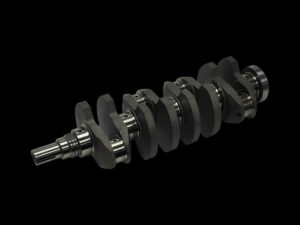
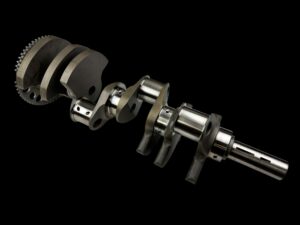
In the realm of high-performance Mitsubishi 4G63 engines, the rotating assembly is the heart of power and reliability. The Brian Crower BC5109LW 4340 Billet Crankshaft represents the pinnacle of this critical component’s evolution. Engineered specifically for the 7-bolt 4G63 platform, this is not a reworked OEM casting or a forged alternative; it is a precision-machined billet masterpiece designed from a solid bar of premium material. With its substantial 102mm stroke, it is the cornerstone for building a high-displacement, high-revving, and incredibly robust engine capable of withstanding the extreme cylinder pressures generated by modern turbocharging systems. For builders targeting serious horsepower figures—well into the four-digit range—while maintaining streetable characteristics and unparalleled durability, the BC5109LW is the definitive starting point. Its lightweight design and meticulous balancing reduce parasitic losses and harmonic vibrations, translating directly to faster engine acceleration and a broader, more usable powerband.
Uncompromised Integrity: 4340 Aircraft-Quality Billet Steel Construction
The fundamental advantage of the BC5109LW lies in its core material and manufacturing process. Unlike forged crankshafts, which are shaped under immense pressure, a billet crankshaft is CNC-machined from a single, homogeneous blank of premium 4340 chromoly steel. This alloy is renowned in aerospace and motorsport for its exceptional strength-to-weight ratio and superior fatigue resistance. The billet process allows for complete control over the grain structure, eliminating the potential for flaws, inclusions, or porosity that can be present in cast or even forged components. Every journal, counterweight, and fillet is machined to exacting tolerances, resulting in a crankshaft with ultimate structural integrity. This construction method is critical for engines subjected to repeated high-stress events, such as aggressive nitrous use, high-boost turbocharging, or sustained high-RPM operation. The material’s inherent toughness provides a massive safety margin, ensuring the crankshaft remains the strongest link in your rotating assembly, not the point of failure. For a deeper technical dive into the advantages of billet construction, refer to this authoritative resource on forged vs. billet crankshaft differences.
Engineered Displacement: The Precision of a 102mm Stroke
Stroke is a primary determinant of an engine’s displacement and torque characteristics. The BC5109LW’s 102mm (4.015-inch) stroke is a carefully selected increase over many OEM and aftermarket options. When paired with appropriate aftermarket rods and pistons, this stroke enables a significant bump in total engine displacement. For a standard 85mm bore, this yields approximately 2.3 liters; with a common overbore to 85.5mm or 86mm, displacement climbs even further. This increased displacement provides a broader, flatter torque curve, improving driveability and reducing turbo lag, as more air and fuel are moved per revolution. Crucially, Brian Crower doesn’t just increase the stroke—they engineer it. The stroke length is optimized in conjunction with the rod journal sizing and counterweight placement to maintain proper piston speed and rod angularity, ensuring longevity and efficient combustion. Each throw is machined with absolute precision, guaranteeing perfect indexing (commonly 180° for an inline-four) and consistent stroke length across all cylinders, which is paramount for balanced power output and smooth operation.
The Lightweight Advantage: Performance Through Mass Reduction
Reducing rotational mass is one of the most effective ways to free up horsepower and improve throttle response. The “LW” in the BC5109LW designation signifies its lightweight design. Through strategic machining of the counterweights and careful material selection, this crankshaft sheds unnecessary mass compared to a fully-counterweighted OEM-style unit. This reduction in inertia means the engine requires less energy to accelerate the crankshaft itself, allowing more of the engine’s power to be directed to the flywheel and, ultimately, the drivetrain. The benefits are multifaceted and immediately perceptible:
- Enhanced Throttle Response: The engine revs more quickly and freely, reducing turbo spool time and improving drivability.
- Reduced Bearing Load: Lower rotational mass decreases the centrifugal forces on the main and rod bearings, contributing to improved longevity.
- Diminished Harmonic Vibrations: A precisely balanced, lightweight assembly generates less destructive harmonic vibration, protecting other engine components.
- Increased Power Efficiency: Less power is wasted overcoming internal inertia, making more horsepower available at the crank.
This crankshaft is internally balanced to Brian Crower’s specifications and is typically used with matching aftermarket rods and pistons to achieve a neutrally balanced rotating assembly. It is supplied unfinished, requiring final balancing as part of a complete engine blueprinting process by your machinist.
Vehicle Fitment & Application Notes
The BC5109LW is engineered as a direct replacement for the 7-bolt Mitsubishi 4G63 engine. Correct identification of your engine platform is critical. This crankshaft is specifically designed for the 7-bolt main cap configuration, which is found in later model engines. It is not compatible with the earlier 6-bolt 4G63 blocks.
Primary Vehicle Applications Include:
• 1992-1999 Mitsubishi Eclipse GS-T & GSX (7-bolt engines)
• 1992-1999 Eagle Talon TSi & TSi AWD (7-bolt engines)
• 1992-1999 Plymouth Laser RS Turbo AWD (7-bolt engines)
• 1994-1998 Mitsubishi Galant VR-4 (specific 7-bolt models)
• Various Evolution I-III (CN9A, CP9A) models – verification against specific chassis/VIN is required.
• Other JDM and international market vehicles utilizing the 7-bolt 4G63T engine.
Installation Note: This is a competition-grade component. Installation must be performed by a qualified engine builder. It requires precise measurement of main journal clearances, rod side clearances, and a complete professional balancing session with your specific rods, pistons, and flywheel/flexplate. Always use new, high-performance main and rod bearings. Verify all clearances during mock-up before final assembly.
Technical Specifications
| Part Number | BC5109LW |
| Engine Application | Mitsubishi 4G63 (7-Bolt) |
| Construction | 4340 Chromoly Steel Billet |
| Stroke | 102mm (4.015 in) |
| Main Journal Diameter | Standard 7-Bolt Size (Requires Verification) |
| Rod Journal Diameter | Standard 4G63 Size (Typically Requires Matching Rods) |
| Counterweight Design | Lightweight (LW) |
| Balance | Internally Balanced, Requires Final Assembly Balancing |
| Surface Finish | Machined, Ready for Final Polish & Micro-Polishing |
| Intended Use | Competition / High-Performance Street |
Be the first to review “BC5109LW – Mitsubishi 4G63 (7 Bolt) LW Crankshaft – 4340 Billet – 102mm Stroke”
| Make | Model | Year |
|---|---|---|
| Mitsubishi | Eclipse | 1995 - 2006 |
| Mitsubishi | Lancer Evolution | 1992 - 2007 |
Related products
Sale!
Original price was: $5,422.64.$4,715.34Current price is: $4,715.34.
2JZGE/GTE VVT-i
BC5309LW-96 – Toyota 2JZGTE LightWeight Crankshaft – 4340 Billet – 96mm Stroke w/Honda Journal
$5,851.73
$5,851.73
$2,779.72
Reviews
There are no reviews yet.