
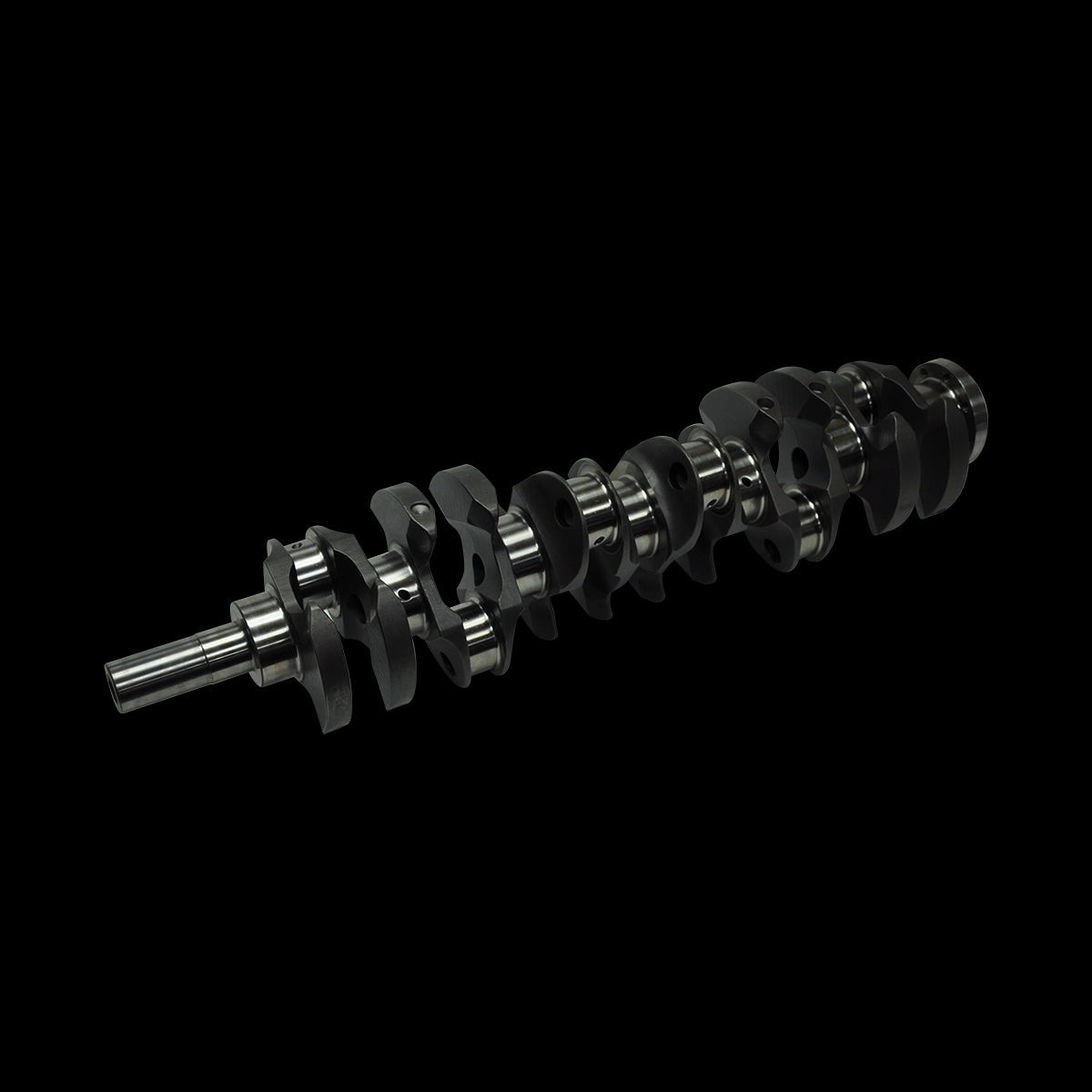
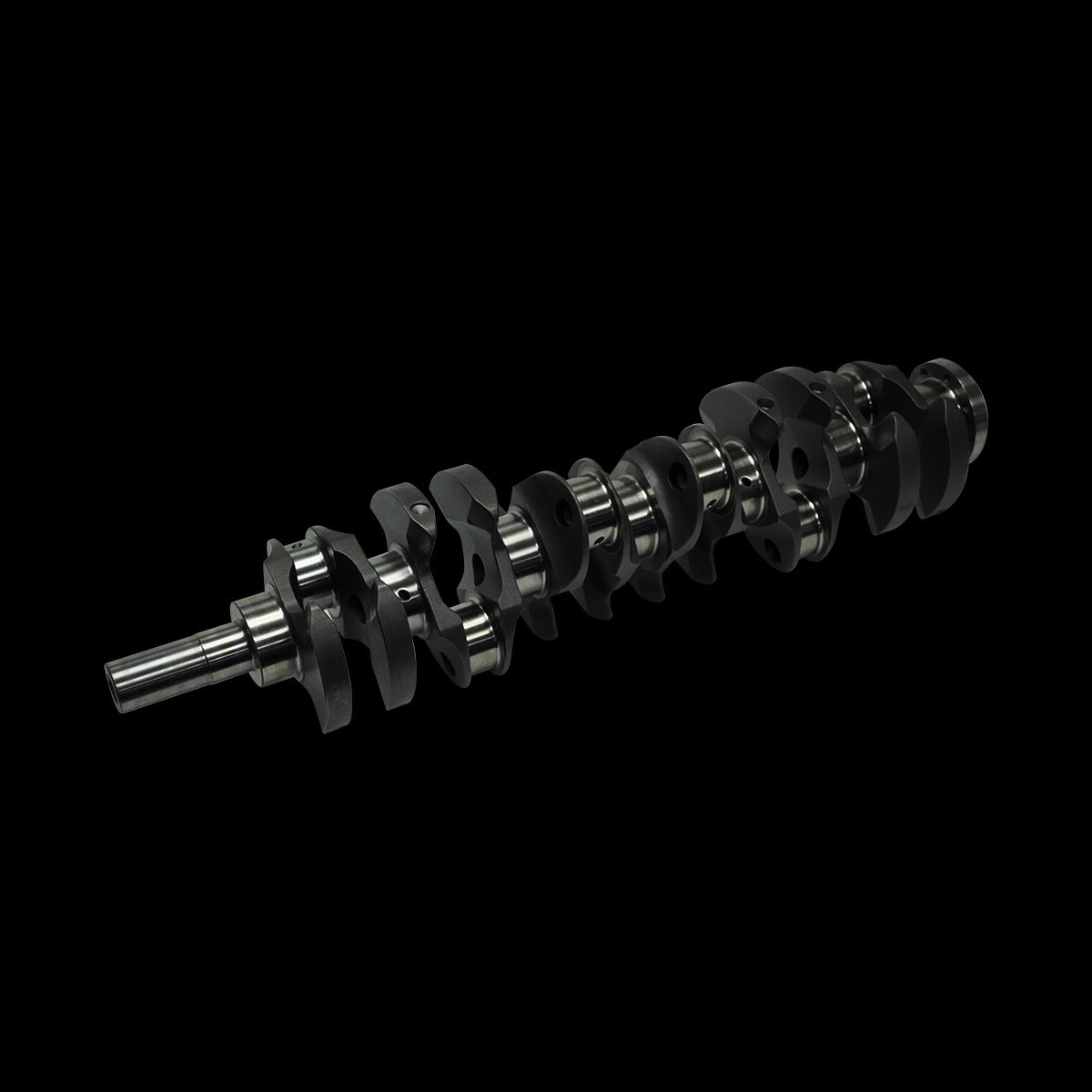
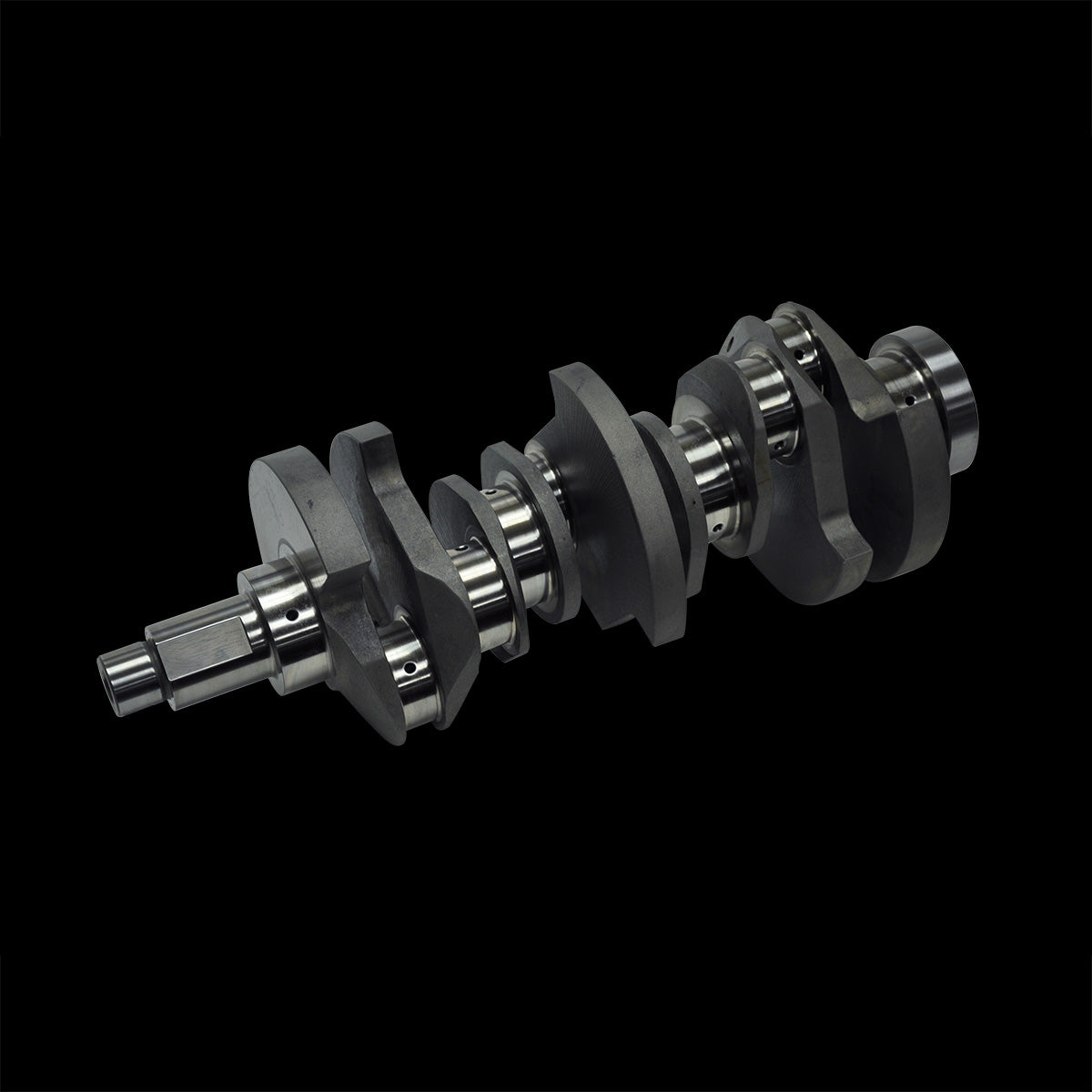
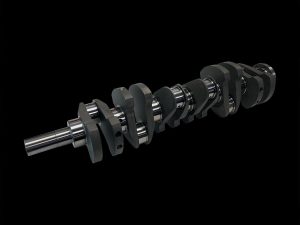
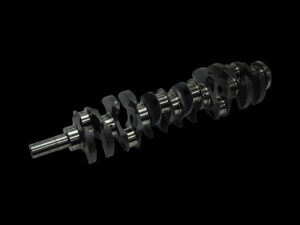
In the realm of high-performance Toyota 2JZ engine building, the rotating assembly is the heart of power and reliability. The BC5309LW Lightweight Crankshaft from Brian Crower represents a pinnacle of modern metallurgical and machining science, engineered explicitly for the legendary 2JZGTE and 2JZGE platforms. This is not a modified OEM component but a purpose-built, 4340 billet steel masterpiece with a 94mm stroke, designed to transform a 3.0-liter engine into a robust 3.4-liter powerhouse. For builders targeting serious horsepower, whether for forced-induction dominance, high-RPM NA applications, or relentless circuit racing, this crankshaft delivers the foundational strength and reduced inertial mass required for next-level performance. It embodies a perfect synergy between weight savings and ultimate tensile strength, ensuring that every ounce of rotational force is translated into usable power without compromise.
Metallurgical Superiority: 4340 Aircraft-Quality Billet Steel
The core of the BC5309LW’s performance lies in its material composition. It is machined from a solid bar of premium 4340 chromoly nickel steel, a material specification revered in aerospace and motorsport for its exceptional strength-to-weight ratio and fatigue resistance. Unlike forged cranks which are shaped under high pressure, billet machining allows for precise grain flow control and the elimination of potential material inconsistencies. The 4340 alloy, through a rigorous heat-treating process including quenching and tempering, achieves a optimal hardness and ductility profile. This results in a crankshaft with immense yield strength, capable of withstanding the colossal cylinder pressures generated by high-boost turbochargers or aggressive nitrous oxide use without flexing or failing. The inherent toughness of 4340 billet steel, as explored in detailed technical analyses on authoritative platforms like EngineLabs, provides a safety margin that cast or even some forged units cannot match, making it the definitive choice for builds where failure is not an option.
The 94mm Stroke: Engineering for Displacement and Torque
Stroke is a primary determinant of an engine’s displacement and torque characteristics. The BC5309LW’s 94mm stroke represents a significant increase over the factory 2JZ-GTE crankshaft (86mm). This longer stroke, when paired with appropriate cylinder bore dimensions, directly increases total engine displacement to approximately 3.4 liters. The physics are straightforward: a longer stroke increases the leverage on the crankshaft journals, creating greater torque output for a given cylinder pressure. This translates to a broader, flatter torque curve, providing stronger low-end and mid-range response—a critical advantage in both street and track scenarios. However, increasing stroke introduces complex engineering challenges, including increased piston speed and altered dynamic forces. Brian Crower’s design meticulously accounts for this through precise counterweighting and journal profiling, ensuring perfect harmonic balance and minimizing destructive vibrations at elevated RPM, thus preserving bearing and valvetrain life.
Lightweight Design Philosophy: Reducing Rotational Inertia
The “LW” in BC5309LW stands for LightWeight, a critical feature that goes beyond mere mass reduction. By strategically machining material from non-critical areas and optimizing the counterweight design, this crankshaft achieves a significant reduction in rotational mass compared to a standard billet unit. Why does this matter? Rotational inertia is the resistance to changes in rotational speed. A lighter crankshaft requires less energy to accelerate and decelerate. This manifests as drastically improved throttle response, as the engine can rev up and down more rapidly. It reduces parasitic loss, freeing up horsepower that would otherwise be used just to spin a heavier assembly. For turbocharged applications, this means reduced turbo lag and faster spool characteristics as the engine can change RPM more quickly to meet boost demand. The lightweight design is a calculated performance enhancer, contributing directly to drivability and peak power.
Comprehensive Vehicle Fitment and Application Notes
The BC5309LW crankshaft is engineered as a direct-fit replacement for a specific range of Toyota vehicles equipped with the 2JZ engine family. Proper fitment is crucial for installation and performance. This crankshaft is designed for use with aftermarket connecting rods and pistons configured for the 94mm stroke; it is not compatible with stock 3.0L rotating assemblies without significant modification.
Primary Vehicle Fitment: This crankshaft is compatible with all Toyota models housing the 2JZ-GTE and 2JZ-GE engine codes. This includes, but is not limited to:
• Toyota Supra (JZA80) – 1993-2002 (2JZ-GTE)
• Toyota Aristo (JZS147, JZS161) – 1997-2005 (2JZ-GTE)
• Toyota Soarer (JZZ30) – 1991-2000 (2JZ-GE)
• Toyota Chaser (JZX100) – 1996-2001 (1JZ-GTE, noting that 2JZ bottom-end swaps are common and this crankshaft is key for such conversions)
• Toyota Mark II (JZX110) – 1996-2000
Important Considerations: Installation requires matching the crankshaft with the correct main and rod bearing sizes. Builders must also verify clearance for the increased stroke within their specific engine block and with their chosen piston and rod combination. It is imperative to have the entire rotating assembly balanced by a professional machinist after installation.
Technical Specifications and Engineered Benefits
The BC5309LW integrates its advanced material and design into a package defined by precise specifications. The benefits of this crankshaft are systemic, impacting every aspect of engine performance and durability.
- Ultimate Tensile Strength: The 4340 billet steel construction provides superior resistance to bending and torsional stress, essential for high-horsepower and high-RPM applications.
- Reduced Rotating Mass: The lightweight design decreases rotational inertia, leading to sharper throttle response, faster engine acceleration, and reduced parasitic power loss.
- Increased Displacement: The 94mm stroke reliably expands engine capacity to 3.4L, providing a substantial foundation for increased torque and horsepower output.
- Enhanced Engine Balance: Precision machining and optimized counterweighting ensure harmonic balance, protecting bearings and the valvetrain from destructive vibrations.
- Turbo Optimization: Faster engine spool-up due to lower inertia translates directly to reduced turbo lag and more immediate boost response.
- Professional-Grade Reliability: Built to withstand extreme abuse, it offers unparalleled durability for drag racing, time attack, dyno competition, and high-performance street use.
| Specification | Detail |
|---|---|
| Part Number | BC5309LW |
| Engine Application | Toyota 2JZ-GTE / 2JZ-GE |
| Material | 4340 Chromoly Billet Steel |
| Stroke | 94mm |
| Resulting Displacement (approx.) | 3.4 Liters (with appropriate bore) |
| Main Journal Diameter | Standard 2JZ Size (Requires verification for specific bearing sets) |
| Rod Journal Diameter | Standard 2JZ Size (Requires verification for specific bearing sets) |
| Counterweight Design | Optimized for Lightweight & Balance |
| Finish | Precision Machined, Heat-Treated |
| Key Feature | Lightweight (LW) Construction for Reduced Rotational Inertia |
Selecting the BC5309LW crankshaft is a definitive statement of intent for any serious 2JZ build. It provides the architectural backbone for engines destined to exceed 1000 horsepower reliably, while its lightweight properties ensure that power is accessible and manageable. This component eliminates the weaknesses inherent in factory parts, offering a solution where maximum performance and engineered resilience are non-negotiable. It is the cornerstone for builders who understand that in the equation of extreme performance, the crankshaft is not merely a part—it is the central axis upon which all power rotates.
Be the first to review “BC5309LW – Toyota 2JZGTE/GE LightWeight Crankshaft – 4340 Billet – 94mm Stroke”
| Make | Model | Year |
|---|---|---|
| Lexus | SC300 | 1992 - 2000 |
| Toyota | Supra | 1993 - 2002 |
Related products
$5,354.24
2JZGE/GTE VVT-i
BC5309LW-96 – Toyota 2JZGTE LightWeight Crankshaft – 4340 Billet – 96mm Stroke w/Honda Journal
$5,851.73
$2,779.72
$5,341.72
$2,779.72
Reviews
There are no reviews yet.