
Precision Engineered for Forced Induction: The BC0723 Turbo-Spec Camshaft
In the realm of high-performance air-cooled Volkswagen engines, forced induction represents the pinnacle of power density and engineering challenge. Standard and even many “performance” camshafts fall short under boost, their profiles optimized for atmospheric pressure, not the explosive cylinder filling of a turbocharger. The Brian Crower BC0723 camshaft is engineered from the ground up to shatter that ceiling. This is not a modified street grind; it is a purpose-built, turbo-spec component designed to manage the unique volumetric efficiency, dynamic compression, and exhaust scavenging demands of a boosted Type 1 or Type 3 engine. It represents a calculated intersection of aggressive duration, optimized lobe separation, and meticulous ramp design, all focused on extending powerband, controlling dynamic compression for pump fuel, and unlocking the full potential of your turbo system. For the builder who understands that airflow is king, and that the camshaft is its conductor, the BC0723 is the definitive orchestration for power.
Core Design Philosophy: Managing Airflow Under Pressure
The fundamental goal of any turbo camshaft is to maximize the area under the lift curve while optimizing valve timing for the pressurized intake charge and critical exhaust scavenging. The BC0723 executes this with a high-lift, long-duration profile paired with a wide lobe separation angle (LSA). This specific combination is critical. The increased duration allows the valves to be open longer, facilitating the movement of the greater mass of air the turbo is forcing into the cylinders. Crucially, the wide LSA (114 degrees) creates significant separation between the intake closing and exhaust opening events. This reduces overlap, the period where both valves are open at top dead center. While overlap can benefit naturally aspirated engines by using exhaust scavenging to pull in intake charge, in a turbo application, excessive overlap allows boost pressure to escape directly out the exhaust port, wasting energy and increasing turbo lag. The BC0723’s profile minimizes this, ensuring boost pressure is contained and utilized for power generation, not lost to the exhaust.
Furthermore, Brian Crower’s proprietary CNC-machined lobe profiles are designed with accelerated ramp rates. This allows the valves to reach maximum lift quickly and dwell there, maximizing the window for airflow, before closing in a controlled manner. This precise motion is engineered to work in harmony with high-quality valve springs—a mandatory pairing—to ensure valve train stability at elevated RPMs, where turbo engines often make peak power. The cam is manufactured from a premium grade of 8620 chromoly steel, billet-machined for absolute consistency, and then induction hardened for exceptional wear resistance against the punishing environment of a high-horsepower, high-heat boosted engine.
Installation Imperatives & Synergistic Components
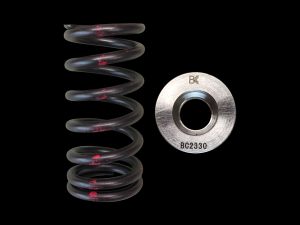
Installing the BC0723 camshaft is a commitment to a comprehensive performance build. This camshaft’s aggressive profile is not compatible with stock or worn valve train components. To realize its potential and ensure engine longevity, a supporting suite of parts is absolutely mandatory. First and foremost are high-performance valve springs with increased seat and open pressure. The stock springs will not control the valve motion at high RPM with this profile, leading to valve float, power loss, and catastrophic engine failure. Matching lightweight chromoly retainers and hardened steel pushrods are also required to handle the increased stresses.
Precision during installation is non-negotiable. Proper camshaft endplay must be set using thrust washers, and lifter pre-load must be meticulously adjusted, especially if using adjustable rocker arms. The engine’s static compression ratio must also be considered. The BC0723, with its later intake valve closing event, effectively lowers the engine’s dynamic compression ratio. This allows you to run a higher static compression piston set-up on pump gasoline when under boost, improving off-boost driveability, or alternatively, safely run more boost pressure on a lower static compression bottom end. A custom engine management system capable of fine-tuning fuel and spark is highly recommended to capitalize on the changed volumetric efficiency and airflow characteristics. For in-depth technical guidance on building a turbocharged air-cooled VW, consider this resource on turbocharging fundamentals from Aircooled.Net.
Vehicle Fitment & Application
The BC0723 is designed specifically for Volkswagen Air-Cooled engines utilizing a standard single-port or dual-port cylinder head configuration and a traditional doghouse-style cooler. Correct identification of your engine case and heads is essential before purchase.
- Volkswagen Type 1 (Beetle, Ghia, Thing): All years and displacements (1200cc, 1300cc, 1500cc, 1600cc) utilizing a vertically split engine case. Fits both single-port (pre-1971) and dual-port (1971+) cylinder heads.
- Volkswagen Type 3 (Squareback, Fastback, Notchback): All air-cooled Type 3 variants with the pancake-style engine. Shares the same basic camshaft core design as the Type 1.
- Application Note: This camshaft is engineered explicitly for turbocharged or supercharged applications. Its use in a naturally aspirated engine will result in very poor low-end torque, rough idle, and suboptimal performance. It is intended for serious performance builds where forced induction is the central power-adder.
Technical Specifications & Measured Benefits
The specifications of the BC0723 tell the story of its forced-induction focus. Below is a detailed breakdown of its key metrics, which dictate its behavior in your engine.
| Specification | Value | Performance Implication |
|---|---|---|
| Advertised Duration (Intake/Exhaust) | 308° / 304° | Extended valve open time for moving high volumes of boosted charge. |
| Duration @ 0.050″ Lift (Intake/Exhaust) | 254° / 250° | Aggressive “at the valve” timing, defining the true powerband character. |
| Gross Valve Lift (1.1:1 Rocker) | 0.525″ / 0.525″ | High lift maximizes airflow potential at peak piston demand. |
| Lobe Separation Angle (LSA) | 114° | Wide LSA minimizes overlap, containing boost pressure and reducing lag. |
| Recommended RPM Range | 3500 – 8000+ RPM | Engine is optimized for power under boost, typically made in the mid-to-high RPM band. |
The Tangible Advantage: What You Gain
- Optimized Boost Management: The wide LSA profile actively works to contain intake charge pressure, directing energy to the piston crown instead of out the exhaust, making boost more effective and responsive.
- Extended Powerband: Facilitates horsepower production well beyond the limits of a stock cam, allowing the engine to efficiently breathe and make power deep into the RPM range where turbos are most efficient.
- Pump Fuel Compatibility: By lowering dynamic compression, it allows for safer high-boost operation on affordable pump gasoline or enables a more streetable higher-static compression build.
- Enhanced Exhaust Scavenging: The exhaust profile is tuned to efficiently evacuate spent gases from the cylinder, reducing pumping losses and lowering intake charge temperature for more consistent power.
- Professional-Grade Durability: Manufactured from premium 8620 steel and induction hardened, it is built to withstand the extreme pressures and heat cycles inherent in high-output turbo applications.
The Brian Crower BC0723 is the critical link between your turbo system and your engine’s inherent ability to use it. It transforms a collection of high-performance parts into a cohesive, violent, and efficient powerplant. This is the camshaft for the builder who measures success not just in horsepower, but in engineering integrity under boost.
Reviews
There are no reviews yet.