
No products in the cart.
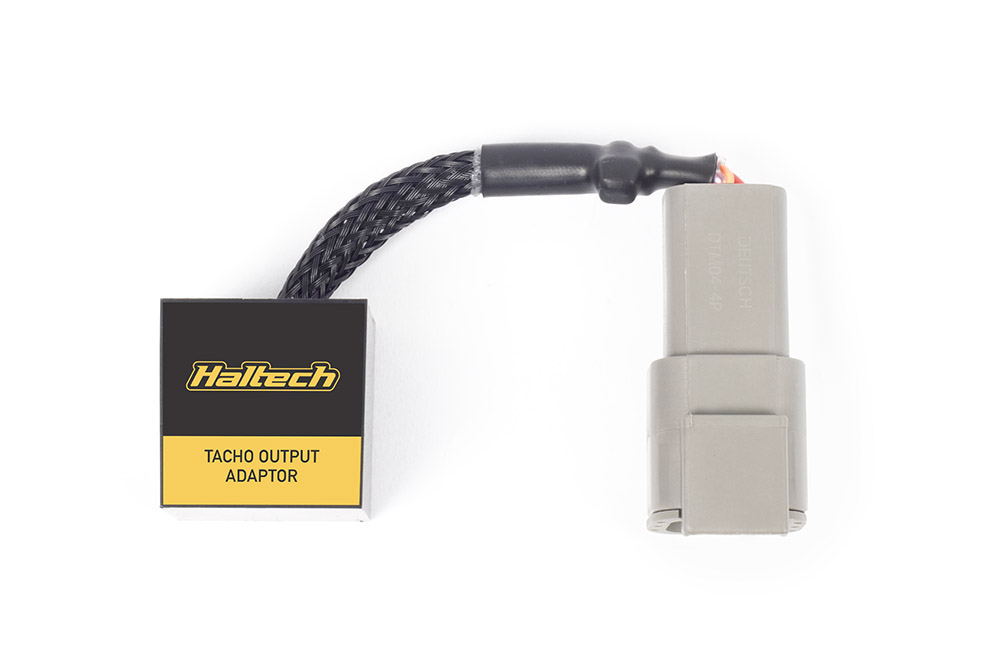

Instrumentation Accuracy: Tacho Output Adaptor (Coil Negative Emulation)
In the world of restomod builds and standalone ECU integration, one of the most frequent hurdles is the synchronization of modern electronics with vintage instrumentation. Classic tachometers—particularly those found in 1980s and 1990s Nissan, Toyota, and Mazda chassis—often rely on a “Coil Negative” signal. This signal is a high-voltage spike generated when an ignition coil’s primary circuit is interrupted. Modern ECUs, however, output a low-voltage (5V or 12V) square wave for their tacho signal. The Tacho Output Adaptor is an engineered Digital-to-Analogue interface that takes a low-current Digital Pulse Output (DPO) from the ECU and emulates the high-voltage flyback pulse required to drive an original analogue tachometer accurately.
The Engineering of Flyback Signal Emulation
The core function of this adaptor is to create a controlled “kick” that mimics the behavior of a traditional ignition system. Inside the unit is a small inductive coil that, when triggered by the ECU’s DPO, generates a inductive spike. This process is essentially a miniature version of Inductive ignition theory. Without this flyback pulse, an older tachometer will either stay at zero or read wildly inaccurately because the low-voltage square wave from the ECU lacks the energy to move the gauge’s internal mechanism. The Tacho Output Adaptor ensures that your Supra, RX-7, or Skyline dashboard remains fully functional, preserving the original look and feel of the cabin while providing the reliability of modern fuel map calibration and engine management.
Operational Benefits for Performance Swaps
For the professional tuner, having an accurate tachometer is not just about aesthetics; it is a critical diagnostic and safety tool. An accurate RPM reading allows the driver to hit shift points consistently and monitor for signs of engine trouble. During harness integration, this adaptor simplifies the wiring process significantly. Instead of trying to tap into the high-voltage side of the ignition system—which can introduce EMI (Electromagnetic Interference) and noise into the ECU—this adaptor allows the tuner to use a clean, dedicated DPO. This isolation protects the ECU’s sensitive internal circuitry from the high-voltage spikes associated with the ignition system while providing the necessary signal to the dash.
Installation Best Practices and ECU Configuration
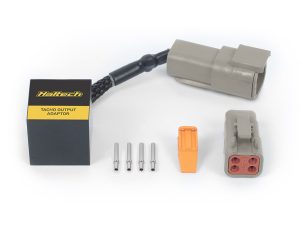
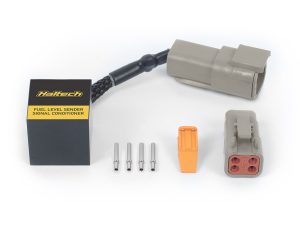
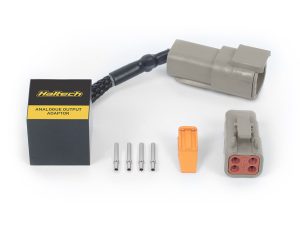
This adaptor is a universal component and is compatible with any ECU featuring a spare DPO. Installation involves three main connections: Power (12V), Ground, and the Trigger input from the ECU. The output then goes directly to the tachometer signal wire. It is important to note that the ECU must be configured correctly in the software; typically, the output is set to a Tacho function with a 50% duty cycle. The Pulse Per Revolution (PPR) must also be matched to the gauge—for example, a 4-cylinder gauge expects 2 pulses per revolution. The kit includes a high-quality Deutsch DTM 4 connector set to ensure a secure and reliable connection in high-vibration automotive environments.
Technical Specifications
| Parameter | Specification |
|---|---|
| Output Type | 1 x Coil Negative Emulated Signal |
| Input Signal Required | Low Voltage DPO (ECU Controlled) |
| Signal Theory | Inductive Flyback Emulation |
| Voltage Compatibility | 12V Systems |
| Connector Type | Deutsch DTM 4 Plug and Pins |
| Application | Analogue Tachometers / Vintage Dashboards |
Summary & Includes
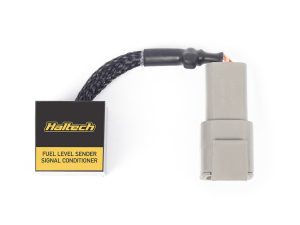
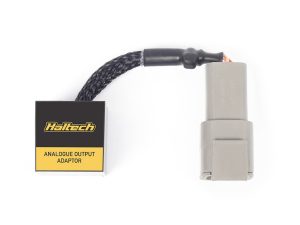
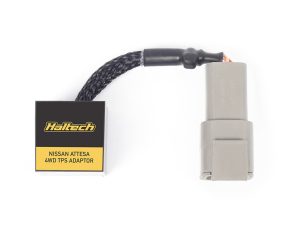
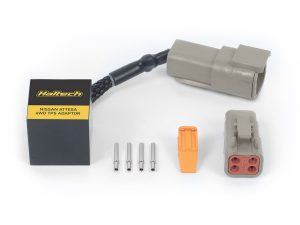
The Tacho Output Adaptor is the essential link for maintaining factory instrumentation in modern swaps. Includes: 1 x Tacho Adaptor and a Matching Set of DTM 4 Connector plug and pins. Note: Requires a spare Digital Pulse Output (DPO) on the ECU for operation.
Reviews
There are no reviews yet.