No products in the cart.
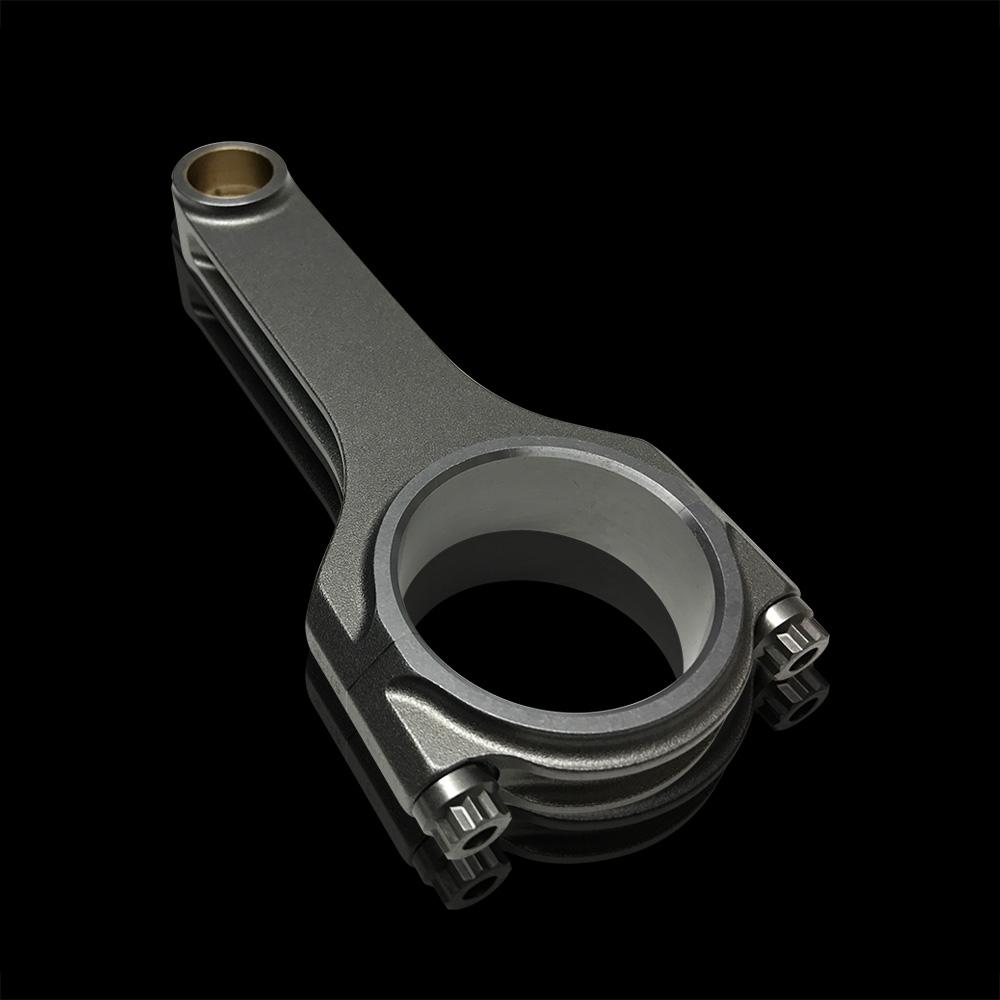
In the relentless pursuit of rotary RPM and forced-induction dominance, the connecting rod stands as the linchpin between piston integrity and crankshaft rotation. For builders of the legendary Honda F22C1 and F22C2 powerplants—the heart of the AP1 and AP2 Honda S2000—the factory forged rods, while robust, represent the final frontier before catastrophic failure in extreme builds. The BC6064 ProH2K Connecting Rod Set from Brian Crower is not an upgrade; it is a foundational re-engineering of this critical component. Engineered for the specific harmonics and cylinder pressures of the F-series VTEC engine, this set transforms the rotating assembly from a calculated risk into a predictable, bulletproof asset. Utilizing premium 4340 chromoly steel, a proprietary H-bean design, and secured by aerospace-grade ARP 2000 fasteners, the BC6064 is the definitive choice for high-RPM naturally aspirated, turbocharged, or supercharged applications targeting 600+ wheel horsepower and sustained operation beyond 9,000 RPM.
Material Science & Metallurgical Foundation: Beyond 4340 Chromoly
The baseline specification of “4340 chromoly steel” is ubiquitous in performance catalogs, but the devil—and the durability—is in the details of processing. Brian Crower’s ProH2K rods begin with a premium vacuum-degassed 4340 alloy, selected for its optimal balance of nickel, chromium, and molybdenum. This precise chemistry is the blueprint for high tensile and yield strength. The transformative process, however, is the proprietary ProH2K (Pro Heat Treat Killed) treatment. This isn’t a standard batch heat treat; it’s a multi-stage thermal cycling process that meticulously refines the steel’s grain structure. By controlling the austenitizing, quenching, and tempering phases with extreme precision, BC achieves a uniform Rockwell hardness of C43-45 throughout the entire rod. This uniformity is critical. It eliminates soft spots that can initiate cracks and ensures consistent elastic modulus across the beam and big end, allowing the rod to flex and recover predictably under load without taking a permanent set or suffering fatigue failure.
Design Geometry: The H-Beam Advantage for F22C Dynamics
The F22C engine is an oversquare, high-winding masterpiece, producing its peak torque at nearly 8,000 RPM. This operating environment subjects connecting rods to immense tensile forces (pulling apart on the exhaust stroke) and compressive loads (fuel ignition). The BC6064 employs a strategically optimized H-beam design. This geometry provides a superior strength-to-weight ratio compared to I-beam designs, particularly in resisting the column-buckling forces of compression. The wide, flat flanges of the “H” create immense lateral stiffness, preventing rod whip at extreme RPM—a primary concern in 9,000+ RPM S2000 applications. Furthermore, the design allows for significant material to be placed precisely where stress concentrations are highest: at the beam-to-boss junctions. Every critical radius is CNC-machined with a generous, polished fillet to eliminate machining marks that can act as stress risers, the primary nucleation points for fatigue cracks.
Precision Machining & Weight Management
Performance is a function of both strength and mass. A heavy rod increases inertial loads, robbing horsepower and stressing the crankshaft. An inconsistently light rod may be weak. The BC6064 set is weight-matched to within 1 gram per set, a standard that exceeds most OEM specifications. This is achieved through CNC machining from a forged 4340 billet, not a casting. The process starts with a forging that aligns the metal’s grain flow with the rod’s contours, enhancing strength. CNC centers then machine every critical surface: the small end eye, the beam profiles, the bolt boss faces, and the big end bore. This results in not only precise dimensional accuracy but also removes only the material necessary, achieving an optimal final weight. The small end features a precision honed bore for a press-fit piston pin, while the big end is machined to exacting tolerances for perfect cap alignment and crush on the crankshaft journal.
The Fastener Doctrine: ARP 2000 Wave-Loc Fasteners
A rod is only as strong as its weakest point, which is invariably the fastener. Brian Crower eliminates this variable by including ARP 2000 Wave-Loc fasteners as standard equipment with the BC6064. The ARP 2000 alloy is a case-hardened, triple-alloy steel with a tensile strength exceeding 220,000 psi. The “Wave-Loc” design incorporates a unique waved bearing surface on the underside of the bolt head. When torqued, this wave flattens, creating a consistent and massive clamping force that mechanically locks the bolt in place, resisting loosening from harmonic vibration—a key threat in high-RPM four-cylinder engines. These fasteners require precise, multi-stage torqueing (typically torque-to-yield procedure as specified by ARP), which creates a preload greater than any operational force trying to separate the rod cap. This ensures the rod big end remains perfectly circular, maintaining optimal oil clearance and bearing crush.
Complete System Benefits & Performance Outcome
Installing the BC6064 ProH2K rod set transforms the engine’s operational envelope. It is a systemic upgrade that delivers tangible, measurable benefits across the entire powerband.
- Eliminated Rod Failure Mode: Removes the factory rod as the limiting factor, allowing builders to focus on piston, ring, and bearing selection for a given power goal.
- Enhanced RPM Capability: The stiff H-beam design and balanced weight safely support sustained operation above the factory redline, enabling more aggressive cam profiles and VTEC tuning.
- Improved Boost and Nitrous Tolerance: The compressive and tensile strength directly translates to resilience against detonation and the immense cylinder pressures generated by forced induction or nitrous oxide.
- Optimized Rotating Assembly Balance: Precision weight matching reduces harmonic vibrations, decreasing load on main bearings and contributing to smoother engine operation and potential longevity.
- Foundation for Maximum Power: Provides the structural integrity required to reliably achieve and contain 600-800+ wheel horsepower, a common target for built F22C turbo applications.
Vehicle Fitment & Direct Application
The BC6064 is engineered as a direct, drop-in replacement for the OEM connecting rods. No machining of the crankshaft or block is required when used with standard bearing sizes. It is specifically designed for the 2.2L (2157cc) Honda F22C engine family.
Primary Application:
• 2004-2009 Honda S2000 (AP2 chassis, F22C1 engine)
• 2004-2005 Honda S2000 (AP1 chassis, F22C1 engine in certain markets)
• Honda F22C2 engine variants
Note: Always verify engine code (stamped on block). These rods are compatible with both the earlier (2004-2005) and later (2006-2009) F22C crankshafts. For ultimate builds, pairing with a balanced crankshaft and precision bearings (e.g., ACL Race Series or King Bearings) is recommended.
Technical Specifications
| Specification | Detail |
|---|---|
| BC Part Number | BC6064 |
| Application | Honda F22C1, F22C2 (2004+) |
| Material | Premium 4340 Chromoly Steel |
| Heat Treat | Proprietary ProH2K (Heat Treat Killed) |
| Design | Precision CNC-Machined H-Beam |
| Fasteners | ARP 2000 Wave-Loc Rod Bolts (Included) |
| Center-to-Center Length | 5.413″ (137.5mm) – OEM Dimension |
| Big End Diameter | 1.888″ (47.95mm) – OEM Dimension |
| Small End Diameter | 0.866″ (22.00mm) – For Press-Fit Pins |
| Weight (Per Rod) | Approximately 525-530 grams (matched ±1g) |
| Surface Finish | Shot Peened for Fatigue Resistance |
| Power Rating | Recommended for 600+ WHP Applications |
Final Analysis: The Brian Crower BC6064 ProH2K Connecting Rod Set is a masterclass in targeted performance engineering. It addresses the specific failure modes of the F22C platform with superior materials, intelligent design, and top-tier ancillary components like ARP fasteners. For the builder whose calculus involves horsepower, RPM, and boost pressure instead of mileage and fuel economy, this component is a non-negotiable cornerstone of a reliable, high-output engine. It provides the confidence to explore the outermost limits of the F22C’s potential. For a deeper technical dive into connecting rod metallurgy and design theory, refer to this authoritative resource on connecting rod selection principles from Engine Builder Magazine.
Be the first to review “BC6064 – Honda F22C (’04-up) – ProH2K Connecting Rods w/ARP2000 Fasteners”
| Make | Model | Year |
|---|---|---|
| Honda | S2000 | 2004 - 2009 |
Related products
B16A / B18C - Connecting Rods
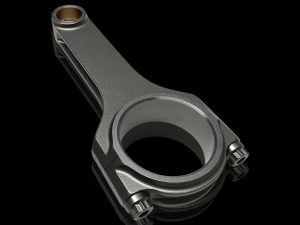
BC6026 – Honda/Acura B18C – ProH2K Connecting Rods w/ARP2000 Fasteners
$685.57
B18A / B18B - Connecting Rods
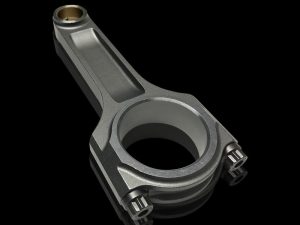
BC6019 – Acura B18A/B18B, B20 – ProH2K Connecting Rods w/ARP2000 Fasteners
$685.57
B18A / B18B - Connecting Rods
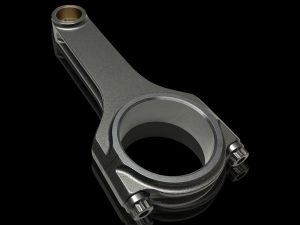
BC6017 – Acura B18A/B18B, B20 – I-Beam Connecting Rods w/ARP2000 Fasteners
$1,090.11
$1,022.79
Reviews
There are no reviews yet.