
No products in the cart.
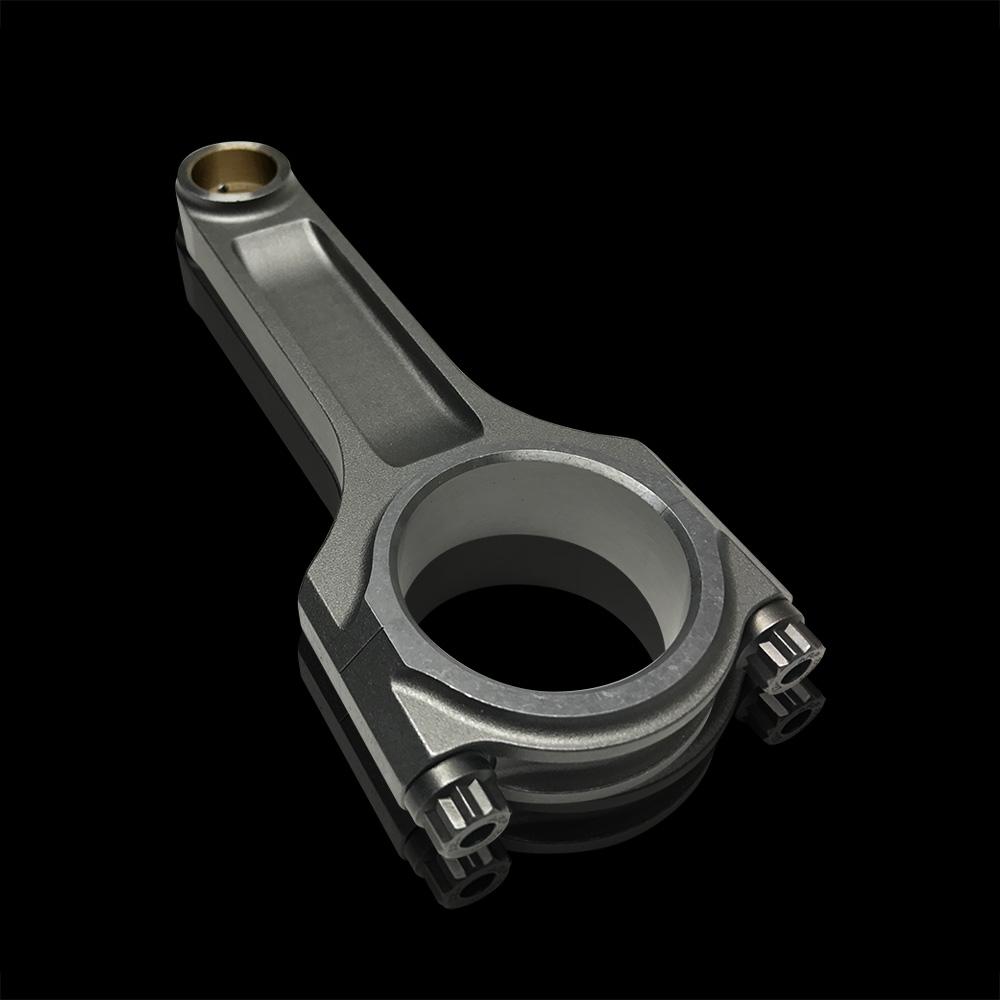
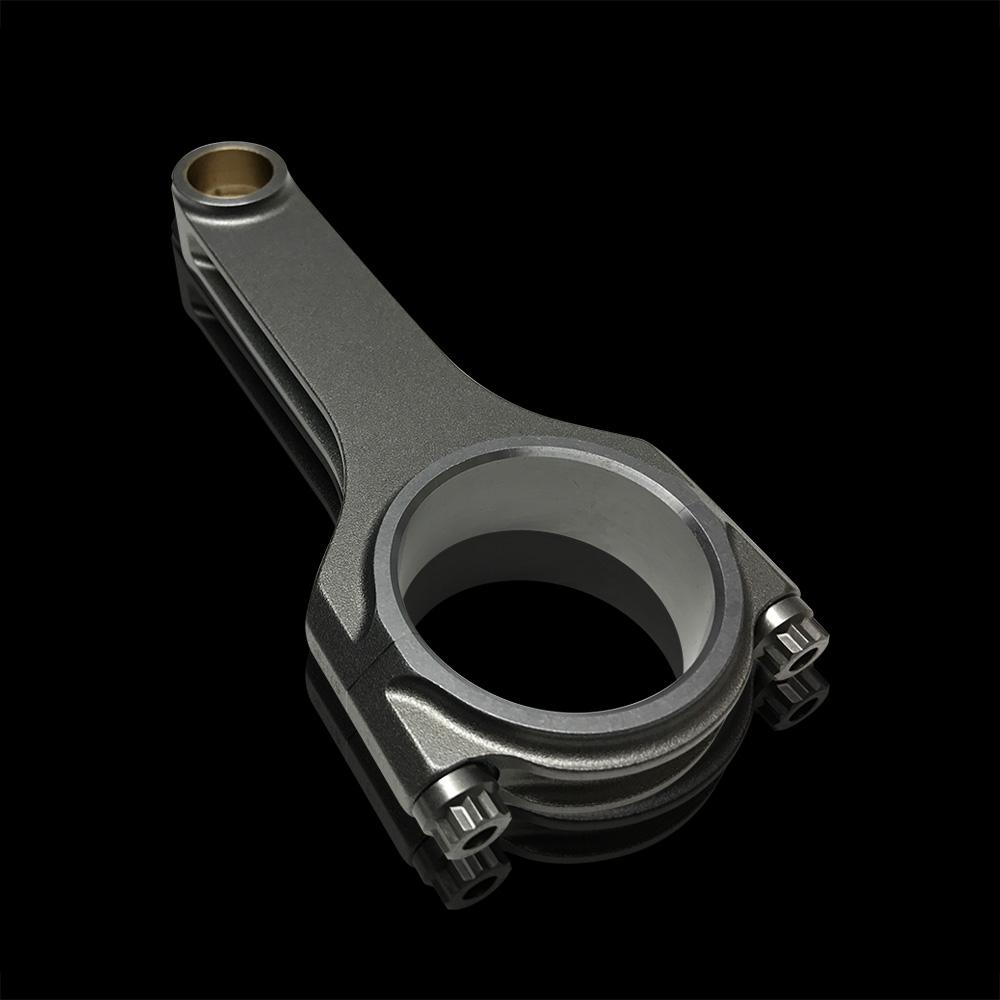
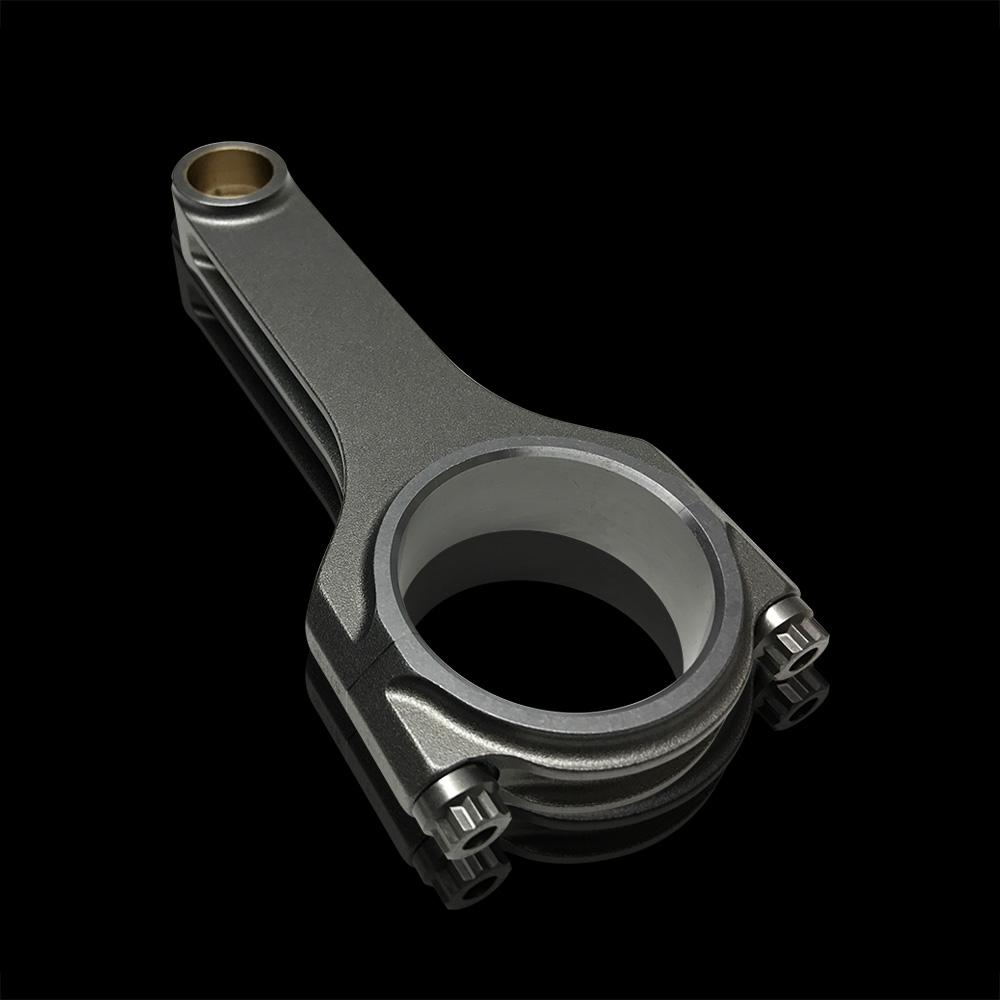
In the realm of high-performance engine building, the connecting rod is the unsung hero of the rotating assembly, a critical component translating the violent force of combustion into usable rotational energy. For the Mitsubishi 4B11 engine—the heart of the legendary Lancer Evolution X and a cornerstone of modern forced-induction builds—compromise in this area is not an option. The BC6137 I-Beam Connecting Rod set from Brian Crower represents the definitive upgrade, engineered to transform the 4B11 from a potent factory powerplant into a relentless, high-RPM force. These are not mere replacements; they are a fundamental re-engineering of the engine’s kinematic backbone. Utilizing a proprietary 4340 chromoly steel forging process and secured by industry-leading ARP2000 fasteners, the BC6137 rods are calculated for one purpose: to provide an unbreakable, precision-balanced foundation for serious horsepower and relentless durability. This is the component that separates a tuned engine from a truly built engine.
Material Science and Forging Integrity: The 4340 Chromoly Foundation
The BC6137’s performance narrative begins at the atomic level with its material composition. Brian Crower selects premium vacuum-degassed 4340 chromoly steel, a nickel-chromium-molybdenum alloy renowned for its exceptional strength-to-weight ratio and fatigue resistance. The “forged” designation is critical; each rod is hot-forged under immense pressure, aligning the steel’s grain structure to follow the intricate contours of the I-beam shape. This process creates a far denser, more uniform component than any casting or even a billet machining process could achieve, eliminating potential voids and stress risers that become failure points under extreme cylinder pressure. The forging is then subjected to a precise thermal cycling process—normalization and quenching—to achieve a specific core hardness, followed by a stress-relieving temper. This results in a rod that is not glass-hard and brittle, but tough and malleable enough to absorb the shock loads of high-boost, high-RPM operation without yielding. The final step is a shot-peening treatment across all critical surfaces, including the beam, pin, and bolt boss areas, to induce a layer of compressive surface stress, further enhancing fatigue life by preventing micro-crack initiation.
ARP2000 Fasteners: The Critical Interface of Clamping Force
A connecting rod is only as strong as its weakest point, which is invariably the fastener system. Brian Crower eliminates this vulnerability by including genuine ARP 2000 cap screws as standard. The ARP2000 alloy is a case-hardened, triple-alloy steel capable of sustaining clamp loads far exceeding those of OEM or even typical aftermarket fasteners. Their unique manufacturing process ensures perfect thread engagement and uniform tensile strength across the entire batch, a non-negotiable requirement for maintaining consistent rod alignment and bearing crush. The high clamp load provided by these fasteners, torqued to ARP’s specified value with their proprietary lubricant, ensures the rod cap remains absolutely fixed to the rod body, preventing fretting, walk, or bore distortion—the primary killers of crankshaft and bearing longevity. For a technical deep dive into the metallurgy and testing behind these critical components, refer to this authoritative resource on high-performance fastener engineering.
I-Beam Profile: A Structural Analysis for High-Load Applications
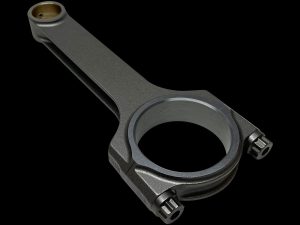
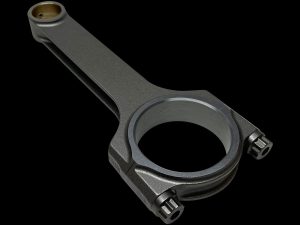
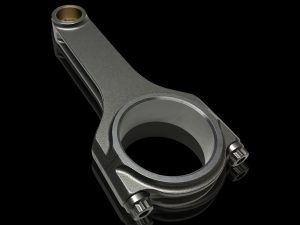
The iconic I-beam design of the BC6137 is not an aesthetic choice; it is a deliberate structural optimization for the specific loading profile of a high-output, turbocharged inline-four. The I-beam shape, with its wide flanges and centralized web, provides the greatest possible section modulus in the plane of bending (along the beam’s vertical axis), which is where the rod experiences its most severe compressive and tensile loads during the combustion and exhaust strokes. This design efficiently manages the column-buckling forces encountered at high cylinder pressures. Furthermore, the profile is carefully sculpted to provide exceptional rigidity while allowing for strategic weight reduction in non-critical areas. The beam is profiled and balanced to minimize reciprocating mass, reducing inertial stress on the crankshaft and allowing for more aggressive valve springs and higher, stable rev limits. Every radius is a calculated fillet, eliminating sharp corners that concentrate stress, and the entire component is magnaflux inspected post-machining to guarantee absolute integrity.
Precision Machining and Balanced Assembly
Forging provides the raw strength, but precision machining defines the component’s functionality. Each BC6137 rod is CNC-machined to exacting tolerances that surpass OEM specifications. The large end bore, which houses the rod bearings and interfaces with the crankshaft journal, is honed to a mirror finish with a diameter tolerance within 0.0002″. This ensures perfect bearing conformity and oil film stability. The small end, which receives the piston wrist pin, is precision-bored and can be supplied with a bronze bushing for full-floating piston applications, a common requirement in all-out race builds. Critically, each rod set is weight-matched to within a 1-gram tolerance per end (big end and small end). This process, performed on a scale, is essential for eliminating harmonic imbalances in the rotating assembly, reducing destructive vibration, and ensuring smooth, stable operation at elevated RPMs that would cause an unbalanced assembly to self-destruct.
Key Performance Benefits of the BC6137 Rod Set
- Unmatched Durability: Forged 4340 chromoly steel construction provides a fatigue limit capable of supporting 800+ wheel horsepower and beyond, making it a cornerstone for big-turbo and high-boost builds.
- Optimal Weight-to-Strength Ratio: The strategic I-beam design offers maximum strength with minimal reciprocating mass, improving engine responsiveness and reducing stress on related components.
- Guaranteed Fastener Integrity: Inclusion of genuine ARP2000 cap screws provides the highest possible clamp load, ensuring rod cap stability and protecting crankshaft and bearing life.
- Precision Engineered Fit: CNC machining and weight-matching to exacting tolerances ensure perfect bearing alignment, optimal oil clearance, and a balanced rotating assembly for smooth high-RPM operation.
- Direct OEM Fitment: Designed as a direct replacement for the factory 4B11 rod, requiring no block machining or clearance issues when used with appropriate pistons, simplifying the build process.
Vehicle Fitment and Application Notes
The BC6137 is engineered specifically for the Mitsubishi 4B11 engine platform. This includes a direct fit for all years and models utilizing this engine. Primary applications include the 2008-2015 Mitsubishi Lancer Evolution X (CT9A chassis for JDM models, CZ4A for USDM). They are also a direct-fit upgrade for the 2008-2015 Mitsubishi Lancer Ralliart and other global market vehicles equipped with the turbocharged 4B11T. For builders working with the naturally aspirated 4B11 engine found in standard Lancers, these rods provide an immense strength reservoir for high-compression, high-RPM naturally aspirated or nitrous oxide applications. It is critical to note that while the rod itself is a direct fit, a build utilizing these components will require aftermarket forged pistons with the correct wrist pin diameter, as well as a complete engine balancing service. The use of OEM pistons is not recommended due to pin fitment and the drastic increase in cylinder pressure these rods are designed to withstand.
Technical Specifications
| Specification | Detail |
|---|---|
| Part Number | BC6137 |
| Engine Application | Mitsubishi 4B11 / 4B11T |
| Material | Forged 4340 Chromoly Steel |
| Fasteners | ARP2000 Cap Screws (Included) |
| Design | Precision I-Beam |
| Center-to-Center Length | 150.0mm (Stock Length) |
| Big End Bore Diameter | 52.0mm |
| Small End Bore Diameter | 22.0mm (Bushed for Floating Pin) |
| Weight (Approx. per rod) | 525 grams |
| Finish | Shot-Peened, Black Oxide |
Selecting the BC6137 connecting rods is a declaration of intent for any 4B11 build. It is the decision to prioritize absolute mechanical integrity over cost, to seek not just power but longevity under that power, and to build with a component that provides a measurable safety margin for future power goals. This is the link that empowers the crank and piston to perform without fear of failure—a true masterpiece of performance metallurgy and precision engineering.
Be the first to review “BC6137 – Mitsubishi 4B11 I-Beam Connecting Rods w/ARP2000 Fasteners”
| Make | Model | Year |
|---|---|---|
| Mitsubishi | Lancer Evolution X | 2008 - 2015 |
Related products
B16A / B18C - Connecting Rods
BC6025 – Honda/Acura B18C – ProH625+ Connecting Rods w/ARP Custom Age 625+ Fasteners
$1,022.79
CONNECTING RODS
BC6068 – Honda F22C (’04-up) – ProH625+ Connecting Rods w/ARP Custom Age 625+ Fasteners
$1,022.79
B16A / B18C - Connecting Rods
BC6028 – Honda B16A – ProH625+ Connecting Rods w/ARP Custom Age 625+ Fasteners
$1,022.79
Reviews
There are no reviews yet.