
No products in the cart.
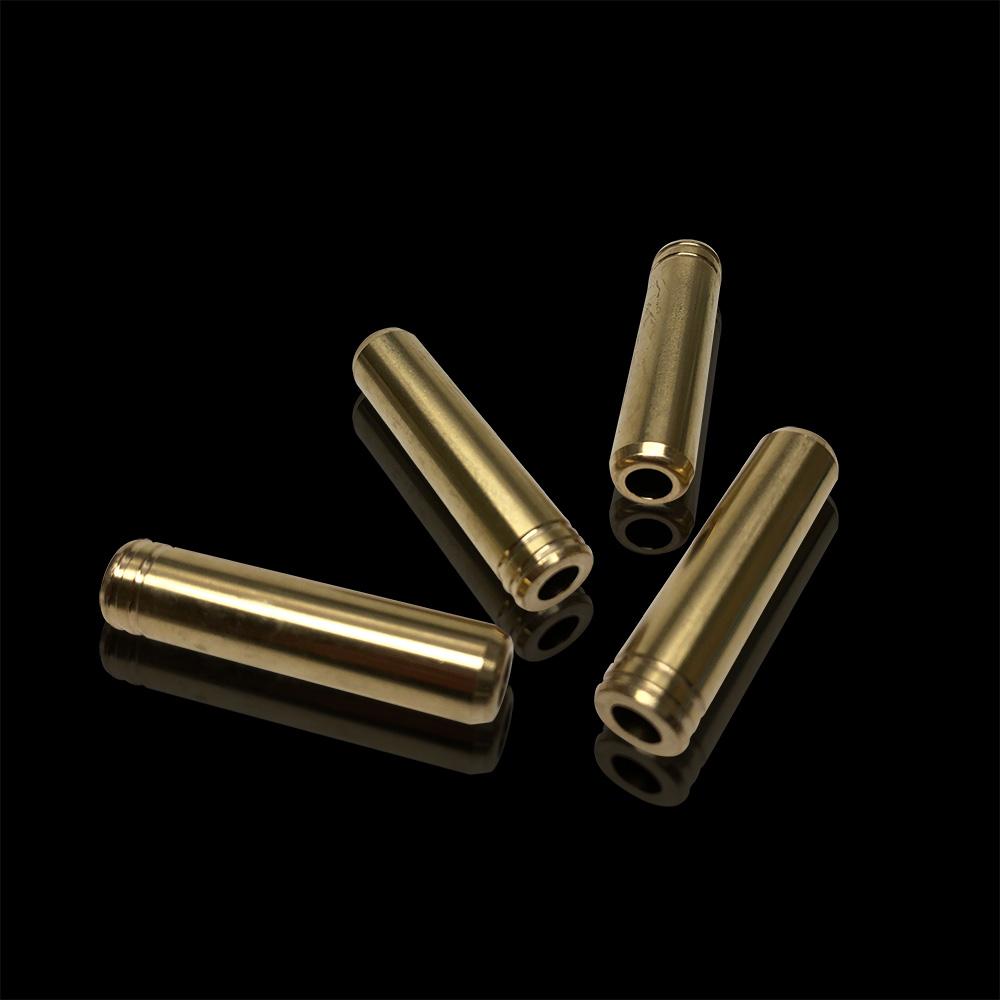
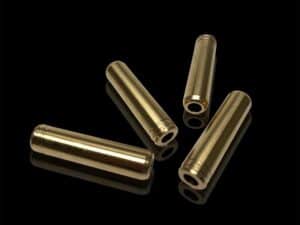
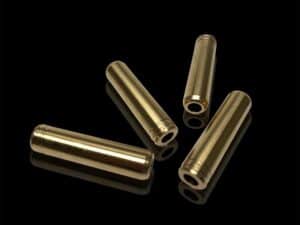
In the high-stakes realm of performance engine building, where incremental gains are measured in thousandths of an inch and microseconds, the valve train stands as a critical frontier. The valve guide, a component often overlooked in favor of its more glamorous valve and spring counterparts, is the unsung hero of stability, sealing, and longevity. For the legendary Toyota 3S-GTE and 3S-GE powerplants—engines revered for their tunability and racing pedigree—compromising on this fundamental pillar is not an option. This is the engineering territory where the Brian Crower BC3936 Intake Valve Guides are designed to dominate. Engineered from a proprietary Manganese Silicon Aluminum Bronze alloy and precision-machined to exacting 6.0mm inner diameters, the BC3936 set represents a definitive upgrade over OEM components, delivering quantifiable improvements in thermal management, wear resistance, and valvetrain accuracy for both street and competition applications.
The Metallurgical Foundation: Manganese Silicon Aluminum Bronze
Standard OEM valve guides are typically cast iron or powdered metal, materials chosen for cost-effectiveness and adequate performance in stock applications. Under the elevated cylinder pressures, increased valve spring tensions, and higher RPM limits of a modified 3S engine, these materials reveal their limitations through accelerated wear, reduced heat dissipation, and potential galling. The BC3936 guide is constructed from a specialized bronze alloy incorporating Manganese, Silicon, and Aluminum. This metallurgical formulation is not arbitrary; each element serves a critical function. Aluminum and Silicon dramatically enhance the alloy’s strength and hardness at operating temperature, resisting the deformation that can lead to valve stem binding. Manganese increases tensile strength and workability, ensuring structural integrity. Crucially, bronze alloys possess a natural lubricity and a coefficient of thermal expansion much closer to that of the aluminum cylinder head compared to iron. This reduces the risk of guide loosening in the head bore during extreme thermal cycling—a common failure mode in high-boost or high-compression scenarios.
Thermal and Mechanical Advantages in the 3S Environment
The 3S-GTE, particularly in modified form, is a heat generator. Effective management of this thermal energy within the cylinder head is paramount to preventing detonation, preserving seal integrity, and maintaining clearances. The BC3936’s bronze alloy acts as a superior thermal conduit, pulling heat away from the valve stem more efficiently than iron guides. This directly lowers the temperature of the valve stem and the valve itself, contributing to overall valvetrain stability and reducing the thermal burden on valve springs and seals. Mechanically, the inherent lubricity of the bronze material minimizes friction between the guide and valve stem. This results in less parasitic power loss, smoother valve action at extreme RPM, and a significant reduction in abrasive wear on both the guide and the more expensive valve stem. For engines utilizing aggressive cam profiles or high-lift setups, this reduced friction is a key contributor to reliable, repeatable valve events.
Precision Engineering for Uncompromised Fitment
Brian Crower understands that superior material is useless without machinist-grade precision. Each BC3936 guide is manufactured to nominal dimensions that ensure a perfect, interference-fit press into the Toyota 3S cylinder head. The critical 6.0mm inner diameter (I.D.) is held to extremely tight tolerances, providing the ideal clearance for standard or aftermarket 6mm valve stems. This precision ensures proper oil control—enough clearance for a thin film of oil to lubricate the stem, but not so much as to allow excessive oil consumption (a common issue with worn OEM guides). Furthermore, the guides are designed to be installed and then final-reamed to the exact clearance specification by the engine builder, allowing for customization based on fuel type, application (race vs. street), and specific valvetrain components. This “machinist-ready” philosophy guarantees that the foundation of your valvetrain is as precise as the rest of your engine build. For a deeper technical dive into valvetrain dynamics and clearance strategies, refer to this authoritative resource on valvetrain geometry and theory.
- Superior Heat Dissipation: Manganese Silicon Aluminum Bronze alloy transfers heat from the valve stem more effectively than OEM iron guides, protecting valves and springs.
- Exceptional Wear Resistance: The hardened bronze material and its natural lubricity drastically reduce abrasive wear on both the guide and valve stem, ensuring longevity.
- Optimized Thermal Expansion: Expands and contracts at a rate more compatible with the aluminum cylinder head, maintaining a secure press-fit and optimal clearance.
- Reduced Friction: Lower stem-to-guide friction minimizes parasitic power loss and enables smoother operation at high RPM with aggressive cam profiles.
- Precision Machining: Manufactured to exacting tolerances for a perfect press-fit and designed to be finish-reamed for application-specific clearances.
- Enhanced Oil Control: The precise 6.0mm I.D. provides ideal clearance for proper lubrication while helping to mitigate oil consumption issues.
Vehicle Fitment: Toyota 3S-GTE & 3S-GE Applications
The BC3936 is engineered specifically for the intake side of the twin-cam, 16-valve Toyota 3S engine family. Correct identification of your engine is crucial. These guides are a direct replacement for the intake valve guides in the following applications:
Primary Applications:
• Toyota 3S-GTE (2.0L Turbocharged): Found in the Celica GT-Four (ST165, ST185, ST205), Caldina GT-T, and MR2 (SW20).
• Toyota 3S-GE (2.0L Naturally Aspirated): Including the “Gen 2,” “Gen 3,” and “Beams” red-top/black-top variants found in the Celica (ST162, ST182, ST202, ST213), MR2 (SW20), RAV4, and Caldina.
Important Note: Always verify your engine’s specific configuration. While the BC3936 is designed for the intake guides across these platforms, exhaust guides may differ in material or specification depending on the model and year. It is standard practice and highly recommended to replace all valve guides (intake and exhaust) during a comprehensive cylinder head rebuild for uniform performance and reliability.
Technical Specifications: BC3936 Intake Valve Guides
| Specification | Detail |
|---|---|
| Part Number | BC3936 |
| Material | Manganese Silicon Aluminum Bronze |
| Inner Diameter (Nominal) | 6.0mm |
| Quantity per Set | 8 (for one cylinder head) |
| Application | Intake Valve Guides Only |
| Compatible Valve Stem Diameter | 6.0mm |
| Primary Engine Fitment | Toyota 3S-GTE, 3S-GE (all generations) |
Selecting the BC3936 Intake Valve Guides is a decision rooted in performance engineering. It addresses the material and design shortcomings of the factory components, providing a robust, thermally efficient, and precise foundation for your Toyota 3S valvetrain. Whether you’re rebuilding a high-mileage ST205 GT-Four engine, blueprinting a BEAMS 3S-GE for NA performance, or assembling a forged 3S-GTE for four-digit horsepower, this component ensures the critical interface between valve and head is engineered to the same demanding standard as the rest of your build. Trust the precision and material science of Brian Crower to deliver the stability and durability your engine requires.
Be the first to review “BC3936 – Toyota 3SGTE/GE – Intake Valve Guides”
| Make | Model | Year |
|---|---|---|
| Toyota | Celica | 1986 - 1999 |
Related products
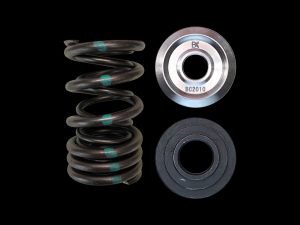
F20C / F22C - Valvetrain
BC0040 – Honda K20A/K20Z/F20C/F22C Spring/Titanium Retainer/Seat Kit
$560.21
Reviews
There are no reviews yet.