
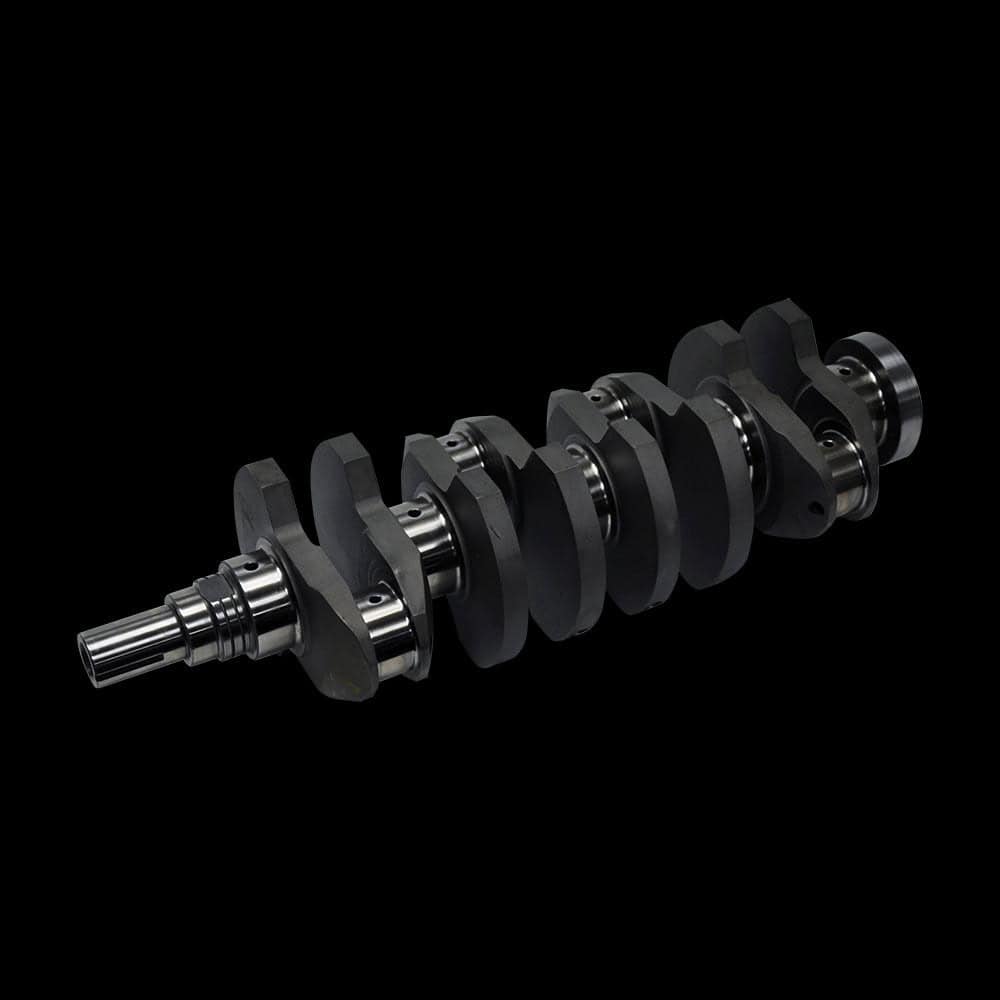
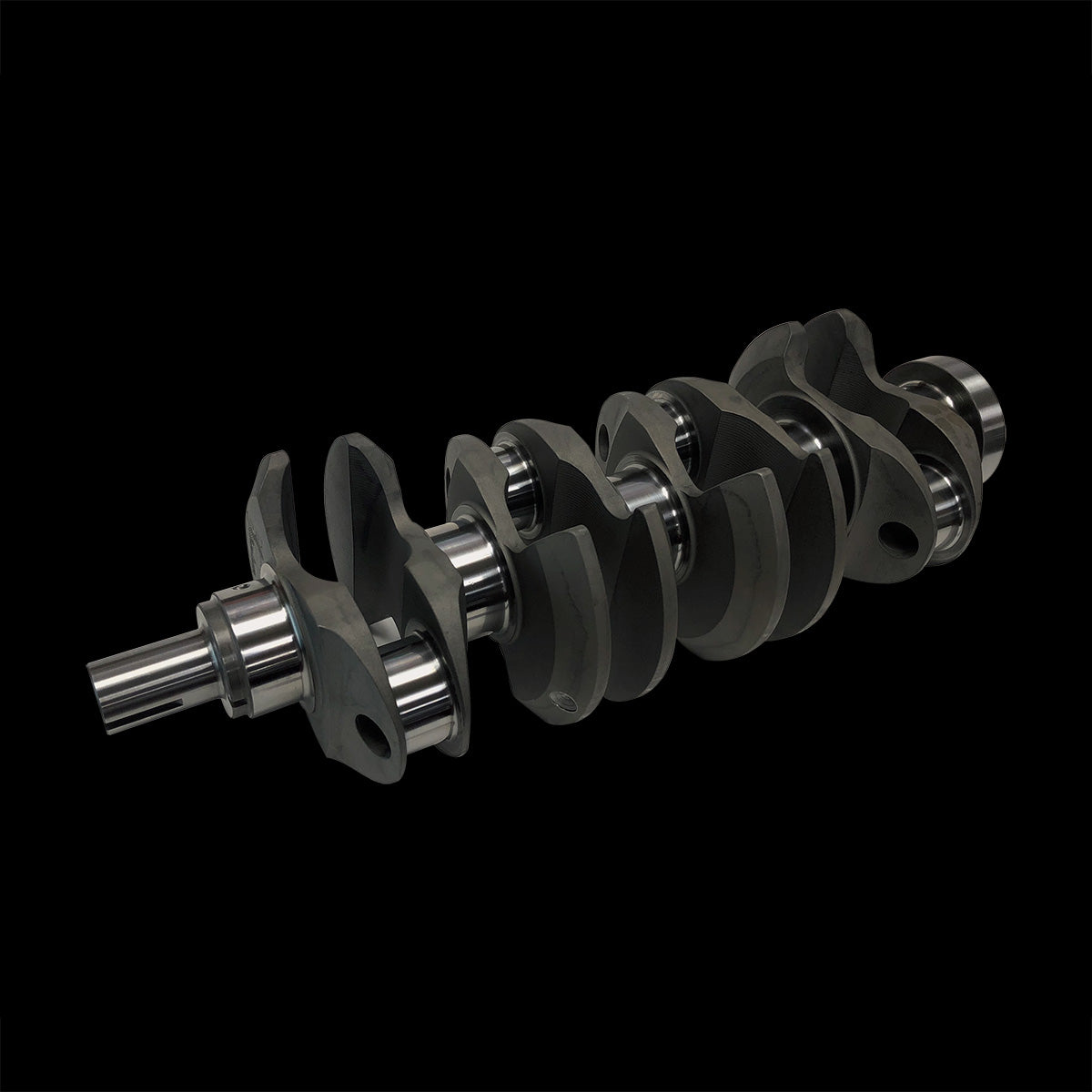
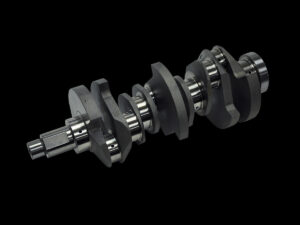
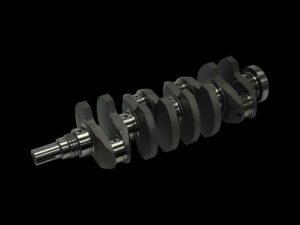
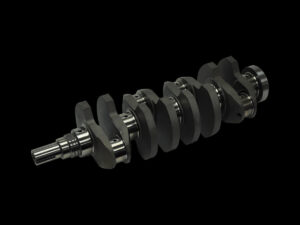
In the universe of high-performance Honda and Acura K-series engines, the rotating assembly is the heart of power and reliability. At its core lies the crankshaft—a component that transcends its basic function to become a defining element of an engine’s character and capability. For builders seeking the ultimate foundation for power, the BC5047 4340 Billet Crankshaft from Brian Crower represents the pinnacle of material science and precision machining. Engineered specifically for the venerable K20 platform, this crankshaft with its aggressive 92mm stroke is not merely a part; it is a calculated upgrade that redefines the engine’s volumetric and mechanical potential. Designed for forced induction and extreme RPM applications, it transforms a potent four-cylinder into a torque-monster, capable of sustaining the brutal forces generated by big turbochargers or high-revving, high-compression builds. This analysis delves into the technical merits, installation considerations, and performance transformation offered by this masterfully engineered component.
Engineering Superiority: The 4340 Billet Steel Advantage
The choice of material is the first and most critical differentiator between a stock component and a competition-grade part. The BC5047 is machined from a premium-grade 4340 chromoly steel billet, a material whose properties are light-years ahead of the cast or even forged stock units. 4340 steel is a nickel-chromium-molybdenum alloy known for its exceptional strength-to-weight ratio and superb fatigue resistance. The “billet” process involves machining the entire crankshaft from a single, homogeneous block of this material. This eliminates the potential for internal flaws, inclusions, or grain flow inconsistencies that can be present in castings or even some forging processes. The result is a crankshaft with uniform density and ultimate structural integrity, capable of handling the immense bending and torsional loads produced by a high-stroke, high-horsepower application without flex or failure.
Precision Machining and Micro-Surface Finish
Brian Crower’s manufacturing process subjects the 4340 billet to CNC machining with tolerances measured in ten-thousandths of an inch. Each rod and main journal is finish-machined to a mirror-like micro-surface finish. This ultra-smooth finish is crucial for optimizing oil film strength and minimizing friction between the journals and bearings. Reduced friction translates directly to less parasitic power loss and lower operating temperatures. Furthermore, the precise radii on all journal fillets are meticulously machined and polished to eliminate stress risers—microscopic points where cracks can initiate under cyclical loading. This attention to detail is what separates a parts-store component from a true performance masterpiece designed for longevity under duress.
Stroking the K-Series: The 92mm Stroke Performance Calculus
The defining feature of the BC5047 is its 92mm stroke, a significant increase over the common K20A2/A3 stroke of approximately 86mm. This strategic alteration to the engine’s geometry has profound implications. Increasing the stroke lengthens the leverage arm of the connecting rod on the crankshaft, which directly increases engine displacement and, more importantly, torque production. Torque is the force that accelerates the vehicle, and a stroker crankshaft like this provides a substantial boost in low-end and mid-range torque, dramatically improving drivability and throttle response. For turbocharged applications, this means the engine comes “on boost” earlier and harder, making power more accessible. It’s a fundamental change to the engine’s breathing character, moving it from a high-strung, peaky powerband to a broader, more muscular curve. When paired with the appropriate rods, pistons, and cylinder head work, the 92mm stroke can yield displacements well over 2.2 liters, creating a formidable powerplant from the compact K-block. For an in-depth technical discussion on the dynamics of stroker cranks and engine harmonics, refer to this authoritative resource on engine building fundamentals at Engine Builder Magazine.
OEM Rod Journal Compatibility: A Builder’s Benefit
Understanding the practicalities of engine building, Brian Crower designed the BC5047 with OEM-spec rod journals. This is a critical engineering decision that offers immense value. It means this high-performance billet crankshaft accepts standard K-series connecting rod bearings and is directly compatible with a vast array of aftermarket H-beam and I-beam connecting rods designed for the stock journal diameter. This eliminates the need for expensive, custom-sized bearings or rods, simplifying the build process, reducing cost, and leveraging the proven reliability of a widely available bearing size. It allows the builder to focus their investment on the quality of the rods themselves, rather than dealing with compatibility hurdles.
Blueprint-Balanced for Harmonious High-RPM Operation
Every BC5047 crankshaft is neutrally balanced and fully blueprinted from the factory. “Blueprinting” refers to the process of machining and measuring the crankshaft to exacting specifications that meet or exceed the original design intent, ensuring every critical dimension—journal diameters, widths, stroke, and overall length—is perfect. Neutral balancing means the crankshaft is balanced internally as a standalone component. This is essential when building a custom rotating assembly, as the final balancing will be performed with the specific pistons, pins, rings, and rods (and often the clutch/flywheel assembly) installed. Starting with a neutrally balanced crankshaft provides the perfect foundation for the machinist to achieve a perfectly balanced assembly, which is non-negotiable for smooth operation, especially in a high-stroke, high-RPM four-cylinder where secondary vibrations are more pronounced. A balanced assembly reduces harmonic vibrations, minimizes bearing wear, and contributes to overall engine longevity.
- Massive Torque Increase: The 92mm stroke fundamentally alters engine geometry, delivering a significant boost in low-end and mid-range torque for improved acceleration and drivability.
- Unmatched Durability: Machined from 4340 billet steel, it offers superior tensile strength and fatigue resistance compared to OEM cast or forged cranks, essential for high-horsepower and forced-induction applications.
- Precision Engineering: CNC-machined to ultra-tight tolerances with micro-finished journals for optimal oiling, reduced friction, and maximum power efficiency.
- OEM Compatibility: Features standard K-series rod journal diameters, ensuring direct compatibility with a wide range of high-performance aftermarket connecting rods and standard bearings.
- Blueprint-Balanced Foundation: Supplied neutrally balanced and fully blueprinted, providing the ideal starting point for a perfectly balanced custom rotating assembly.
- Forced Induction Ready: The inherent strength of the 4340 billet material is specifically chosen to withstand the extreme cylinder pressures generated by turbocharging or supercharging.
Vehicle Fitment and Application Guidelines
Primary Application: The BC5047 is engineered explicitly for Honda and Acura K-series four-cylinder engines, specifically targeting the K20 block. Its most common and transformative application is in building a high-displacement, high-torque “stroker” motor.
Critical Builder Notes: Installing a 92mm stroke crankshaft requires significant supporting modifications. The increased stroke means the connecting rods and pistons will travel further up the cylinder bore. To prevent piston-to-cylinder head contact (valve interference) and ensure proper ring seal, you must use specifically designed stroker pistons with a lower compression height and compatible connecting rods. Block clearance (notching) for the connecting rods may also be required. This is a component for a full engine rebuild or build, not a direct “drop-in” replacement for a stock crankshaft. Consultation with your engine machinist and parts supplier is mandatory to select the correct piston/rod combination and verify all clearances.
Technical Specifications: BC5047 Crankshaft
| Specification | Detail |
|---|---|
| Part Number | BC5047 |
| Core Application | Honda/Acura K20 Series Engine |
| Material | Premium 4340 Chromoly Billet Steel |
| Stroke | 92mm |
| Rod Journal Diameter | OEM K-Series Specification |
| Main Journal Diameter | OEM K-Series Specification |
| Balancing | Neutrally Balanced (External balance required with full assembly) |
| Finish | Micro-polished Journals & Fillets |
| Primary Use | High-Performance Stroker Builds, Forced Induction, Race Applications |
The Ultimate Foundation for Power
The Brian Crower BC5047 92mm Stroker Crankshaft is the definitive choice for the serious K-series builder aiming to maximize displacement, torque, and structural security. It represents a symbiotic blend of advanced material science, precision manufacturing, and practical design intelligence. By starting your build with this component, you are not just installing a crankshaft; you are installing the absolute backbone of a high-horsepower engine, one engineered to provide a tangible and transformative performance advantage while offering the peace of mind that comes with uncompromising quality. It is the core around which legendary K-powered builds are realized.
Be the first to review “BC5047 – Honda/Acura K20 Crankshaft – 4340 Billet – 92mm Stroke w/OEM Rod Journal”
| Make | Model | Year |
|---|---|---|
| Acura | RSX | 2002 - 2006 |
| Honda | Civic | 2002 - 2005 |
Related products
2JZGE/GTE VVT-i
BC5309LW-86 – Toyota 2JZGTE/GE – 4340 Billet LightWeight Crankshaft 86mm Stroke w/Honda Journal
$5,851.73
$4,626.45
$2,779.72
$2,779.72
Reviews
There are no reviews yet.