
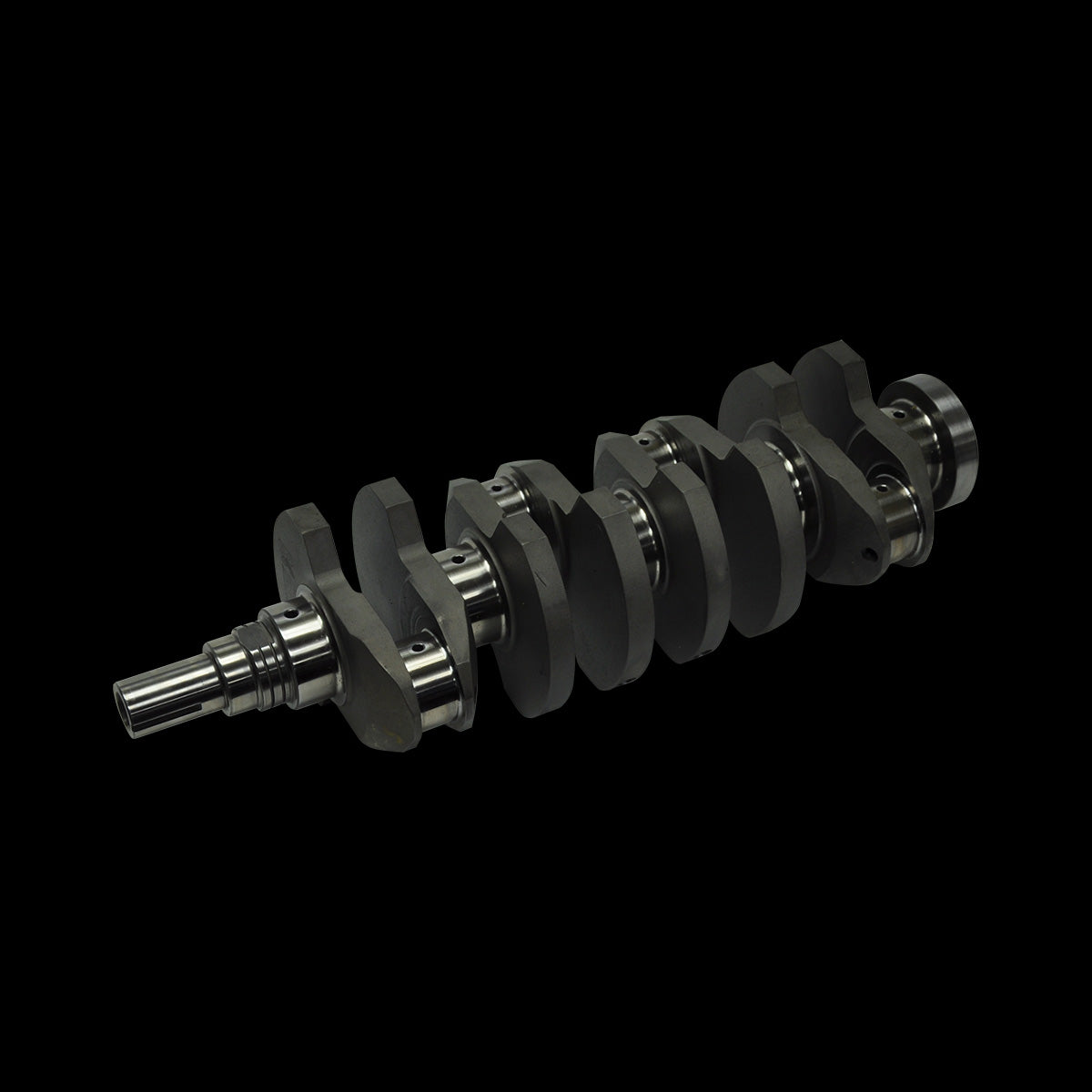
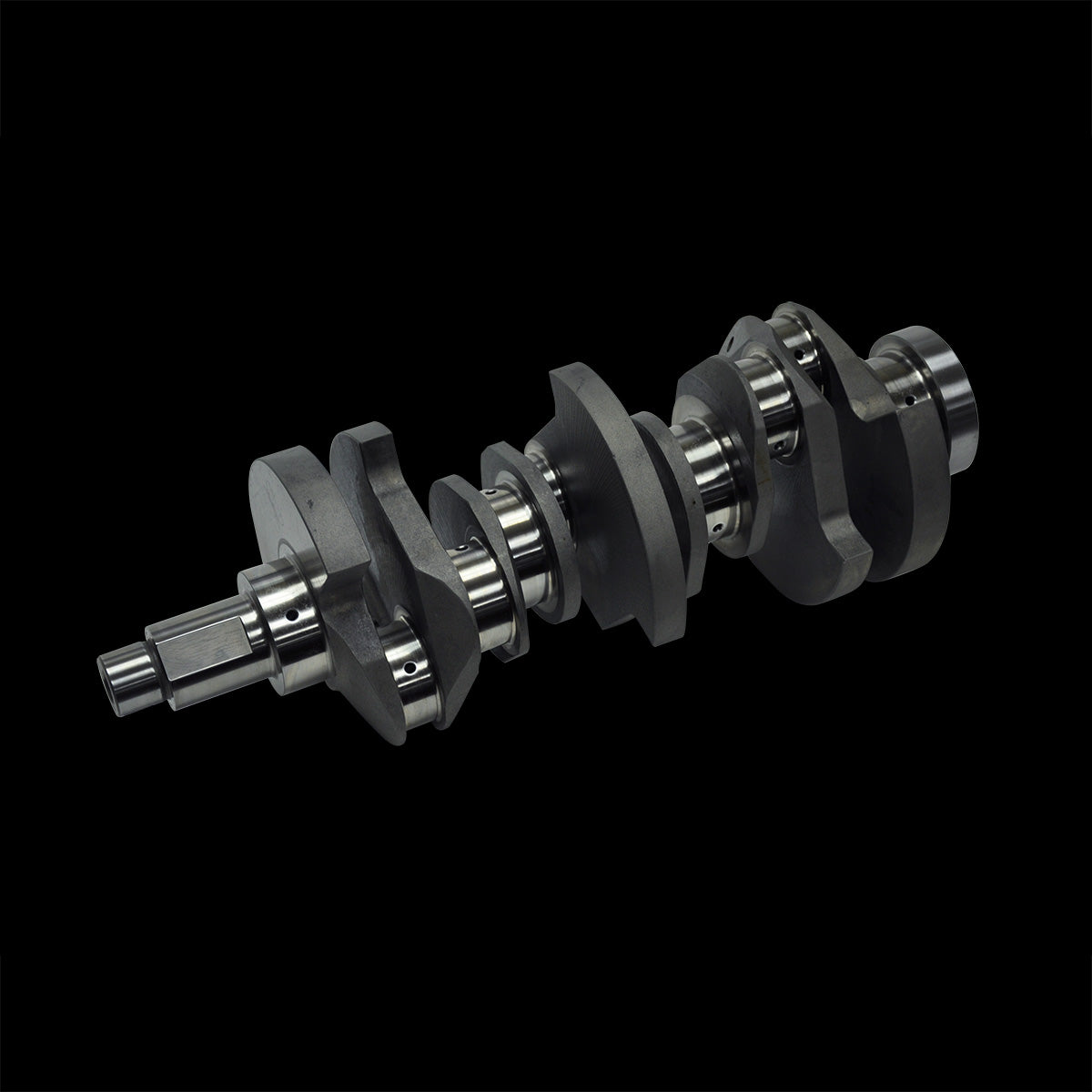
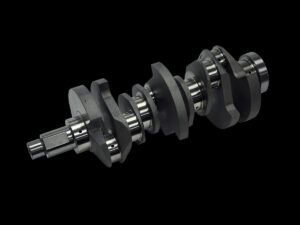
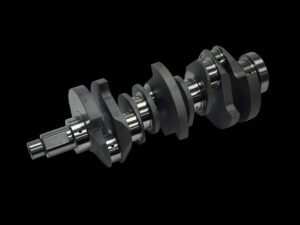
In the realm of forced-induction performance, the Mitsubishi 4G63 engine stands as a legendary platform, its potential often gated by the integrity of its rotating assembly. The factory crankshaft, while robust, becomes the critical failure point when power levels escalate beyond 700whp and RPM limits are pushed. The Brian Crower BC5109 4340 Billet Crankshaft is engineered as the definitive solution, a component that doesn’t merely replace the OEM part but redefines the engine’s foundational strength. Specifically designed for the 7-bolt 4G63 block, this 102mm stroke billet crankshaft is the product of aerospace-grade material science and precision CNC machining, transforming the engine’s heart into an anchor capable of withstanding the extreme cylinder pressures and inertial forces of modern high-output builds. This is not an upgrade; it is a fundamental re-engineering of a key limitation.
Core Architectural Superiority: 4340 Billet Steel & Precision Machining
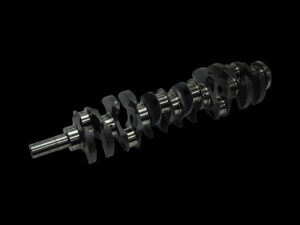
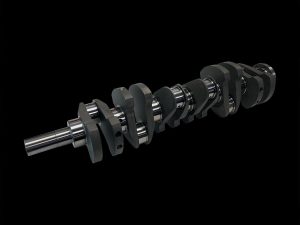
The defining characteristic of the BC5109 is its material composition. Unlike forged crankshafts, which are pounded into a rough shape under immense pressure, or cast OEM units, a billet component is machined from a single, solid premium-grade 4340 chromoly steel bar. This “billet truth” process allows for grain structure that runs continuously through the part, eliminating the potential for forging seams, inclusions, or porosity that can serve as stress risers. 4340 steel, with its nickel-chromium-molybdenum alloying, offers an exceptional balance of ultimate tensile strength (typically 180,000-200,000 PSI post-heat treat) and ductility. This material property is non-negotiable for engines targeting sustained high-RPM operation or immense torque, as it resists the torsional flex and fatigue that lead to catastrophic failure. Each BC5109 is subjected to a rigorous deep-case hardening and thermal cycling process, creating an immensely hard, wear-resistant surface at the journal radii and thrust faces while maintaining a tough, shock-absorbent core. The final machining is performed on state-of-the-art CNC equipment, ensuring journal concentricity and overall straightness are held to tolerances far surpassing OEM specifications, a critical factor for maintaining optimal oil clearance and bearing life under extreme loads.
Optimized Stroke & Counterweight Design for High-RPM Stability
The 102mm stroke of the BC5109 is a key performance parameter. It is designed to work in harmony with aftermarket connecting rods and pistons to achieve target displacements—often used in 2.1L to 2.3L stroker configurations. More critically, its counterweight design has been meticulously engineered. Brian Crower employs proprietary counterweight profiling to achieve optimal internal balance while minimizing windage losses. The shape and mass of each counterweight are calculated to perfectly offset the reciprocating and rotating masses of a typical performance piston and rod assembly, reducing harmonic vibrations that can destroy main and rod bearings. This focus on harmonic damping is what separates a precision racing component from a mere metal replica. The crankshaft is also fully cross-drilled for enhanced oiling. This design directs pressurized oil from the main journals directly to the rod journals, ensuring a consistent, high-volume supply to the critical rod bearings even during sustained high-RPM operation, a well-documented weak point in high-output 4G63 builds.
- Unmatched Fatigue Life: The continuous grain structure of 4340 billet steel provides superior resistance to cyclic loading from combustion and inertial forces, offering longevity that forgings cannot match in the most severe environments.
- Absolute Dimensional Integrity: CNC machining ensures every journal diameter, width, and radius is consistent and precise, guaranteeing perfect oil clearances and eliminating the need for remedial grinding or fitting.
- Enhanced High-RPM Oiling: The cross-drilled oil passages provide priority main-to-rod oiling, drastically reducing the risk of oil starvation at the rod bearings—a primary cause of 4G63 engine failure.
- Optimized for Forced Induction: The material strength and thermal treatment are specifically selected to handle the dramatic heat cycles and shock loads generated by large turbochargers and high levels of boost pressure.
- Foundation for Massive Power: This crankshaft is the cornerstone for builds reliably exceeding 1000+ horsepower, providing the rotational stability and strength needed to harness such output.
Technical Specifications & Installation Precision
Every dimension of the BC5109 is crafted for direct, precision replacement within the 7-bolt 4G63 block, but with enhancements critical for performance. The main and rod journal sizes maintain standard diameters to accommodate widely available performance bearing sets, but their surface finish is a superior, laser-etched micro-polish that promotes optimal oil film retention. The thrust washer surfaces are widened and hardened to manage the axial loads from high-pressure clutches. Crucially, each crankshaft is supplied unbalanced. This is a mark of a professional-level component, as it allows the engine builder to dynamically balance the entire rotating assembly—crankshaft, damper, flywheel, clutch, and rods/pistons—as a unit. This process is mandatory for achieving the silky-smooth operation and longevity expected from a serious race or high-performance street engine. For a deeper technical understanding of why 4340 steel is the material of choice for such critical components, refer to this analysis on the metallurgical properties of 4340 steel.
| Specification | Detail |
|---|---|
| Part Number | BC5109 |
| Application | Mitsubishi 4G63 7-Bolt |
| Material | Premium 4340 Chromoly Billet Steel |
| Stroke | 102mm |
| Main Journal Diameter | Standard 7-Bolt Size |
| Rod Journal Diameter | Standard 4G63 Size |
| Oiling System | Fully Cross-Drilled |
| Finish | Thermally Treated & Micro-Polished |
| Supplied Condition | Unbalanced (For Assembly Balancing) |
Vehicle Fitment: The Foundation for DSM & Evo Legend
The BC5109 crankshaft is engineered exclusively for the Mitsubishi 4G63 engine utilizing the 7-bolt main cap configuration. This directly targets the later evolution of this iconic powerplant, where bottom-end strength became paramount. Its fitment is critical for builders seeking absolute reliability in the most demanding applications.
Primary Applications Include:
– Mitsubishi Eclipse GS-T & GSX (1997-1999): The final generation of the 2G DSM, where the 7-bolt engine was standard. This crankshaft is the ultimate solution for eliminating crank walk concerns and building a truly bulletproof foundation.
– Mitsubishi Lancer Evolution IV-IX (1996-2007): All factory turbocharged Evolution models within this range utilize a 7-bolt 4G63. The BC5109 is the cornerstone for any Evo build aiming for 500+ horsepower, Time Attack dominance, or sustained road racing duty.
– Various 7-Bolt Swap Applications: This crankshaft is also the correct component for any build using a 7-bolt 4G63 block as its base, including certain overseas Galant VR-4 models and custom race car applications where the 7-bolt’s architecture is preferred.
Note: This crankshaft is not compatible with the earlier 6-bolt 4G63 engines (found in 1990-1992.5 DSMs and Evolution I-III). The main journal diameter and bolt pattern are fundamentally different. Correct identification of your engine’s bolt configuration is essential before purchase.
Be the first to review “BC5109 – Mitsubishi 4G63 (7 Bolt) Crankshaft – 4340 Billet – 102mm Stroke”
| Make | Model | Year |
|---|---|---|
| Mitsubishi | Eclipse | 1995 - 2006 |
| Mitsubishi | Lancer Evolution | 1992 - 2007 |
Related products
$4,626.45
$4,396.57
$2,779.72
$5,851.73
$5,354.24
$4,626.45
Reviews
There are no reviews yet.