
No products in the cart.
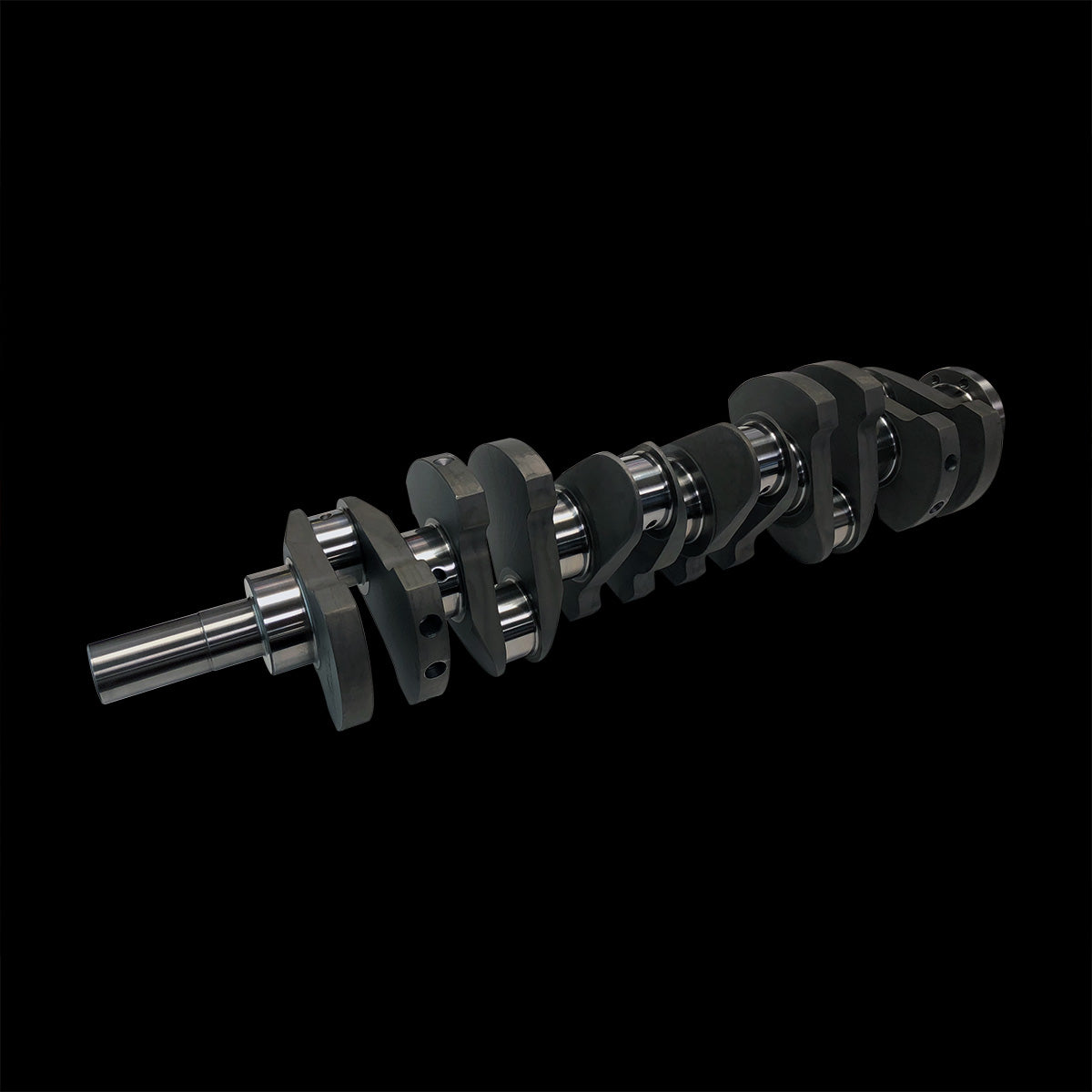
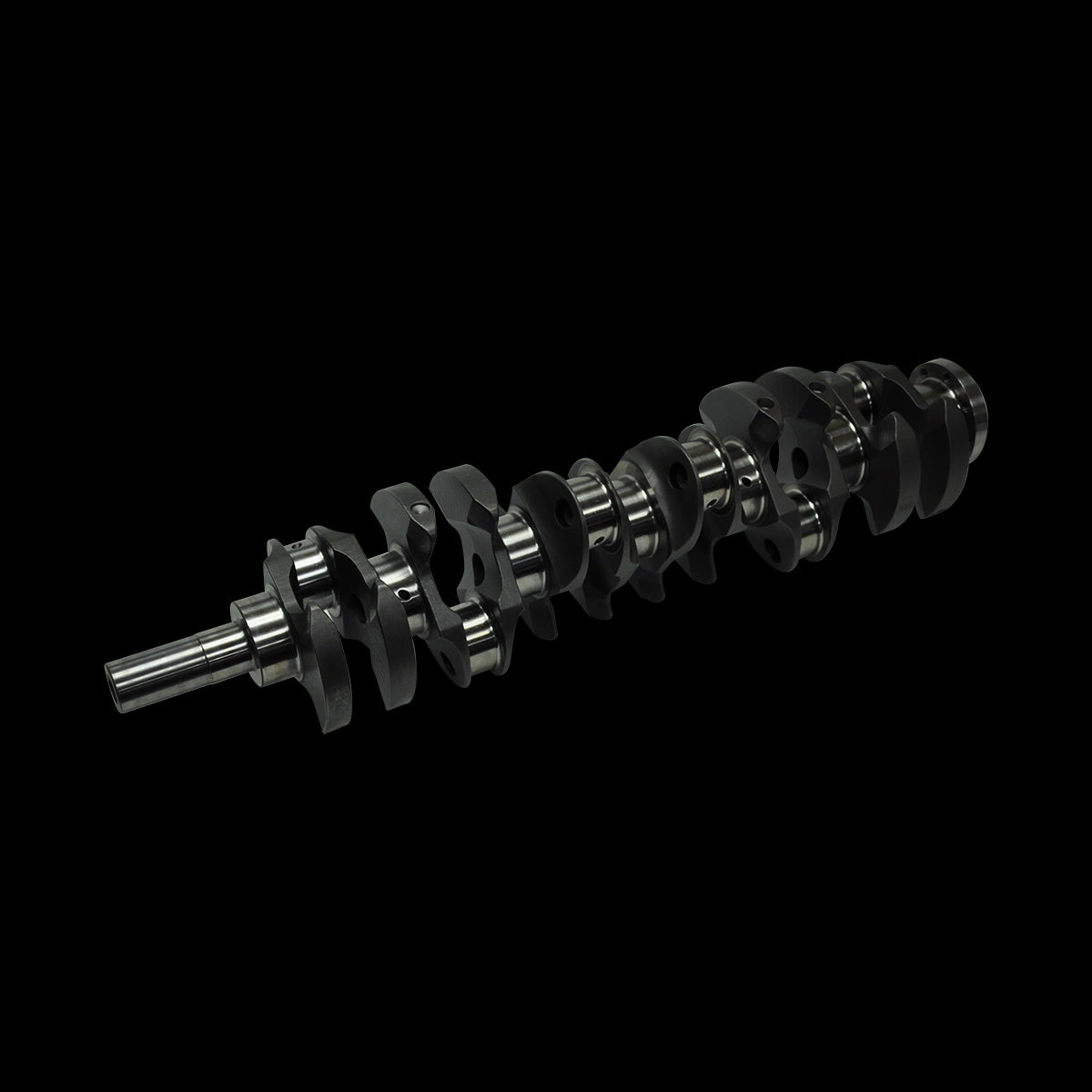
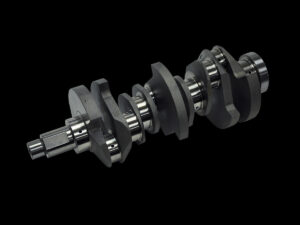
The BC5309-86 represents the absolute zenith of rotating assembly engineering for the legendary Toyota 2JZ platform. This is not a modified factory casting or a reground stock piece; it is a purpose-built, CNC-machined billet crankshaft crafted from premium 4340 alloy steel. Engineered for builders who demand uncompromising strength, perfect harmonic control, and the flexibility to push displacement and RPM beyond conventional limits, this crankshaft features an 86mm stroke and the strategic adoption of Honda-sized connecting rod journals. It is the foundational component for creating a truly indestructible, high-winding, and massively powerful 2JZ-GTE or 2JZ-GE engine. Every dimension, radius, and counterweight is digitally optimized for balance and durability, transforming the already robust 2JZ into a forged rotating assembly capable of supporting four-figure horsepower figures with margin to spare.
Core Engineering & Material Science
At the heart of the BC5309-86’s superiority is its material composition and manufacturing origin. Starting as a solid “billet” of AISI 4340 chromoly steel, the crankshaft is machined from a single, homogeneous block of material. This process eliminates the potential for internal flaws, inclusions, or porosity that can be present in cast or even forged crankshafts. The 4340 alloy provides an exceptional balance of tensile strength, fatigue resistance, and toughness. Following precise CNC machining to the most exacting tolerances, the crankshaft undergoes a rigorous heat-treating and nitriding process. This creates an immensely hard, wear-resistant surface while maintaining a ductile, shock-absorbing core. The result is a component that resists flex, bearing wear, and micro-fracturing under extreme loads and harmonics that would destroy lesser crankshafts. For a deep dive into the advantages of billet 4340 components in race engines, refer to this technical resource on crankshaft material science.
The 86mm Stroke & Honda Journal Advantage
This crankshaft employs two critical dimensional changes that offer significant performance benefits for the serious builder.
Strategic Stroke Increase
The 86mm stroke represents a calculated increase over various factory 2JZ strokes. This stroke, when paired with the appropriate piston and rod combination, is a cornerstone for achieving a target displacement—often in the 3.2L to 3.4L range—while maintaining an optimal rod-to-stroke ratio for reduced piston side-loading and improved high-RPM durability. The increased stroke directly translates to greater torque production per cylinder fill, enhancing the engine’s area under the curve.
Honda-Sized Rod Journal Conversion
The adoption of Honda B-series sized connecting rod journals (1.888″) is a masterstroke of parts commonality and performance. This conversion unlocks access to a vast, global market of high-quality, off-the-shelf performance connecting rods designed for Honda applications. Builders are no longer limited to custom or 2JZ-specific rod offerings. This allows for the selection of rods with optimal lengths, beam profiles, and bolt configurations from top-tier manufacturers, often at a lower cost and with faster availability. The slightly smaller journal diameter also reduces bearing surface speed, which can contribute to reduced friction and lower oil temperatures under extreme operation.
Precision Balance & Harmonic Control
A crankshaft’s duty extends beyond mere strength; it must manage the tremendous inertial and combustion forces without introducing destructive harmonics. The BC5309-86 is manufactured as a zero-balanced component. This provides the engine builder with a pristine starting point to precisely balance the entire rotating assembly (crankshaft, rods, pistons, and flywheel/flexplate) as a unit. This absolute balance is non-negotiable for smooth operation at sustained high RPM. Furthermore, the counterweight design is meticulously calculated for the 86mm stroke and intended rod/piston weights. Proper counterweighting minimizes main bearing loads and countershaft whip, ensuring the crankshaft rotates true within the block under all conditions, a critical factor in main bearing and block longevity.
- Unmatched Durability: 4340 billet steel and nitriding offer ultimate resistance to flex, fatigue, and bearing wear in 1500+ horsepower applications.
- Optimal Displacement Foundation: The 86mm stroke is the key to reliable 3.2L+ builds with strong torque characteristics.
- Superior Parts Compatibility: Honda-sized rod journals grant access to a vast selection of high-performance, readily available connecting rods.
- Professional-Grade Precision: CNC-machined to exacting tolerances and supplied zero-balanced for a perfect build.
- Enhanced Rotational Stability: Engineered counterweights and material integrity minimize harmonics and shaft deflection at extreme RPM.
Technical Specifications
| Part Number | BC5309-86 |
| Engine Application | Toyota 2JZ-GTE & 2JZ-GE |
| Core Material | Premium AISI 4340 Alloy Steel |
| Manufacturing Process | CNC Machined from Solid Billet, Heat Treated & Nitrided |
| Stroke | 86.0mm |
| Main Journal Diameter | Standard 2JZ Size (Requires verification for specific block year) |
| Rod Journal Diameter | 1.888″ (Honda B-Series Specification) |
| Balance Configuration | Supplied Zero-Balanced |
| Required Components | Honda-journal performance rods, Custom pistons for target displacement & compression, Performance main & rod bearings. |
Vehicle Fitment & Builder Notes
Primary Fitment: This crankshaft is designed for use in all years and variants of the Toyota 2JZ-GTE and 2JZ-GE engine blocks. This includes engines found in the:
- Toyota Supra JZA80 (1993-1998)
- Toyota Aristo JZS161 (1997-2005)
- Toyota Soarer JZZ30 (1991-2000)
- And other vehicles equipped with the 2JZ engine.
Critical Builder Considerations: The BC5309-86 is a core component for a full rotating assembly overhaul. Installation must be performed by a qualified machinist and engine builder. Key steps include: verifying main journal sizing against your specific block, performing a final balance of the entire rotating assembly (crankshaft, dampener, flywheel, rods, and pistons), and ensuring proper clearances for all bearings. The use of Honda-journal connecting rods and custom pistons is mandatory. This crankshaft is the definitive choice for dedicated race engines, ultimate street performance builds, and any application where absolute reliability at stratospheric power levels is the paramount objective.
Be the first to review “BC5309-86 – Toyota 2JZGTE/GE – 4340 Billet Crankshaft, 86mm Stroke w/Honda Journal”
| Make | Model | Year |
|---|---|---|
| Lexus | SC300 | 1992 - 2000 |
| Toyota | Supra | 1993 - 2002 |
Related products
$4,626.45
Sale!
Original price was: $5,422.64.$4,715.34Current price is: $4,715.34.
Reviews
There are no reviews yet.