
No products in the cart.
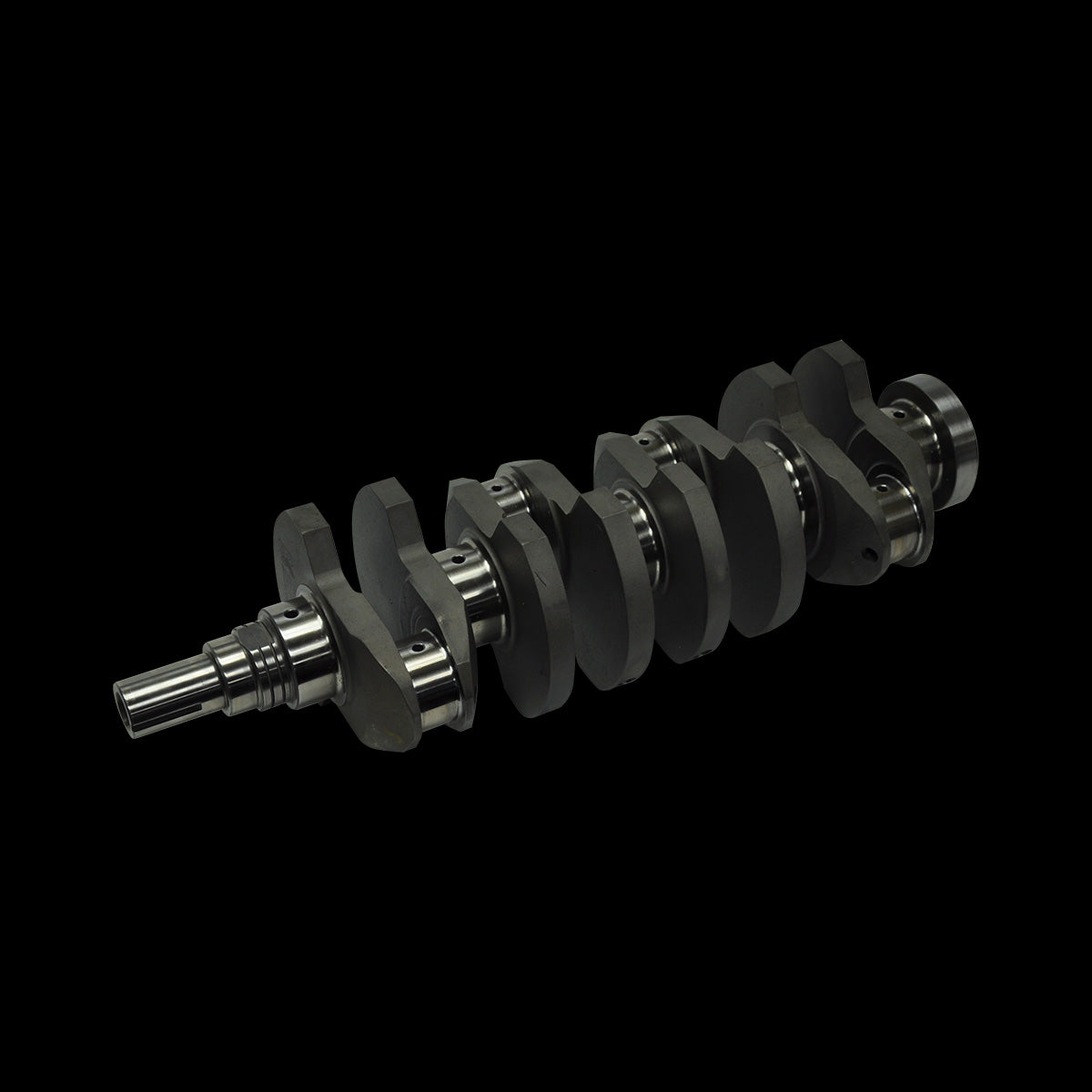
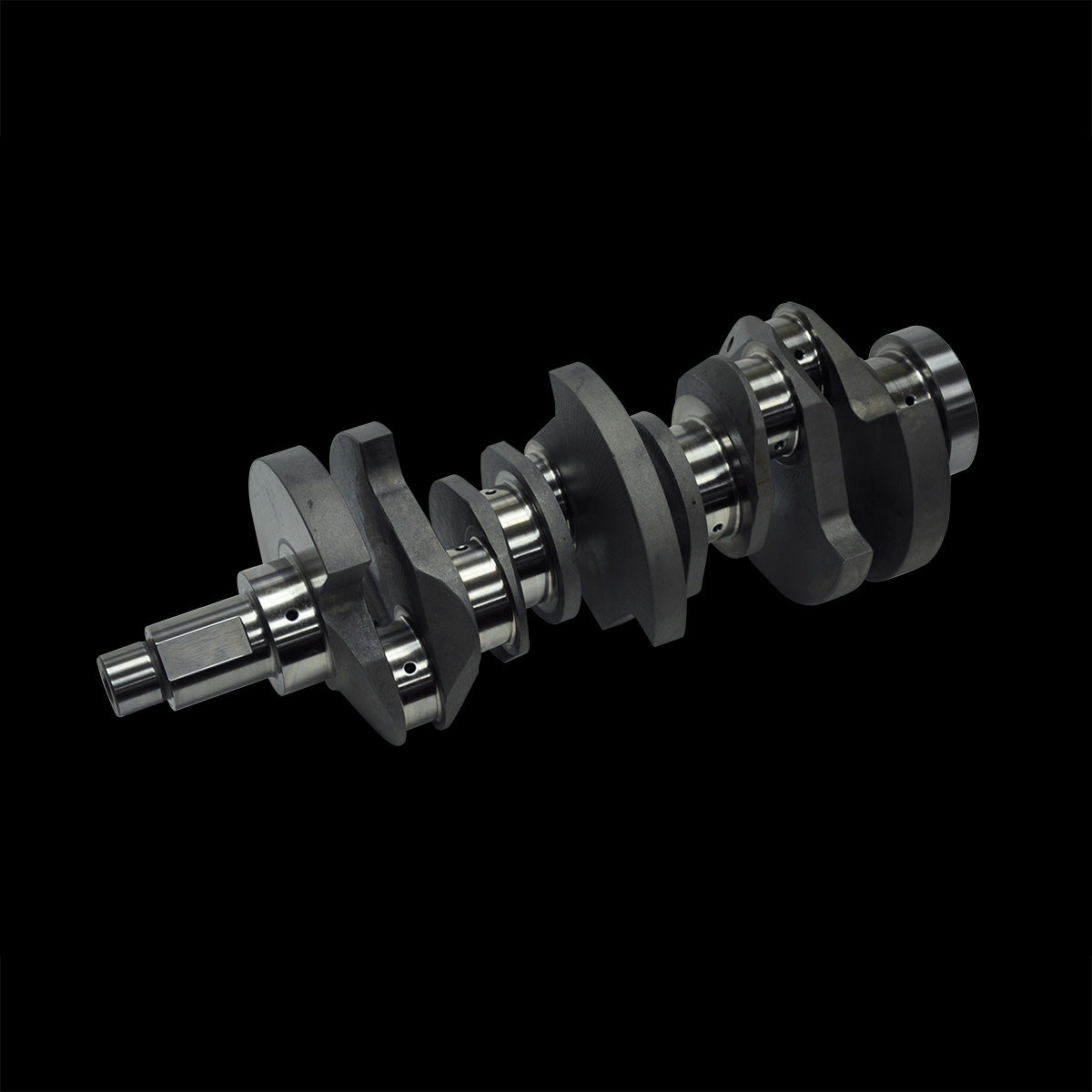
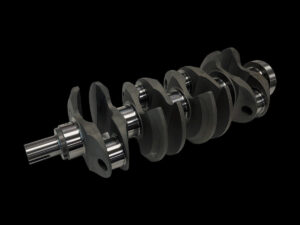
For the serious engine builder targeting maximum power density and absolute durability from the Toyota 2AZ-FE platform, the factory cast crankshaft represents a fundamental limitation. Engineered for mass production, reliability, and cost-efficiency, the OEM component lacks the material integrity and design precision required for sustained high-RPM operation under significant cylinder pressure. The Brian Crower BC5349 4340 Billet Steel Crankshaft is a purpose-built solution that transforms this foundational rotating assembly component from a potential point of failure into the cornerstone of a high-performance engine. Machined from a single, vacuum-degassed ingot of premium 4340 chromoly steel and featuring a strategic 102mm stroke, this crankshaft is not merely an upgrade; it is a complete re-engineering of the engine’s rotational heart, designed to provide the stiffness, fatigue resistance, and dimensional stability necessary for forced induction and high-RPM naturally aspirated builds alike. This component is the definitive choice for builders of Scion tC, Toyota Camry, and other 2AZFE-powered vehicles who demand a part that matches their ambition for power and reliability.
Engineering Superiority: The 4340 Billet Steel Advantage
The core distinction of the BC5349 lies in its base material and manufacturing process. Unlike a cast or even a forged crankshaft, a billet component begins as a solid, homogeneous bar of premium alloy steel. Brian Crower specifies AISI 4340 chromoly steel, renowned for its excellent combination of high tensile strength, toughness, and fatigue resistance. The billet is vacuum degassed during its initial production, a critical process that removes dissolved gases and impurities, resulting in a metal matrix with superior internal integrity and consistency. This blank is then subjected to a meticulous CNC machining process, where material is removed with extreme precision to form the final crankshaft. This method allows for optimal grain flow orientation and eliminates the potential for internal flaws common in casting processes. The result is a component with a higher safety margin, capable of handling the tremendous bending and torsional stresses generated by high horsepower and aggressive stroker applications. For a deeper technical understanding of billet vs. forged metallurgy, consult this resource on crankshaft selection from EngineLabs.
Precision Specifications & Performance Geometry
Every dimension of the BC5349 is calculated and machined to exacting tolerances, ensuring perfect compatibility and optimized performance within the 2AZFE block.
Critical Dimensional Data
| Specification | Value / Detail |
|---|---|
| Part Number | BC5349 |
| Stroke | 102mm |
| Main Journal Diameter | Standard OEM Size |
| Rod Journal Diameter | Standard OEM Size |
| Material | Premium 4340 Chromoly Billet Steel |
| Surface Treatment | Nitride Hardened |
| Balancing | Internally Balanced (Requires external damper/flywheel balancing for zero-balance assembly) |
The 102mm stroke is a key performance feature. Increasing stroke directly increases engine displacement, which improves torque output across the entire RPM band. When combined with appropriate piston and rod selection, this stroke increase is a fundamental method for achieving greater power potential. The crankshaft is finished with a nitride hardening process. This thermal-chemical treatment diffuses nitrogen into the surface of the journal fillets and bearing surfaces, creating an extremely hard, wear-resistant outer layer while maintaining the ductile, shock-absorbing core properties of the 4340 steel. This dramatically improves bearing life and resistance to scoring under high-load conditions.
Definitive Benefits for the High-Performance 2AZFE
- Unmatched Durability: The homogeneous 4340 billet steel structure provides superior fatigue life and resistance to cracking compared to cast or even forged counterparts, essential for high-boost or nitrous applications.
- Increased Displacement & Torque: The 102mm stroke increases engine swept volume, yielding greater potential for horsepower and, critically, a broader, stronger torque curve.
- Optimal Oil System Integrity: Precision-machined oil passages are deburred and polished to ensure unrestricted oil flow to critical main and rod bearings, stabilizing oil pressure under high-RPM stress.
- Reduced Rotational Mass (Potential): Through strategic machining, billet cranks can often be made lighter than their cast equivalents, reducing rotational inertia for quicker engine acceleration and deceleration.
- Dimensional Perfection: CNC machining guarantees exact journal diameters, widths, and centerline distances. This ensures perfect bearing clearance and piston deck height when used with correctly specified components.
- Enhanced Stiffness: The inherent strength of the billet material and optimized counterweight design reduce flex and torsional distortion at high RPM, promoting stability and longevity.
Vehicle Fitment & Application Notes
Primary Engine Application: Toyota 2AZ-FE (2.4L) and related variants.
Vehicle Fitment Includes: Scion tC (2005-2010), Toyota Camry (2002-2006), Toyota RAV4 (2001-2005), and other models equipped with the 2AZFE engine. Always verify specific year and model compatibility based on your engine block casting and configuration.
Critical Installation Requirements: This is a fully machined, internally balanced crankshaft. It is designed to be used with an externally balanced assembly. This means the harmonic damper and flywheel/flexplate must be balanced as a set with the crankshaft installed (often referred to as a “zero balance” or “neutral balance” setup). It is not a direct drop-in replacement for the externally balanced OEM crank without proper rebalancing of the entire rotating assembly. Professional engine balancing is absolutely mandatory. Furthermore, this crankshaft requires the use of performance main and rod bearings sized to match its standard journal diameters. Always perform a dry assembly and plastigage check to confirm clearances before final engine assembly.
System Integration & Build Philosophy
The BC5349 crankshaft is the foundational component of a complete performance rotating assembly. To realize its full potential and ensure engine longevity, it must be paired with complementary components engineered to the same standard. This includes H-beam or I-beam connecting rods (such as Brian Crower’s BC6250+ series) capable of handling the increased stroke and RPM, and custom forged pistons with the correct compression height and ring package for your target compression ratio and induction method. The nitride-hardened journals pair perfectly with high-performance coated bearings. Integrating this crankshaft demands a holistic build approach, considering oil pump capacity, windage control (via a crank scraper and baffled oil pan), and a robust harmonic damper. When installed as part of a meticulously planned and balanced system, the BC5349 transforms the 2AZFE from a competent commuter engine into a formidable powerplant capable of reliably delivering well over 500+ horsepower, setting a new benchmark for the platform’s performance ceiling.
Be the first to review “BC5349 – Scion 2AZFE Crankshaft – 4340 Billet – 102mm Stroke”
| Make | Model | Year |
|---|---|---|
| Scion | tC | 2005 - 2010 |
| Toyota | Camry | 2002 - 2009 |
Related products
Sale!
Original price was: $5,652.64.$4,915.34Current price is: $4,915.34.
$4,626.45
$5,354.24
$2,779.72
Reviews
There are no reviews yet.