No products in the cart.
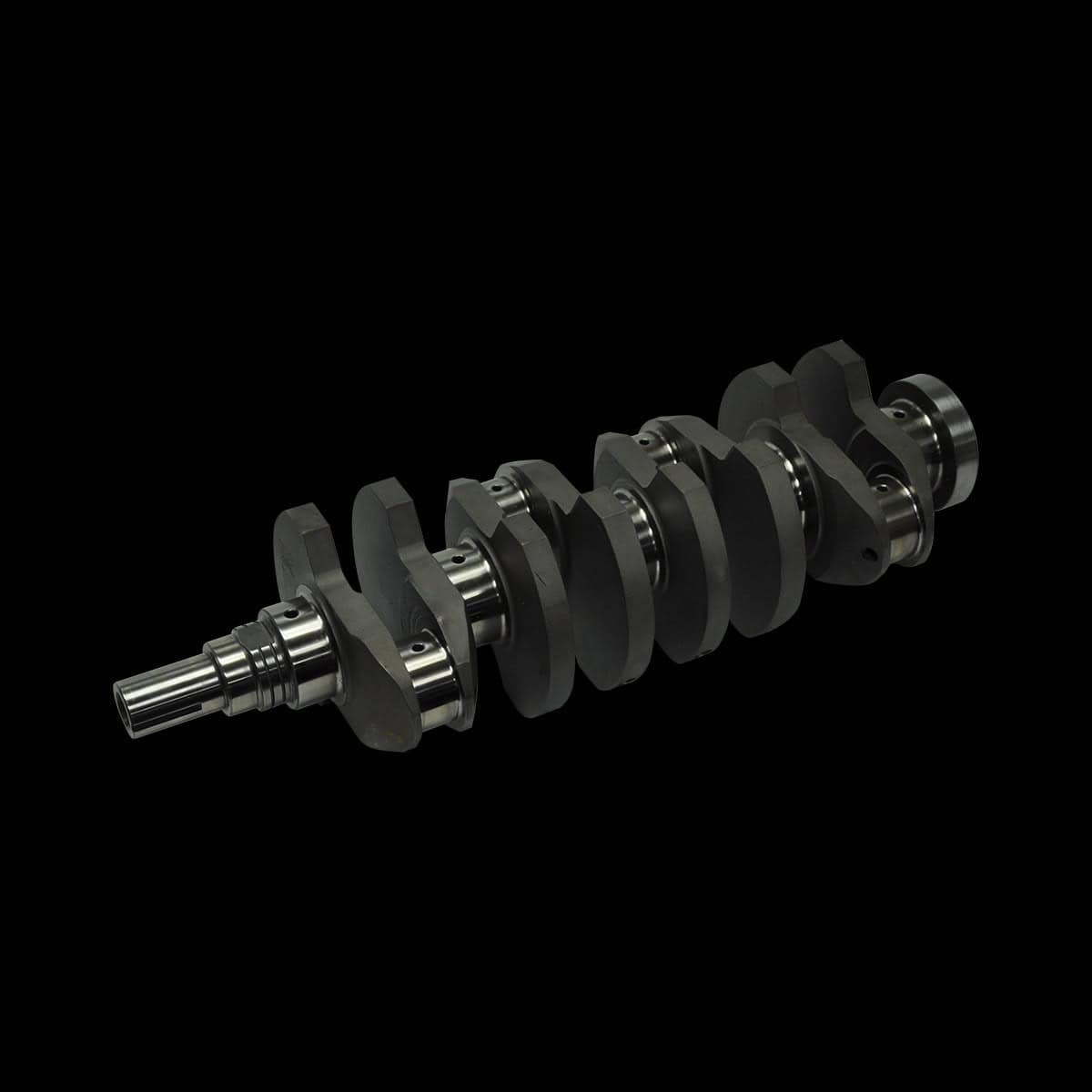
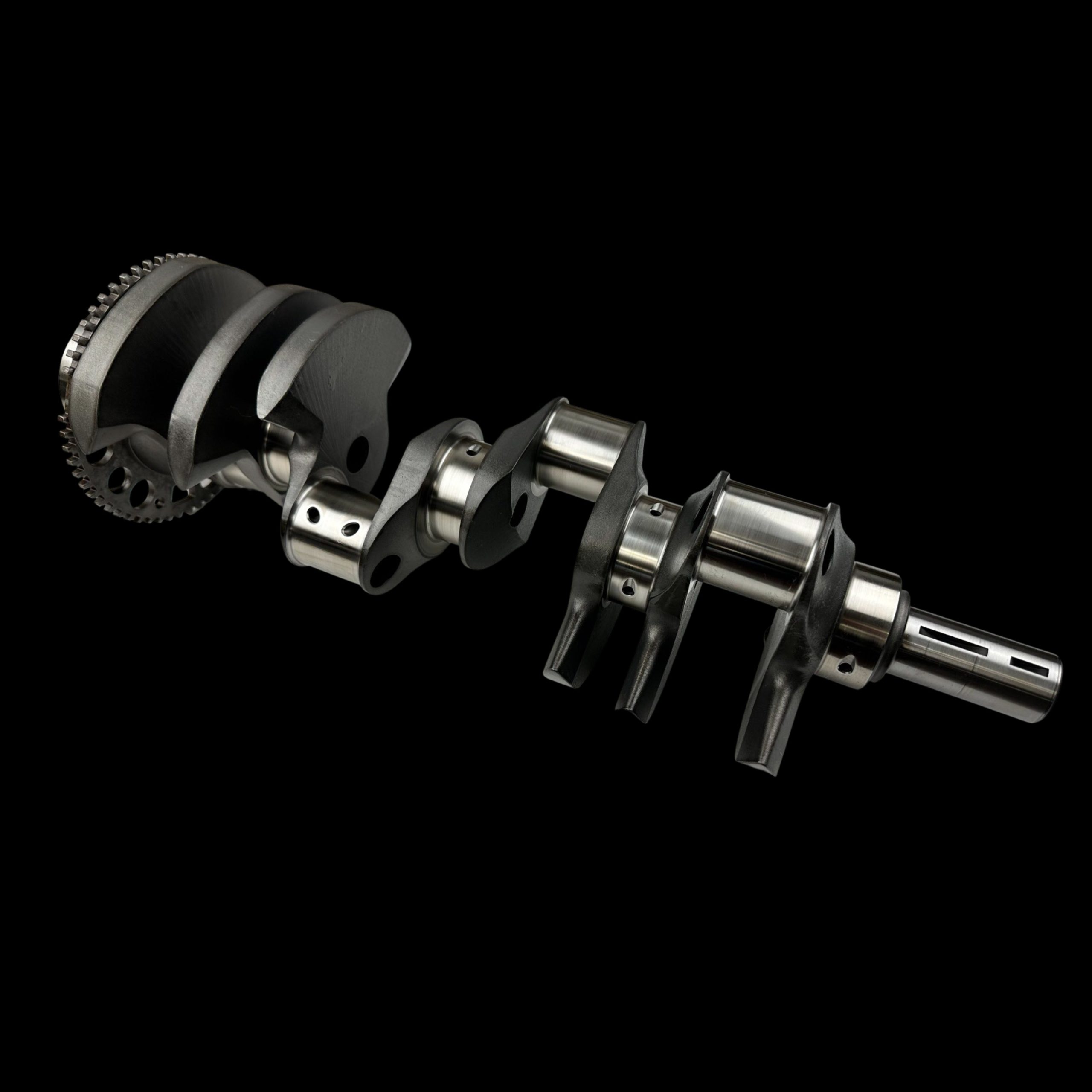
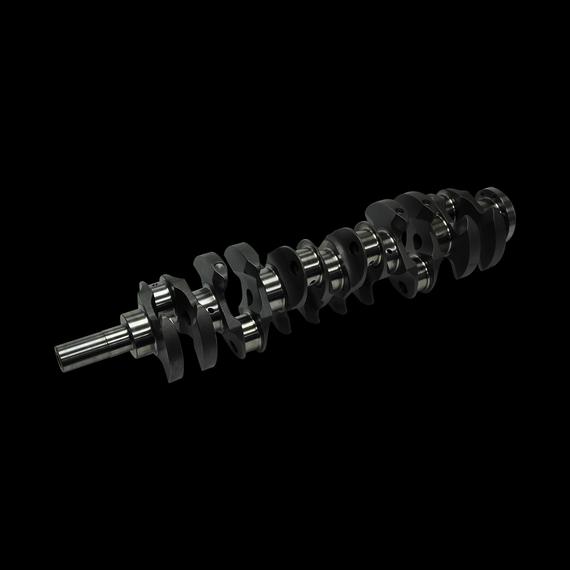
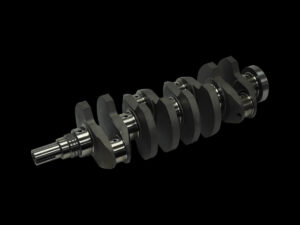
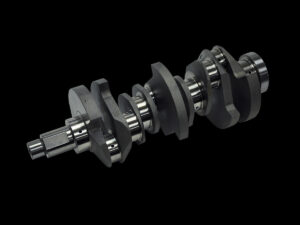
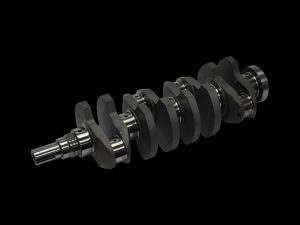
In the realm of high-output, reliable four-cylinder performance, the crankshaft is the foundational component upon which all power and durability is built. For the legendary Nissan SR20DE and SR20DET, achieving significant displacement increases while maintaining structural integrity under extreme loads requires a component engineered beyond OEM parameters. The Brian Crower BC5209 Crankshaft is that component. This is not a reground or reworked factory piece; it is a purpose-built, 4340 chromoly billet crankshaft featuring a substantial 91mm stroke, designed to transform your SR20 platform into a high-torque, high-horsepower stroker engine. Every facet of its design—from the aerospace-grade material to the precision-machined journals and counterweights—is optimized for forced induction applications and sustained high-RPM operation, providing the ultimate rotating assembly foundation for your build.
Engineering Excellence: The 4340 Billet Advantage
At the core of the BC5209’s superiority is its construction from a certified 4340 chromoly steel billet. This is a critical distinction from cast or forged crankshafts. A billet component is machined from a single, homogenous block of material, ensuring a continuous grain flow that follows the contours of the final part. This process eliminates the potential for internal flaws, inclusions, or porosity that can be present in castings and, to a lesser extent, forgings. 4340 steel is a nickel-chromium-molybdenum alloy known for its exceptional strength-to-weight ratio, high fatigue resistance, and superb toughness. Its alloying elements provide deep hardenability, allowing for a uniform hardness profile through the entire cross-section of the crankshaft after heat treatment. The result is a crankshaft that can withstand the immense bending and torsional stresses generated by high cylinder pressures, aggressive cam profiles, and elevated rotational inertia without flexing or failing. This billet 4340 construction is non-negotiable for builds targeting reliable power in excess of 600+ horsepower.
Material Science and Heat Treatment
The specified 4340 billet undergoes a rigorous multi-stage heat treatment process. This typically involves normalizing to refine the grain structure, followed by oil quenching to achieve a high surface and core hardness. A final tempering cycle then reduces brittleness and induces the desired balance of hardness and ductility. Brian Crower’s specified heat treat protocol ensures a final hardness in the range of 28-32 HRC, creating a crankshaft that is immensely strong yet resistant to cracking under shock loads. The journals are then precision ground and micro-polished to a mirror finish (often sub-10 RA), which dramatically reduces friction with the bearing shells, improves oil film retention, and minimizes the risk of premature bearing wear or spun bearings—a common failure point in highly stressed engines.
The 91mm Stroke: Mastering the Stroker Formula
The defining feature of the BC5209 is its 91mm stroke, a significant increase over the factory SR20DE(T) stroke of approximately 86mm. This strategic increase in throw is the most effective method for increasing engine displacement, moving from the stock 1998cc to approximately 2120cc—a gain of over 120cc. The physics are straightforward: increased stroke increases piston displacement per cylinder per revolution, which directly translates to greater torque output across the entire powerband. This is particularly transformative for turbocharged applications, where the enhanced low-end and mid-range torque improves throttle response, reduces turbo lag, and allows the engine to build boost more rapidly. The stroker configuration, when paired with appropriate pistons and connecting rods, creates a more efficient combustion event and can often allow for the use of a larger turbocharger while maintaining excellent street manners.
Counterweight Design and Balancing
Increasing the stroke alters the dynamic mass and balance of the rotating assembly. The BC5209 addresses this with meticulously CNC-machined counterweights. Their size, shape, and placement are calculated to precisely offset the inertia forces generated by the reciprocating mass of the pistons and rods at the new stroke length. Each BC5209 crankshaft is individually balanced to an exacting standard, typically within 1 gram-inch, as a bare unit. For optimal performance and longevity, it is imperative to internally balance the entire rotating assembly—including this crankshaft, specific stroker pistons, performance rods, and a matching harmonic damper/flywheel—as a matched set. This eliminates destructive harmonic vibrations that can cause bearing failure, oil pressure loss, and catastrophic engine damage at high RPM.
Technical Specifications & Precision Dimensions
The BC5209 is manufactured to exacting tolerances that meet or exceed OEM clearances for optimal oil pressure management. The following table details the critical specifications that define this performance component.
| Specification | Detail / Measurement |
|---|---|
| Part Number | BC5209 |
| Base Engine | Nissan SR20DE, SR20DET (Red & Black Top) |
| Construction | 4340 Chromoly Steel Billet |
| Stroke | 91mm |
| Resulting Displacement (with 86mm bore) | ~2120cc |
| Main Journal Diameter | Standard SR20 size (Consult manual for exact spec) |
| Rod Journal Diameter | Standard SR20 size (Consult manual for exact spec) |
| Heat Treatment | Fully Heat Treated & Tempered |
| Finish | Micro-Polished Journals, Nitrided or Tuftrided (Specification Dependent) |
| Balancing | Individually Balanced (Bare) |
Vehicle Fitment & Compatibility
The BC5209 crankshaft is engineered as a direct replacement component for the factory SR20 crankshaft, maintaining all key interface dimensions. However, its 91mm stroke necessitates the use of complementary components to achieve a functional and reliable stroker engine. It is compatible with a wide range of Nissan vehicles equipped with the SR20DE or SR20DET engine.
- Primary Applications (DET): Nissan Silvia S13, S14, S15 (JDM & specific markets); 180SX/240SX (with SR20DET swap); Nissan Pulsar GTI-R (RNN14).
- Primary Applications (DE): Nissan 200SX (SR20DE); Nissan Silvia (non-turbo variants); Nissan Bluebird; Nissan Serena.
- Mandatory Supporting Modifications: This crankshaft must be used with stroker-specific pistons (to accommodate the changed deck height and prevent valve/piston interference) and performance connecting rods designed for the 91mm stroke. The use of stock pistons and rods is impossible and will cause immediate engine destruction.
- Oil System: It is highly recommended to upgrade to high-volume or high-pressure oil pump gears and use high-performance main and rod bearings (e.g., ACL Race Series or equivalent) with appropriate clearances.
- Assembly Note: Always perform a thorough mock-up assembly to check piston-to-valve clearance, deck height, and rod angularity before final assembly.
Comprehensive Benefits & Performance Summary
- Unmatched Strength & Durability: Machined from a single 4340 chromoly steel billet, it provides the highest possible fatigue resistance and structural integrity for extreme horsepower and RPM applications.
- Significant Displacement Increase: The 91mm stroke boosts engine capacity to approximately 2.1 liters, yielding substantial gains in torque and horsepower, especially under forced induction.
- Improved Throttle Response & Power Band: The increased displacement enhances low-end and mid-range torque, reducing turbo lag and improving drivability across the entire RPM range.
- Precision Engineering: CNC-machined to exacting tolerances with micro-polished journals for superior oil control, reduced friction, and maximum bearing life.
- Foundation for High Power: This is the essential core component for building a reliable SR20 stroker engine capable of supporting 600+ horsepower with correct supporting mods.
- Optimized Counterweight Design: Engineered for the specific stroke and expected reciprocating masses, providing a stable foundation for smooth high-RPM operation when properly balanced.
Installation Considerations & Final Notes
Installing the BC5209 crankshaft is a task for a professional engine builder with experience in performance stroker assemblies. Critical steps include verifying all journal dimensions and surface finishes, performing a complete blueprinting session to measure and set exact bearing clearances, and conducting a full rotating assembly balance. The engine block must be meticulously cleaned and inspected, and all clearances—main, rod, thrust, and piston-to-wall—must be measured and logged. For a deeper technical understanding of stroker engine dynamics and the trade-offs involved in changing stroke, engineers and builders often reference foundational texts on engine design. A resource such as the technical article on the principles of stroker crankshafts and rod angularity provides valuable context for the engineering decisions embodied in this component. The Brian Crower BC5209 is not merely a part; it is a calculated upgrade that redefines the potential of the SR20 platform, offering a bulletproof foundation for serious performance.
Be the first to review “BC5209 – Nissan SR20DE(T) Crankshaft – 4340 Billet – 91mm Stroke”
| Make | Model | Year |
|---|---|---|
| Nissan | 180SX | 1991 - 1998 |
| Nissan | Silvia | 1991 - 2002 |
Related products
Sale!
Original price was: $5,422.64.$4,715.34Current price is: $4,715.34.
$2,779.72
$4,396.57
$5,354.24
$2,779.72
Reviews
There are no reviews yet.