
No products in the cart.
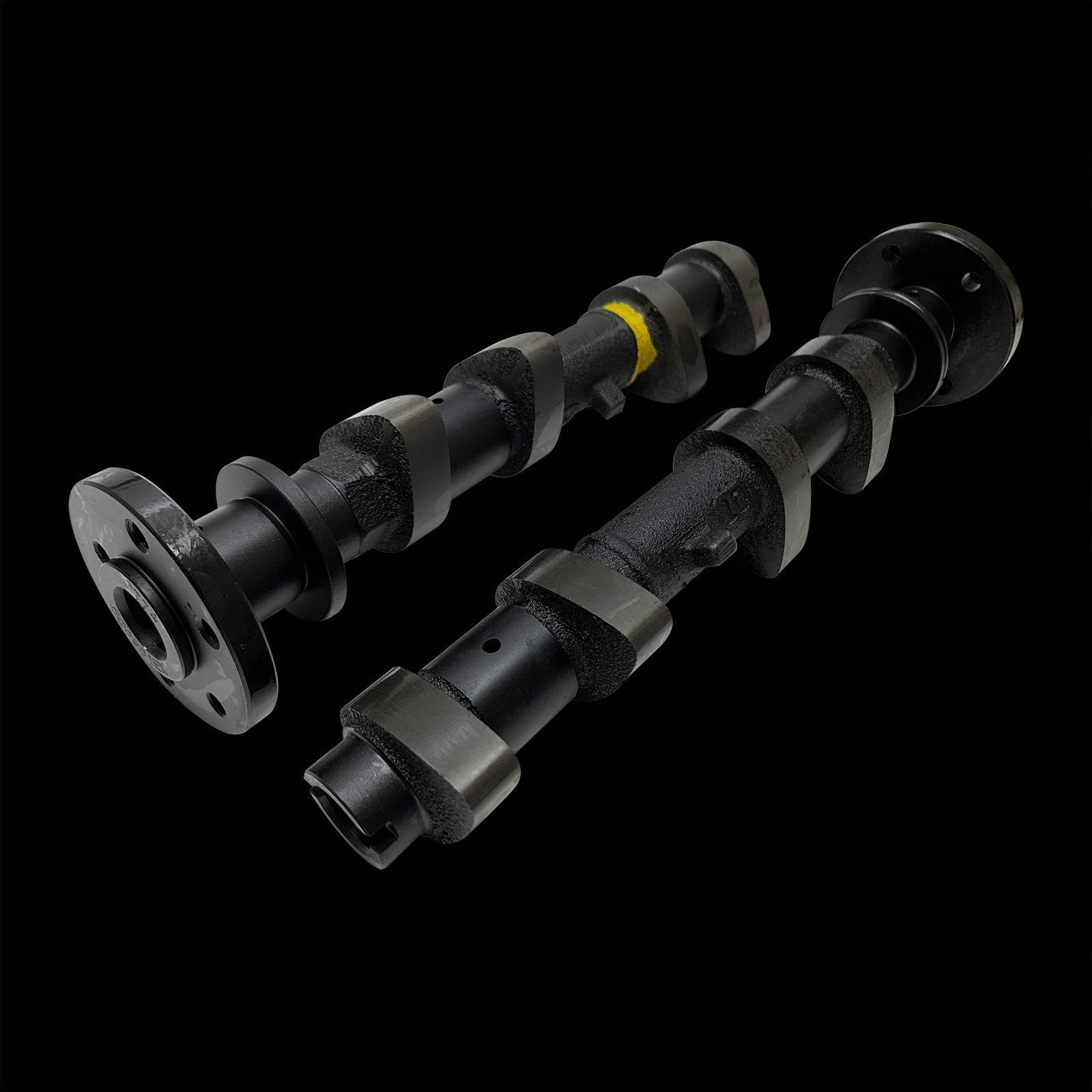
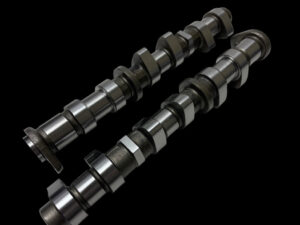
In the relentless pursuit of dominance across dunes and technical trails, the factory camshafts in your Polaris XP Turbo represent a significant bottleneck to unlocked potential. Engineered for broad reliability and emissions compliance, the stock profiles leave substantial horsepower and torque on the table, particularly in the critical mid-to-top-end RPM range where high-speed dune assaults and long trail pulls are won. The BC0911 Polaris XP Turbo (16-up) Stage 2+ Duner/Trail Spec Camshafts from Brian Crower are not mere components; they are a precision-calibrated kinetic upgrade. Designed through extensive dyno and real-world testing, these billet camshafts redefine the engine’s volumetric efficiency and combustion characteristics, delivering a profound increase in power that is both visceral and measurable. This is a cornerstone modification for the serious rider who interprets terrain as a challenge to their machine’s mechanical resolve.
Core Design Philosophy & Technical Execution
Brian Crower’s engineering mandate for the BC0911 camshaft set was unambiguous: create a profile that delivers massive gains without compromising the ProStar 1000’s renowned durability or requiring supporting modifications that venture into extreme, race-only territory. The result is a Stage 2+ designation, indicating performance beyond typical bolt-ons but engineered for sustained use in demanding environments. Each camshaft is CNC-machined from premium 8620 chromoly steel billet, a material chosen for its exceptional fatigue strength and wear resistance under high spring pressures. The profiles are then precision-ground to BC’s proprietary “Duner/Trail Spec” lobe designs, which are the heart of the performance transformation.
Analyzing the Profile: Lift, Duration, and Overlap
The power gains are orchestrated through calculated changes to three fundamental parameters: lift, duration, and lobe separation angle (LSA). Compared to the stock profiles, the BC0911 cams feature increased valve lift. This allows a greater volume of the air-fuel mixture to enter the combustion chamber on the intake cycle and a more complete evacuation of exhaust gases on the exhaust cycle. Coupled with this is a strategically increased duration—the length of time, measured in degrees of crankshaft rotation, that the valve remains off its seat. The “Stage 2+” duration is aggressive enough to shift the power band higher, filling in the mid-range torque dip characteristic of the turbocharged engine and building relentless power to the rev limiter, yet it maintains a lobe separation angle (LSA) that preserves solid low-end manifold pressure and tractability.
This refined balance is critical. A narrower LSA can increase peak power but often at the expense of bottom-end response and idle quality—a compromise unacceptable for a machine that must crawl through rocky trails. BC’s chosen LSA for the BC0911 ensures the power delivery remains broad, usable, and predictable. The increased overlap period (when both intake and exhaust valves are slightly open) is optimized to leverage the turbocharger’s exhaust gas flow, improving scavenging efficiency. This reduces pumping losses and lowers charge air temperatures, effectively making the forced induction system more efficient. For a deeper dive into the science of camshaft timing and its effects on forced induction engines, refer to this authoritative resource on camshaft fundamentals and performance theory.
Tangible Performance Benefits & Riding Dynamics
The transformation delivered by the BC0911 camshafts is immediately apparent on the dyno and unequivocal on the terrain. This is a system upgrade that changes the character of the XP Turbo.
- Substantial Mid-Range and Top-End Horsepower: Expect gains of 15-25+ horsepower at the wheels, with the most significant increases occurring from 6,500 RPM to the rev limit. The notorious “flat spot” in the power curve is effectively eliminated.
- Enhanced Torque Production and Curve: Low-end torque remains robust, while mid-range torque sees a dramatic improvement, translating to instant throttle response when climbing or accelerating out of corners without needing to downshift.
- Optimized Turbo Spool and Response: The improved exhaust scavenging reduces turbo lag. The turbocharger builds boost more quickly and maintains it more effectively under load, creating a seamless, linear power delivery.
- Extended Power Band Usability: The engine no longer feels breathless at higher RPMs. It pulls hard and consistently, allowing you to hold a gear longer in dunes and maintain momentum on fast, rolling trails.
- Maintained Driveability and Reliability: Unlike extreme “race” grinds, the BC0911 profile requires no compromise. Idle quality remains stable, low-speed maneuvering is unaffected, and the engine’s long-term durability is preserved when paired with quality valvetrain components.
Precise Vehicle Fitment & Installation Notes
Vehicle Fitment: The BC0911 camshaft set is engineered specifically for the following platform:
- Polaris XP Turbo / Turbo S / Turbo R (All models) – 2016, 2017, 2018, 2019, 2020, 2021, 2022, 2023, 2024
Critical Installation Protocol: This is a professional-grade installation. Camshaft replacement requires complete disassembly of the front of the engine, including radiator removal. Valve timing is critical; the engine must be locked at Top Dead Center (TDC) using the appropriate factory service tools. It is highly recommended, though not strictly required for the BC0911 profile, to upgrade to high-performance valve springs (such as Brian Crower’s BC0604 kit) to ensure proper valve control at elevated RPM and prevent valve float. Always perform a post-installation valve lash adjustment as specified in the service manual. A professional tune via a compatible programmer (e.g., Dynojet PV3, EVO-P) is mandatory to adjust fueling and ignition timing for the new airflow characteristics; running the stock ECU calibration will result in poor performance and potential detonation.
Technical Specifications & Part Data
| Specification | BC0911 Value | Notes |
|---|---|---|
| Part Number | BC0911 | Set includes (1) Intake & (1) Exhaust Cam |
| Core Material | 8620 Chromoly Steel Billet | Precision CNC-machined |
| Profile Design | Stage 2+ Duner/Trail Spec | Proprietary Brian Crower grind |
| Advertised Duration | Increased (Proprietary) | Significant increase over stock |
| Valve Lift | Increased (Proprietary) | Higher lift for increased airflow |
| Lobe Separation Angle (LSA) | Optimized for Turbo | Balances power with driveability |
| Required Supporting Mods | ECU Tune (Mandatory) | Valve Spring Upgrade (Recommended) |
System Integration and Final Assessment
The BC0911 camshafts are a definitive power-adder that exploits the inherent potential of the ProStar 1000 turbo platform. They function as the central catalyst, elevating the performance of existing modifications like intake, exhaust, and intercooler upgrades. This is not a modification that operates in isolation; it redefines the engine’s breathing architecture, demanding a corresponding recalibration of fuel and spark via a professional tune to realize its full, safe potential. For the rider whose objective is absolute performance parity with—or superiority over—the latest factory offerings and custom-built machines, the installation of Brian Crower’s BC0911 Stage 2+ Duner/Trail Spec Camshafts is a calculated, technical imperative. It represents the transition from a production-based powertrain to a purpose-built, high-output engine system engineered for the summit of recreational performance.
Be the first to review “BC0911 – Polaris XP Turbo (16-up) Stage 2+ Duner/Trail Spec Camshafts”
| Make | Model | Year |
|---|---|---|
| Can-Am | X3 |
Related products
Reviews
There are no reviews yet.