
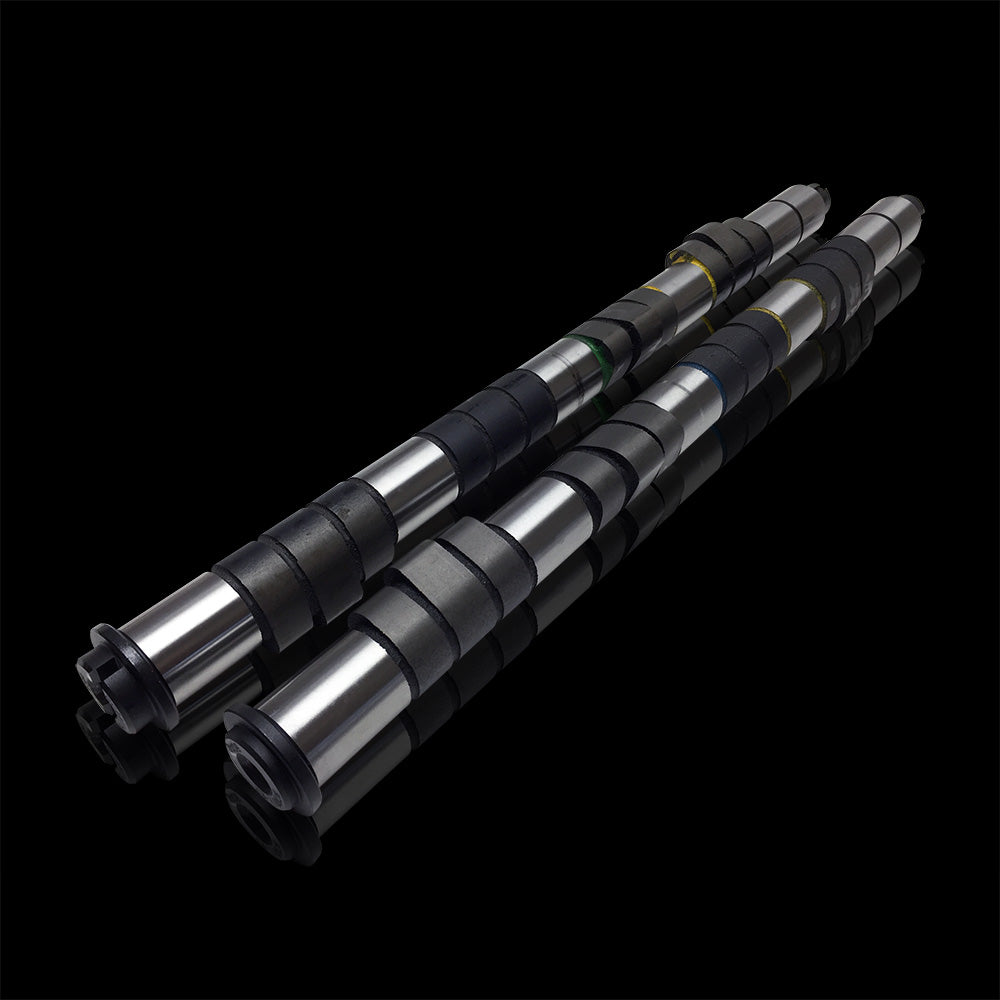
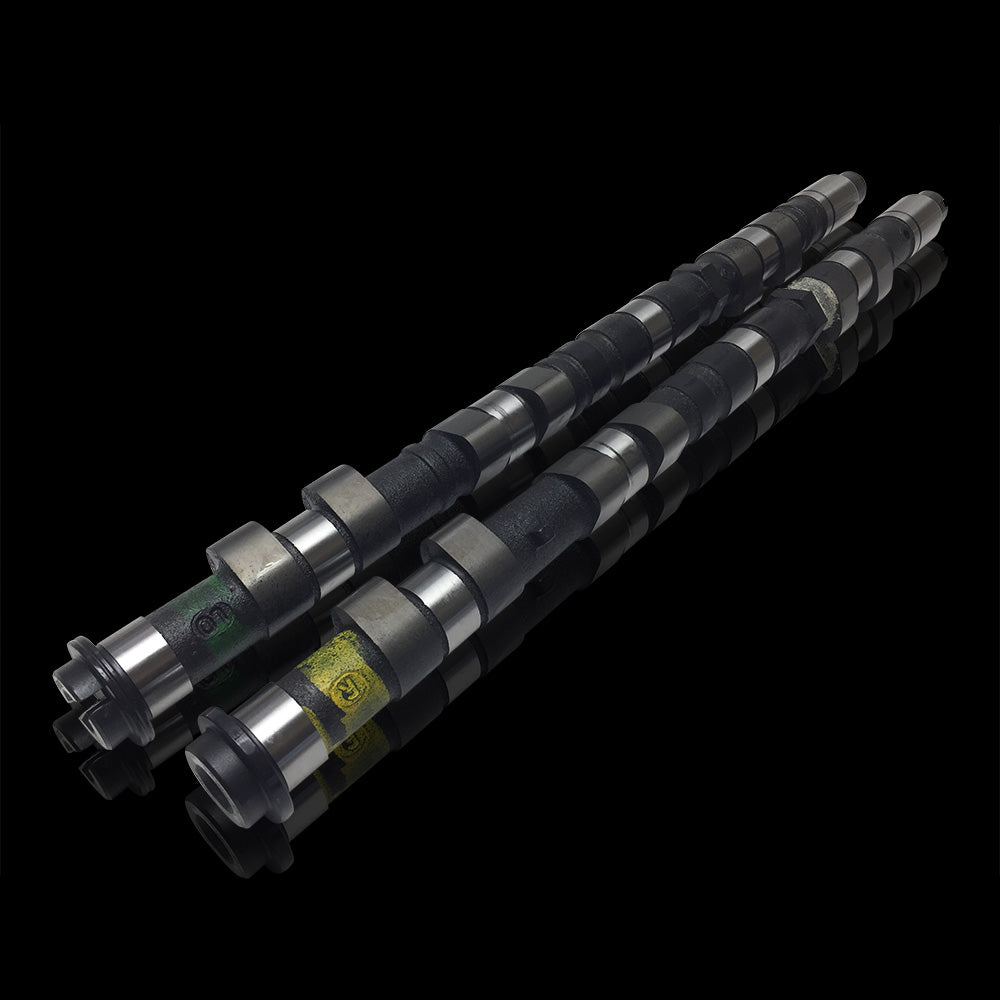
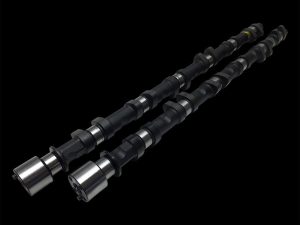
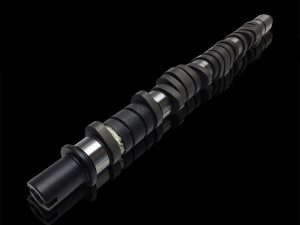
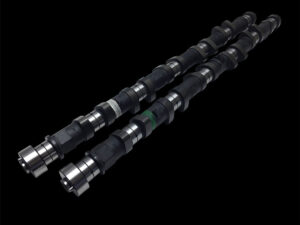
For the builder pursuing the absolute zenith of naturally aspirated Honda B-Series performance, the path is narrow, unforgiving, and demands components engineered without compromise. The Brian Crower BC0013 Stage 3 Camshafts represent the culmination of this pursuit—a set of radical-profile camshafts designed exclusively for fully built, high-displacement, and high-RPM B16A, B17A, and B18C engines. This is not an upgrade for the street-driven weekend warrior; it is the final, critical piece for a race-oriented motor where every last horsepower above 8,000 RPM is sacred. Engineered with Brian Crower’s signature CNC-ground billet cores and precision profiling, the BC0013 camshafts deliver an extreme increase in valve lift and duration, orchestrating a violent and efficient charge exchange that unlocks the final 15-25% of your engine’s innate potential. When paired with the requisite valvetrain, head work, and management, these cams transform a built short block into a screaming, peaky, and devastatingly powerful naturally aspirated weapon.
Product Overview & Core Application
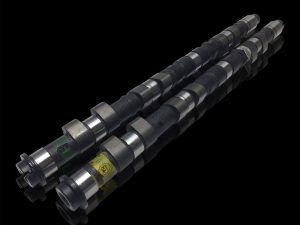
The BC0013 camshaft kit is classified under Brian Crower’s “Stage 3” or “Race” category, a designation reserved for profiles that sacrifice all low-end manners and broad powerbands for stratospheric peak power. These cams are engineered for motors that live at high RPM, typically finding their home in dedicated drag race, time-attack, or club road race applications where the throttle is either fully open or fully closed. The “Normally Aspirated Spec” in the title is a critical identifier, denoting an aggressive lobe separation angle (LSA) and timing events optimized for atmospheric engine breathing, not for forced induction. The kit includes a matched pair of intake and exhaust camshafts, precision-ground from high-quality 8620 steel billet, then heat-treated and micro-polished for ultimate strength and reduced friction. The core application is clear: fully built engines with forged internals, ported and polished cylinder heads with oversized valves, dual valve springs with titanium retainers, and a standalone engine management system capable of fine-tuning the extreme ignition and fuel maps these profiles demand.
Engineering Philosophy & Performance Profile
Brian Crower’s engineering for the BC0013 focuses on one primary objective: maximizing the area under the lift curve at the valve to move the greatest possible mass of air-fuel mixture at the engine’s peak volumetric efficiency point. This is achieved through a combination of very high valve lift and very long duration. Compared to a mild “Stage 2” street cam, the BC0013 profiles feature significantly more aggressive opening and closing ramps, which dictate the speed at which the valve accelerates off its seat and returns. This aggressive ramp design, while demanding on the valvetrain, allows for more extreme lift and duration figures while maintaining a stable valve event at astronomical RPM—often exceeding 9,500 RPM with the correct supporting components. The lobe separation angle is typically tight, which creates a significant overlap period where both intake and exhaust valves are open simultaneously. This overlap is essential for using exhaust scavenging to pull in the fresh intake charge in a high-RPM, naturally aspirated engine, a principle you can explore in depth in this authoritative technical article on camshaft lobe separation and exhaust scavenging. The result is a powerband that begins violently around 5,800-6,500 RPM and screams all the way to the fuel cut, with peak power occurring well past 8,500 RPM.
Critical Benefits & System Requirements
Installing the BC0013 camshafts is a system-level modification. Their benefits are monumental but are entirely contingent upon a complete and correct engine build.
- Extreme Peak Horsepower Gains: Properly matched with head work and induction, these cams can yield gains of 40+ horsepower at the peak over a stock-type “bolt-in” performance camshaft, capitalizing on the flow of a fully prepared cylinder head.
- Optimized High-RPM Volumetric Efficiency: The profile is meticulously designed to exploit the inertial tuning effects of long intake runners and large-diameter headers at precisely tuned engine speeds, filling the cylinders more completely at the target RPM range.
- Aggressive Exhaust Scavenging: The long exhaust duration and specific timing enhance the negative pressure wave in the exhaust header primary tube, actively “pulling” spent gases out of the cylinder and drawing in the fresh intake charge during the overlap period.
- Billet Core Strength & Stability: Manufactured from 8620 billet steel, these cams are significantly stronger than reground OEM cores, resisting flex and lobe wear at sustained high RPM, ensuring consistent valve timing and engine performance.
- Demands a Complete Valvetrain & Tuning Overhaul: This is a key benefit in disguise. Using these cams forces the builder to address the entire top-end system with appropriate springs, retainers, guides, and tuner expertise, resulting in a robust, reliable, and optimized high-RPM package.
Detailed Vehicle Fitment & Compatibility
Vehicle Fitment: The BC0013 camshafts are a direct-fit replacement for the factory camshafts in the following Honda engines. It is imperative to understand that “fitment” refers to physical installation into the cylinder head. Operational success requires the extensive supporting modifications listed below.
- Primary Applications: Honda B16A (JDM and USDM SiR/VTi), B17A (Acura Integra GS-R 1992-1993), B18C1 (USD Integra GS-R), B18C5 (Integra Type R) and B18C Type R variants.
- Engine Management: A standalone ECU (Hondata S300, AEM Series 2, MoTeC, etc.) is absolutely mandatory for adjusting fuel, ignition, and particularly the VTEC engagement point, which will need to be raised significantly.
- Required Valvetrain: Must be used with dual or beehive valve springs, titanium retainers, and high-quality forged chrome-moly spring seats/keepers designed for high lift. Stock or single spring setups will immediately fail.
- Cylinder Head Modifications: Extensive porting and polishing is highly recommended. Oversized valves (e.g., +1mm) are strongly advised to capitalize on the increased lift and duration. Valve-to-piston clearance must be checked and adjusted via fly-cutting or custom pistons.
- Supporting Modifications: A short-gear final drive (4.9 or higher) is necessary to keep the engine in its narrow powerband. A lightweight flywheel helps with acceleration. Expect to lose all practical drivability below 4,500 RPM, including vacuum for power brakes.
Technical Specifications & Data
| Specification | Intake Cam | Exhaust Cam | Notes |
|---|---|---|---|
| Part Number | BC0013 | Sold as a matched set | |
| Advertised Duration | 310° | 305° | Measured at 0.004″ lobe lift |
| Duration @ 0.050″ Lift | 273° | 268° | Critical performance metric |
| Gross Valve Lift | 12.90mm (0.508″) | 12.20mm (0.480″) | With stock 1.6:1 rocker ratio |
| Lobe Separation Angle (LSA) | 112° | Tight LSA for high overlap and peak power | |
| Required Valve Springs | BC0100 or BC0200 Series Dual Springs (Minimum) | Do not use with stock or OEM-type springs | |
| Core Material | CNC-Ground 8620 Steel Billet | Heat-treated and micro-polished | |
Final Mechanic’s Note: The Brian Crower BC0013 Stage 3 Camshafts are the definitive choice for the serious all-motor B-Series competitor. They are a commitment to a peak-power philosophy, requiring significant financial and technical investment in the entire engine platform. The data they produce on the dyno sheet is a direct reflection of the builder’s skill in component selection, assembly precision, and tuning acumen. There is no room for approximation. If your build sheet includes phrases like “ported by a master,” “fully forged,” “standalone ECU,” and “race fuel only,” then the BC0013 is the camshaft designed to complete your engine’s story. For any application with lesser goals, a Brian Crower Stage 2 or Stage 2.5 profile will provide a far more practical and streetable power increase.
Be the first to review “BC0013 – Honda B16A/B18C Stage 3 Camshafts – Normally Aspirated Spec”
| Make | Model | Year |
|---|---|---|
| Acura | Integra | 1990 - 2001 |
| Acura | RSX | 2002 - 2006 |
| Honda | Civic | 1992 - 2000 |
| Honda | Integra | 1990 - 2001 |
Related products
B18A / B18B - Camshafts
BC0022 – Honda/Acura B18A/B Stage 2 Camshafts – Normally Aspirated Spec
$562.28
B18A / B18B - Camshafts
BC0021 – Honda/Acura B18A/B Stage 2 Camshafts – Forced Induction Spec
$562.28
Reviews
There are no reviews yet.