
Engineering Exhilaration: The Brian Crower BC0427 Coyote Stroker Kit
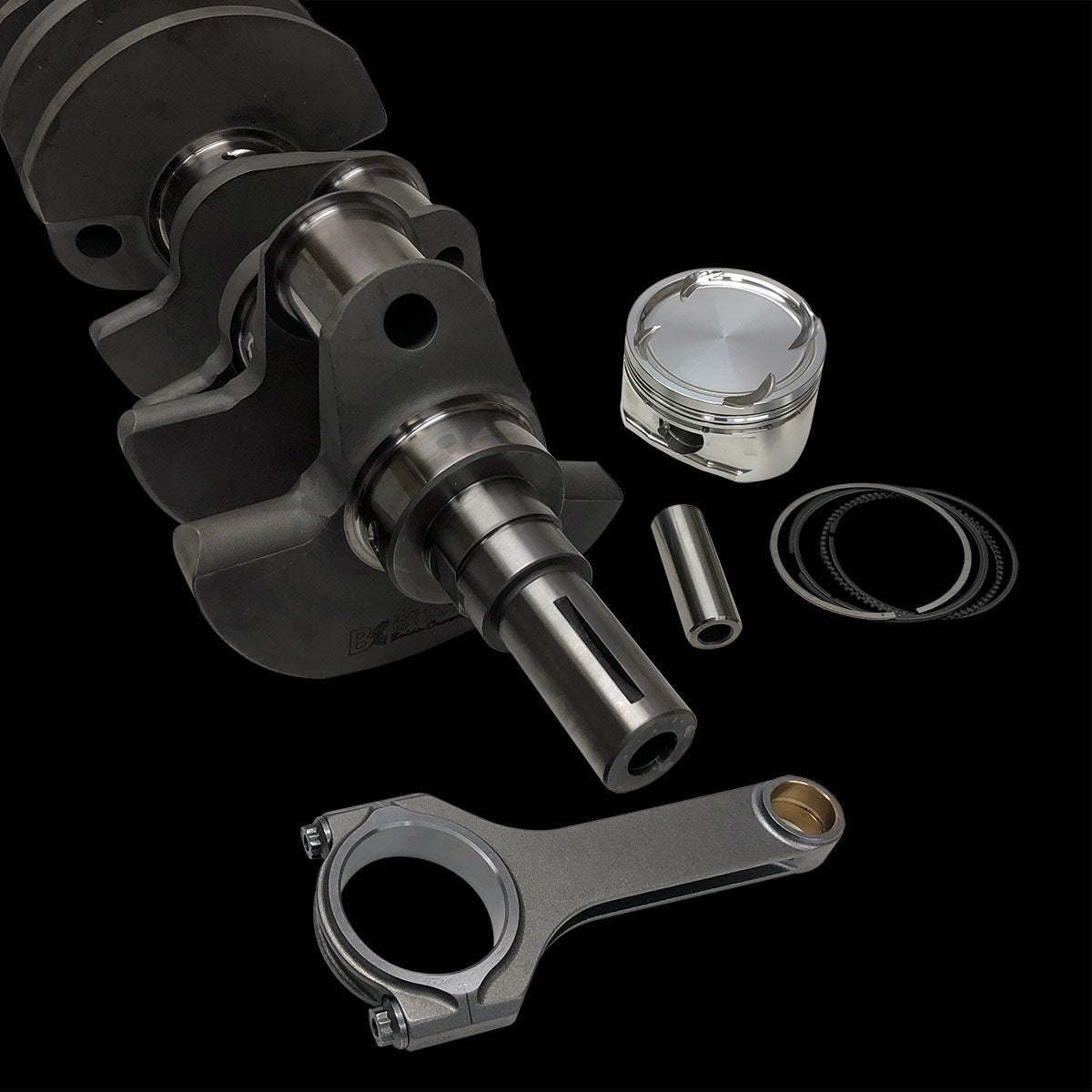
For the builder who views the factory 5.0L Coyote not as a finished product, but as a profoundly capable starting block, displacement is the ultimate currency. Incremental gains from bolt-ons eventually hit a thermodynamic wall, where true, seismic shifts in torque and horsepower require a foundational change in engine architecture. The Brian Crower BC0427 Stroker Kit is that foundational change. This is not a collection of parts; it is a fully engineered system designed to systematically replace the Coyote’s rotating assembly, transforming it from a high-revving 302 cubic inch engine into a monstrous 363 cubic inch torque furnace, all while maintaining—or even enhancing—the platform’s legendary durability. Engineered for the forced induction pioneer or the naturally aspirated purist seeking ultimate street dominance, the BC0427 is the definitive blueprint for a next-generation Coyote build.
Core Component Analysis: The Anatomy of a Stroker
Every stroker kit is defined by the synergy of its components. The BC0427’s specification reads like a wish list for serious performance, with each piece selected and machined to work in concert under extreme conditions.
The 3.875″ Stroke Crankshaft: Redefining the Lever Arm
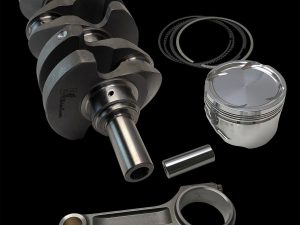
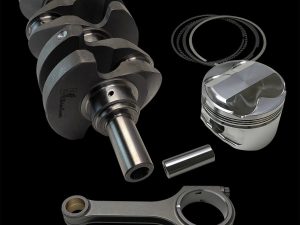
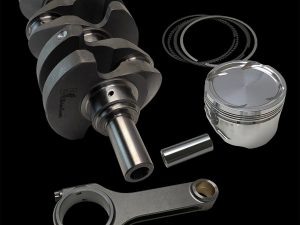
The heart of the transformation is the custom-forged 4340 steel crankshaft. By increasing the stroke from the factory’s 3.65 inches to a substantial 3.875 inches, Brian Crower engineers have extended the lever arm of each piston. This longer stroke directly increases displacement by over 60 cubic inches (from 302ci to ~363ci) and, according to fundamental engine physics, generates significantly greater torque at every point in the RPM band. The crank is precision CNC-machined from a single billet of American-sourced 4340 steel, heat-treated to a core hardness of 30-34 Rc for optimal strength-to-weight ratio, and utilizes 2.086″ BBC rod journals. This journal size increases oil film surface area for superior hydrodynamic lubrication under load and allows for the use of a robust, proven big-block Chevy rod bearing. Every journal is micropolished to a mirror finish to minimize friction and maximize bearing life, a critical detail for sustained high-RPM operation.
ProHD 5.825″ H-Beam Connecting Rods: The Unyielding Link
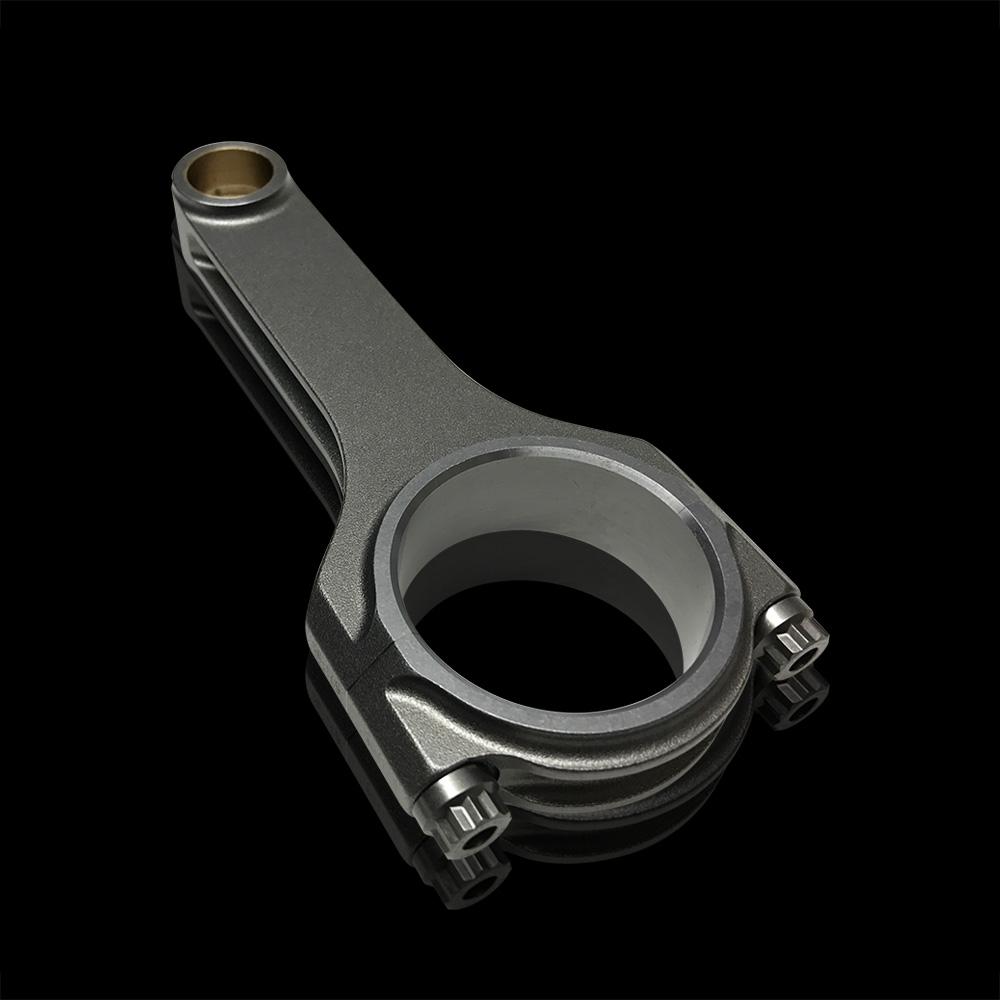
Connecting the increased stroke of the crank to the piston is a task that demands an unbreakable link. The included ProHD H-Beam rods are constructed from 4340 chromoly steel, utilizing a true H-beam design that provides an exceptional balance of tensile strength and column stiffness to resist buckling under immense cylinder pressure. The 5.825-inch center-to-center length is specifically calculated to work with the 3.875″ stroke crank and common piston compression heights, ensuring proper piston deck clearance and ring pack placement. Crucially, these rods are fitted with 7/16-inch ARP2000 cap screws. This fastener upgrade over smaller 3/8″ bolts provides a massive increase in clamp load, virtually eliminating rod cap walk and fretting under the intense loads produced by high-boost or nitrous applications.
Piston & Pin Specification: Managing Increased Inertial Forces
To complete the rotating assembly, the kit utilizes pistons designed for the new stroker geometry, featuring a 1.888-inch wrist pin. This larger-diameter pin is a necessity in a stroker application, as the increased piston speed and acceleration impose greater shear forces on the pin boss. The larger pin significantly increases the contact area and shear strength, preventing the catastrophic failure of a pin bending or snapping. These pistons are typically forged from 2618 aluminum alloy, chosen for its ultimate ductility and fatigue resistance in high-horsepower, high-heat environments over the slightly harder but more brittle 4032 alloy. Combined with a premium set of piston rings, this setup ensures proper seal and longevity even in the face of dramatically increased cylinder pressures.
Performance Implications & Engineering Benefits
The installation of the BC0427 kit is a transformative event for the Coyote platform. The benefits are not singular but systemic, affecting every aspect of engine performance.
- Exponential Torque Increase: The 20% increase in displacement manifests primarily as a broad, deep swell of torque. This provides transformative street manners, reducing the need for excessive gearing and making power accessible much earlier in the RPM range.
- Enhanced Volumetric Efficiency for Forced Induction: For turbo or supercharged applications, the larger displacement acts as a larger “air pump.” This means the engine can move more air at a given RPM, allowing boost to be built more quickly (reducing turbo lag) and effectively increasing the efficiency of the entire forced induction system, often leading to more power at lower boost levels.
- Foundational Strength for High-Horsepower Goals: The 4340 steel crank and ProHD rods with 7/16 fasteners create a rotating assembly capable of supporting 1,500+ horsepower with proper tuning and supporting mods. This builds a safety margin that stock components lack.
- Improved Low-End and Mid-Range Response: The increased stroke inherently improves cylinder filling at lower engine speeds, sharpening throttle response and providing relentless pull through the mid-range, where most street and track driving occurs.
- Optimal Component Synergy: Every measurement—stroke, rod length, pin size, journal diameter—is pre-calculated by Brian Crower’s engineers. This eliminates guesswork, ensuring proper piston-to-valve clearance, deck height, and ring placement when used with the recommended components.
Vehicle Fitment & Application Notes
The BC0427 kit is designed as a core upgrade for the modular 5.0L Coyote V8 platform. Primary application is for builders of:
Direct Fitment: 2011-2023 Ford Mustang GT (5.0L Coyote); 2011-2014 Ford F-150 (5.0L Coyote); 2015-2020 Ford F-150 (5.0L Coyote Gen 2); and other vehicles utilizing the Ti-VCT Coyote engine. It is compatible with both Gen 1, Gen 2, and Gen 3 Coyote engine blocks, though piston selection must be matched to the specific cylinder head (e.g., Gen 3’s with port injection will require different pistons than earlier gens).
Critical Builder Considerations: This is a professional-level engine building component. Installation requires complete engine disassembly, machining of the block (including likely boring/honing to the final piston size, and crankshaft balancing), and precise measurement of deck clearance, quench, and piston-to-valve clearance. The use of aftermarket cylinder heads or aggressive camshafts makes the latter check absolutely mandatory. For a deep dive on clearance checking and Coyote stroker assembly theory, consult this authoritative resource on Coyote stroker assembly fundamentals.
Technical Specifications Table
| Component | Specification | Material |
|---|---|---|
| Crankshaft Stroke | 3.875 Inch | Forged 4340 Steel |
| Rod Journal Size | 2.086″ (Big Block Chevy) | N/A |
| Connecting Rods | ProHD H-Beam, 5.825″ Center-to-Center | 4340 Chromoly Steel |
| Rod Fasteners | 7/16″ ARP2000 Cap Screws | Alloy Steel |
| Wrist Pin Diameter | 1.888 Inch (Oversized) | DCM Tool Steel |
| Resulting Displacement | ~363 Cubic Inches (~5.95L) | N/A |
| Kit Part Number | BC0427 | N/A |
Note: Pistons and rings are kit-specific and must be selected based on final bore size and compression ratio goals. Final balancing of the entire rotating assembly (crank, rods, pistons, pins, rings, and balancer/flywheel) is required after all machining is complete.
Be the first to review “BC0427 – Ford Coyote Stroker Kit – 3.875″ Stroke Crank w/1.888″ Pin/ProHD Rods (5.825″ H Beam with 7/16 fasteners)”
| Make | Model | Year |
|---|---|---|
| Ford | Mustang | 2011 - 2023 |
Related products
$4,248.23
B16A / B18C - Stroker Kits
BC0026B – Honda B18/B20 Stroker Kit – 92mm Stroke Billet/ProH2K Long Rods (5.512″)
$3,464.66
$4,248.23
Reviews
There are no reviews yet.