
No products in the cart.
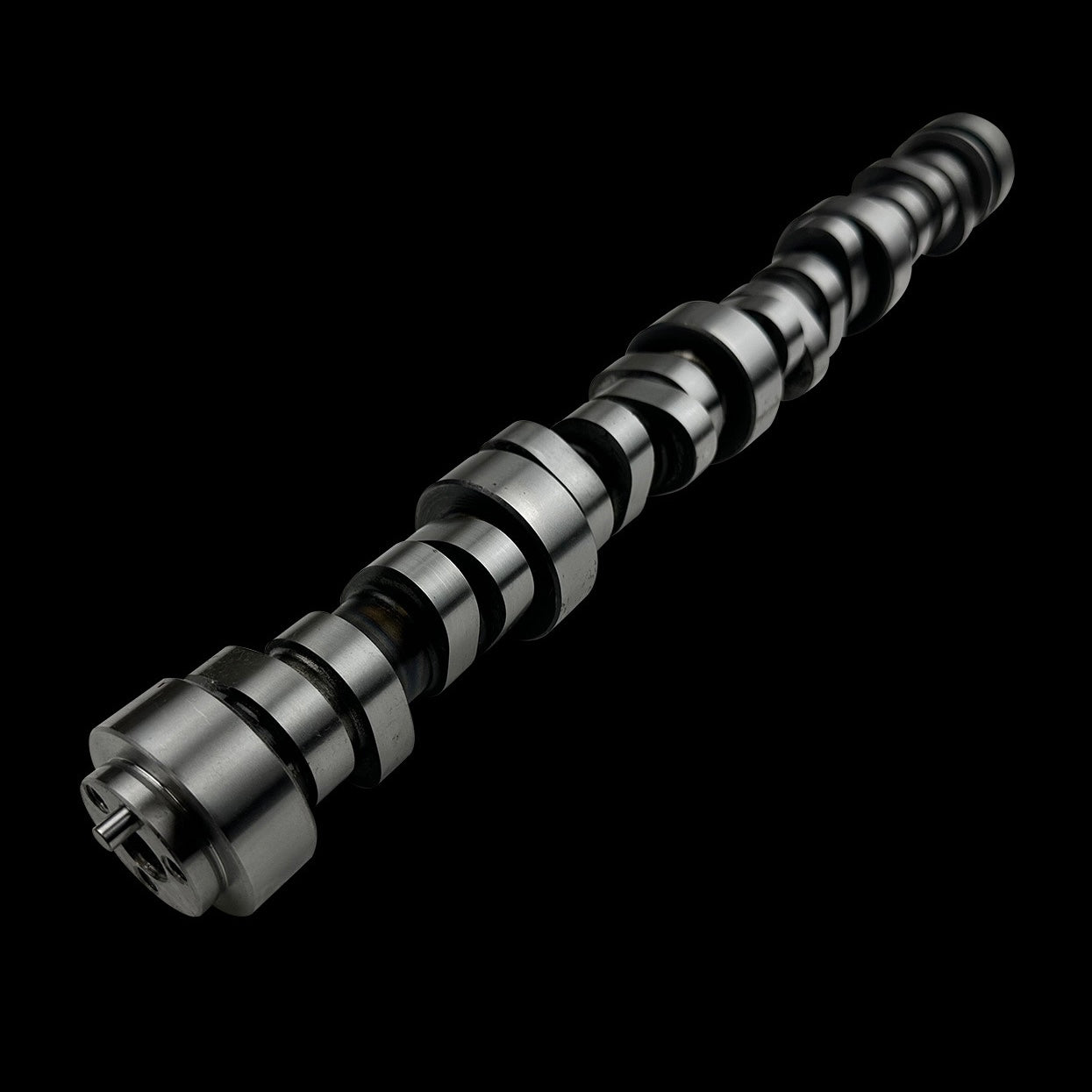
When the objective is uncompromising street performance with a pronounced aggressive edge, the selection of valvetrain components becomes a critical engineering decision. The Brian Crower BC0465 Stage 2 Camshaft for GM LS Gen III and Gen IV platforms is not merely a part; it is a calculated upgrade designed to transform the engine’s personality and output. Engineered with a 226/232 degrees of duration at .050″ lift and .575″/.591″ valve lift, this 3-bolt camshaft with a 114-degree lobe separation angle (LSA) is the definitive choice for enthusiasts seeking substantial power gains in the 3000-6500 RPM operating range without sacrificing daily street manners. It represents a precise calibration of airflow dynamics, leveraging advanced lobe profiles to deliver a powerful, choppy idle, a broad torque curve, and peak horsepower where it matters most.
Design Philosophy & Performance Profile
The BC0465 is engineered under the Brian Crower Stage 2 designation, a category defined by aggressive street performance with a clear focus on peak power. The core of its design lies in the meticulous profile of its lobes. The 226-degree intake duration and 232-degree exhaust duration (measured at .050″ valve lift) create a significant overlap period. This overlap is strategically tuned by the 114-degree LSA, which optimizes the compromise between cylinder scavenging at high RPM and maintaining effective cylinder pressure at lower speeds. The result is an engine that pulls hard from the mid-range and continues to build power aggressively to a 6500+ RPM peak. The .575″ intake and .591″ exhaust lift demand corresponding upgrades to valve springs, pushrods, and likely rocker arms, but they are essential for unlocking the airflow potential of ported or aftermarket cylinder heads.
Technical Specifications & Valvetrain Demands
Understanding the specifications is key to a successful installation and meeting performance expectations. This camshaft’s parameters dictate specific valvetrain requirements.
| Specification | Value | Significance |
|---|---|---|
| Part Number | BC0465 | Brian Crower stage 2, 3-bolt design. |
| Duration at .050″ | 226° Intake / 232° Exhaust | Defines the aggressive, high-RPM power character and choppy idle. |
| Valve Lift | .575″ Intake / .591″ Exhaust | Requires upgraded springs & pushrods; maximizes flow through head ports. |
| Lobe Separation Angle (LSA) | 114° | Broadens torque curve, improves idle quality vs. tighter LSA, and reduces overlap noise. For a deeper technical dive on LSA, see this resource from MotorTrend. |
| Camshaft Type | 3-Bolt Billet Core | Provides superior strength and precise timing gear attachment for Gen IV and late Gen III engines. |
The lift and duration figures mandate a comprehensive valvetrain overhaul. Minimum required upgrades include dual-coil valve springs capable of handling .600″+ lift, hardened chromoly pushrods of the correct length (post-installation measurement is critical), and high-quality timing chain components. Failure to match the camshaft with components of adequate strength and precision will result in valvetrain failure.
Vehicle Fitment & Platform Compatibility
The BC0465 is engineered specifically for the ubiquitous GM LS engine family, covering a wide range of popular Gen III and Gen IV applications. Its 3-bolt flange pattern is essential for compatibility with late-model timing covers and harmonic balancers. Precise fitment is as follows:
Primary Applications: This camshaft is designed for use in LS engines utilizing a factory 3-bolt cam gear attachment. This includes most LS2, LS3, LS7, and L99 engines, as well as late-model LS1 and LS6 engines (typically 2001+). It is also compatible with LS-based truck engines (e.g., LQ4, LQ9) that have been updated to a 3-bolt timing set.
Critical Pre-Installation Check: For early Gen III engines (pre-2001 LS1/LS6), which typically use a single-bolt cam gear, this camshaft will not fit without also converting the timing set and harmonic balancer to the later 3-bolt style. Always verify your engine’s specific camshaft snout configuration before purchasing.
Key Performance Benefits & Outcomes
Installing the Brian Crower BC0465 camshaft yields a transformative set of performance characteristics. These are the measurable and experiential benefits an installer can expect:
- Substantial Mid-to-Top-End Power Gain: Optimized for the 3000-6500+ RPM band, this camshaft delivers significant increases in horsepower and torque, particularly when paired with supporting bolt-ons like cold air intakes, long-tube headers, and ported heads.
- Aggressive, Audible Lope: The 226/232 duration on a 114 LSA produces a distinct, choppy idle that unmistakably signals the performance within, without being so radical as to cause severe driveability issues.
- Enhanced Cylinder Scavenging: The longer exhaust duration helps pull spent combustion gases out of the cylinder more effectively, especially with a free-flowing exhaust, leading to denser air charges and more complete combustion.
- Broadened Torque Curve: The 114-degree LSA helps maintain a flatter, more useable torque curve across the RPM range compared to tighter-LSA cams of similar duration, improving streetability.
- Factory-Profile Reliability (When Supported): Manufactured from high-quality billet steel and utilizing lobe profiles designed for durability, the BC0465 offers race-proven performance without sacrificing valvetrain longevity—provided the required supporting components are installed.
Installation Considerations & Final Tuning Imperative
The installation of a Stage 2 camshaft is a serious undertaking that goes beyond a simple parts swap. Mechanically, it requires locking the engine at Top Dead Center (TDC), removing the harmonic balancer, timing cover, and valve springs, and meticulously following torque procedures for the new 3-bolt cam gear. Professional-grade tools—such as a crankshaft holder, camshaft installation tool, and valve spring compressor—are strongly recommended to prevent damage to the cam bearings or crankshaft thrust surface.
However, the mechanical installation is only half the battle. The final and most critical step is professional dyno tuning. The increased airflow and altered volumetric efficiency (VE) of the BC0465 will render the factory engine control unit (ECU) calibration ineffective. A tuner must adjust air/fuel ratios, ignition timing, and idle control parameters across the entire operating range to realize the camshaft’s full potential, ensure safe operation, and pass emissions diagnostics. Without this essential tune, the engine may suffer from poor idle, rich or lean conditions, and a significant loss of the power gains the cam was intended to provide.
Be the first to review “BC0465 – GM LS Gen III/Gen IV Stage 2 Camshaft – 3 Bolt (114°)”
| Make | Model | Year |
|---|---|---|
| Hyundai | Genesis Coupe | 2010 - 2016 |
Related products
Sale!
CLEARANCE / OVERSTOCK
BC3101S-8 – Mitsubishi 4G63/Evo Exhaust Valves (30.5mm / STD) – set/8
Original price was: $219.10.$190.52Current price is: $190.52.
Sale!
CLEARANCE / OVERSTOCK
BC3104S-8 – Mitsubishi 4G63/Evo Intake Valves (35mm / +1mm) – set/8
Original price was: $219.10.$190.52Current price is: $190.52.
Sale!
CLEARANCE / OVERSTOCK
BC3102S-8 – Mitsubishi 4G63/Evo Intake Valves (34.5mm / +.5mm) – set/8
Original price was: $219.10.$190.52Current price is: $190.52.
Sale!
CLEARANCE / OVERSTOCK
BC3211S-8 – Nissan KA24DE Exhaust Valves (31.80mm / +.5mm) – set/8
Original price was: $219.10.$190.52Current price is: $190.52.
Sale!
CLEARANCE / OVERSTOCK
BC3234S-12 – Nissan RB26 Intake Valves (35.65mm / +1mm) – set/12
Original price was: $328.65.$285.78Current price is: $285.78.
Sale!
CLEARANCE / OVERSTOCK
Original price was: $219.10.$190.52Current price is: $190.52.
Reviews
There are no reviews yet.