
No products in the cart.
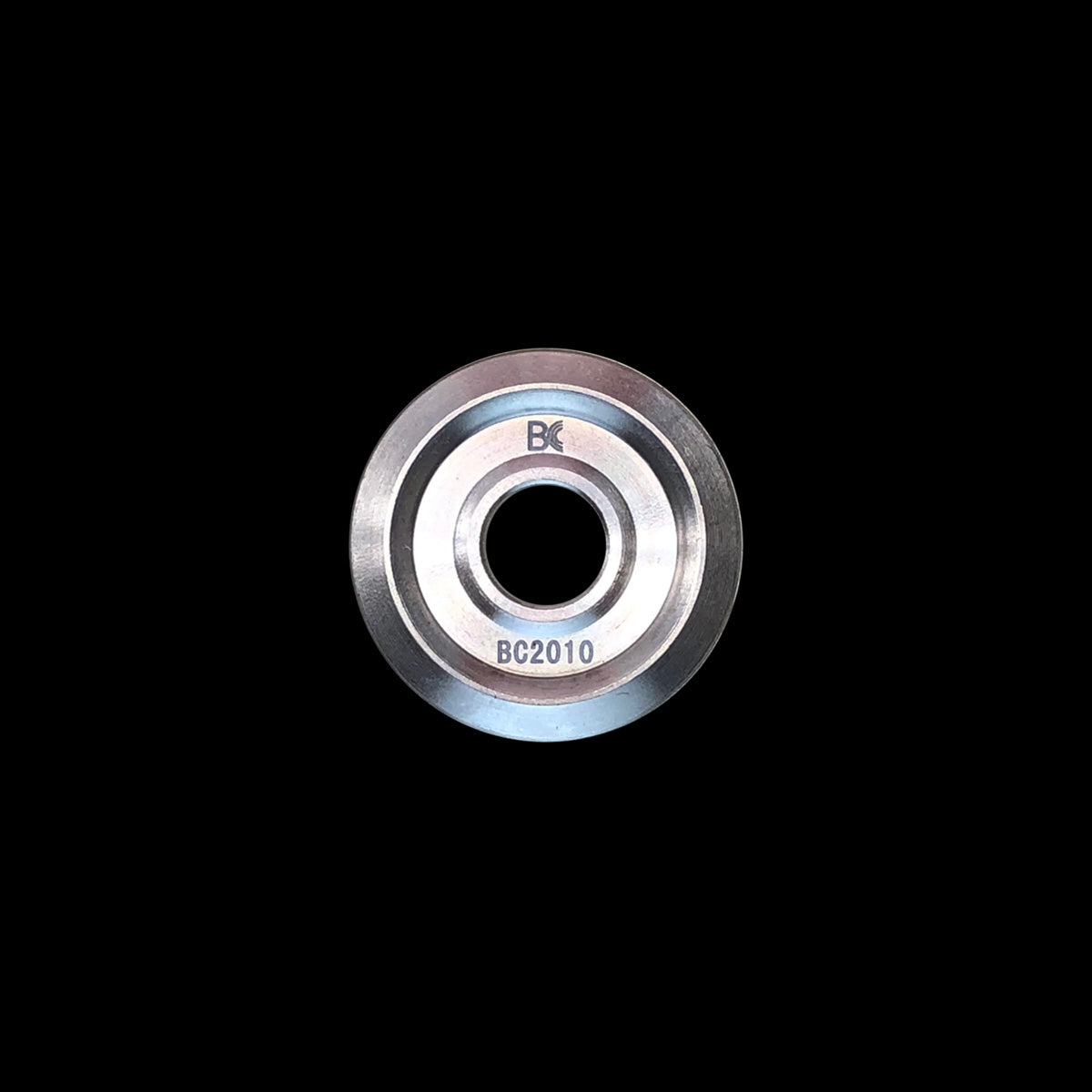
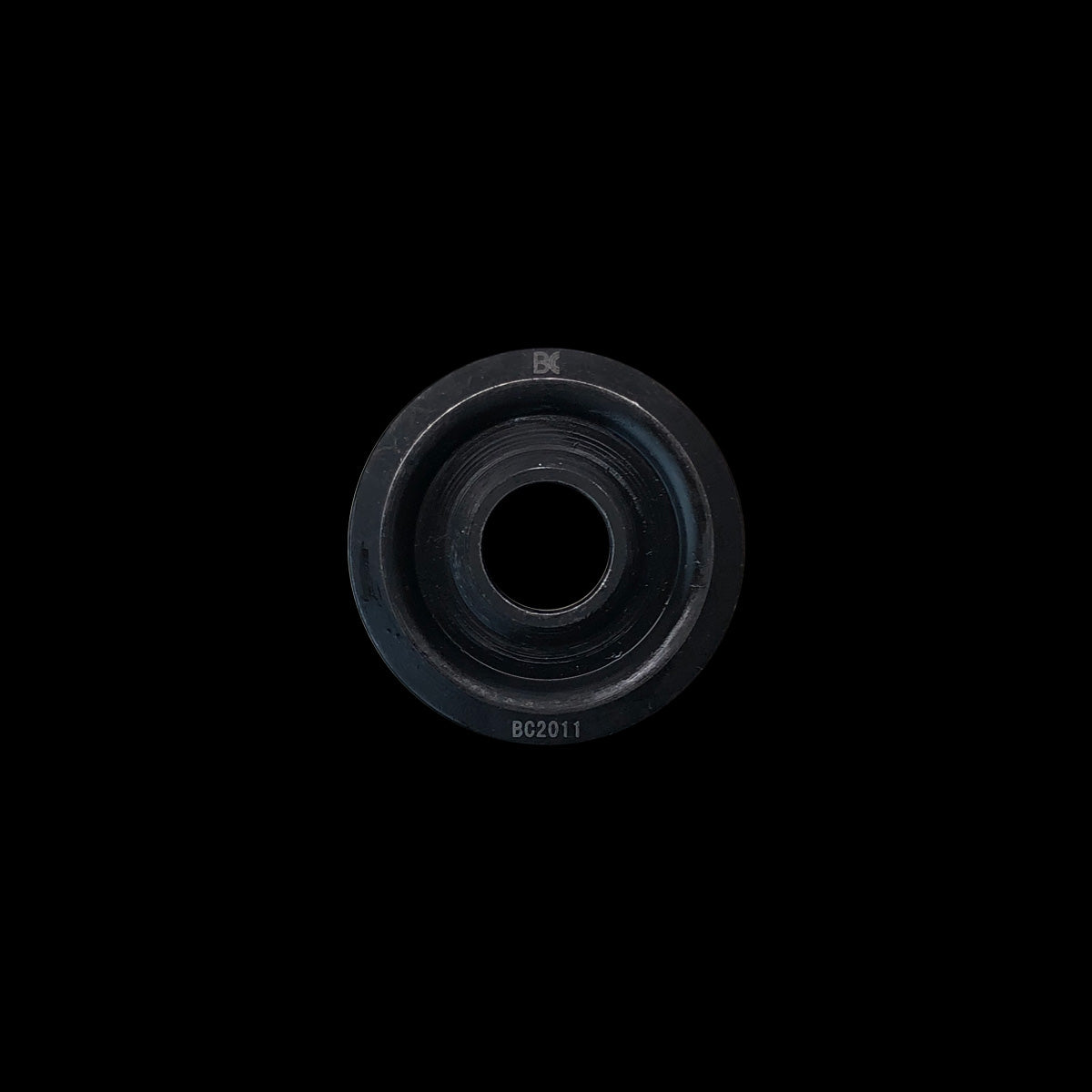
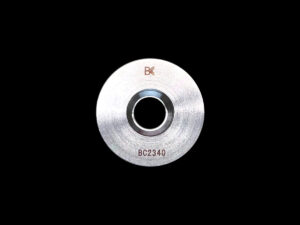
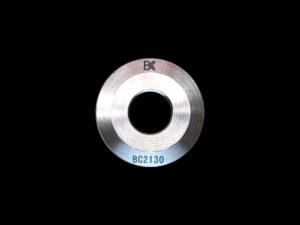
In the stratified atmosphere of high-RPM engine building, where milliseconds dictate power and microns define reliability, the valve train is the critical path. Every component must be an exercise in minimal mass and maximal strength. The BC2010-1 Titanium Retainer from Brian Crower isn’t merely a replacement part; it’s a calculated upgrade for a specific, demanding application. Designed as the companion piece for “limited mileage” dual-valve-spring setups on premier Honda/Acura platforms—B, H, K, and F series—this single titanium retainer represents the apex of focused engineering. It is the definitive solution for builders who demand absolute precision for competition engines, dyno queens, or weekend warriors where longevity is measured in seasons, not decades, and every gram shed from the valvetrain translates directly to higher, stable redlines and reduced risk of valve float.
The Material Science: Why Titanium is Non-Negotiable
To understand the BC2010-1’s purpose, one must first apprehend the physics of the valve train. It is a harmonic system undergoing extreme acceleration and deceleration, with forces multiplying exponentially as RPM climbs. The retainer’s primary function is to locate the spring, but its mass directly impacts the entire assembly’s inertial characteristics. Steel retainers, while robust, add significant weight. Titanium alloy (typically 6AL-4V, as used in aerospace and motorsport) provides a transformative strength-to-weight ratio. It offers comparable tensile strength to high-grade steel at roughly 40% less density. This mass reduction decreases the load on the valve spring, allowing it to control the valve more effectively at peak lift and during closure. The result is a more responsive valve, reduced camshaft lobe wear, and a higher practical RPM limit before the onset of destructive valve float. For a detailed analysis of valvetrain dynamics and material impacts, reference this technical treatise on valvetrain geometry and spring selection from industry experts.
Engineering the BC2010-1: A Specification for Precision
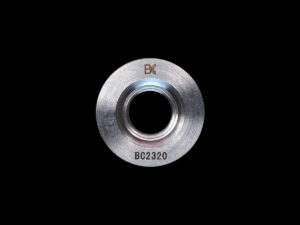
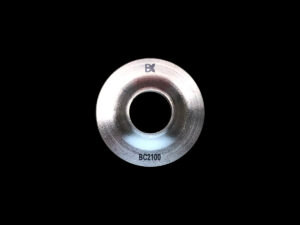
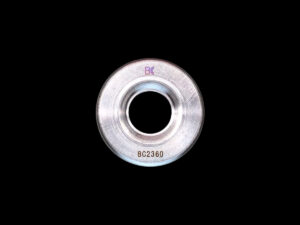
The BC2010-1 is not a generic component. It is meticulously CNC-machined from billet titanium to exacting tolerances, ensuring perfect concentricity and seat geometry for the corresponding valve spring. Its design is optimized for use with Brian Crower’s own dual valve spring kits intended for limited mileage applications. The “limited mileage” designation is crucial; these springs exert higher seat and open pressures to control aggressive cam profiles at high RPM, which accelerates fatigue life compared to OEM-style springs. The titanium retainer is the essential partner, mitigating stress by lowering the oscillating mass. Key engineering features include a precision-machined lock groove that provides secure retention for the valve lock (keeper), a hardened wear surface where it contacts the spring, and a profile that minimizes material without compromising structural integrity under extreme cyclic loading.
Primary Performance Benefits
- Significant Mass Reduction: Dramatically decreases valvetrain inertial mass, reducing stress on springs, cam lobes, and the valve itself.
- Elevated RPM Capability: Enables safer, more stable engine operation at higher rotational speeds by delaying valve float.
- Enhanced Valve Control: Allows the stiffer “limited mileage” valve springs to operate more efficiently, improving timing accuracy and seating velocity.
- Reduced Component Wear: Lower inertial forces lead to decreased wear on camshaft lobes, lifters (or rocker arms), and spring seats.
- Competition-Grade Material: Manufactured from aerospace-grade titanium (6AL-4V) for optimal strength, fatigue resistance, and weight savings.
Vehicle Fitment & Application Specifics
Critical Note: The BC2010-1 is sold as a single retainer. A full set is required per engine (e.g., 4 retainers for a 4-cylinder, 6 for a V6). Its application is specifically tied to the use of Brian Crower “Limited Mileage” dual valve spring kits. It is not designed for OEM single springs or other aftermarket spring designs without verification of dimensional compatibility.
Compatible Engine Platforms:
- Honda/Acura B-Series (DOHC): B16A, B16B, B17A, B18C (Integra Type R, JDM SiR), B18C5 (Integra Type R), B18C1 (GSR).
- Honda/Acura H-Series (DOHC): H22A, H22A1, H22A4 (Prelude VTEC), H23A (Prelude).
- Honda/Acura K-Series (DOHC): K20A, K20A2, K20Z, K24A (RSX Type-S, Civic Si, TSX). Verify spring kit compatibility for specific K-series variants.
- Honda F-Series (DOHC): F20B, F20C, F22C (S2000). Particularly critical for high-revving F20C/F22C applications.
Intended Use: This component is engineered for performance, race, or limited-street-use engines. Regular inspection of the entire valvetrain is mandatory in such applications.
Technical Specifications & Installation Considerations
| Parameter | Specification |
|---|---|
| Part Number | BC2010-1 |
| Material | Aerospace Grade 6AL-4V Titanium |
| Finish | CNC Machined, Uncoated |
| Spring Type | Dual Spring, “Limited Mileage” Specific |
| Quantity | 1 (One) Retainer |
| Primary Application | High-RPM, Performance/Competition Engines |
Installation Protocol & Warning
Installation must be performed by a qualified technician with proper valvetrain tools. Always install with new, matching “limited mileage” valve springs and new valve locks. The installed height and spring pressure must be verified using a spring pressure tester and installed height micrometer. Failure to set correct installed height will result in improper spring pressure, leading to catastrophic engine failure. Titanium retainers should be inspected for cracks or deformation during routine engine maintenance intervals. Use of improper assembly lubricant is not recommended; a dedicated moly-based assembly lube is required on the lock grooves and retainer-to-spring contact point.
Reviews
There are no reviews yet.