
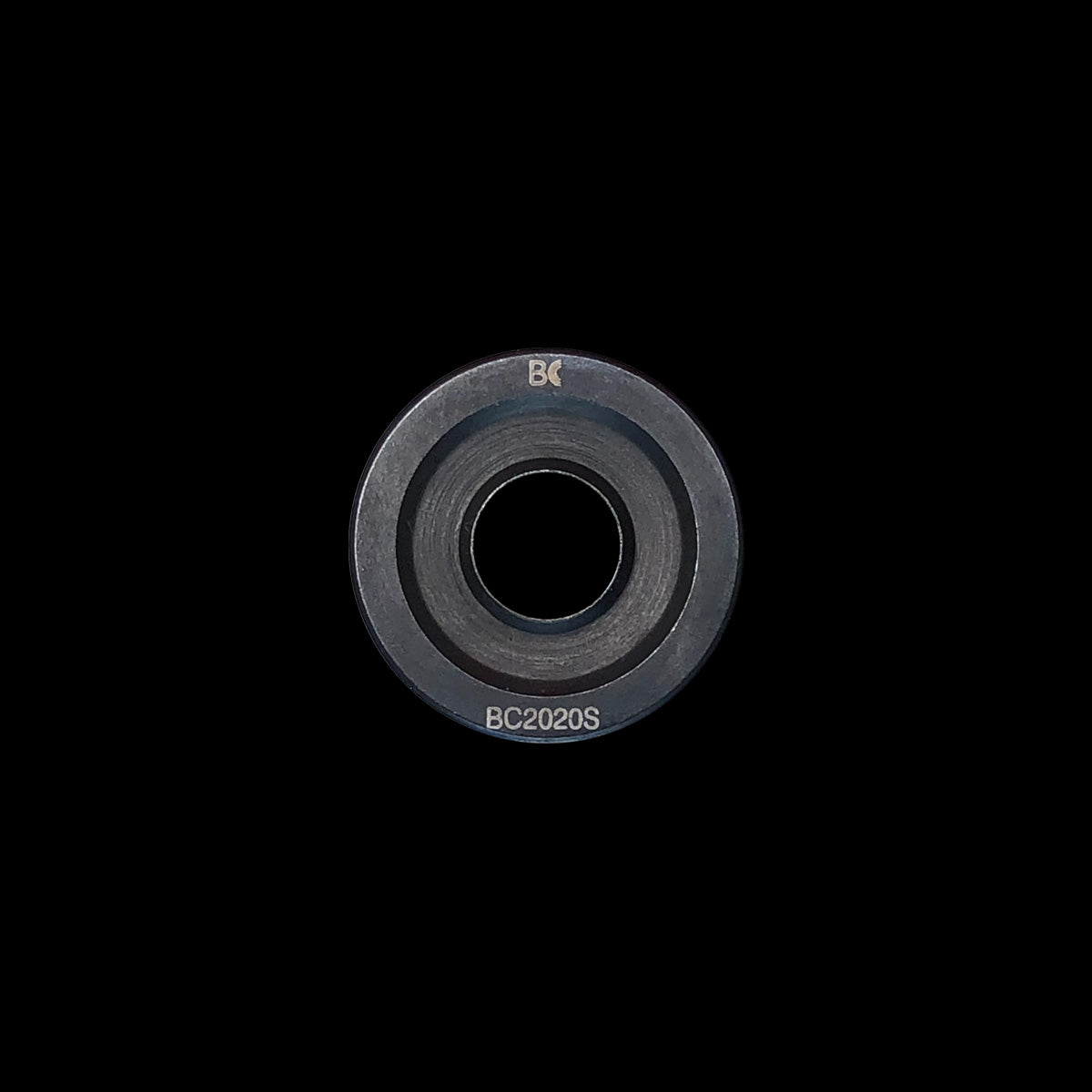
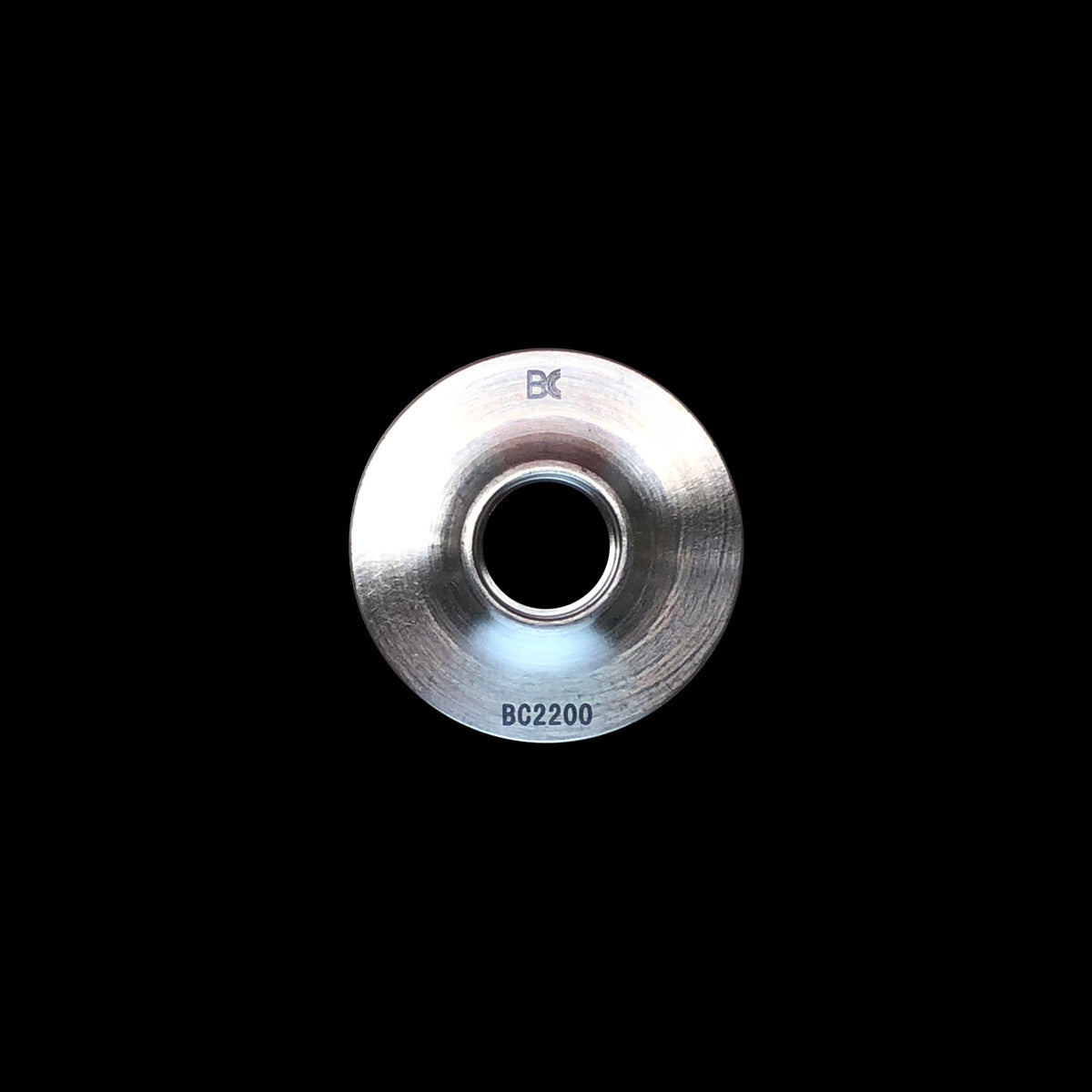
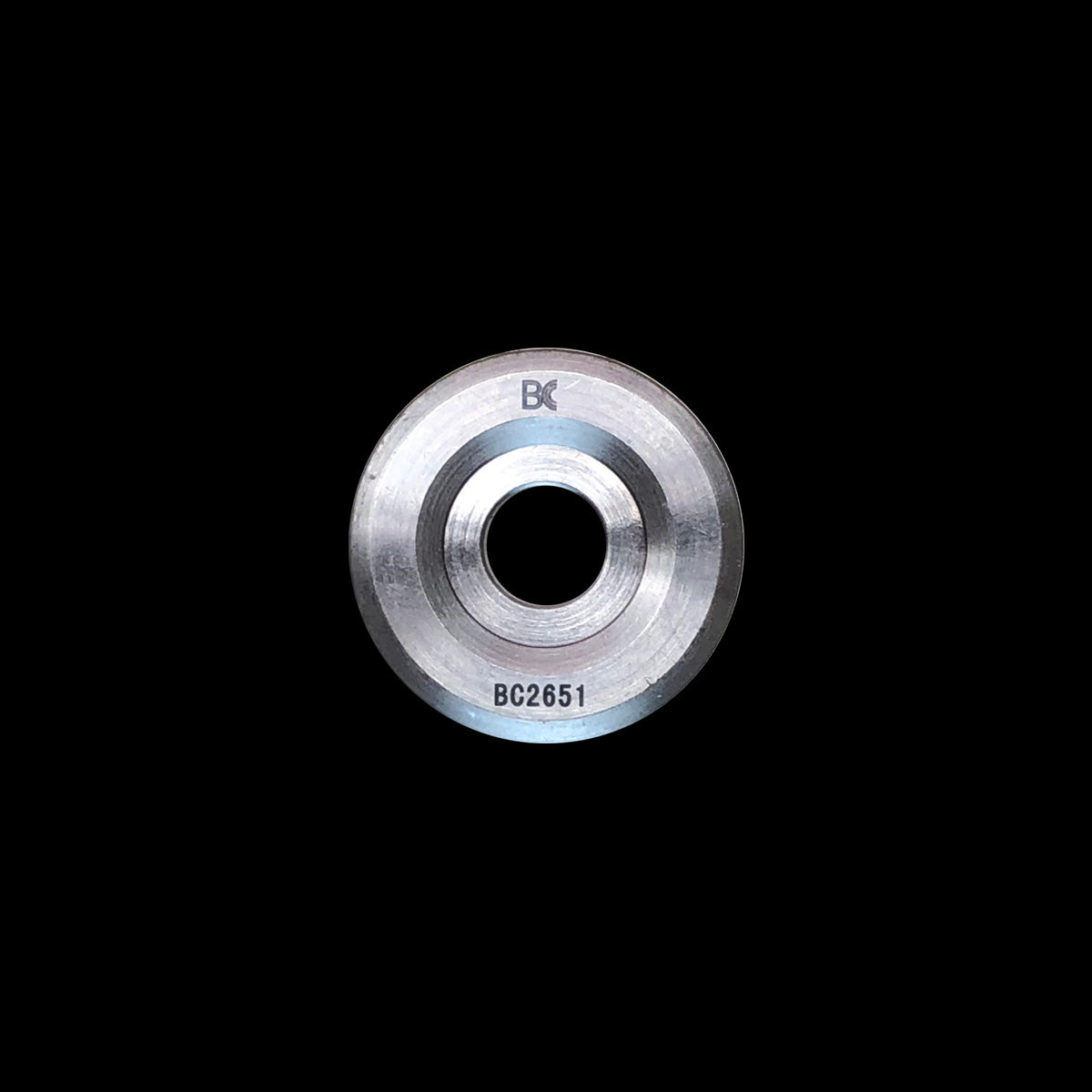
BC2020S-1 – Steel Retainer (Honda/Acura B18A/B18B/B20B)
In the precise world of performance engine building, especially within the revered Honda B-series platform, the margin for error is measured in thousandths of an inch and the tolerance for failure is zero. While camshafts, pistons, and connecting rods often command the spotlight, the seasoned builder knows that true reliability and performance are forged in the details of the valvetrain. The BC2020S-1 Steel Retainer from Brian Crower is one such critical detail. This is not a generic replacement part; it is a purpose-engineered, high-density component designed to replace the factory sintered iron retainers in B18A, B18B, and B20B non-VTEC engines. Its primary mission is to provide an unyielding foundation for the valve spring, managing extreme inertial forces and thermal cycling to prevent catastrophic valvetrain failure. For builders pushing the limits of durability in high-mileage applications, forced induction setups, or sustained high-RPM use, upgrading to a precision-machined steel retainer like the BC2020S-1 is not an option—it is a fundamental engineering necessity.
Engineering Analysis: The 4340 Chromoly Steel Advantage
The factory sintered iron retainers used in many OEM applications are adequate for stock power and RPM limits but become a liability under increased stress. Sintered metal, while cost-effective, can have microscopic porosity and lacks the ultimate tensile strength and fatigue resistance needed for performance. The BC2020S-1 is machined from solid billet of SAE 4340 chromoly steel, a material whose properties are non-negotiable in high-stress automotive and aerospace applications. The “chromoly” designation refers to its chromium and molybdenum alloying elements, which facilitate deep hardening and provide exceptional strength-to-weight ratio. After machining, these retainers undergo a rigorous heat-treating process to achieve a specific Rockwell hardness (typically in the C38-C42 range), ensuring they possess the necessary surface hardness to resist wear from the valve spring, while maintaining a ductile core to absorb impact loads without becoming brittle. This material science translates directly to the track or street: the retainer will not deform under load, which maintains critical installed spring height and pressure, and it will resist the fatigue that leads to retainer failure and valve drop.
Precision Geometry and Critical Interface Design
The geometry of a valve retainer is a lesson in applied physics. The BC2020S-1 is not merely a copy of the OEM profile; its design is optimized for strength and compatibility. The outer diameter and locking groove (keeper groove) are machined to exacting tolerances to ensure a perfect interface with Brian Crower’s matching valve springs and standard OEM-style lockers (keepers). This precise fit eliminates any potential for movement or fretting, which can cause groove wear and eventual failure. The internal radius and wall thickness are calculated to distribute the immense load from the valve spring evenly, reducing stress concentrations that can lead to cracking. Furthermore, the machining process results in a superior surface finish. A smoother finish on the retainer’s contact surfaces minimizes friction and heat generation at the point where the spring rotates during operation, contributing to overall valvetrain stability and longevity. Every sharp edge is broken, and every dimension is held to a tolerance that guarantees consistency from one retainer to the next—a critical factor when balancing a complete valvetrain.
Performance Benefits and Application Scope
Installing the Brian Crower BC2020S-1 Steel Retainer system provides a foundational upgrade that enhances the entire engine’s capability and safety margin. Its benefits are measurable and critical for any serious build.
- Eliminates OEM Weak Link: Directly addresses the failure point of stock sintered iron retainers, especially in engines with upgraded valve springs or increased RPM limits.
- Superior Fatigue Resistance: The 4340 chromoly steel and proper heat treatment allow the retainer to withstand millions of cycles at high load without degradation, essential for endurance racing or high-mileage turbocharged vehicles.
- Maintains Valve Train Geometry: Resistance to deformation ensures consistent installed height and spring pressure over time, preserving camshaft profile accuracy and valve timing.
- Enhanced Heat Tolerance: Performs reliably in the high-temperature environment of the cylinder head, where sustained heat can weaken inferior materials.
- OEM+ Fitment: Designed as a direct, drop-in replacement for the specified applications, requiring no modification to the cylinder head, valves, or guides. They are engineered to work with the stock valve stem locks.
- Foundational for Future Upgrades: Provides the necessary platform for more aggressive camshaft profiles and higher-pressure springs should the builder decide to increase performance later.
Comprehensive Vehicle Fitment
The BC2020S-1 is engineered specifically for the single overhead cam (SOHC), non-VTEC variants of the legendary Honda B-series engine. Precise fitment is paramount. This retainer is compatible with the following applications. Always verify engine code and head casting before installation.
Honda / Acura Applications:
- Honda B18A Engine: 1990-1991 Honda Integra (RSi/XSi)
- Acura B18B Engine (Non-VTEC): 1992-1993 Acura Integra (GS/RS/LS), 1994-1995 Acura Integra (RS/LS)
- Honda B20B Engine: 1996-1998 Honda CR-V (RD1), Various JDM and international market applications.
Critical Note: This retainer is not designed for VTEC-equipped B-series engines (B16A, B17A, B18C, B20Z) or for Dual Overhead Cam (DOHC) non-VTEC engines (B18A1/B18B1 from 1990-1991 Integra). Using an incorrect retainer can lead to improper spring seating, incorrect installed height, and immediate valvetrain failure.
Technical Specifications Table
| Specification | Detail |
|---|---|
| Part Number | BC2020S-1 |
| Material | SAE 4340 Chromoly Steel, Heat-Treated |
| Finish | Machined, Black Oxide or Similar Corrosion-Resistant Finish |
| Quantity | 1 Retainer (Sold Individually; 16 required for a complete V8 set for an inline-4 engine) |
| Compatible Spring Types | OEM Replacement Springs, Brian Crower Single Springs (Specify for SOHC Non-VTEC) |
| Compatible Locks (Keepers) | OEM Standard 7° Locks |
| Primary Application | Honda B18A, Acura B18B (Non-VTEC), Honda B20B (SOHC, Non-VTEC) Engines |
Installation Protocol and Valvetrain Synergy
Installing the BC2020S-1 retainers is a procedure that demands cleanliness, precision tools, and methodical care. The cylinder head should be clean, with valves, guides, and seats in known good condition. Always install new valve stem seals. Use a quality, on-head valve spring compressor. The retainer must sit squarely on the spring before the locks are installed. A small amount of assembly lube on the valve stem tip and the inside of the retainer/lock interface is recommended. Most critically, after assembly, you must verify the Installed Spring Height (ISH) for each valve. Using a different retainer, even a direct-replacement design, can subtly alter this dimension. ISH must be within specification for your chosen valve springs to ensure correct seat and open pressures. Deviations can be corrected with appropriate valve spring shims. Remember, the retainer is one component in a system. For maximum benefit and safety, pair it with quality valves, properly specified valve springs that match your cam profile and RPM goals, and new locks. A comprehensive understanding of valve spring dynamics is crucial for any performance build. Finally, after initial assembly and again after the first heat cycle, it is imperative to check valve lash (clearance) and re-torque the cylinder head according to the manufacturer’s specified sequence and procedure.
Be the first to review “BC2020S-1 – Steel Retainer – (Honda/Acura B18A/B18B/B20B) – 1 only”
| Make | Model | Year |
|---|---|---|
| Acura | Integra | 1994 - 2001 |
| Honda | Civic | 1992 - 2000 |
Related products
Sale!
Original price was: $14.23.$12.37Current price is: $12.37.
Sale!
Original price was: $14.23.$12.37Current price is: $12.37.
Sale!
Original price was: $14.23.$12.37Current price is: $12.37.
Sale!
Original price was: $14.23.$12.37Current price is: $12.37.
Sale!
Original price was: $14.23.$12.37Current price is: $12.37.
Sale!
Original price was: $14.23.$12.37Current price is: $12.37.
Sale!
Original price was: $14.23.$12.37Current price is: $12.37.
Sale!
Original price was: $14.23.$12.37Current price is: $12.37.
Reviews
There are no reviews yet.