
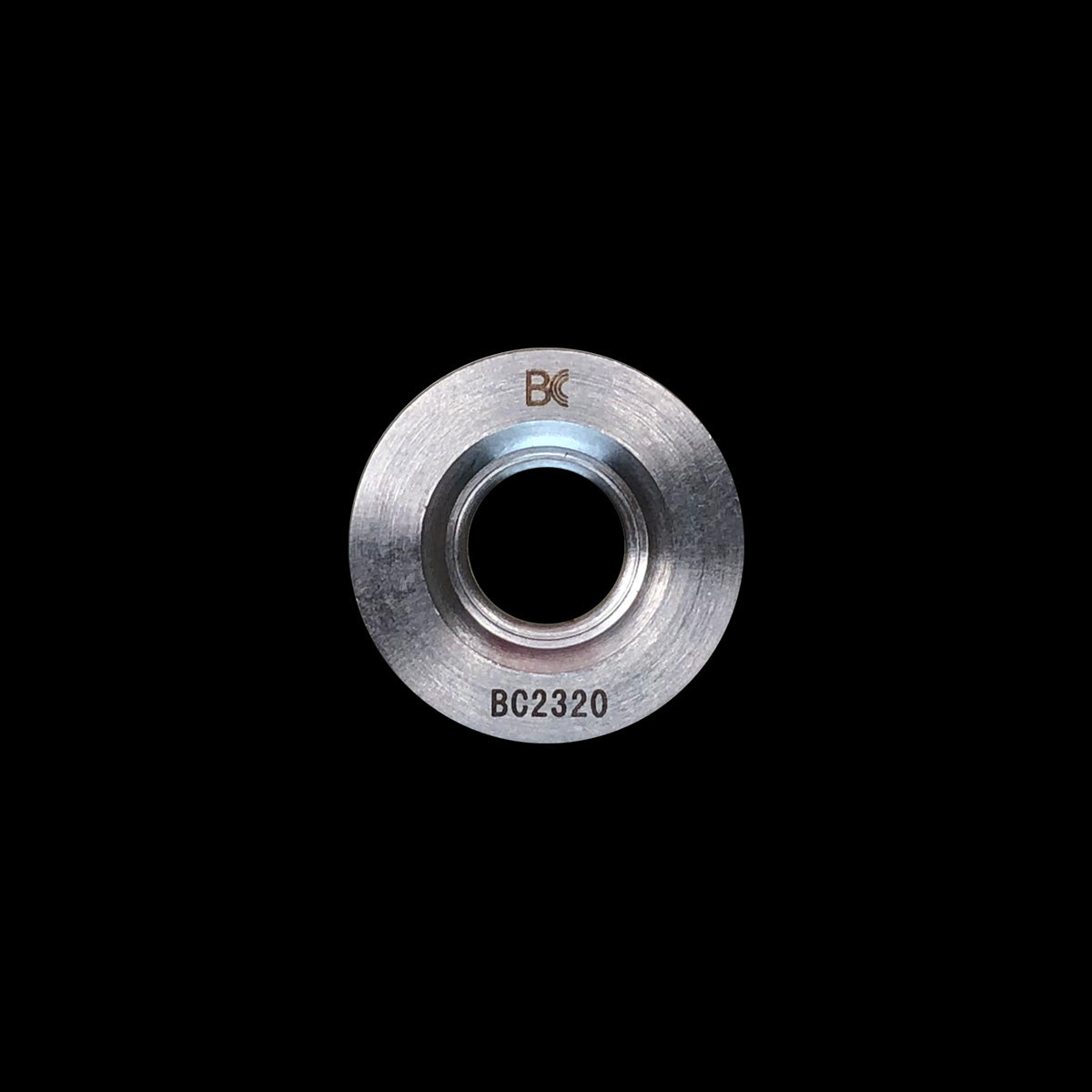
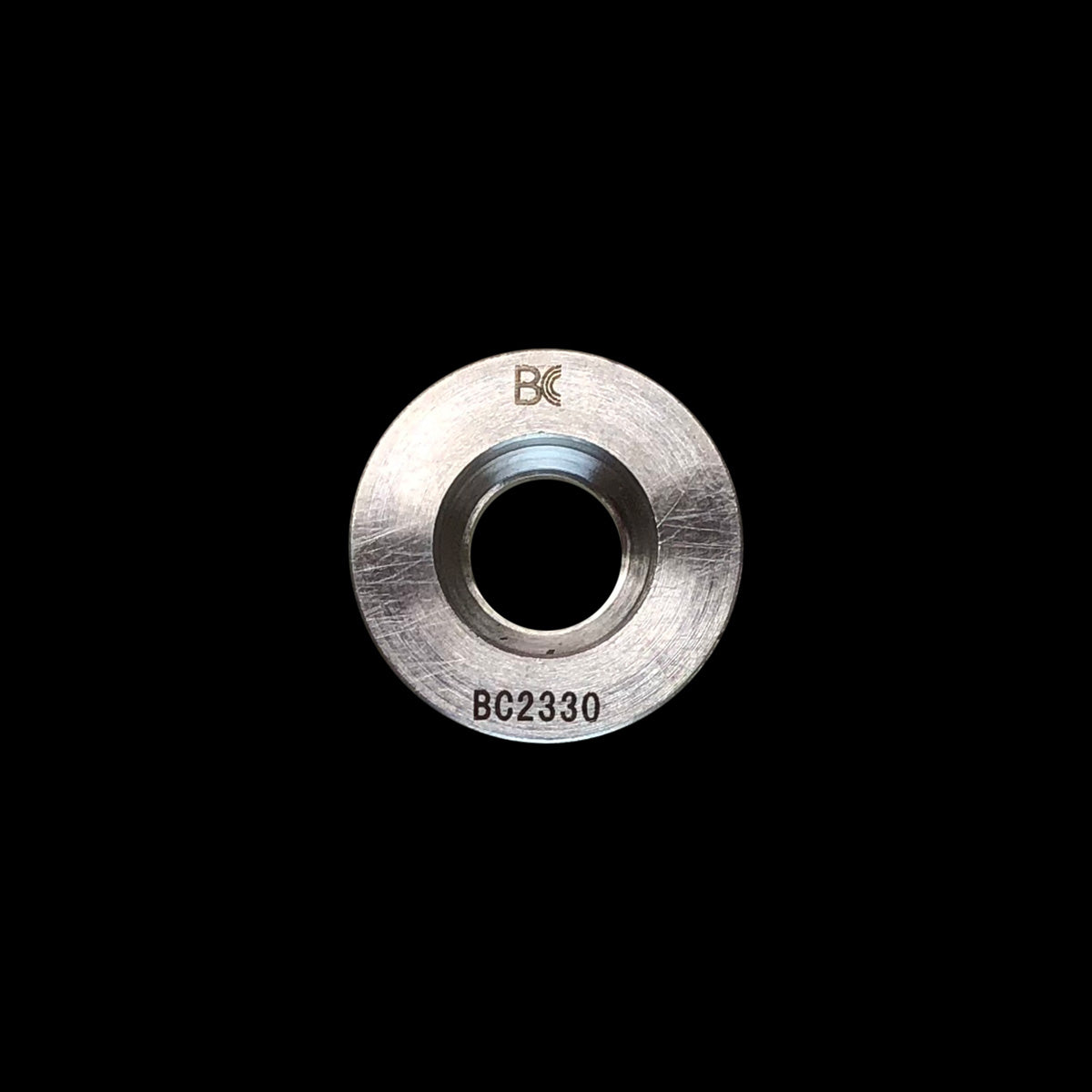
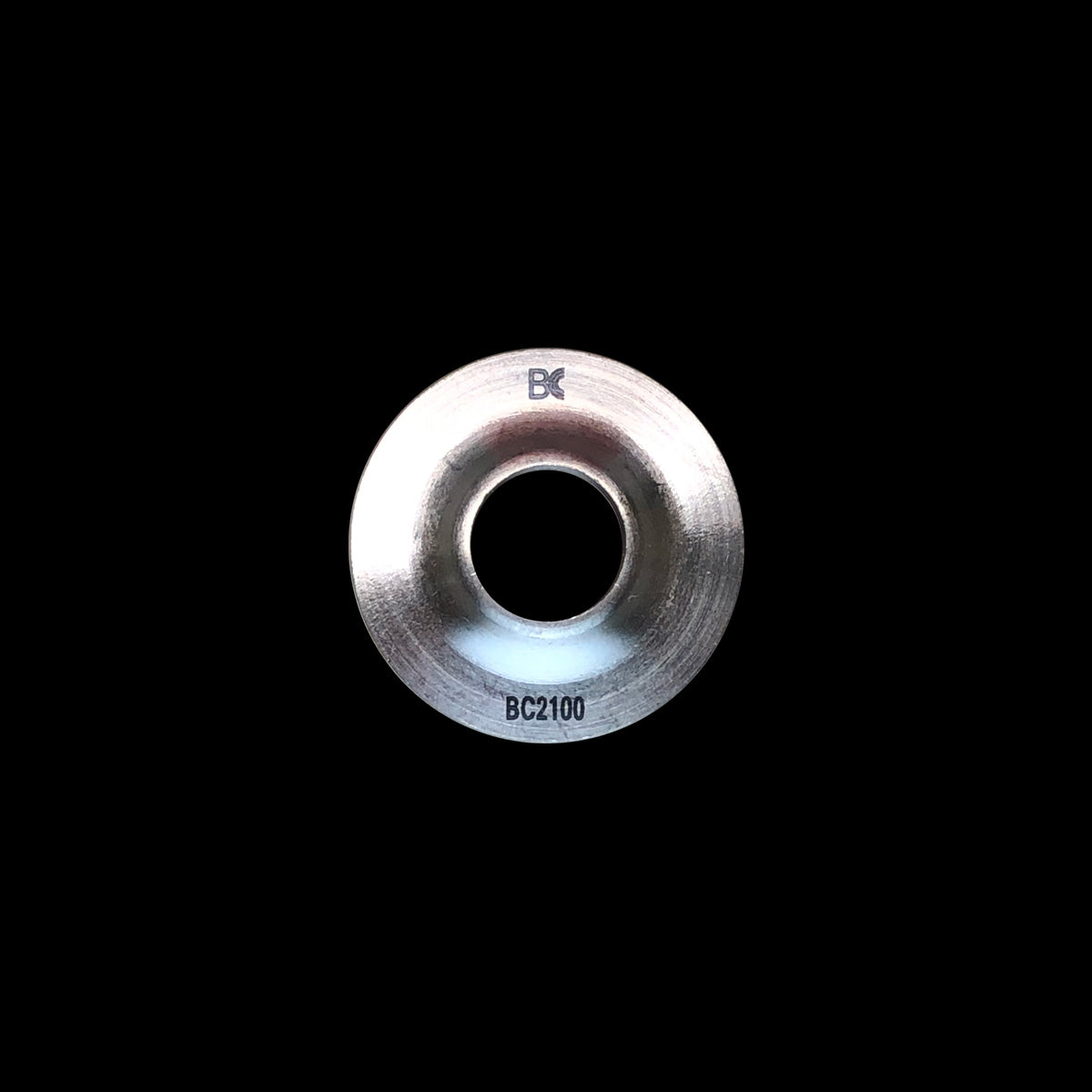
In the realm of high-performance engine building, particularly for the legendary Toyota 7M-GTE and 7M-GE powerplants, every component’s margin for error vanishes at elevated RPM. The valve train, a symphony of precise mechanical motion, becomes a critical failure point under boost and high lift. Standard retainers, often forged from hardened steel or lesser materials, represent a significant unsprung weight penalty and a potential point of fatigue. The Brian Crower BC2320-1 Titanium Retainer is not an upgrade; it is a fundamental re-engineering of this pivotal component. Engineered specifically for the 7M series, this single retainer—part of a full set—embodies the transition from robust stock performance to relentless, race-proven durability. Its purpose is singular: to provide an absolute, weight-optimized, and fatigue-resistant interface between the valve spring and the keepers, enabling the valve train to operate with precision and stability far beyond factory limits. For the builder seeking to unlock the true potential of their 7M, whether for a high-boost street application or an all-out race engine, the choice in retainers is binary. This is the definitive component for those who measure performance in grams saved and RPM gained.
Design Philosophy & Material Superiority
The efficacy of the BC2320-1 begins at the atomic level. Brian Crower selects aerospace-grade 6AL-4V titanium alloy for this retainer, a material whose properties are leagues beyond conventional steel. The primary advantage is its exceptional strength-to-weight ratio. Titanium 6AL-4V offers tensile strength comparable to many high-grade steels but at roughly 56% of the density. This translates directly to a dramatic reduction in unsprung mass within the valve train. Reducing the mass that the valve spring must accelerate and decelerate with each cycle diminishes valve float, lowers the risk of harmonic resonance, and allows for more aggressive cam profiles and higher redline thresholds. Furthermore, titanium exhibits superior fatigue resistance, crucial for an component undergoing millions of cyclical stress events. Unlike steel, which can develop micro-fractures over time leading to catastrophic failure, titanium’s crystalline structure is more resistant to this type of fatigue, offering a vastly extended service life under extreme conditions. The BC2320-1 is CNC-machined to exacting tolerances from a solid billet of this alloy, ensuring perfect concentricity, a flawless mating surface for the spring, and precise grooves for the valve locks. This is not a cast or sintered part; it is a precision-machined instrument.
Technical Benefits & Performance Gains
Installing Brian Crower Titanium Retainers delivers quantifiable and tangible improvements across the entire engine’s operational envelope. The benefits are systemic, affecting reliability, power potential, and valve control.
- Radical Reduction in Unsprung Weight: This is the paramount benefit. Lighter retainers, often paired with lighter valves and springs, allow the valve train to respond more quickly to cam lobe profiles, improving volumetric efficiency at high RPM and delaying the onset of valve float.
- Enhanced Valve Train Stability: Reduced mass lowers the inertial forces acting on the valve spring. This results in more consistent valve seating, improved seal, and reduced shock loading on the entire valvetrain assembly, from camshaft to valve tip.
- Increased RPM Capability & Safety Margin: By mitigating the forces that contribute to valve float, the BC2320-1 effectively raises the engine’s practical redline. This allows you to safely extract power higher in the rev range, a critical factor for turbocharged applications like the 7M-GTE where boost builds with engine speed.
- Reduced Spring Load Requirements: With less mass to control, a given valve spring can be effective at a slightly lower pressure. This can reduce friction and wear on the cam lobes and lifters, while still providing superior valve control compared to a heavier retainer with a stiffer spring.
- Exceptional Corrosion and Heat Resistance: Titanium naturally resists corrosion and retains its strength at elevated temperatures better than steel, making it ideal for the hot, harsh environment of a cylinder head, especially in turbocharged engines.
Precision Vehicle Fitment & Compatibility
The BC2320-1 is engineered with laser-focused application. It is not a universal part. Its dimensions—inner diameter, outer diameter, lock groove geometry, and seating angle—are machined specifically to match the OEM specifications and common aftermarket valves for the Toyota 7M engine series. Correct fitment is non-negotiable for valvetrain integrity.
Primary Application:
- Toyota 7M-GTE (2.5L Twin-Cam, Turbocharged) – Found in the Toyota Supra (MA70), Soarer (MZ10), and Cressida (MX83).
- Toyota 7M-GE (2.5L Twin-Cam, Naturally Aspirated) – Found in the Toyota Supra (MA70), Cressida (MX83), and Pickup/Truck.
Critical Compatibility Notes: This retainer is designed for use with standard 7mm valve locks. It is imperative to verify compatibility with your specific valves, particularly aftermarket ones, as stem tip geometry can vary. Always use these retainers as part of a balanced valve train package, typically including appropriate Brian Crower valvesprings and valves for optimal performance and safety. Attempting to use stock springs with titanium retainers at significantly increased RPM is not advised.
Engineering Specifications & Detailed Analysis
Understanding the precise specifications of the BC2320-1 is crucial for the performance builder who leaves nothing to chance. The table below details the critical dimensions and material properties that define this component’s capability.
| Specification | Detail | Performance Implication |
|---|---|---|
| Part Number | BC2320-1 (Single Retainer) | Identifies component for a full set (16 required for a 7M). |
| Primary Material | Aerospace 6AL-4V Titanium Alloy | Provides optimal strength-to-weight ratio and fatigue life. |
| Manufacturing Process | Precision CNC Machined from Billet | Ensures dimensional perfection, consistency, and structural integrity. |
| Weight (Approx. per Retainer) | ~3.5-4.5 grams (vs. 8-10g for steel) | ~50-60% reduction in unsprung mass per valve. |
| Lock Groove Type | Standard 7mm (Dual or Single Grove) | Compatible with OEM and standard aftermarket 7mm valve locks. |
| Surface Finish | Machined, may feature a mild bead blast | Provides clean, consistent surface for spring seating. |
For a deeper technical dive into the metallurgical advantages of titanium in high-stress valvetrain applications, consult this authoritative resource on titanium valvetrain benefits from EngineLabs.
Installation Protocol & Final Assessment
The installation of titanium retainers demands the same precision with which they were manufactured. Always install them as part of a complete valve job. Cleanliness is paramount; the retainer, valve locks, valve stem tip, and spring must be free of debris. Use a quality valve spring compressor and ensure the locks seat perfectly into the machined grooves. It is highly recommended to perform a complete valve train geometry check after assembly, verifying installed height and spring pressure. While the BC2320-1 is a direct replacement in dimension, its performance envelope necessitates complementary components—specifically, valve springs rated for your target RPM and cam profile. Using these retainers with worn or under-spec springs negates their primary benefit and is dangerous.
In final assessment, the Brian Crower BC2320-1 Titanium Retainer is a critical investment for any serious 7M-GTE or 7M-GE build. It addresses a fundamental physical limitation of the stock valve train. The reduction in unsprung mass is not a theoretical gain; it is a direct enabler of higher, safer engine speeds, improved valve control, and long-term durability under boost and stress. For builders who understand that horsepower is built on a foundation of supported RPM, this component is indispensable. It represents the point where the robust 7M engine sheds its factory constraints and is transformed into a precise, high-revving performance engine, capable of reliably delivering the power its design promised.
Be the first to review “BC2320-1 – Titanium Retainer – (Toyota 7MGTE/7MGE) – 1 only”
| Make | Model | Year |
|---|---|---|
| Toyota | Supra | 1986 - 1992 |
Related products
Sale!
Original price was: $14.23.$12.37Current price is: $12.37.
Sale!
Original price was: $14.23.$12.37Current price is: $12.37.
Sale!
Original price was: $14.23.$12.37Current price is: $12.37.
Sale!
Original price was: $14.23.$12.37Current price is: $12.37.
Sale!
RETAINERS
BC2300-1 – Titanium Retainer – (Subaru EJ205-WRX / EJ257-STi, Toyota 3SGTE, 2JZGTE/GE) – 1 only
Original price was: $14.23.$12.37Current price is: $12.37.
Sale!
Original price was: $14.23.$12.37Current price is: $12.37.
Sale!
Original price was: $14.23.$12.37Current price is: $12.37.
Sale!
Original price was: $14.23.$12.37Current price is: $12.37.
Reviews
There are no reviews yet.