
No products in the cart.
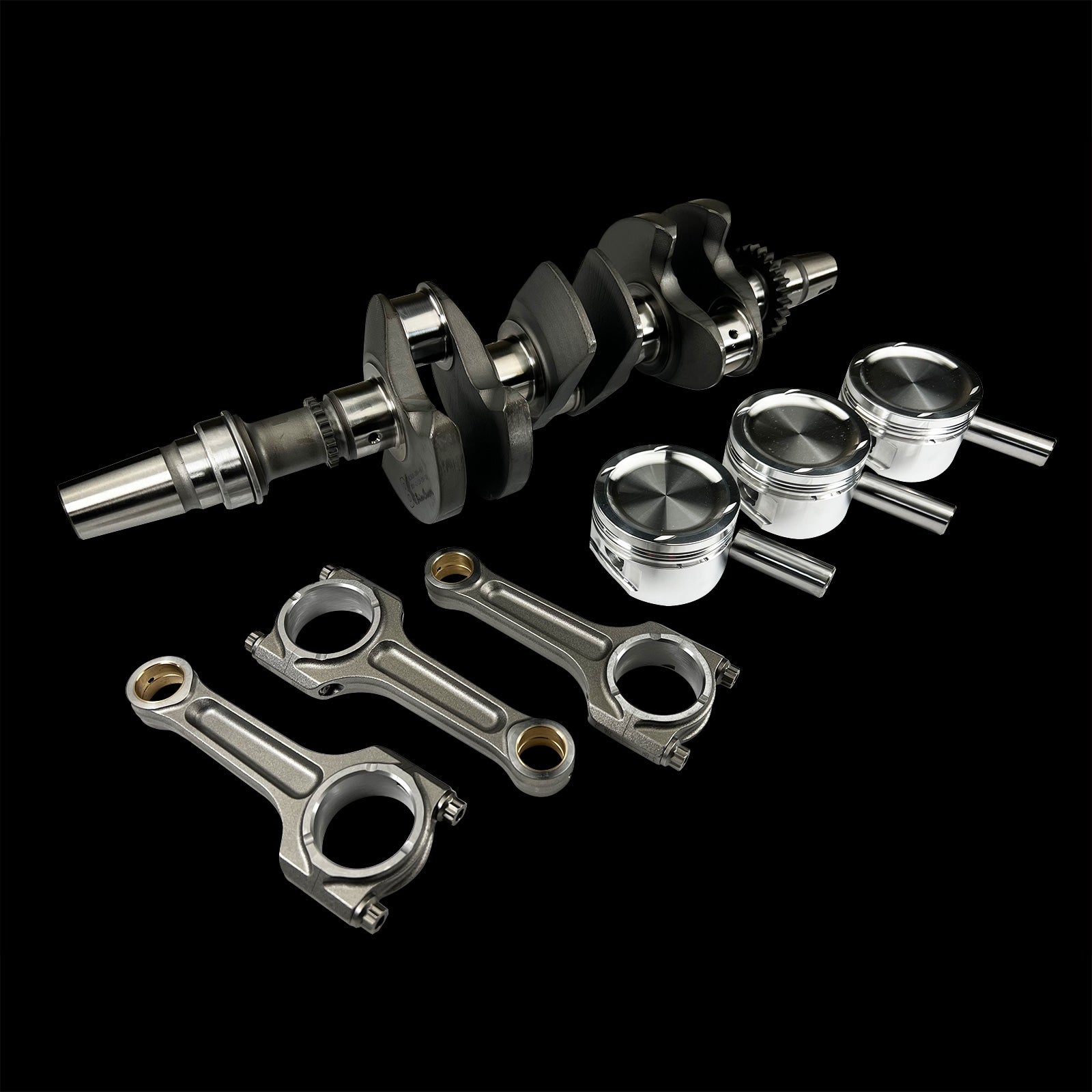
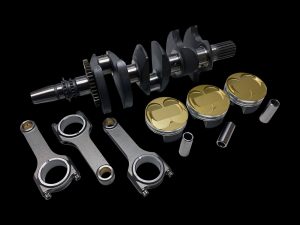
In the relentless pursuit of horsepower and durability for the legendary Toyota 2JZ engine, component selection moves beyond mere parts replacement into the realm of strategic engineering. The BC6307T-UPG Titanium I-Beam Connecting Rods with ARP625+ Fasteners represent this pinnacle, a calculated upgrade for engines destined for severe duty, high-RPM operation, or ambitious stroker configurations. This isn’t a modest improvement; it’s a fundamental re-engineering of a critical rotating assembly component. Manufactured by Brian Crower, these rods translate aerospace-grade material science and proven performance architecture into a package designed to handle the extraordinary cylinder pressures and inertial forces generated by modern turbocharging and nitrous oxide systems. For the builder who views the engine as a balanced system, the reduction in reciprocating mass and the immense tensile strength offered by this assembly are non-negotiable factors for achieving both robust power ceilings and engine longevity.
Material Science: The Titanium Advantage
Transitioning from forged steel or even aluminum to titanium for a connecting rod is a significant leap in performance engineering. The BC6307T-UPG rods are machined from premium Ti-6Al-4V (Grade 5) titanium alloy, the workhorse of the aerospace and high-stress motorsports industries. The benefit profile is profound:
- Exceptional Strength-to-Weight Ratio: Titanium’s primary advantage. These rods achieve a remarkable balance, offering fatigue and tensile strength comparable to many steel alloys while being approximately 40-45% lighter. This drastic reduction in reciprocating mass is a performance catalyst.
- Reduced Inertial Loading: Lighter rods mean lower forces on the rod journals during the piston’s rapid change of direction at top and bottom dead center. This decreases stress on the entire rotating assembly, reduces bearing loads, and allows the engine to accelerate and decelerate more quickly, improving throttle response.
- Enhanced High-RPM Stability: By minimizing the mass being slung around by the crankshaft, engine balance is improved, and the risk of harmful harmonics at elevated RPM is reduced. This creates a safer environment for pushing the 2JZ’s renowned RPM potential.
- Superior Fatigue Resistance: Ti-6Al-4V exhibits excellent resistance to metal fatigue, the progressive structural damage caused by cyclic loading. This is critical for a component experiencing constant tension-compression cycles, ensuring long-term reliability under boost.
Structural Analysis: The I-Beam Design Philosophy
The choice of an I-beam cross-section is a deliberate engineering decision favoring ultimate strength and rigidity. This design provides optimal material distribution to handle the specific load types encountered by a connecting rod.
Load Management Under Combustion Pressure
During the power stroke, the rod is primarily under compressive load, pushing the piston down. The I-beam’s vertical web is exceptionally resistant to buckling or column failure under this compression. Simultaneously, the wide flanges at the top and bottom of the “I” provide immense stability, preventing flex or twist that could misalign the bearings and lead to premature wear or failure.
Controlling Tensile Stress at High RPM
As the piston reaches top dead center on the exhaust stroke and begins its descent, the rod must pull the piston down the cylinder. This creates a high-tensile (stretching) load, exacerbated by piston inertia at high RPM. The I-beam design efficiently manages these tensile forces along its length, maintaining dimensional stability where an H-beam might exhibit more deflection. For high-RPM, high-boost, or nitrous-assisted 2JZ applications where both compressive and tensile loads are extreme, the I-beam’s inherent rigidity is a key safety factor. For a deeper dive into connecting rod design theory and its impact on engine dynamics, consider this resource on connecting rod design from Engine Builder Magazine.
Fastener Engineering: The ARP625+ Upgrade
The stock rod bolt is often the weakest link in a connecting rod assembly. Brian Crower eliminates this vulnerability by including ARP625+ Custom Age 625+® fasteners as a critical upgrade. These are not standard ARP2000 bolts; they represent a further evolution in fastener technology.
Manufactured from a proprietary nickel-chromium-molybdenum alloy, ARP625+ bolts exhibit a 260,000 psi minimum tensile strength. This provides an immense clamp load to keep the rod cap securely positioned under brutal combustion events. More importantly, they possess superior fatigue resistance and ductility compared to previous generations. This means they can withstand the cyclic loading of high-performance use without succumbing to the brittle failure that can plague inferior fasteners. The precision-rolled threads and proprietary underhead fillet reduce stress concentrations, ensuring the bolt’s strength is fully realized in the application. In a titanium rod, where the beam is capable of withstanding tremendous force, the fastener must be its equal—the ARP625+ ensures it is.
Application and Vehicle Fitment
The BC6307T-UPG is engineered as a direct-fit replacement for the factory connecting rods within the 2JZ engine family. Correct installation by a qualified machinist or engine builder is paramount, involving precise big-end bore sizing, ring fitting, and proper fastener torqueing to ARP’s specifications with their recommended lubricant.
Vehicle Fitment
This component is designed specifically for the Toyota 2JZ engine platform, including:
- Toyota Supra MKIV (1993-2002) – 2JZ-GTE
- Toyota Aristo / Lexus GS300 (1997-2005) – 2JZ-GTE
- Toyota Soarer / Lexus SC300 (1991-2000) – 2JZ-GE / 2JZ-GTE
- Toyota Chaser / Cresta / Mark II (1996-2001) – 1JZ-GTE / 2JZ-GTE (varies by model)
- Universal fitment for any application utilizing a standard 2JZ-GE or 2JZ-GTE long block.
Note: These rods are an ideal choice for high-performance builds, including turbocharged, nitrous, and high-compression naturally aspirated setups. They are also compatible with many popular 2JZ stroker crankshaft kits when the correct piston pin diameter and compression height are specified for the intended stroke.
Technical Specifications
| Specification | Detail |
|---|---|
| Part Number | BC6307T-UPG |
| Center-to-Center Length | 5.700 in. (144.78 mm) – Stock 2JZ length |
| Big End Bore Diameter | 2.1650 in. (54.99 mm) – Requires finish honing to spec |
| Small End Bore Diameter | 0.8661 in. (22.00 mm) – For standard 22mm piston pins |
| Beam Design | I-Beam Profile |
| Core Material | Ti-6Al-4V (Grade 5) Titanium Alloy |
| Fasteners Included | ARP625+ Custom Age 625+® Rod Bolts & Nuts |
| Primary Application | High-Horsepower Turbo, Nitrous, Stroker, and High-RPM 2JZ Builds |
Selecting the BC6307T-UPG rods is a definitive statement of build intent. It signifies a commitment to leveraging advanced materials and precision engineering to unlock the full, reliable potential of the Toyota 2JZ platform. By addressing the critical triumvirate of weight, strength, and fastener integrity, this assembly provides a foundation capable of supporting four-figure horsepower goals while enhancing the engine’s overall dynamic character.
Be the first to review “BC6307T-UPG – Toyota 2JZ – Titanium I-Beam w/ARP625+ Fasteners”
| Make | Model | Year |
|---|---|---|
| Yamaha | 998 | 2016 |
| Yamaha | YXZ | 2016 |
Related products
Reviews
There are no reviews yet.