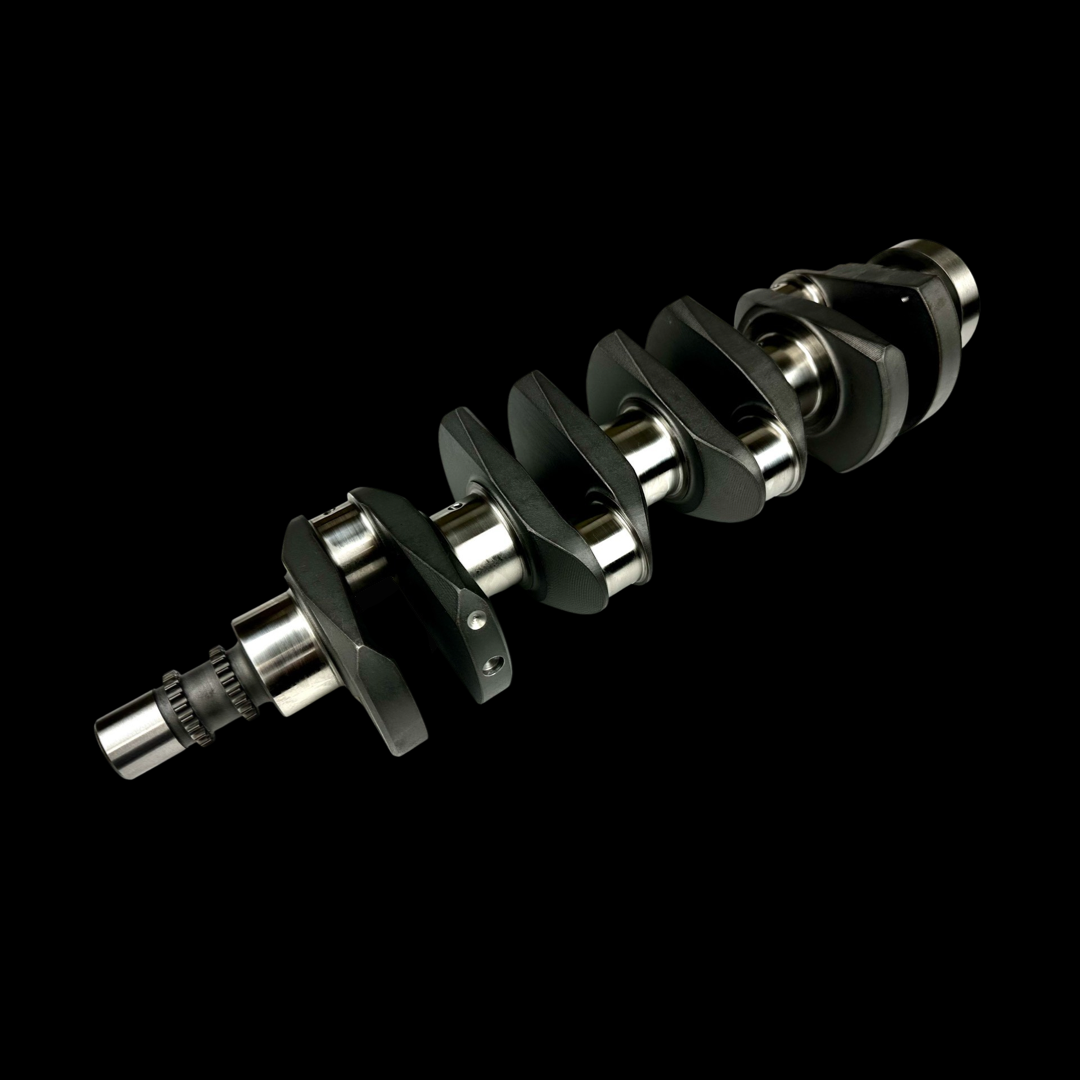
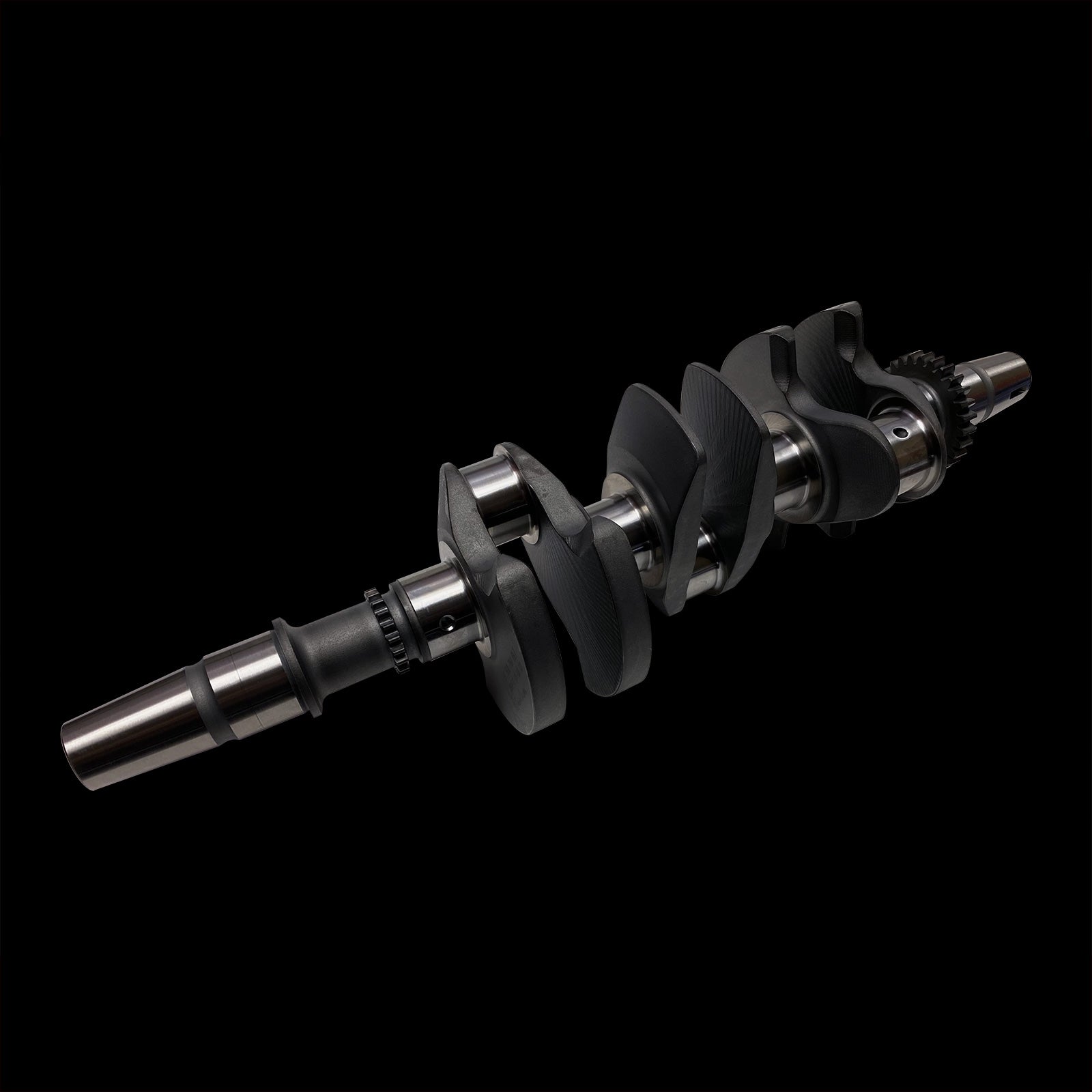
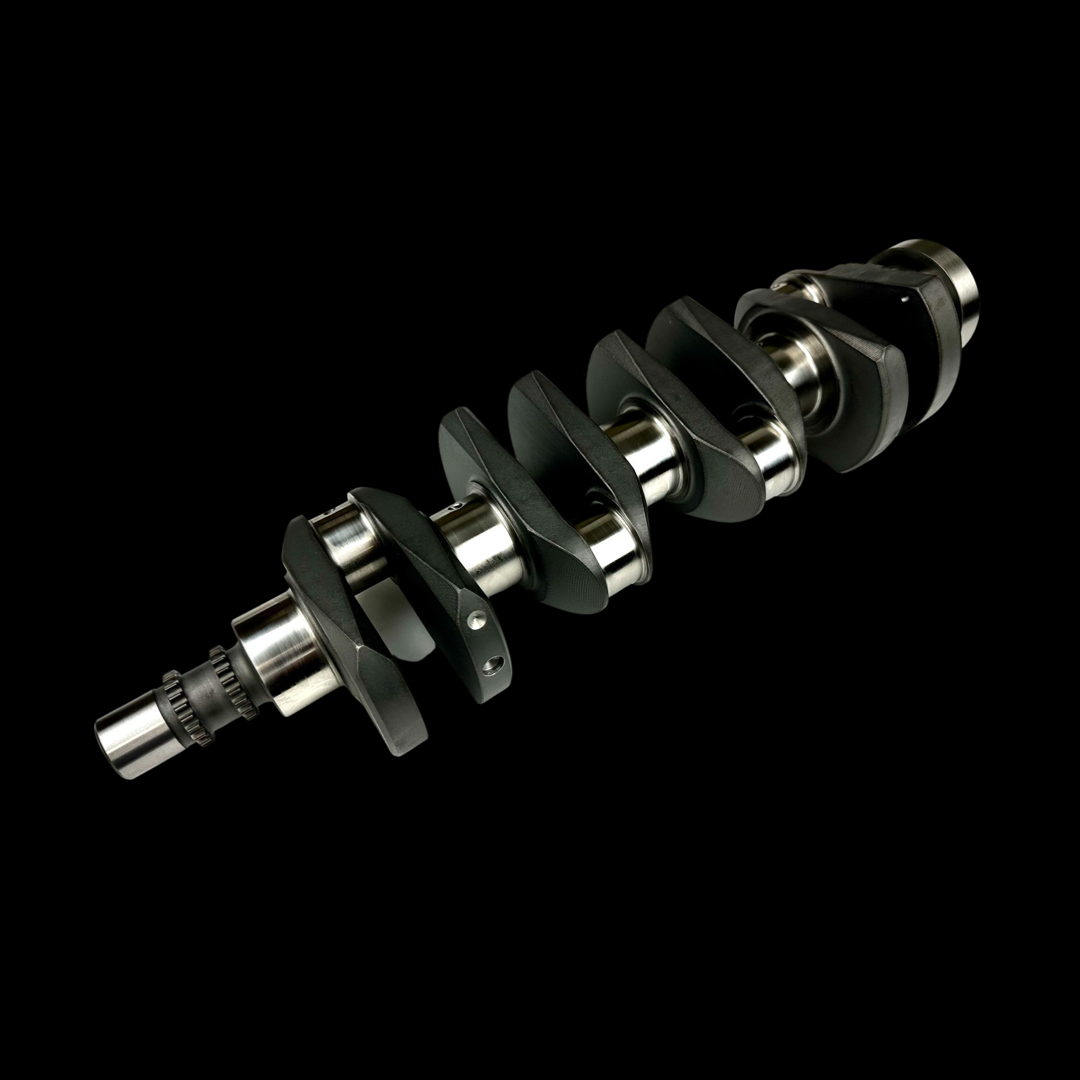
In the demanding world of high-output forced induction, the valvetrain is the critical bridge between combustion potential and realized power. For builders of the Nissan TB48DE engine—a platform revered for its robust architecture and displacement advantage—selecting a camshaft that aligns with the aggressive pressure ratios and thermal loads of turbocharging is non-negotiable. The Brian Crower BC0299T-3 Stage 3 “Duner Spec” Camshaft Kit is not merely an upgrade; it is a recalibration of the engine’s respiratory philosophy. Engineered explicitly for turbo or supercharged applications where mid-range torque and top-end power are paramount, this camshaft profile represents a masterclass in forced induction cam design. It moves beyond generic “performance” grinds to offer a specialized lobe strategy that maximizes volumetric efficiency under boost, manages dynamic cylinder pressure, and ensures valvetrain stability at extended RPM, making it the definitive choice for serious dune, prerunner, and high-performance street builds seeking to unleash the full, latent potential of the boosted TB48.
Engineering Philosophy: The Forced Induction Specialist
Traditional high-lift, long-duration “race” cams often compromise low-speed manifold vacuum and off-boost response, creating a drivability nightmare in street-driven or dune vehicles. The BC0299T-3’s design circumvents this pitfall through targeted engineering. Its profile is the result of computational fluid dynamics (CFD) analysis and real-world testing on boosted TB48 platforms. The primary focus is optimizing the area under the lift curve during the critical intake and exhaust cycles. For turbo applications, this means a lobe design that facilitates superior scavenging during the overlap period, using exhaust pulse energy to draw in the denser, pressurized intake charge. This reduces intake charge contamination and lowers effective combustion chamber temperatures. The “Duner Spec” nomenclature signifies a profile tuned for the unique load demands of sand and off-road use—requiring explosive torque out of corners and on climbs, rather than just peak horsepower numbers on a dyno sheet. The metallurgy is equally critical; manufactured from premium-grade 8620 steel billet, each cam is precision-machined, heat-treated using a proprietary process for core hardness, and finished with a super-lube oxide coating to prevent micro-welding and wear on initial startup, ensuring longevity that matches its performance.
Performance Benefits & System Synergy
Installing the BC0299T-3 camshafts transforms the operating character of the TB48 under boost. It acts as the key that unlocks the synergistic potential of your entire forced induction system—from turbocharger or supercharger to intercooler and fuel system. The benefits are systemic and measurable.
- Maximized Volumetric Efficiency Under Boost: The specific lift and duration figures are calculated to work in concert with boosted air density. They allow the engine to ingest a significantly larger mass of air per cycle compared to factory or mild aftermarket cams, directly translating to greater power potential before reaching diminishing returns on boost pressure.
- Enhanced Mid-Range Torque Production: Contrary to outdated beliefs, a properly designed turbo cam can dramatically improve torque in the 3,000-5,000 RPM range. The BC0299T-3’s profile accelerates spool time by improving exhaust flow to the turbine, and improves intake charge velocity, yielding a fatter, more usable powerband essential for off-road dynamics.
- Improved Exhaust Scavenging & Reduced EGTs: The aggressive exhaust lobe profile ensures spent gases are evacuated more completely and efficiently. This reduces exhaust gas temperature (EGT), a critical factor in turbo longevity and detonation prevention, while also creating a stronger pulse for the turbo’s turbine wheel.
- Stable Valvetrain Dynamics at High RPM: Designed for use with appropriate springs (like Brian Crower’s matching kits), the ramp rates and lift profiles maintain positive control of valves even when the engine is pulling hard to its redline under full boost, preventing valve float and ensuring repeatable, reliable performance.
- Optimized for Supporting Modifications: This camshaft assumes you are running a competent fuel system, engine management, and forced induction hardware. It is the final, crucial component that ties these systems together, allowing you to safely run higher boost levels or make more power at the same boost level due to improved efficiency.
Technical Specifications & Comparison
The following table details the exact specifications of the BC0299T-3 camshaft set, providing a clear, quantitative view of its aggressive profile. Comparing these figures to the stock Nissan TB48 camshafts reveals the monumental shift in engine strategy.
| Specification | BC0299T-3 Intake Cam | BC0299T-3 Exhaust Cam | Stock TB48 Cam (Approx.) |
|---|---|---|---|
| Duration at 0.050″ Lift | 234 degrees | 238 degrees | 200-208 degrees |
| Gross Valve Lift | 0.600″ | 0.595″ | ~0.410″ |
| Lobe Separation Angle (LSA) | 112 degrees | ~114-116 degrees | |
| Recommended RPM Range | 2,800 – 7,200+ RPM (With supporting valvetrain) | ||
Note: The tighter LSA (112°) combined with high lift increases overlap, which is beneficial for turbocharging as it uses exhaust flow to draw in the pressurized intake charge, enhancing cylinder filling. This is a key differentiator from naturally aspirated profiles. For a deeper academic understanding of how lobe separation and duration affect turbocharged engine performance, consult this resource on turbo camshaft theory at Engine Builder Magazine.
Vehicle Fitment & Prerequisite System Requirements
The BC0299T-3 is a precision component designed for a specific engine within a specific performance context. Correct fitment and system compatibility are absolutely essential to achieve the intended results and prevent engine damage.
Primary Vehicle Fitment: This camshaft set is engineered exclusively for the Nissan TB48DE engine. This engine is found primarily in:
• Nissan Patrol (Y61, GU) models from approximately 1998-2010 equipped with the 4.8L inline-six.
• It is crucial to verify your engine’s specific model code and displacement before purchase, as the Patrol also utilized other engines like the TD42 (diesel) and TB45E.
Mandatory Supporting Modifications: This is a Stage 3 profile. Installing it into an otherwise stock engine, or one without the following, will yield poor results and risk failure.
1. Forced Induction System: A turbocharger or supercharger system with adequate flow capacity and proper tuning is required.
2. Valvetrain Upgrade: The stock valve springs cannot control the high lift and aggressive ramp rates. Installation of performance valve springs, retainers, and likely upgraded valves (such as Brian Crower’s BC-0299T-3-SPK kit) is mandatory.
3. Engine Management & Fuel System: A programmable ECU (e.g., Haltech, Link, Nistune) is required to recalibrate fuel maps, ignition timing, and potentially variable valve timing (VVT) parameters. Upgraded fuel pumps, injectors, and a regulator are also prerequisites.
4. Bottom-End Integrity: For sustained high-RPM, high-boost operation, forged connecting rods and pistons are strongly recommended to handle the increased cylinder pressures.
Installation Notes & Final Tuning Imperative
Installation should be performed by a technician experienced in performance valvetrain assembly. Precise measurement of valve-to-piston clearance is non-optional due to the significant increase in lift. Checking and adjusting phasing, particularly if the engine utilizes variable valve timing on the intake cam, is critical. The ultimate performance and safety of your engine hinge on professional dyno tuning post-installation. A skilled tuner will optimize the air/fuel ratios, ignition advance, and boost control to harness the new cam profile’s capabilities while ensuring detonation margins are safe. The BC0299T-3 transforms the TB48 from a torquey workhorse into a precise, high-strung performance engine; it demands and rewards a complete, systems-engineered approach.
Be the first to review “BC0299T-3 – Nissan TB48 Stage 3 – Turbo/Forced Induction Duner Spec”
| Make | Model | Year |
|---|---|---|
| Polaris | Pro R | 2022 |
Related products
$4,396.57
$2,779.72
$2,779.72
$5,851.73
$4,626.45
Reviews
There are no reviews yet.