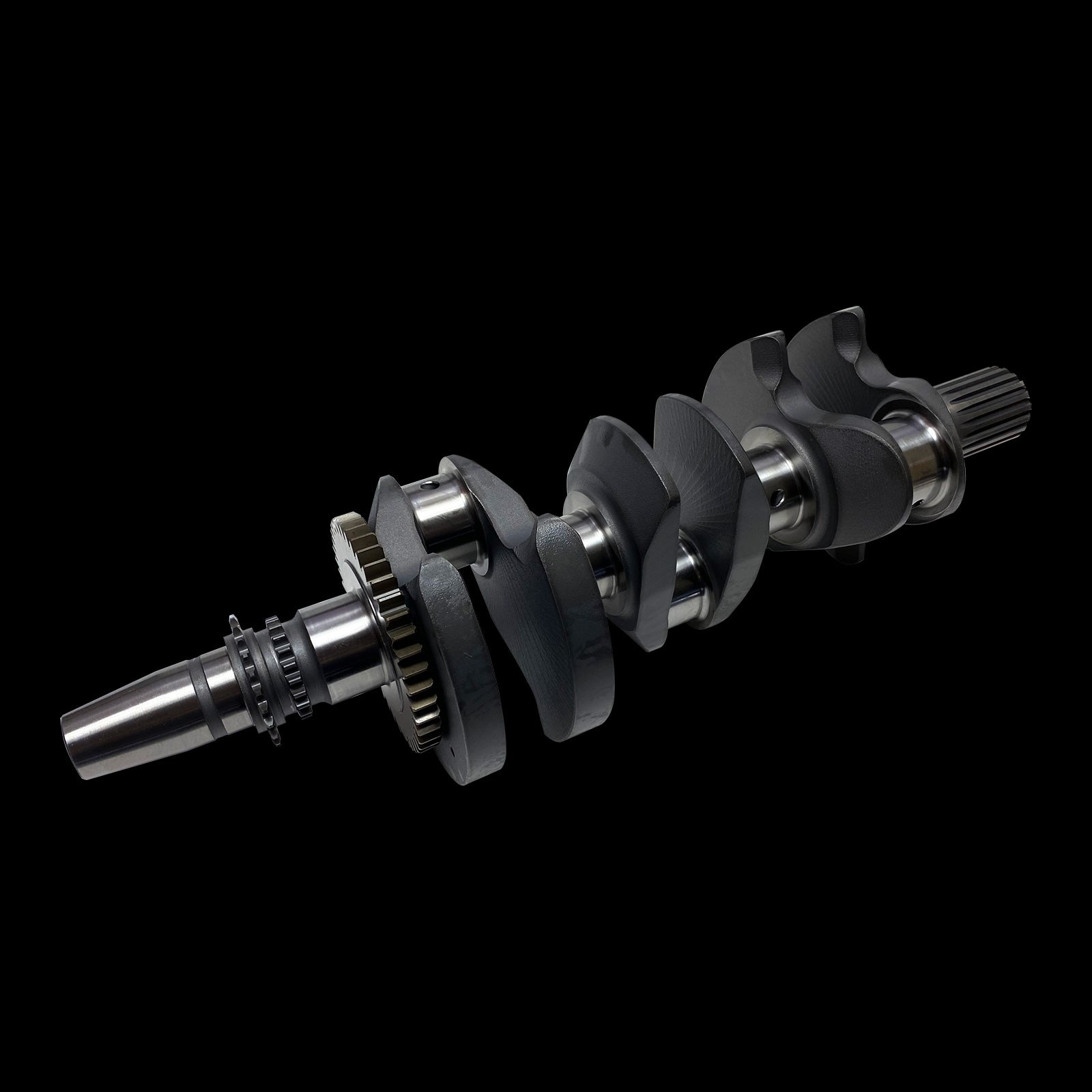
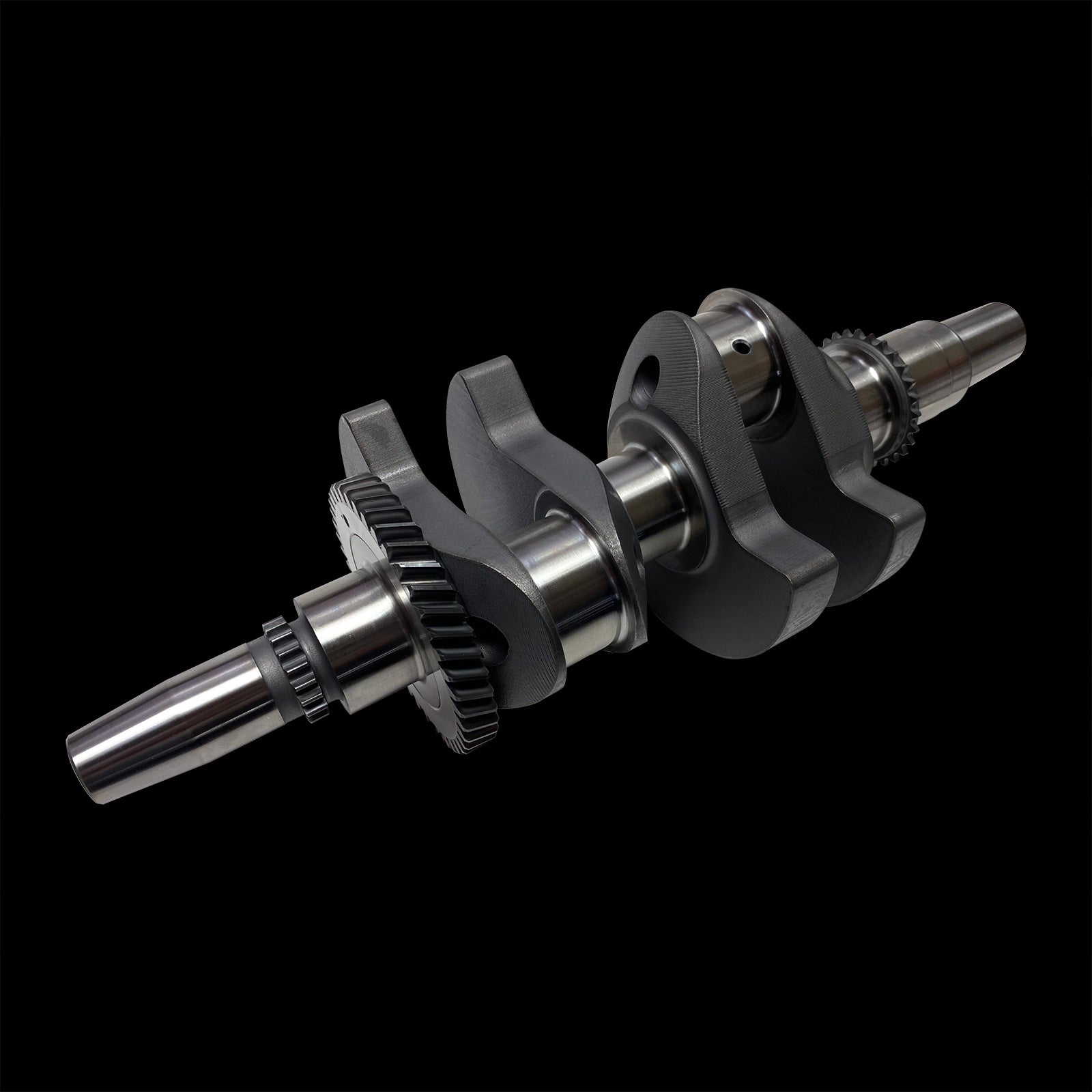
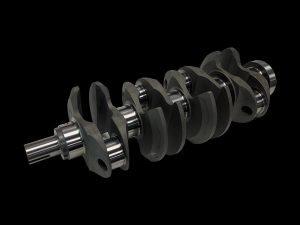
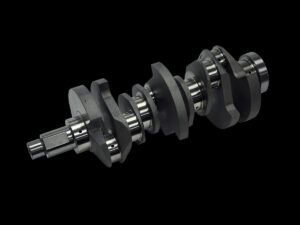
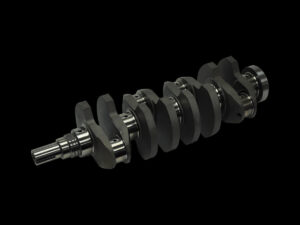
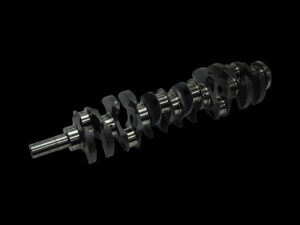
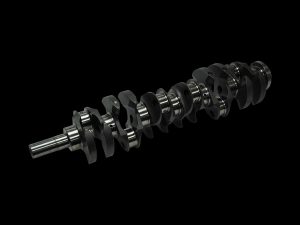
In the relentless pursuit of horsepower and durability, the foundation of any high-output engine is non-negotiable. For Yamaha YXZ1000R and Sidewinder platforms, the stock crankshaft becomes the critical failure point when pushing beyond conservative power limits. The Brian Crower BC5950 Billet Crankshaft is engineered as the definitive solution—a CNC-machined from 4340 chromoly steel billet component that transforms the rotating assembly from a liability into an asset. This 66.2mm stroke crankshaft is not merely a replacement; it is a fundamental upgrade designed for forced induction, high-RPM operation, and extreme abuse, providing the absolute bedrock for a reliable, high-performance build.
Engineering Analysis: The Billet Advantage
Unlike forged or cast crankshafts, the BC5950 begins its life as a solid, homogeneous block of premium 4340 chromoly steel. This billet machining process allows for unparalleled grain structure control and material density. Computer Numerical Control (CNC) equipment then carves the final part to tolerances within 0.0005″, ensuring perfect journal concentricity and balance. The 66.2mm stroke represents a precision increase over stock, engineered to work in harmony with aftermarket piston and rod combinations for optimized displacement and combustion dynamics. Each journal is micro-polished to a mirror finish, drastically reducing friction and wear on the main and rod bearings. Furthermore, the billet construction permits strategic material placement in high-stress areas like the journal fillets and counterweight transitions, areas where traditional cranks are prone to stress cracking under boost and RPM.
Critical Design & Material Specifications
The choice of 4340 chromoly steel is deliberate. This alloy, when properly heat-treated to a target hardness of 30-34 HRC, offers an exceptional strength-to-weight ratio and superior fatigue resistance compared to OEM materials. The crankshaft is fully counterweighted and balanced to a standard of less than 15 gram-cm, a necessity for smooth operation in a high-revving, three-cylinder engine. Brian Crower’s engineering includes upgraded keyways and threads for the crank sprocket and primary drive gear, preventing the fretting and wallowing common under severe torque loads. This is a component built for the long haul, designed to withstand the punishing loads generated by turbochargers or superchargers producing well over 300 horsepower.
Performance Benefits & Build Considerations
Integrating the BC5950 billet crankshaft into your Yamaha engine build delivers transformative advantages. It is the cornerstone for any serious performance upgrade.
- Unmatched Tensile Strength & Fatigue Life: The 4340 billet steel core provides a fatigue limit significantly higher than OEM, virtually eliminating crankshaft failure as a concern.
- Foundation for Increased Displacement: The 66.2mm stroke, when paired with appropriate bore increases, is the key to unlocking greater engine displacement for more torque and horsepower.
- Enhanced Rotating Assembly Stability: The superior balance and true journal alignment reduce harmonics, decrease bearing load, and contribute to overall engine smoothness and longevity.
- Forced Induction Readiness: Designed from the outset to handle the increased cylinder pressures and shock loads from turbocharging or supercharging, making it mandatory for big-power Sidewinder or YXZ builds.
- Precision Compatibility: Machined to precise OEM dimensions for main and rod journals, ensuring drop-in fitment with performance bearings, while the stroke is optimized for aftermarket piston and rod combos.
For builders, understanding the interaction between stroke, rod ratio, and piston selection is crucial. As noted in foundational engine building guides, such as this technical article on displacement and stroke, the stroke length directly influences piston speed and torque characteristics. The BC5950’s 66.2mm stroke is selected to optimize this balance for the Yamaha triple.
Vehicle Fitment & Application
Direct Fitment
The BC5950 Billet Crankshaft is a direct replacement component for the following applications. It is imperative that all other rotating assembly components (rods, pistons, bearings) are selected to match the new stroke and checked for proper clearance during assembly.
- Yamaha YXZ1000R (YXZ1000R / YXZ1000R SE): 2016-2023 model years. Essential for turbo, supercharged, or high-compression naturally aspirated builds targeting class-winning performance in UTV racing or dune applications.
- Yamaha Sidewinder (Snowmobile): 2017-2023 model years (998cc turbocharged engine). The cornerstone upgrade for any snowmobile engine build aiming to reliably exceed factory boost levels and horsepower thresholds.
Note: This crankshaft is designed for the 998cc, 3-cylinder, 4-stroke engine platform shared by these vehicles. Always verify engine model and year before purchase.
Technical Specifications: BC5950 Billet Crankshaft
| Specification | Detail |
|---|---|
| Part Number | BC5950 |
| Construction | CNC Billet 4340 Chromoly Steel |
| Stroke | 66.2mm |
| Main Journal Diameter | OEM Specification |
| Rod Journal Diameter | OEM Specification |
| Balance Standard | Under 15 gram-cm |
| Heat Treat | 30-34 HRC |
| Primary Application | High-HP Forced Induction, Racing |
Build Synergy & Final Recommendations
The BC5950 is the heart of a performance engine, but it requires synergistic components to realize its full potential. It is strongly recommended to pair this crankshaft with forged or billet connecting rods (such as Brian Crower’s H-beam rods) and forged pistons with a compression ratio calculated for your boost or application. A professional-grade balancing of the complete rotating assembly (crankshaft, rods, pistons, flywheel, and clutch) is not just advised—it is critical for longevity at elevated RPM. For tuners and builders, this crankshaft removes the single greatest mechanical limitation of the Yamaha 998cc platform, enabling you to confidently explore the upper echelons of power density and reliability. This is not a part for a simple refresh; it is the declaration of intent for a world-class performance engine.
Reviews
There are no reviews yet.