
No products in the cart.
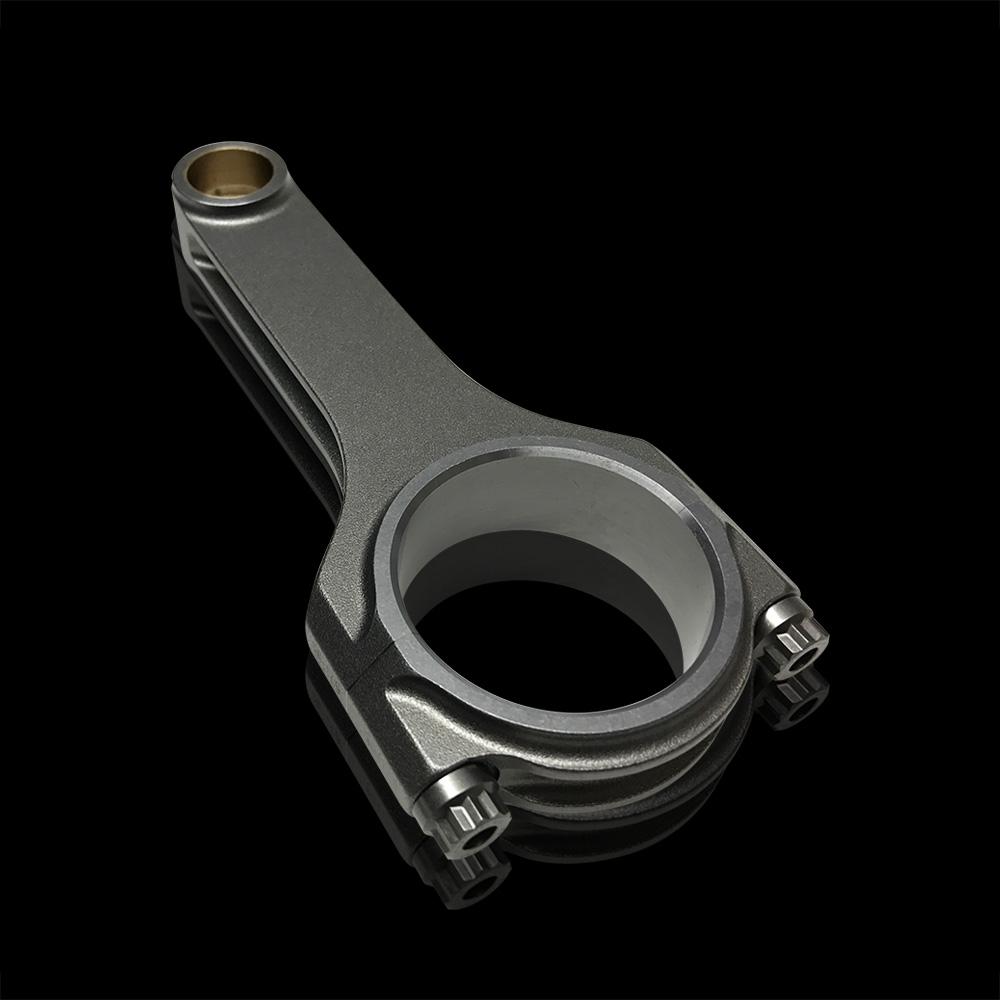
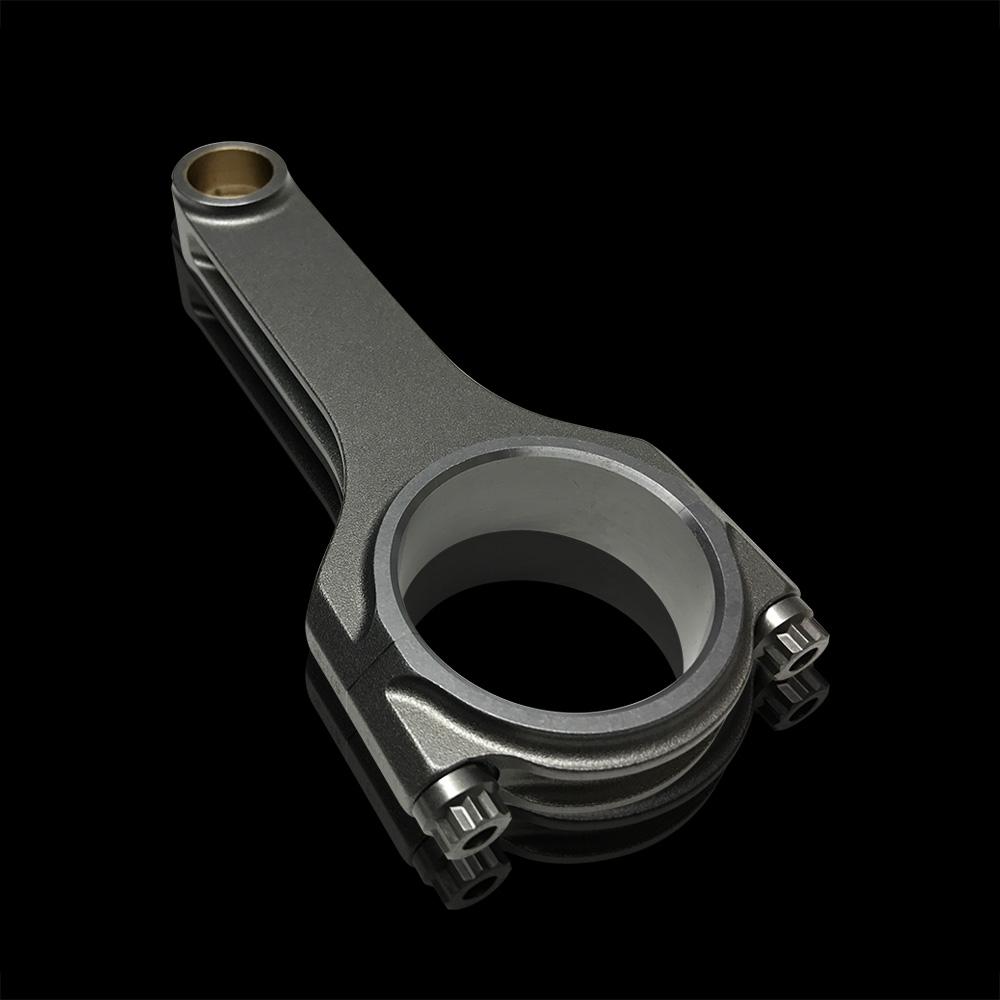
In the realm of forced induction and high-RPM performance, the connecting rod is the unsung hero, a critical pivot point between rotational and linear force. For the legendary Mitsubishi 4G63 engine, selecting a rod that matches its potential is non-negotiable. The Brian Crower BC6103 ProH2K Connecting Rod Set represents a calculated evolution in this component’s design, engineered not merely to withstand abuse but to redefine the parameters of durability and precision. This is not an off-the-shelf upgrade; it is a core systems overhaul designed for builders who speak in terms of mean piston speed, rod angularity, and tensile yield strength. Crafted from premium 4340 chromoly steel and secured with industry-standard ARP2000 fastener technology, this set in the specific 1G width with 2G piston pin (.866″) configuration addresses the exact needs of hybrid engine builds seeking maximum strength without compromise.
Material Science and the ProH2K Metallurgical Advantage
The foundation of any performance connecting rod is its material. The BC6103 rods are machined from a forged billet of 4340 chromoly steel, a nickel-chromium-molybdenum alloy revered in aerospace and motorsport for its exceptional strength-to-weight ratio and fatigue resistance. The “ProH2K” designation signifies a proprietary heat-treating process that takes the material beyond standard benchmarks. This process carefully controls the austenitizing, quenching, and tempering phases to achieve a optimal balance between ultimate tensile strength and ductility. The result is a rod capable of handling the tremendous compressive loads from high-boost scenarios and the tensile loads from high-RPM inertia, all while maintaining a crucial margin of elasticity to absorb detonation events that would shatter lesser components. The final material boasts a nominal tensile strength of 200,000 PSI (hence H2K), a figure that places it at the forefront of consumer-grade performance rods.
Engineering Analysis: H-Beam Design and Precision Machining
The choice of an H-beam profile over an I-beam is a deliberate engineering decision for the 4G63’s high-output applications. The H-beam design features a wide, flat central web flanked by two substantial flanges, creating a cross-section that offers superior resistance to buckling under extreme compressive loads—the primary stress in a boosted engine. This geometry also provides an excellent platform for the rod bolts, reducing stress concentration in the critical cap area. Every BC6103 rod undergoes CNC machining to exacting tolerances, ensuring perfect parallelism between the big and small ends, precise center-to-center distance, and uniform wall thickness. The small end is precision honed for a perfect fit with the .866″ diameter 2G piston pins, while the big end is sized and honed with a 1G journal width for direct replacement. This meticulous attention to dimensional accuracy ensures proper bearing crush and oil clearance, which are fundamental to oil pressure stability and longevity.
The Critical Interface: ARP 2000 Fastener System
The most meticulously crafted rod is only as strong as its weakest point: the rod bolt. Brian Crower eliminates this variable by including ARP 2000 cap screw fasteners as standard. ARP 2000 is a triple-alloy steel (chromium, nickel, and molybdenum) manufactured through a vacuum melt process to eliminate impurities and ensure a uniform grain structure. These fasteners are rated to 220,000 PSI tensile strength and, more importantly, possess exceptional clamp load retention and fatigue life. The rolled threads are superior to cut threads, providing greater strength and a more consistent torque-to-clamp load relationship. Proper installation using ARP’s recommended lubricant and torque-plus-angle procedure guarantees a uniform clamping force that keeps the rod cap securely registered under the most severe operating conditions, preventing cap walk and fretting—a common failure point in high-horsepower engines.
Performance Benefits and Application Rationale
Integrating the BC6103 ProH2K rods into your 4G63 build is a strategic move for achieving reliable power. The benefits are systematic and interconnected.
- Unmatched Durability for Forced Induction: The 4340 chromoly and H-beam design are specifically engineered to withstand the prolonged compressive stresses from high boost levels (commonly supporting 800+ HP applications), effectively eliminating rod bending or buckling as a failure mode.
- Enhanced High-RPM Stability: The balanced design and robust construction minimize stretch and deflection at elevated RPM, allowing you to safely extend the power band and reduce the risk of catastrophic failure due to piston-to-valve contact or loss of bearing clearance.
- Hybrid Build Compatibility: The specific 1G width (0.945″) and 2G pin diameter (.866″) configuration is ideal for builders using 1G 4G63 crankshafts with aftermarket pistons designed for the larger 2G piston pin, a common practice for increasing pin strength and piston options.
- Foundation for Precision Assembly: The CNC-machined consistency provides a perfect foundation for setting exact bearing clearances and achieving optimal engine balance, contributing to smoother operation and reduced harmonic vibration.
- Long-Term Reliability Investment: Beyond just power handling, the combination of premium materials and ARP fasteners dramatically increases the fatigue life of the rotating assembly, making it a cornerstone for endurance racing, time-attack, or any street engine where longevity is prized alongside performance.
For a deeper technical understanding of 4G63 bottom-end preparation and the role of connecting rod geometry, consider this resource on building a bulletproof Mitsubishi 4G63 bottom end.
Vehicle Fitment and Installation Specifications
Vehicle Fitment
Primary Application: This BC6103 rod set is engineered explicitly for the Mitsubishi 4G63 2.0L DOHC inline-4 engine found in specific vehicle platforms. Correct fitment depends on matching the rod’s journal width and pin diameter to your engine’s crankshaft and piston selection.
Compatible Engines & Vehicles:
- Mitsubishi Eclipse GS-T / GSX (1990-1994 1G models) – Using crankshaft from this platform.
- Mitsubishi Eclipse GS-T / GSX (1995-1999 2G models) – Requires matching pistons designed for 1G width crank and 2G pin.
- Mitsubishi Galant VR-4 (1991-1992)
- Eagle Talon TSi / Plymouth Laser RS Turbo (1990-1994)
- Hyundai Sonata / Starex (with 4G63 engine) – Fitment verification for specific year/model required.
Critical Fitment Note: This rod is designed for a 1G crankshaft journal width (0.945″). It will NOT fit the wider 2G (0.827″) crankshaft journal without incorrect side clearance. It uses the 2G piston pin diameter (.866″). You MUST use pistons machined for this larger pin size. Always verify all clearances (rod side, bearing crush, pin fit) during assembly.
Technical Specifications
| Part Number | BC6103 |
| Engine Application | Mitsubishi 4G63 2.0L DOHC |
| Center-to-Center Length | 5.500″ (139.7mm) – Stock Dimension |
| Big End Bore (Finished) | 1.7717″ (45.00mm) – Requires bearing installation |
| Big End Width | 0.945″ (24.0mm) – For 1G Crankshaft |
| Small End Bore (Finished) | 0.8660″ (22.00mm) – For 2G Piston Pins |
| Material | 4340 Chromoly Steel, ProH2K Heat-Treated |
| Design | H-Beam Profile, CNC Machined |
| Fasteners Included | ARP 2000 Cap Screw Bolts (3/8″) |
| Estimated Power Rating | 800+ HP (Dependent on full assembly) |
| Weight (per rod, approx.) | 625 grams |
Be the first to review “BC6103 – Mitsubishi 4G63 (1G Width w/2G Pin .866″) – ProH2K Connecting Rods w/ARP2000 Fasteners”
| Make | Model | Year |
|---|---|---|
| Eagle | Talon | 1990 - 1994 |
| Mitsubishi | Eclipse | 1990 - 1994 |
Related products
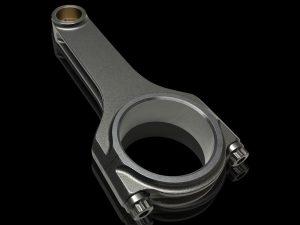
B16A / B18C - Connecting Rods
BC6025 – Honda/Acura B18C – ProH625+ Connecting Rods w/ARP Custom Age 625+ Fasteners
$1,022.79
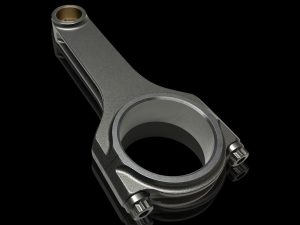
$1,022.79
CONNECTING RODS
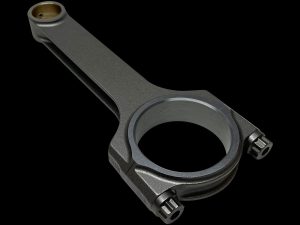
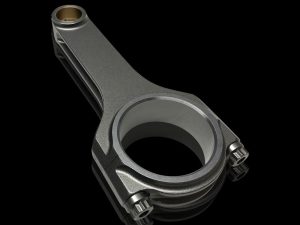
BC6049 – Honda/Acura – ProH2k Stroker w/ARP2000 Fasteners 5.985″ C-to-C w/B16A Journal
$685.57
B16A B18C Parts
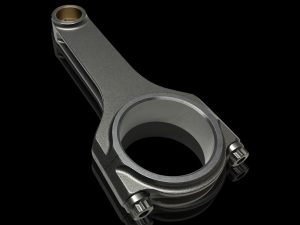
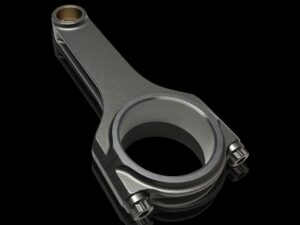
BC6040 – Honda/Acura – ProH2k Stroker w/ARP2000 Fasteners 5.512″ C-to-C w/B16A Journal
$685.57
B18A / B18B - Connecting Rods
BC6057 – Acura B18A/B18B, B20 – LightWeight Connecting Rods w/ARP2000 Fasteners – Rated to 400whp
$685.57
Reviews
There are no reviews yet.