
No products in the cart.
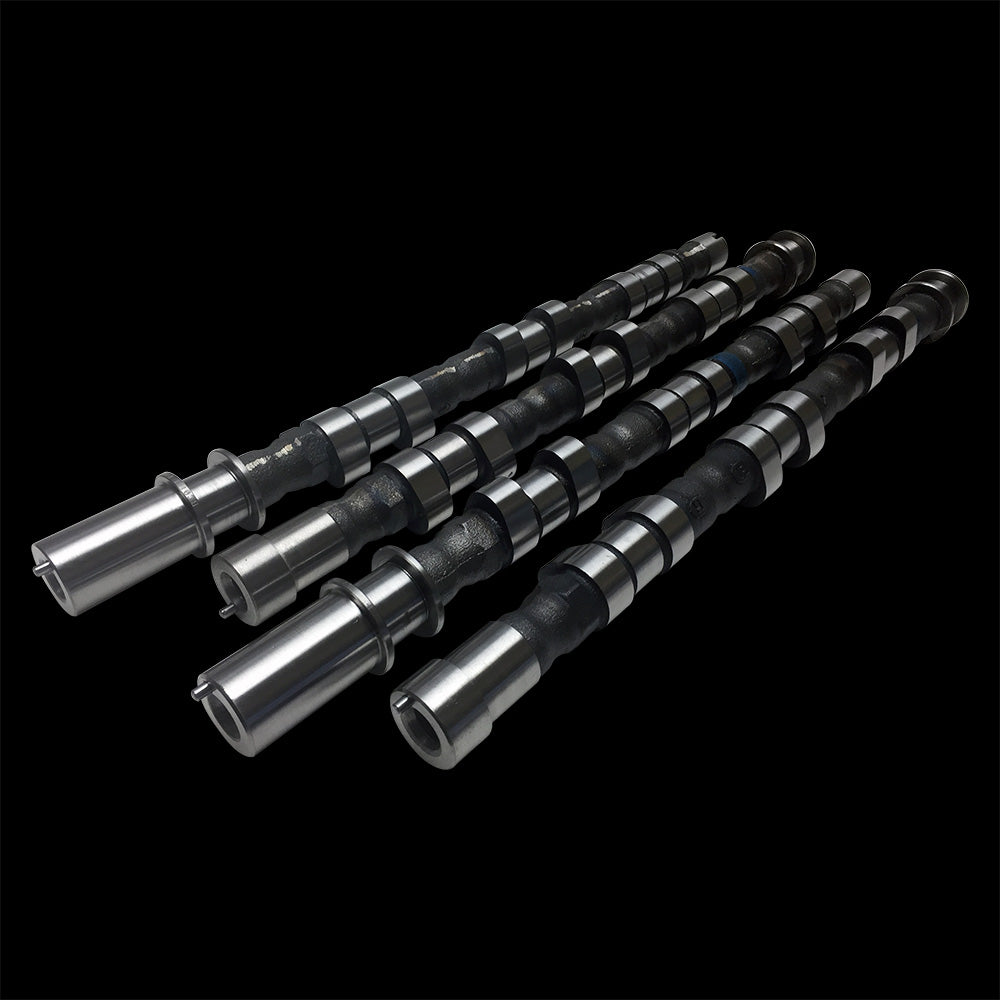
For the dedicated Mitsubishi tuner, the quest for reliable, high-revving horsepower from the venerable 6G72 engine platform demands components that bridge the gap between aggressive race theory and daily-driver pragmatism. The Brian Crower BC0141 Stage 2+ camshaft set represents this exact engineering nexus. Engineered specifically for forced induction and high-RPM naturally aspirated applications, these camshafts are not merely bolt-on parts; they are a recalibration of the engine’s fundamental breathing character. Moving beyond the limitations of factory and mild aftermarket grinds, the BC0141 profile is a calculated assault on volumetric efficiency, designed to exploit the 6G72’s inherent strengths while fortifying its weaknesses with 8620 chromoly steel and CNC precision. This is the definitive upgrade for the Mitsubishi VR-4, 3000GT, Stealth R/T TT, and related platforms, where the goal is not just increased power, but a broader, more usable powerband that translates directly to reduced ETs and superior street performance.
Engineering Philosophy: The Street/Strip Compromise Solved
The “Stage 2+” designation is a deliberate signal. It transcends basic duration and lift increases, embodying a holistic performance package. Brian Crower’s engineers start with the core constraint of the street-driven performance vehicle: drivability. An overly aggressive camshaft can sabotage low-end torque, create poor idle quality, and overwhelm stock valvetrain components, leading to failure. The BC0141 profile is optimized to avoid these pitfalls. The lobe design emphasizes rapid valve acceleration to achieve maximum lift quickly, allowing for significant duration at or near peak lift—where the cylinder breathes most effectively—without needing excessively long overall duration. This methodology, combined with a carefully selected lobe separation angle (LSA), maintains robust mid-range torque for responsive street driving while unlocking massive top-end airflow for peak horsepower. The result is a power curve that feels naturally aspirated in its linearity, even on turbocharged applications, providing a tractable and explosive driving experience.
- Transformative Mid-to-Top-End Power: Specifically designed to increase airflow above 3500 RPM, delivering dramatic horsepower gains where it matters most for acceleration and top-speed.
- Enhanced Drivability & Broad Powerband: The optimized LSA and ramp rate preserve crucial low-end torque and stable idle, making it suitable for daily-driven vehicles with modern engine management.
- Unmatched Valvetrain Stability: Manufactured from premium 8620 chromoly steel and precision-machined, they are significantly more durable than stock cast cams, especially at sustained high RPM.
- Forced Induction Synergy: The profile is ideal for turbocharged applications, allowing engines to move more air efficiently, reduce turbo lag through improved exhaust scavenging, and support higher boost levels safely.
- Complete Valvetrain Compatibility: Engineered to work in harmony with upgraded valve springs and retainers (highly recommended), protecting your investment and ensuring long-term reliability.
Camshaft Specifications & Technical Profile Breakdown
The BC0141 specifications reveal a targeted strategy for the 6G72’s dual-overhead-cam, 24-valve architecture. The profile is asymmetric, with the exhaust lobe typically featuring slightly more duration and/or lift than the intake. This is a critical detail for turbocharged engines, as it promotes better scavenging of exhaust gases from the cylinder, reducing pumping losses and lowering exhaust manifold pressure. This not only helps spool the turbos faster but also reduces the risk of detonation by clearing the chamber more effectively. The increased lift, achieved through a more radical lobe ramp, directly increases the cross-sectional area of the valve opening, which is the primary determinant of an engine’s airflow capacity at high RPM. When paired with aftermarket valve springs to prevent float, this lift allows the engine to breathe deeply well past the factory redline, a necessity for making power in the 7000+ RPM range. For a detailed exploration of valvetrain dynamics and spring selection, refer to this authoritative resource on valve spring harmonics and performance engine building.
Installation, Tuning, and Supporting Modifications
Installing the BC0141 camshafts is a precision task that demands meticulous attention to timing belt alignment, valve lash adjustment (on engines with adjustable rocker arms), and clean assembly practices. Professional installation is strongly advised. The most critical supporting modification is the valvetrain. The factory valve springs are not designed for the increased lift and higher seat pressure required to control the valves at elevated RPM with these cams. To prevent valve float—which can lead to piston-to-valve contact and catastrophic engine failure—a set of Brian Crower or equivalent dual or beehive valve springs and titanium retainers is mandatory. Secondly, tuning is non-negotiable. The increased airflow and altered volumetric efficiency will render the factory fuel and ignition maps insufficient. A competent tune via standalone ECU or a flashed factory ECU is required to optimize air-fuel ratios, ignition timing, and potentially variable valve timing parameters (on applicable engines) to extract the full, safe potential of these camshafts. Expect noticeable idle quality changes; a slightly lumpy idle is normal and indicative of the increased overlap.
Vehicle Fitment: Application-Specific Performance
The BC0141 camshafts are engineered for the specific bore, stroke, and combustion chamber characteristics of the Mitsubishi 6G72 engine family. Correct fitment is paramount for achieving the intended performance results and ensuring proper valvetrain geometry.
Primary Applications Include:
• Mitsubishi 3000GT VR-4 (1991-1999) – Twin-Turbo
• Mitsubishi 3000GT SL / Base (DOHC models) (1991-1999)
• Mitsubishi GTO Twin-Turbo (All JDM & UKDM versions)
• Dodge Stealth R/T Turbo (1991-1993)
• Dodge Stealth ES / Base (DOHC models) (1991-1993)
Note: Always verify engine designation (DOHC 6G72) and year. Some early 1991-1992 models may have minor sensor or head variations. Consultation with a specialist or Brian Crower directly for borderline applications is recommended.
Technical Specifications Table
| Parameter | Intake Cam Specification | Exhaust Cam Specification | Notes |
|---|---|---|---|
| Duration at 0.050″ | Approx. 224-228° | Approx. 228-232° | Measured at the industry-standard tappet rise point; indicates aggressive mid-lift timing. |
| Advertised Duration | Approx. 272-276° | Approx. 276-280° | Total duration from opening to closing at a minimal lash point. |
| Gross Valve Lift | Approx. 0.390″ – 0.410″ | Approx. 0.400″ – 0.420″ | With stock 1.6:1 rocker ratio. Actual lift is cam lobe lift multiplied by rocker ratio. |
| Lobe Separation Angle (LSA) | Approx. 112-114° | Central to drivability; this narrower LSA increases overlap for top-end power while maintaining stability. | |
| Core Material | 8620 Chromoly Steel | Billet steel, heat-treated for extreme strength and wear resistance, superior to OEM cast iron. | |
| Manufacturing Process | CNC Machined & Profile Ground | Ensures exacting lobe-to-lobe consistency and perfect journal concentricity for optimal performance and longevity. | |
Specifications are subject to change by manufacturer. Always confirm exact specs with Brian Crower or your authorized dealer at time of purchase.
Be the first to review “BC0141 – Mitsubishi 6G72/VR-4 Stage 2+ Camshafts – Street/Strip Spec”
| Make | Model | Year |
|---|---|---|
| Dodge | Stealth R/T Turbo | 1991 - 1996 |
| Mitsubishi | 3000GT VR-4 | 1991 - 1999 |
Related products
B18A / B18B - Camshafts
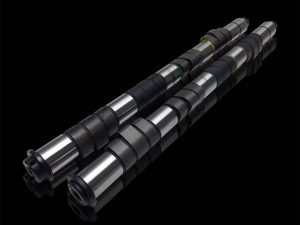
BC0021 – Honda/Acura B18A/B Stage 2 Camshafts – Forced Induction Spec
$562.28
Reviews
There are no reviews yet.