
No products in the cart.
BC5020B: The Definitive 4340 Billet Crankshaft for Honda B-Series Performance
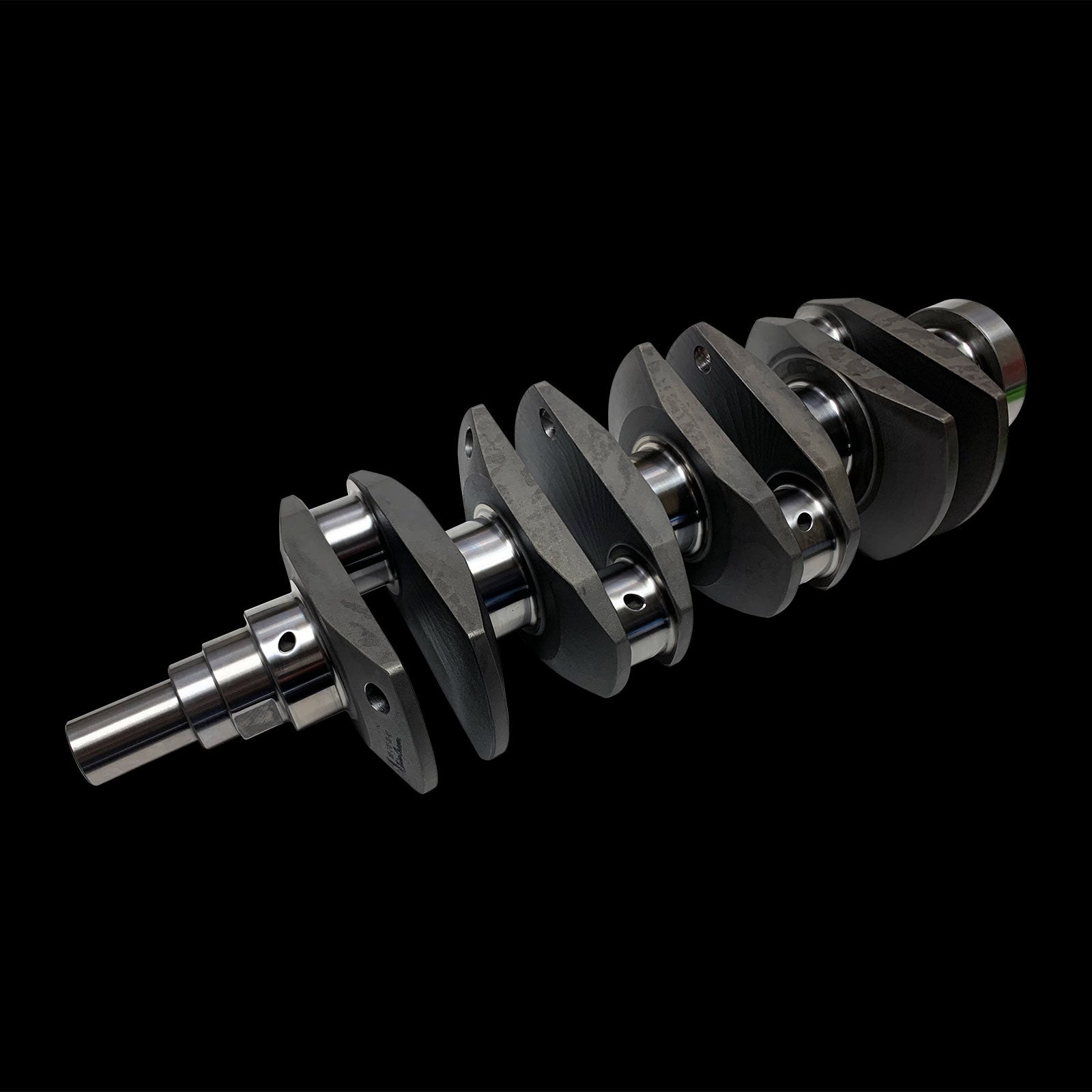
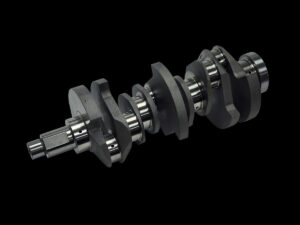
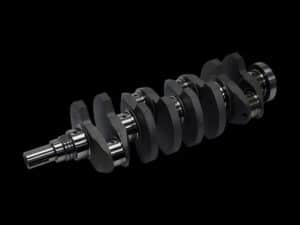
In the realm of forced induction and extreme RPM Honda B-series builds, the factory cast crankshaft represents the single greatest point of catastrophic failure. It is not a question of if it will fail, but when. The BC5020B from Brian Crower is engineered as the ultimate solution—a drop-in replacement that transforms the rotating assembly from a liability into the foundation of unshakable power. This is not merely a “stronger crankshaft”; it is a fully forged, 4340 chromoly billet component, precision-machined to exacting tolerances with a 92mm stroke, designed explicitly for builders targeting reliable power levels far beyond the limits of OEM metallurgy. For the technician building a serious B18A, B18B, or B20B engine, this crankshaft is the non-negotiable core of a bulletproof bottom end.
The Billet Advantage: Engineering Beyond Forging
While the term “forged” is often used as a benchmark for performance, the BC5020B operates on a superior plane: it is machined from a premium 4340 chromoly steel billet. The distinction is critical. A traditional forging starts as a heated blank that is hammered into a rough shape, which can introduce grain flow inconsistencies. A billet part begins as a solid, homogeneous block of vacuum-degassed 4340 alloy—material with proven, uniform strength characteristics throughout. This blank is then sculpted via CNC machining into its final form. This process allows for optimized grain orientation and the elimination of potential stress risers inherent in casting or even forging processes. The result is a crankshaft with ultimate tensile and yield strength, providing a safety margin that instills confidence in 800+ horsepower applications and sustained 9,000+ RPM operation.
Metallurgical Superiority of 4340 Chromoly Steel
The choice of SAE 4340 chromoly steel is deliberate and performance-defining. This nickel-chromium-molybdenum alloy is renowned for its exceptional strength-to-weight ratio and superb fatigue resistance. After machining, the BC5020B undergoes a precise heat-treating and nitride hardening process. This treatment elevates surface hardness to over 60 Rc on the journals, dramatically improving wear resistance and reducing the risk of scoring under extreme bearing loads. The core remains ductile to absorb intense combustion and inertial shocks. For a deeper dive into the science behind this material, consider this resource on crankshaft material science from EngineLabs. This combination of material and process ensures dimensional stability and longevity that a factory casting cannot approach.
Stroke & Journal Specifications: Precision for Power
The BC5020B features a 92mm (3.622″) stroke, a critical measurement that directly influences engine displacement when paired with the appropriate bore. This stroke is engineered to work in harmony with aftermarket connecting rods and pistons to achieve displacements such as 2.0L, 2.1L, or larger in a B-series block. More than just a measurement, every surface is precision-finished. The 2.361″ diameter rod journals and 2.244″ diameter main journals are micro-polished to a mirror finish, minimizing friction and promoting optimal oil film retention. Each counterweight is strategically sized and placed for inherent internal balance, reducing harmonic vibrations that can destroy main bearings at high RPM. The crankshaft is fully machined for OEM-type thrust bearing location and is clearanced for most aftermarket stroker rods, making assembly straightforward for the experienced builder.
- Unmatched Tensile Strength: 4340 billet construction provides the ultimate defense against flex and fracture under boost or high RPM stress.
- Optimized 92mm Stroke: Enables significant displacement increases for substantial gains in torque and horsepower output.
- Nitride-Hardened Journals: Extreme surface hardness ensures exceptional bearing life and resistance to wear, even in severe duty cycles.
- Micro-Polished Surfaces: Reduces parasitic drag on the rotating assembly, freeing horsepower and improving oil pressure stability.
- Internal Balance Design: Counterweights are engineered to minimize destructive harmonics, protecting bearings and the entire rotating assembly.
- Direct OEM Replacement: No block machining required; utilizes standard main and rod bearings for a precision fit.
Vehicle & Engine Fitment: Application-Specific Engineering
The BC5020B is not a universal part; it is meticulously engineered as a direct replacement for specific Honda and Acura engines. Its design ensures proper clearance within the OEM block and compatibility with the stock oiling system and crankshaft position sensor. Correct installation requires matching it with the appropriate main and rod bearings, as well as stroker-specific pistons and connecting rods to accommodate the increased stroke.
Compatible Engine Blocks
This crankshaft is designed to fit the following engine blocks without modification:
- Honda B18A1: (1990-1991 Integra LS/RS)
- Honda B18B1: (1992-1995 Integra LS/RS, 1994-2001 Integra LS/RS)
- Honda B20B: (1996-1998 CR-V, JDM variants)
- Honda B20Z: (1999-2001 CR-V)
- Acura Integra LS/RS (All USDM & CDN models with above engines)
Critical Note: Always verify clearances (piston-to-valve, rod-to-block, etc.) during assembly. The increased stroke necessitates the use of stroker pistons with a compressed height designed for a 92mm stroke and appropriate connecting rods.
Technical Specifications & Build Data
Every dimension of the BC5020B is controlled to a master blueprint. The table below provides the essential data required for engine blueprinting and parts selection. Cross-reference these figures with your connecting rod and piston specifications to ensure a perfect fit.
| Specification | Measurement | Details |
|---|---|---|
| Part Number | BC5020B | Brian Crower Billet Crankshaft |
| Stroke | 92mm (3.622″) | Increased from factory for greater displacement |
| Main Journal Diameter | 2.244″ | OEM specification, uses standard main bearings |
| Rod Journal Diameter | 2.361″ | OEM specification, uses standard rod bearings |
| Core Material | SAE 4340 Chromoly Billet | Vacuum-degassed, nickel-chromium-molybdenum alloy |
| Surface Treatment | Nitride Hardened | Journals hardened to 60+ Rc for maximum wear resistance |
| Balance | Internally Balanced | Precision balanced to less than 1 oz-in at the factory |
| Required Components | Stroker Pistons & Rods | Mandatory for proper clearance and compression height. |
Final Assembly Note: Prior to final assembly, it is considered best practice to have the entire rotating assembly (crankshaft, pistons, rods, and flywheel) balanced as a unit by a professional machinist. This ensures perfect harmony and eliminates any minute imbalances, guaranteeing smooth operation at the engine’s performance limit.
Be the first to review “BC5020B – Honda/Acura B18A, B18B, B20B Crankshaft – 4340 Billet – 92mm Stroke”
| Make | Model | Year |
|---|---|---|
| Honda | Civic | 1992 - 2000 |
Related products
$5,851.73
$4,396.57
$2,779.72
$2,779.72
$4,626.45
$5,341.72
Reviews
There are no reviews yet.