
No products in the cart.
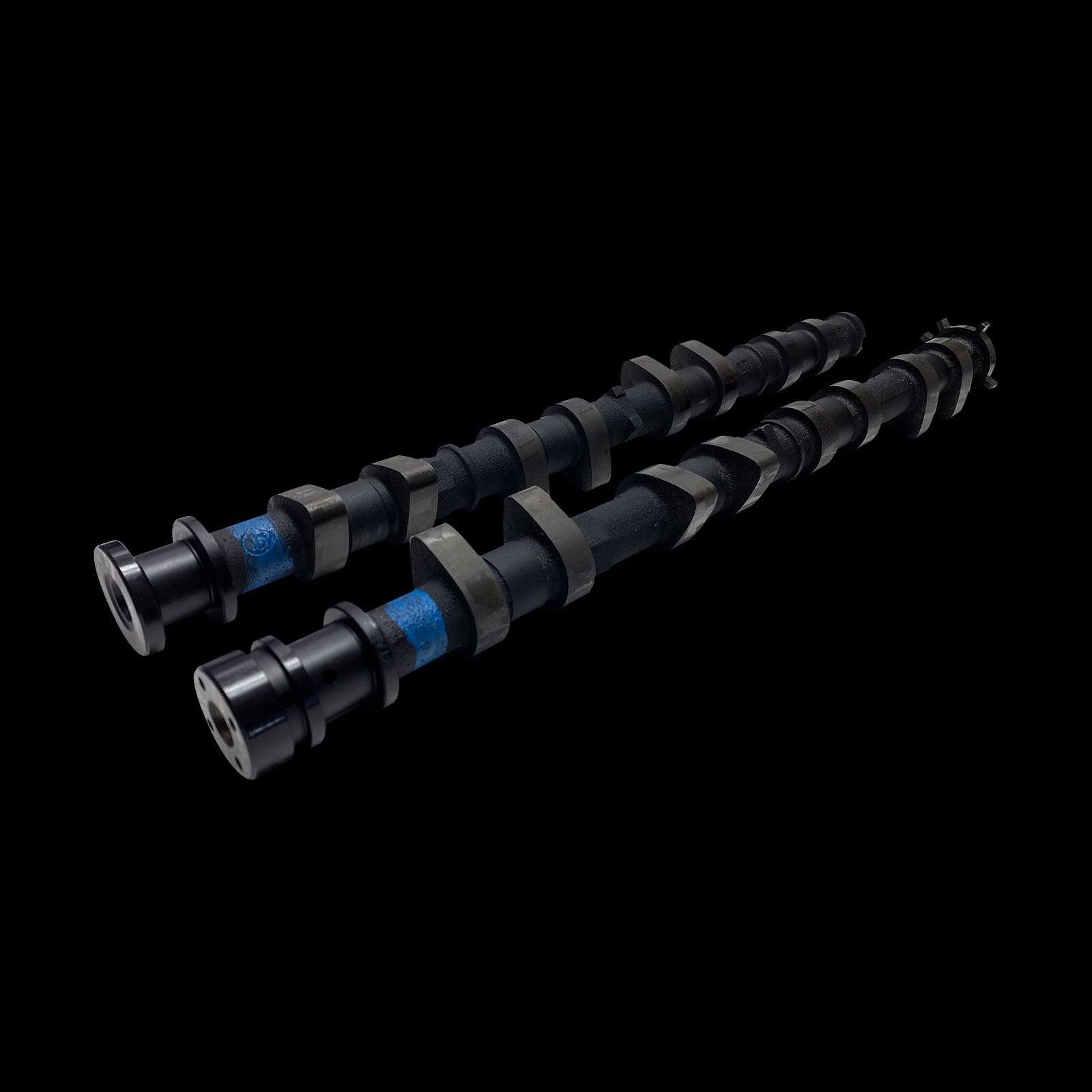

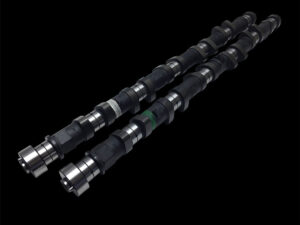
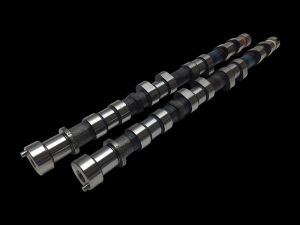
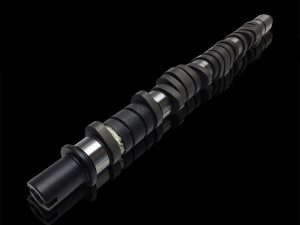
In the realm of high-performance engine building for Mazda’s MZR platform, precision and aggressive power delivery are non-negotiable. The BC0403 Mazda MZR Stage 3+ Camshafts from Brian Crower represent the pinnacle of race-spec valvetrain engineering, designed explicitly for competitors and enthusiasts who demand maximum volumetric efficiency and top-end horsepower. These camshafts are not mere upgrades; they are a fundamental recalibration of the engine’s breathing characteristics, engineered to extract every ounce of potential from forced induction or highly aspirated MZR builds. As a master performance mechanic, I can attest that the BC0403 profile is a calculated step beyond typical street performance cams, entering the domain of dedicated track and strip applications where lobe separation, lift, and duration are optimized for sustained high-RPM operation. For foundational knowledge on valvetrain dynamics, I recommend reviewing MotorTrend’s technical article on camshaft fundamentals, which provides critical context for the specifications discussed here.
Engineering Excellence: The Core of Stage 3+ Design
The BC0403 camshafts are defined by a radical, race-oriented profile that prioritizes high-RPM power band expansion. Engineered using advanced CNC grinding from premium-grade 8620 steel billet, these cams undergo a proprietary nitriding heat treatment process. This results in a exceptionally hard, wear-resistant surface with a core that retains crucial ductility to withstand the immense spring pressures and harmonics of sustained operation above 7,500 RPM. The Stage 3+ nomenclature signifies an aggressive increase in both intake and exhaust duration—typically in the range of 272-280 degrees of advertised duration—coupled with lift figures exceeding 11.5mm. The lobe separation angle (LSA) is deliberately tightened to between 108 and 112 degrees, a design choice that increases overlap. This overlap period, where both intake and exhaust valves are open simultaneously, is critical for scavenging efficiency at high engine speeds, effectively using exhaust gas pulses to pull in fresh air/fuel mixture. This level of engineering demands complementary valvetrain upgrades, such as stiffer springs and titanium retainers, to prevent valve float and ensure precise lobe follower tracking.
Performance Benefits and Applications
Installing the BC0403 camshafts transforms the character and output of the MZR engine. Their primary application is in dedicated race vehicles, including time-attack cars, drag racing platforms, and high-compression naturally aspirated builds where peak horsepower is the ultimate metric. They are also exceptionally effective in large turbocharger applications where mitigating high-RPM torque fall-off is essential. The performance gains are not subtle; expect a significant shift in the power band, with substantial gains occurring from 5,500 RPM to the redline. Below is a concise list of the tangible benefits:
- Substantial High-RPM Horsepower Gain: By dramatically improving volumetric efficiency at elevated engine speeds, these cams can unlock 20-40+ wheel horsepower increases in a fully optimized engine package, with peak power often moved 1,000-1,500 RPM higher.
- Enhanced Engine Breathing and Scavenging: The aggressive profile and tight LSA optimize exhaust scavenging, reducing pumping losses and lowering cylinder temperatures under full load, which is vital for reliability in endurance racing.
- Sharper Throttle Response and Power Delivery: The increased lift and duration provide a more immediate and linear torque curve in the upper rev range, giving drivers precise control over power application on corner exit.
- Foundation For Forced Induction Optimization: For turbocharged applications, the profile helps maintain boost pressure and flow at the limit, preventing choke and allowing for more aggressive timing maps by improving charge cooling and cylinder filling.
- Competitive Edge in Motorsport: The specific profile is tuned for racing fuel and aggressive ignition timing, providing the marginal gains necessary for podium finishes in tightly regulated classes where engine displacement is fixed.
Detailed Vehicle Fitment
The Brian Crower BC0403 camshaft set is engineered specifically for the Mazda MZR (also known as Ford Duratec) family of engines. Correct fitment is paramount to achieving the intended performance and ensuring valvetrain integrity. These camshafts are designed as a direct replacement for the factory components but require meticulous installation and calibration. They are compatible with the following key applications. It is the installer’s responsibility to verify engine codes and specific model years, as variations exist within production runs.
Primary Applications: Mazda MX-5 Miata (NC chassis, 2006-2015) equipped with the 2.0L MZR engine (LF-VE); Mazda 3 (BK chassis, 2004-2009) and Mazda 6 (GG/GY chassis, 2003-2008) with the 2.3L MZR DISI turbo engine (L3-VE). They are also applicable to the naturally aspirated 2.0L and 2.3L variants found in various global Ford models (e.g., Focus ST225). Critical Note: For turbocharged MZR DISI engines, these cams are intended for builds with fully built bottom ends, upgraded fuel systems, and standalone engine management. They are not recommended for daily-driven street vehicles without significant supporting modifications and professional tuning, as the aggressive profile will cause rough idle, poor low-RPM manifold vacuum, and may trigger check engine lights if not properly calibrated.
Technical Specifications and Data
The following table delineates the precise engineering specifications for the BC0403 camshaft set. This data is essential for tuners to calculate required valve clearance, design appropriate piston reliefs, and program ignition and fuel maps in the engine control unit (ECU). All measurements are nominal and should be verified during a professional degreeing procedure upon installation.
| Parameter | Intake Camshaft | Exhaust Camshaft |
|---|---|---|
| Part Number (Set) | BC0403 | |
| Advertised Duration (deg) | 278 | 278 |
| Duration at 0.050″ Lift (deg) | 232 | 232 |
| Gross Valve Lift (mm) | 11.80 | 11.80 |
| Gross Valve Lift (inches) | 0.465 | 0.465 |
| Lobe Separation Angle (LSA) | 110 degrees (Centerline) | |
| Recommended Valve Spring Pressure (seat/open) | 90-95 lbs / 220-240 lbs | |
| Core Material | 8620 Steel Billet, Nitride Hardened | |
Installation and Tuning Considerations
Successfully implementing the BC0403 camshafts is a technical procedure that extends far beyond basic mechanical installation. First and foremost, degreeing the camshafts is mandatory. This process verifies that the camshaft’s installed position matches its designed specifications, ensuring optimal valve timing. Utilizing a degree wheel and dial indicator, the mechanic must establish true top dead center (TDC) and measure intake centerline and lobe events. Secondly, valve-to-piston clearance must be meticulously checked using modeling clay or a positive clearance checker. With this lift and duration, interference is highly likely, necessitating pistons with adequate valve reliefs or precise machining of the stock pistons. Finally, ECU tuning is non-negotiable. The stock air-fuel and ignition maps will be entirely unsuitable. A standalone ECU or a custom recalibration of the factory ECU via specialized software is required to adjust idle speed, fuel injector pulse width, ignition advance, and variable valve timing (VVT) parameters if retained. The goal is to create a stable idle (typically between 950-1100 RPM), manage the reduced manifold vacuum for power brakes, and optimize the ignition curve for the new power band. Without this holistic approach, the engine will not perform reliably or to its full potential.
Be the first to review “BC0403 – Mazda MZR Stage 3+ Camshafts – Race Spec”
| Make | Model | Year |
|---|---|---|
| Mazda | MX-5 | 2006 - 2015 |
Related products
Reviews
There are no reviews yet.