No products in the cart.
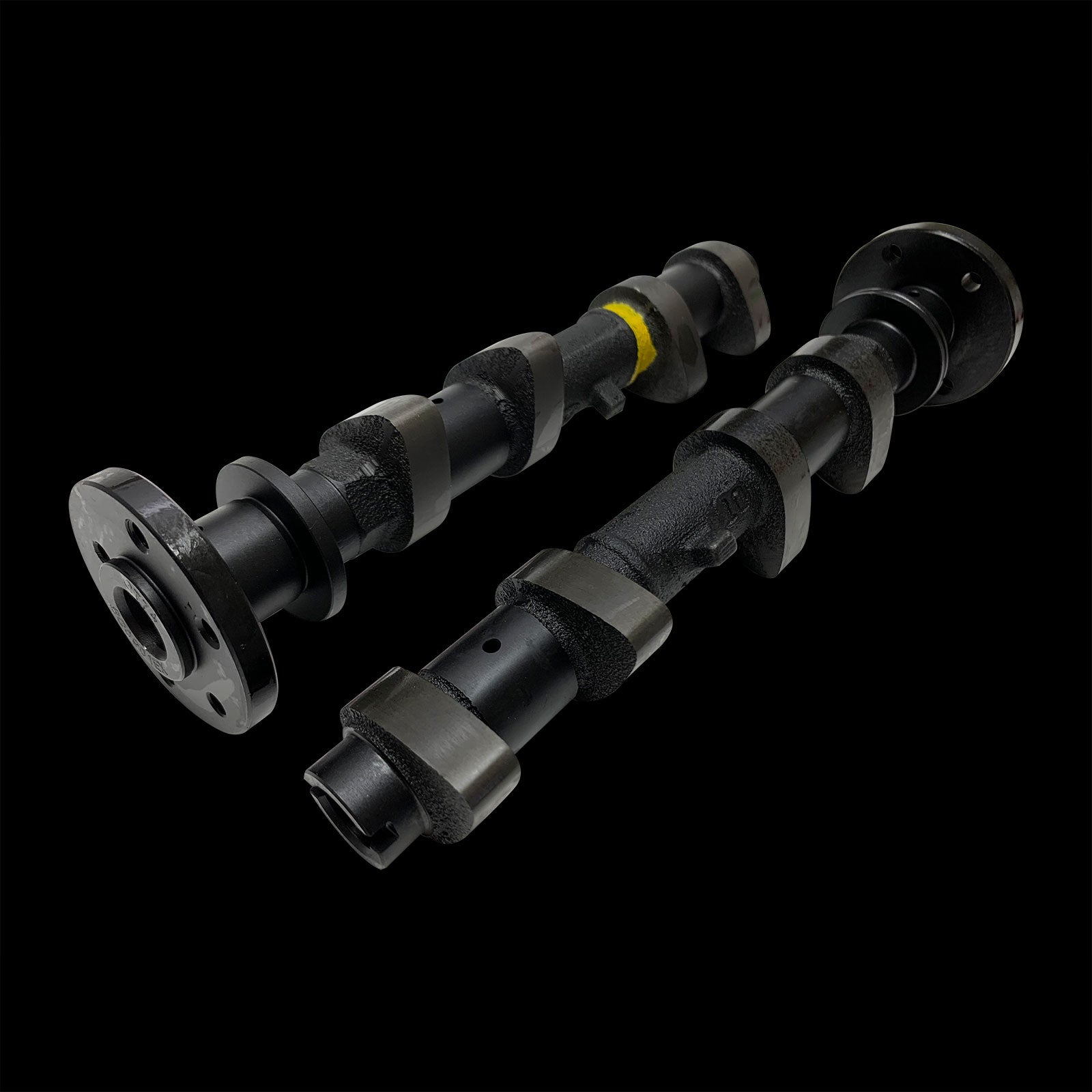
BC0903 – Brian Crower Stage 4 Short Course Spec Camshafts for Polaris XP 1000 (2014-Up)
Introduction
In the demanding world of short-course off-road racing, where every millisecond of throttle response and every foot-pound of torque defines the podium, the engine’s breathing architecture is paramount. The stock camshaft profile in your Polaris XP 1000 is a compromise engineered for broad reliability, emissions compliance, and general usability—not for all-out, sustained high-RPM performance. The BC0903 Stage 4 Short Course Spec Camshaft pair from Brian Crower represents the definitive correction to that compromise. Engineered from the billet up using proprietary lobe designs refined in championship-winning SxS competition, these cams are not an incremental upgrade but a transformative core component. They recalibrate the engine’s entire personality, shifting the power band aggressively upward to provide the violent top-end charge and relentless over-rev capability required to dominate in technical, high-speed sections. This is a precision tool for the serious builder who understands that genuine horsepower is manufactured in the cylinder head, and it begins with masterfully engineered valve timing.
Engineering Philosophy: The Short-Course Power Band
Short-course racing imposes a unique set of demands distinct from desert racing or duning. Courses are characterized by tight rhythms, massive jumps requiring precise launch speed, and short straights where the engine must recover RPM instantly after landing or cornering. The BC0903 profile is engineered explicitly for this environment. Brian Crower’s engineers focused on three core objectives: extending the power band beyond the stock rev limiter, increasing high-RPM volumetric efficiency for maximum top-end horsepower, and maintaining useable mid-range torque to drive out of corners. This is achieved through increased valve lift, aggressive but optimized duration, and a lobe separation angle tailored to the ProStar 1000’s combustion characteristics. The result is an engine that doesn’t just make more peak power but delivers it in a broader, more competitive usable range, allowing you to hold a gear longer and attack the course with relentless momentum.
Technical Deep-Dive: Profile Specifications & Dynamics
Understanding the numbers is critical to appreciating the performance leap. While exact proprietary lobe specifications are closely guarded, the Stage 4 profile operates on principles of high-intensity valve acceleration and increased area under the lift curve. Compared to stock, expect a significant increase in both intake and exhaust valve lift—typically in the range of 2-3mm more—allowing a greater charge of air/fuel mixture into the cylinder and a more efficient expulsion of exhaust gases. The duration is lengthened considerably, holding the valves open longer to capitalize on inertia-based cylinder filling at engine speeds above 7000 RPM. Crucially, the exhaust profile is designed with a strong emphasis on scavenging. By optimizing overlap (the period when both intake and exhaust valves are slightly open), a low-pressure wave is created in the exhaust port that helps pull in the fresh intake charge, effectively “supercharging” the cylinder at high RPM. For a foundational understanding of these principles, refer to this authoritative resource on camshaft timing and theory at MotorTrend.
- Dominant High-RPM Horsepower: Unlocks the top-end potential of your ProStar engine, creating massive gains above 6000 RPM for maximum straightaway speed.
- Extended & Useable Power Band: Broadens the power curve, providing stronger pull from the mid-range and allowing you to hold gears longer without falling off the power.
- Competition-Grade Valve Train Stability: Precision-machined billet cores and proprietary lobe ramps ensure reliable operation at sustained high RPM with recommended upgraded valve springs.
- Enhanced Exhaust Scavenging: Optimized exhaust profile creates superior cylinder evacuation, reducing pumping losses and increasing volumetric efficiency.
- Direct Bolt-In Performance: Manufactured to exact OEM bearing journal specifications for a perfect fit, requiring no block or head machining.
Vehicle Fitment & Critical Installation Notes
Vehicle Fitment: This BC0903 camshaft set is engineered specifically for the 2014 and newer Polaris RZR XP 1000 and Turbo models utilizing the ProStar 1000cc engine (Part Number 4012945, 4012946). Verify your model year and engine designation before purchase. Not compatible with XP 900, XP 1000 models prior to 2014, or the Turbo S High-Output variant with different cam sensor targeting.
Mandatory Supporting Modifications: The aggressive profile of the Stage 4 cams absolutely requires the installation of upgraded valve springs (such as Brian Crower’s matched BC0612 spring kit). The increased lift and valve acceleration rates will overcome the stock springs, leading to valve float, catastrophic engine failure, and severe personal injury. Installation must include a comprehensive engine timing procedure using the factory service manual specifications for cam gear alignment. Professional installation by a qualified performance mechanic is strongly recommended to ensure proper degreeing, lash adjustment (if applicable), and verification of piston-to-valve clearance, which should always be checked during assembly.
Technical Specifications: BC0903 Camshaft Pair
| Specification | Detail |
|---|---|
| Part Number | BC0903 |
| Application | Polaris RZR XP 1000 / XP 4 1000 / Turbo (2014-Up), ProStar 1000 Engine |
| Cam Core | 8620 Steel Billet, Precision CNC Machined |
| Profile Type | Stage 4 – Short Course Racing Aggressive |
| Valve Train | Mechanical Bucket / Shim-Under-Bucket (Requires Upgraded Springs) |
| Installation Notes | Professional Installation Required. Must check Piston-to-Valve Clearance. Must use upgraded valve springs. |
System Integration & Tuning Imperatives
Installing the BC0903 cams is a system-level modification. To realize their full potential and ensure safe operation, the engine management system must be recalibrated. The increased airflow will lean out the fuel mixture at wide-open throttle and alter the optimal ignition timing points. A professional dyno tune using a compatible programmer (such as those from Dynojet or EVO) is not a suggestion—it is a mandatory final step. The tuner will adjust fuel maps, ignition advance, and potentially cam phasing if using an adjustable gear to optimize the power delivery and ensure safe air-fuel ratios. Pairing these cams with a high-flow intake system, a performance exhaust, and a reinforced clutch setup will yield the most dramatic and reliable gains, creating a truly race-ready powertrain.
Conclusion
The Brian Crower BC0903 Stage 4 Short Course Spec Camshafts are the keystone component for transforming your Polaris XP 1000 from a potent recreational vehicle into a legitimate short-course weapon. This is precision engineering applied to the most critical component of horsepower production: valve timing. By accepting no compromises in materials, design, or intended use, Brian Crower delivers a product that provides a definitive competitive edge. For the racer or builder who measures success in stopwatch increments and clear track advantage, the choice is unequivocal. This is not merely a part; it is the blueprint for dominance.
Be the first to review “BC0903 – Polaris XP 1000 (14-up) Stage 4 Short Course Spec Camshafts (pair)”
| Make | Model | Year |
|---|---|---|
| Polaris | XP 1000 | 2014 |
Related products
B18A / B18B - Camshafts
BC0022 – Honda/Acura B18A/B Stage 2 Camshafts – Normally Aspirated Spec
$562.28
Reviews
There are no reviews yet.