
No products in the cart.
Engineering the Ultimate Barrier: A Deep Dive into Brian Crower BC3923 Exhaust Valve Guides
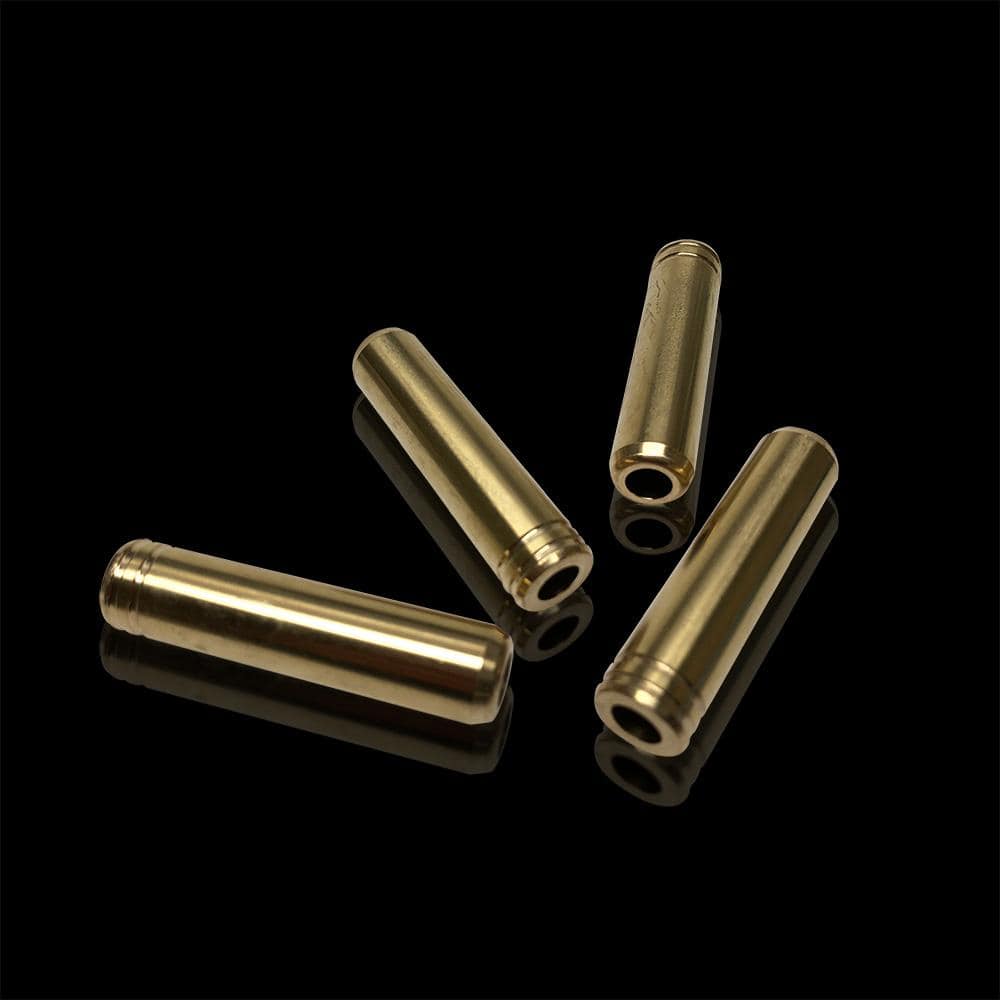
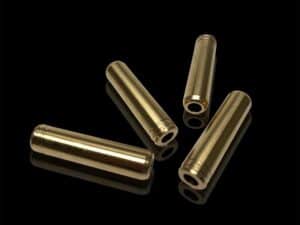
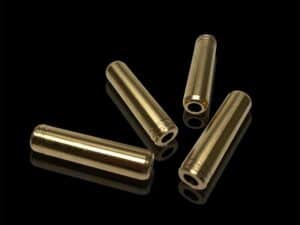
For the dedicated builder of the Nissan SR20DE and SR20DET, the valve train represents the critical intersection of breath, combustion, and mechanical precision. While attention is lavished on cam profiles, spring rates, and titanium retainers, the humble valve guide is often the unsung hero—or the catastrophic failure point. The OEM exhaust guides, subjected to the relentless thermal assault of high-EGT (Exhaust Gas Temperature) operation, are the platform’s known Achilles’ heel under sustained performance demand. The Brian Crower BC3923 Exhaust Valve Guides are not mere replacements; they are a fundamental re-engineering of this vital component. Engineered specifically for the FWD SR20 with a 6.0mm valve stem diameter, these guides are manufactured from a proprietary bronze alloy matrix to deliver unmatched thermal management, wear resistance, and dimensional stability, transforming a maintenance item into a permanent performance upgrade.
The SR20 Exhaust Guide Failure Mode: A Technical Analysis
Understanding the BC3923’s superiority requires a dissection of the OEM guide’s limitations. In a turbocharged or high-RPM NA SR20DET/DE, exhaust valve guides are subjected to a brutal environment. Temperatures can routinely exceed 500°C (932°F), causing the stock powdered iron or cast iron guides to experience accelerated wear and loss of ductility. This thermal fatigue leads to bore enlargement and loss of critical stem-to-guide clearance. The result is increased valve stem friction, compromised valve seal as the stem rocks in an oversized bore, excessive oil consumption via guide vacuum draw, and ultimately, a direct path for combustion gases to erode the valve stem and guide further—a condition known as valve guide guttering. The BC3923 is engineered from the atomic level up to halt this cycle, providing a heat-sink effect and maintaining a consistent lubricating film where OEM designs simply degrade.
- Unmatched Thermal Dissipation: Proprietary bronze alloy conducts heat away from the valve stem up to 400% more efficiently than iron, drastically reducing stem and guide operating temperatures.
- Superior Lubricity & Reduced Friction: The inherent oil-retention properties of the bronze material create a durable hydrodynamic film, minimizing wear on both the guide and the more expensive valve stem.
- Controlled Expansion & Stability: Engineered coefficient of thermal expansion closely matches that of the aluminum cylinder head, ensuring clearance remains optimal across the entire operating temperature range.
- Elimination of Valve Stem Seizing: The material’s anti-galling properties prevent micro-welding between the valve stem and guide, a common failure in overheated iron guides.
- Enhanced Engine Longevity & Consistency: By maintaining precise valve alignment and seal, combustion efficiency remains high, protecting valve seats and preventing power drop-off over time.
Material Science and Precision Manufacturing
Brian Crower’s BC3923 guides are a product of advanced metallurgy, not simply a different material choice. The specific bronze alloy is a copper-tin composite infused with trace elements like phosphorus and nickel. This formulation is critical: it provides the necessary hardness to resist abrasive wear from minute contaminants, while retaining the ductility and porosity needed for oil retention. The guides are centrifugally cast to ensure a uniform, dense grain structure free of voids or impurities that could become failure initiation points. Following casting, each guide undergoes CNC machining to a net shape, guaranteeing the precise 6.0mm inner diameter (I.D.) and outer diameter (O.D.) specifications required for a perfect press-fit into the SR20 cylinder head. The surface finish on the I.D. is meticulously controlled to the sub-micron level, providing the ideal surface for establishing the critical oil film without being so smooth that it cannot retain lubricant. For a deeper understanding of valve train material interactions, review this foundational SAE technical paper on valvetrain friction and wear.
Technical Specifications and Dimensional Integrity
Precision is non-negotiable. The BC3923 is engineered to exacting tolerances that surpass OEM standards, ensuring a perfect interface with both the cylinder head and the valve stem. Below are the definitive specifications for the engineer or machinist:
| Parameter | Specification | Critical Note |
|---|---|---|
| Part Number | BC3923 | Brian Crower Master Listing |
| Valve Stem Diameter | 6.0mm (0.2362″) | Designed for standard and most aftermarket 6mm exhaust valves. |
| Inner Diameter (I.D.) | 6.0mm +0.001″/+0.0015″ (Finished/Honed) | Final honing to achieve stem-to-guide clearance is mandatory after installation. |
| Outer Diameter (O.D.) | Press-Fit Specific (Oversize) | Supplied oversize for machining head to correct press-fit interference (typically 0.0015″ – 0.002″). |
| Material | Proprietary Bronze Alloy | Centrifugally cast, CNC machined for density and consistency. |
| Application | Exhaust Side Only | Intake guides (BC3922) use a different alloy formulation optimized for lower-temperature, fuel-washed environment. |
Vehicle Fitment: Precision for the FWD SR20 Platform
The BC3923 is application-specific. Its dimensions are calculated for the unique bore and port geometry of the transverse-mounted SR20DE and SR20DET cylinder heads. Do not attempt to use these in a RWD SR20 head without verifying dimensional compatibility, as valve angles and guide boss lengths can differ.
Comprehensive Application List
Primary Engine Codes: SR20DE (Naturally Aspirated), SR20DET (Turbocharged)
Chassis Applications (FWD):
• Nissan Pulsar GTI-R (RNN14) – Note: Verify head configuration, though typically FWD-based.
• Nissan Sunny/Pulsar/Vinyl with SR20DE(T) (B13, B14, B15 chassis)
• Nissan Sentra SE-R (B13, B14, B15) with SR20DE
• Nissan NX2000 (B13)
• Nissan Axxess/Stanza with SR20DET
• Nissan 100NX Coupe with SR20DE
• Various Japanese Domestic Market (JDM) FWD Nissan vehicles utilizing the SR20DE/T engine.
Critical Note: Always confirm engine and head identification via casting numbers. This product is for the exhaust valve guides only. A full valve train overhaul requires matching intake guides (BC3922), valves, seals, and springs for balanced performance.
Installation Protocol and Final Honing Procedure
Correct installation is paramount to realizing the performance benefits of the BC3923 guides. This is a machine shop operation requiring precision tooling. The existing OEM guides must be removed without scoring or damaging the cylinder head bore. The head must then be machined (typically line-bored or reamed) to achieve the precise press-fit interference for the new BC3923 guides, which are supplied with an oversize O.D. for this purpose. After pressing the guides into place using a proper arbor press and fixture with the correct installation depth, the most critical step is final honing. The I.D. must be honed to achieve the manufacturer-specified stem-to-guide clearance, typically between 0.001″ and 0.0025″ for a performance street/track bronze guide application, depending on valve stem material and intended use. This honing ensures perfect alignment and the correct oil clearance, making the component ready for assembly with new valves and stem seals.
The Final Verdict: From Wear Item to Foundation Component
The Brian Crower BC3923 Exhaust Valve Guides represent a transition from periodic maintenance to installed performance infrastructure. By addressing the SR20’s thermal management weakness with advanced materials and manufacturing, they provide a foundation for reliable high-RPM power, forced induction resilience, and extended engine life. For the builder who measures success in consistent lap times and dyno sheets—not just between rebuilds, but across seasons—the upgrade to engineered bronze guides is not an option; it is a fundamental requirement for a serious performance SR20 build. Specify BC3923, and build on a foundation that won’t erode under pressure.
Be the first to review “BC3923 – Nissan SR20DE(T) – FWD Exhaust Valve Guides (6.0mm stem dia)”
| Make | Model | Year |
|---|---|---|
| Nissan | Pulsar | 1991 - 1998 |
Related products
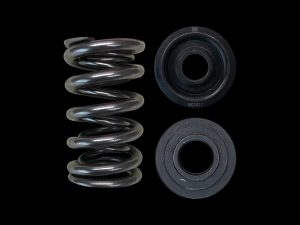
F20C / F22C - Valvetrain
BC0040TS – Honda K20A/K20Z Spring/Steel Retainer/Seat Kit (High Lift)
$461.31
Reviews
There are no reviews yet.