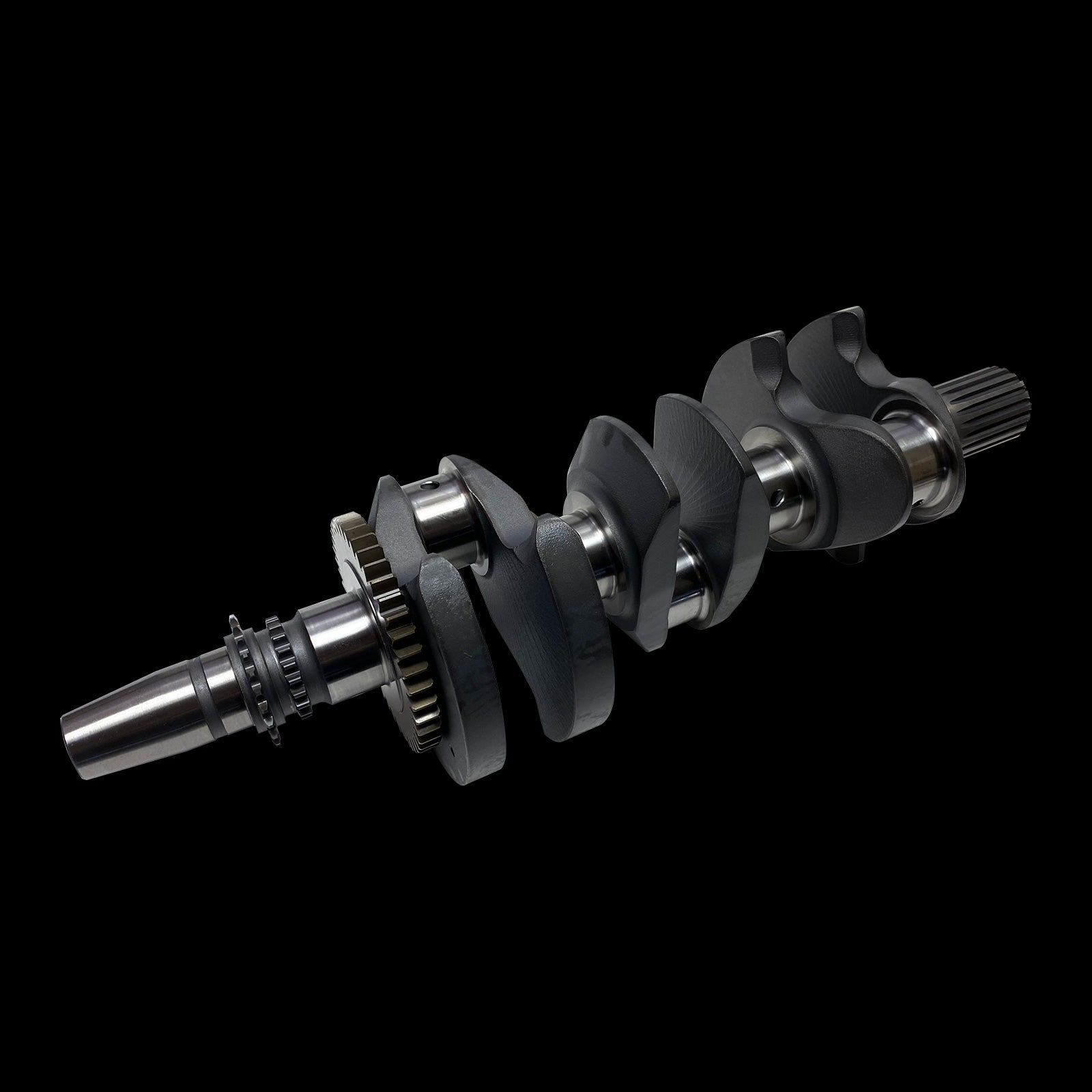
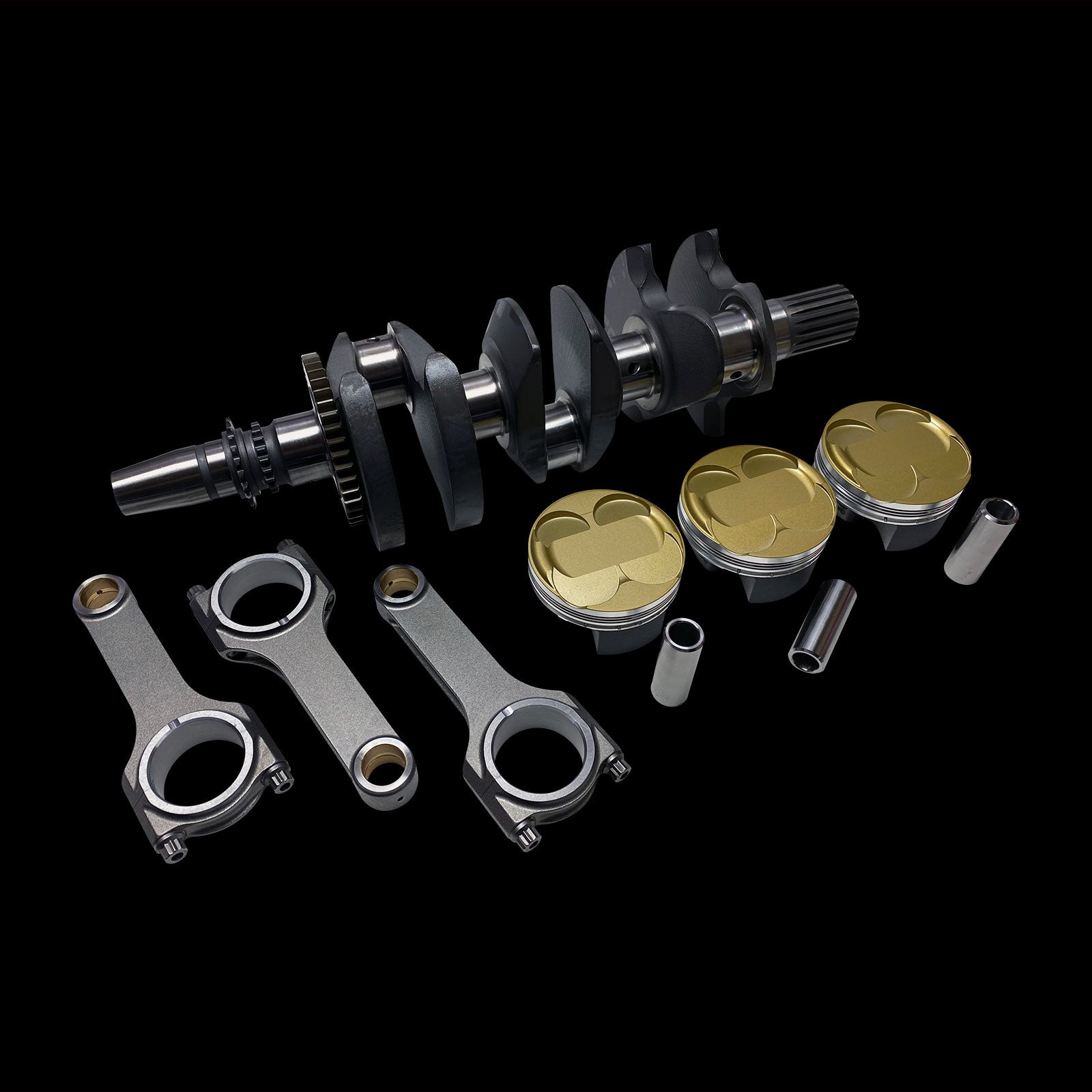
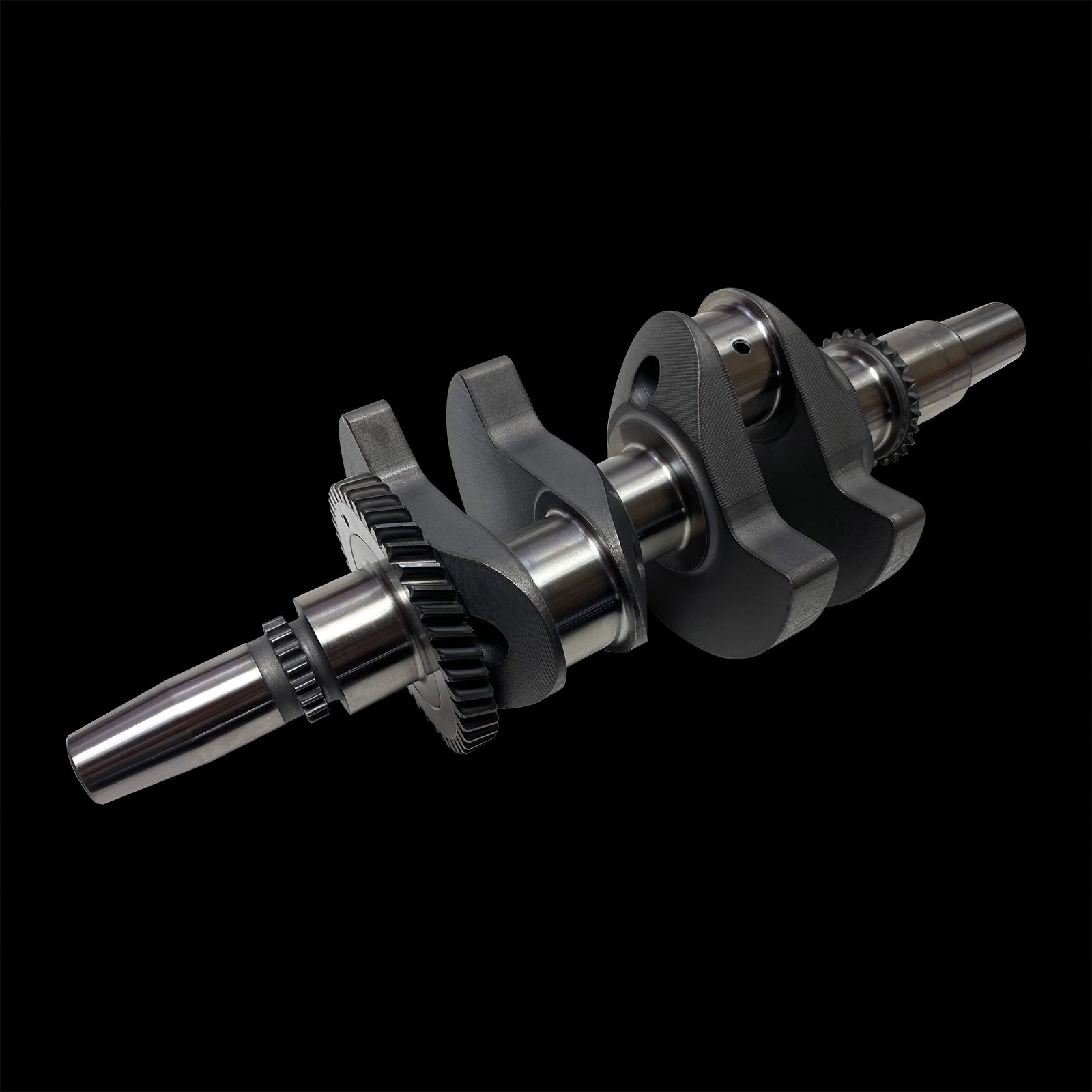
In the relentless pursuit of horsepower and durability, the rotating assembly stands as the absolute heart of the performance equation. For the Yamaha YXZ1000R and Sidewinder platforms, the factory crankshaft represents a compromise—a component engineered for mass production, acceptable NVH, and a broad power band. The Brian Crower BC5951 Billet Crankshaft exists to obliterate that compromise. This is not a modified OEM piece; it is a ground-up, CNC-machined from a single billet of premium 4340 chromoly steel, engineered explicitly for the extreme demands of forced induction, high-RPM operation, and competitive off-road punishment. The defining 71mm stroke is a key component in achieving significant displacement gains, transforming the 998cc engine into a true 1100+cc powerhouse. For the builder who understands that foundation dictates potential, the BC5951 is the non-negotiable starting point.
Engineering Philosophy: Beyond Forged, Into Billet
The term “billet” is often misused, but in the case of the BC5951, it describes the precise manufacturing origin. Where a forging is hammered into a rough shape, a billet component begins as a solid, homogeneous “log” of aerospace-grade 4340 steel. This material is selected for its ultimate tensile strength, superior fatigue resistance, and ideal hardness characteristics. The crankshaft is then entirely CNC-machined to its final dimensions. This process allows for meticulous control over grain flow and material density in critical areas like the journal fillets and counterweight transitions—regions where stress concentrations are highest. The result is a crankshaft with a more consistent and predictable molecular structure than any forging, providing an unparalleled safety margin against the catastrophic harmonics and bending forces generated by big turbochargers, nitrous oxide, and sustained high-RPM use in desert racing or hill climb applications.
Performance Benefits & Design Innovations
The BC5951 is far more than just a stronger crank. Every design facet is optimized for power production and reliability.
- 71mm Stroke for Displacement: The increased stroke, combined with the appropriate cylinder bore, is the most direct path to greater engine displacement. More displacement means more air and fuel per cycle, translating directly into increased torque and horsepower across the entire RPM band.
- Optimized Counterweight Design: Brian Crower’s engineers have meticulously calculated and machined the counterweights to achieve near-perfect internal balance. This reduces parasitic vibration, minimizes bearing load, and allows the engine to rev more freely and reliably to its limit.
- Micro-Polished Journals: All main and rod journals undergo a specialized micro-polishing process that creates an ultrasmooth, mirror-like finish. This drastically reduces friction, lowers oil operating temperatures, and enhances the durability and effectiveness of the engine’s hydrodynamic bearing system.
- Precision Oil Passages: The internal oil galleries are machined with exacting tolerances and deburred to ensure unrestricted oil flow to the main and rod bearings under all conditions, a critical factor for turbocharged engines with high bearing loads.
- Nitride Hardened Surface: Following machining, the entire crankshaft undergoes a deep nitride hardening treatment. This process infuses the surface with nitrogen, creating an extremely hard, wear-resistant case while retaining a tough, ductile core to absorb impacts.
Vehicle Fitment: Precision Application
The BC5951 is engineered as a direct-replacement component for specific models, ensuring correct fitment with OEM or performance engine cases, bearings, and timing components. It is designed for the Yamaha YXZ1000R (2016 and later) and the Arctic Cat/Yamaha Sidewinder snowmobile engine platform (which shares the same core CP3 architecture). This crankshaft is the cornerstone for builders aiming to extract over 300+ horsepower reliably from these engines. It is compatible with a wide range of aftermarket connecting rods and pistons, but consultation with your engine builder or Brian Crower’s technical team is recommended to ensure a balanced and optimized rotating assembly package. For a deeper dive into the engineering principles behind stroker crankshafts and their impact on engine dynamics, consider this resource on stroker crankshaft dynamics from Engine Labs.
Technical Specifications & Build Considerations
Integrating the BC5951 into your engine build requires attention to detail. It is a complete crankshaft assembly, ready for installation with performance bearings. Due to the increased stroke, piston selection is critical to achieve the desired compression ratio and valve clearance. Builders must use pistons specifically designed for a 71mm stroke crankshaft. Additionally, the engine’s ECU may require tuning adjustments to account for the change in displacement and engine dynamics, especially in fuel-injected applications.
| Specification | Detail |
|---|---|
| Part Number | BC5951 |
| Application | Yamaha YXZ1000R (2016+), Arctic Cat/Yamaha Sidewinder |
| Stroke | 71mm |
| Construction | CNC-Machined 4340 Chromoly Steel Billet |
| Surface Treatment | Nitride Hardened |
| Journal Finish | Micro-Polished |
| Balance | Internally Balanced for Standard Rotation |
The Ultimate Foundation for Forced Induction
While naturally aspirated builds benefit greatly from the strength and stroke of the BC5951, its true destiny lies in forced induction applications. The massive cylinder pressure and heat generated by turbochargers or superchargers place extraordinary tensile and torsional stress on a crankshaft. The billet 4340 construction and nitride hardening of the BC5951 are specifically engineered to withstand these forces indefinitely. When paired with quality H-beam rods and forged pistons, this crankshaft forms a rotating assembly capable of supporting well over 500 horsepower, making it the definitive upgrade for anyone serious about maximizing the potential of their Yamaha YXZ or Sidewinder engine. This is not a part for hopeful gains; it is the calculated, essential infrastructure for realized, dependable power.
Be the first to review “BC5951 – YAMAHA YXZ/SIDEWINDER (16-up) BILLET CRANKSHAFT (71mm STROKE)”
| Make | Model | Year |
|---|---|---|
| Yamaha | YXZ | 2016 - 2023 |
Related products
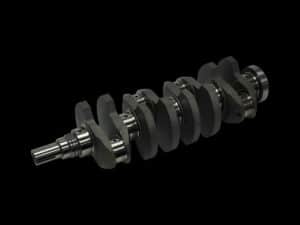
$2,779.72
2JZGE/GTE VVT-i
BC5309LW-96 – Toyota 2JZGTE LightWeight Crankshaft – 4340 Billet – 96mm Stroke w/Honda Journal
$5,851.73
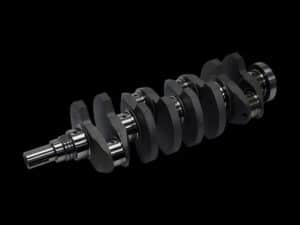
$2,779.72
$4,396.57
$4,626.45
Sale!
Original price was: $5,652.64.$4,915.34Current price is: $4,915.34.
Reviews
There are no reviews yet.