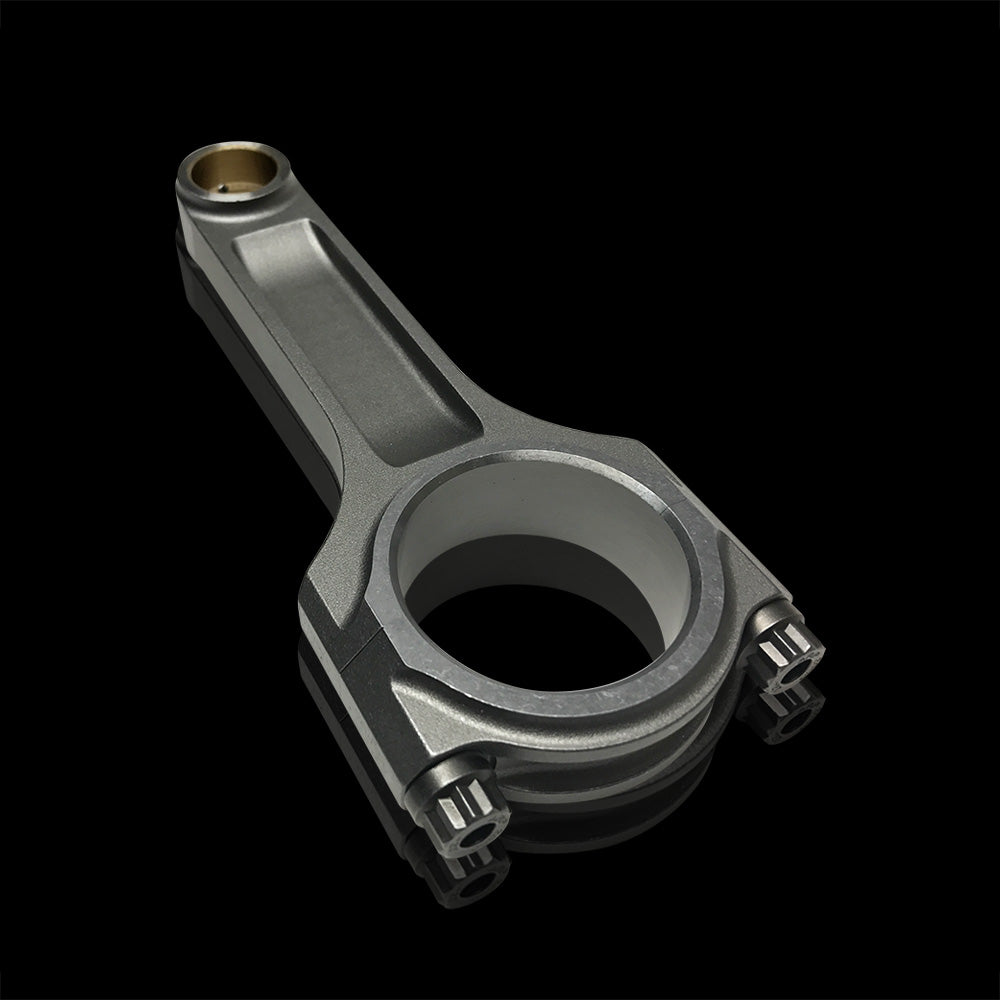
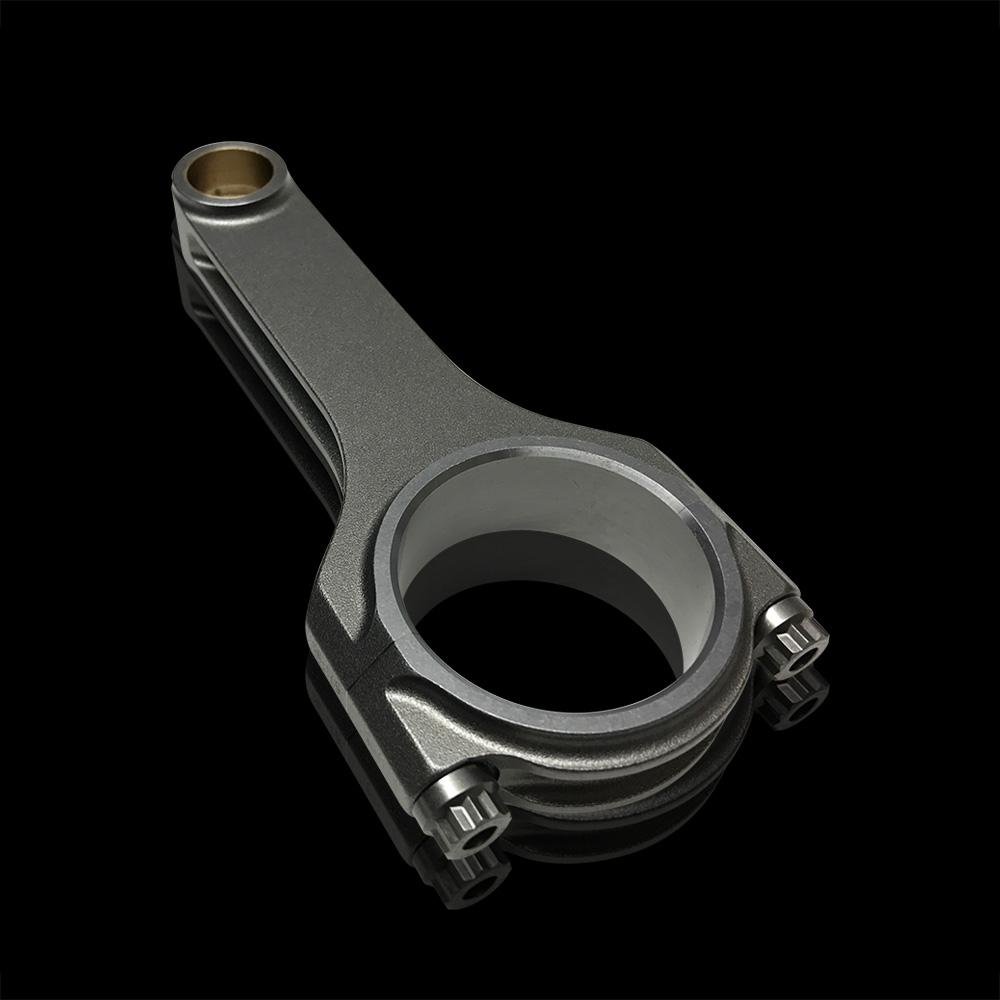
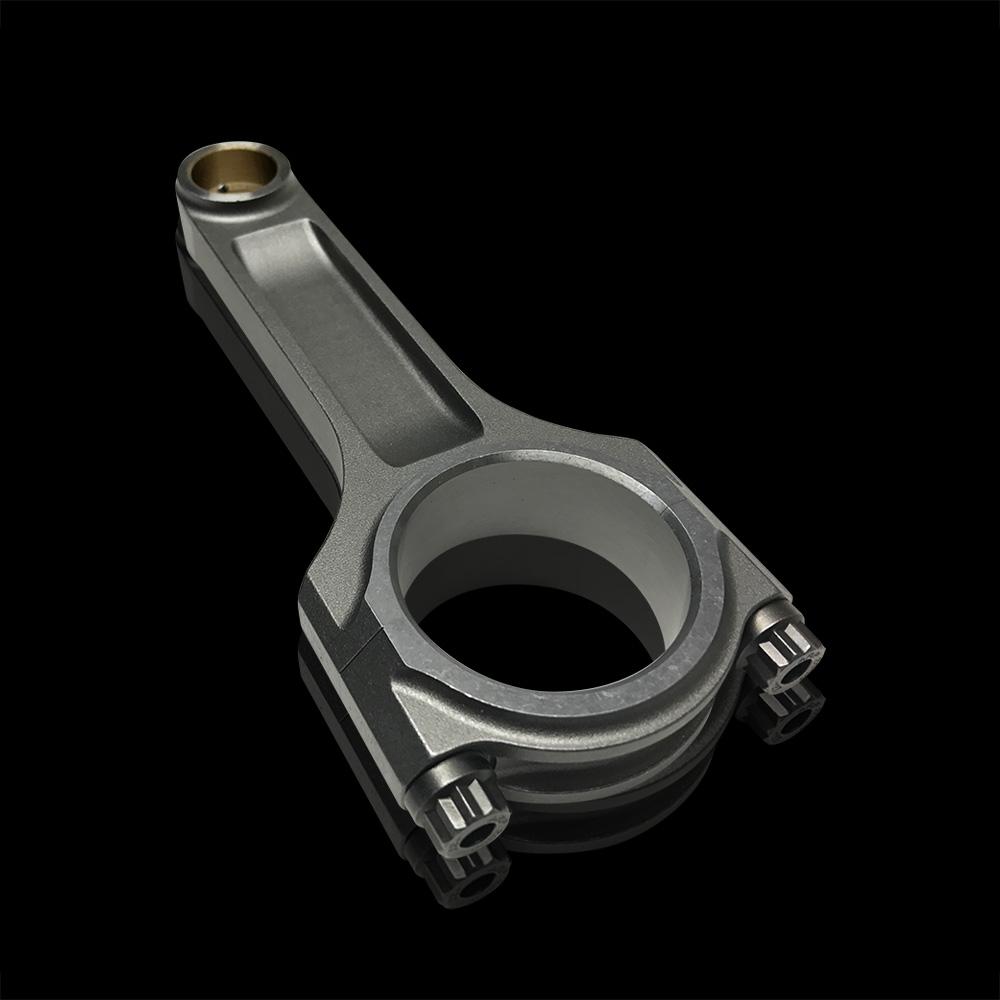
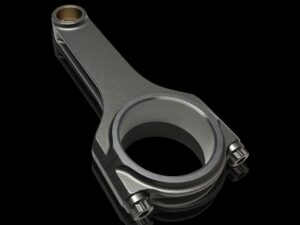
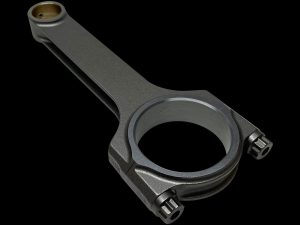
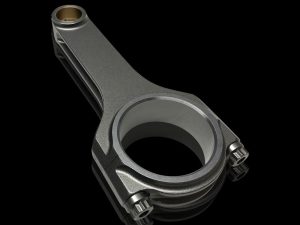
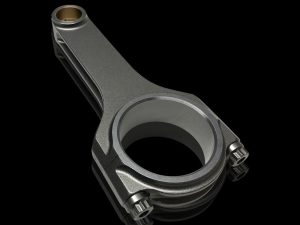
BC6107 – Mitsubishi/DSM 4G63 2nd Gen 7-Bolt I-Beam Connecting Rods w/ARP2000 Fasteners
In the relentless pursuit of power and reliability within the Mitsubishi 4G63 platform, the connecting rod stands as a critical pivot point between piston motion and crankshaft rotation. For builders of the revered 2nd Generation, 7-bolt 4G63—the cornerstone of legendary DSM and Evolution performance—the stock rod represents a definitive ceiling. The BC6107 I-Beam Connecting Rods, engineered specifically for this application and assembled with renowned ARP2000 fasteners, are not merely an upgrade; they are a foundational re-engineering of the rotating assembly’s backbone. Designed for high-RPM durability and immense cylinder pressure, these rods transform the engine’s core from a potential liability into an asset capable of supporting north of 700 horsepower. This product description, crafted from a master mechanic’s perspective, will dissect the metallurgy, precision machining, and design philosophy that make the BC6107 the definitive choice for serious 4G63 builds.
Engineering Philosophy & Design Rationale
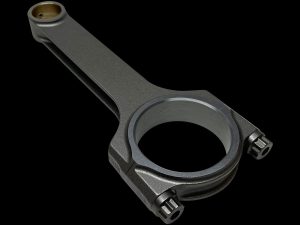
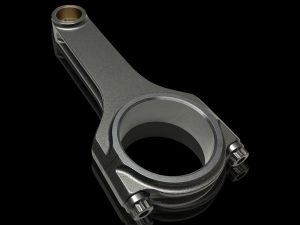
The I-beam design, chosen for the BC6107, represents a classic and proven solution for high-stress, high-output applications. This configuration places material precisely where it is needed to manage the complex loading forces within a performance engine: primarily tension during the exhaust stroke and compression during the power stroke. The cross-sectional “I” shape provides an exceptional strength-to-weight ratio, resisting bending and buckling far more effectively than an H-beam or a stock rod under severe detonation or high boost pressure. BC’s engineers have optimized the beam’s profile and pinched design at the piston pin end (small end) to reduce mass while maintaining structural integrity, a critical consideration for controlling inertial forces at elevated RPM.
Every BC6107 rod begins as a certified 4340 chromoly steel forging. This aerospace-grade material is celebrated for its superior tensile strength, fatigue resistance, and toughness compared to standard 5140 or powdered metal rods. The forging process aligns the metal’s grain structure to follow the contour of the rod, enhancing its natural strength. Following forging, each rod undergoes a precise heat-treating regimen to achieve a core hardness that balances ultimate strength with necessary ductility, preventing catastrophic brittle failure. The final step is a shot-peening process over the entire rod, including the critical radii of the beam and ends, which induces beneficial compressive stresses on the surface to dramatically improve fatigue life—a non-negotiable for any component subjected to millions of cyclic loads.
Technical Specifications & Manufacturing Precision
Precision is not an add-on; it is the manufacturing standard. Each BC6107 rod is CNC-machined to exacting tolerances that far surpass OEM specifications, ensuring perfect balance and fitment within your engine block. This meticulous process guarantees consistency from rod to rod, which is paramount for smooth engine operation and longevity at high power levels.
| Specification | Detail |
|---|---|
| Material | Premium 4340 Chromoly Steel Forging |
| Fasteners | ARP2000 Wave-Loc® Cap Screws (200,000 psi tensile) |
| Center-to-Center Length | 5.905 inches (150.0mm) – Maintains stock compression height |
| Big End Bore Diameter | 2.1650 inches (55.0mm), precision honed with align bore consistency |
| Small End Bore Diameter | 0.8661 inches (22.0mm), typically fitted with a press-fit piston pin |
| Weight Tolerance | ± 2 grams per set (balanced) |
| Surface Treatment | Shot-Peened for enhanced fatigue resistance |
| Design | High-Strength I-Beam with Pinched Small End |
The inclusion of ARP2000 cap screws cannot be overstated. These are not generic hardware; they are engineered fasteners with a 200,000 psi tensile strength. Their Wave-Loc® design provides superior clamp load retention, virtually eliminating the risk of cap walk or fastener stretch under extreme conditions. Proper installation torque, as specified by ARP’s lubricant, is critical and detailed in their comprehensive technical guide, which is essential reading for any performance builder: ARP Fastener Installation Technical Article.
Primary Performance Benefits
The integration of premium materials, proven design, and precision manufacturing yields a component suite with unequivocal advantages for the performance-oriented 4G63.
- Extreme Power Capacity: Rated to reliably support 700+ horsepower applications, removing the stock rod as the weak link in high-boost or high-nitrous setups.
- Superior High-RPM Stability: The optimized I-beam design and balanced weight control resonant harmonics and inertial stress, allowing for safe operation beyond 8,500 RPM.
- Enhanced Detonation Resistance: The toughness of 4340 steel and the rod’s design provide a greater margin of safety against failure from incidental detonation or pre-ignition events.
- Perfect Rotating Assembly Balance: CNC machining and tight weight-matching ensure minimal vibration, reducing bearing wear and contributing to overall engine smoothness and longevity.
- Unmatched Fastener Integrity: ARP2000 bolts provide a clamp load that secures the rod cap with absolute authority, preventing the fretting and bore distortion that can lead to spun bearings.
- Maintained Engine Geometry: The stock 5.905” center-to-center length ensures compatibility with standard stroke crankshafts and a wide range of aftermarket pistons without altering compression height or quench.
Vehicle Fitment & Application Specifics
Critical Clarification: The BC6107 is engineered exclusively for the 2nd Generation, 7-bolt 4G63 engine. Correct identification is paramount to avoid installation errors and engine damage.
Compatible Vehicles & Engines:
- Mitsubishi Eclipse GS-T / GSX: 1995-1999 model years (7-bolt engine).
- Mitsubishi Eagle Talon TSi AWD / FWD: 1995-1998 model years (7-bolt engine).
- Mitsubishi Plymouth Laser RS Turbo: Relevant late models with the 7-bolt configuration.
- Mitsubishi Evolution IV-IX (JDM & USDM): All factory 7-bolt 4G63 engines. (Note: Always verify crank journal sizing for specific Evolution models during assembly).
- Other Applications: Any 4G63 derivative utilizing the 2nd Gen, 7-bolt core with a 88mm stroke crankshaft.
Non-Compatible Applications: These rods are NOT designed for 1st Generation 6-bolt 4G63 engines (1990-1992.5 DSM). The big-end bore and bolt pattern are specific to the 7-bolt crankshaft and block architecture. Attempting to modify or force-fit these rods into a 6-bolt engine will result in catastrophic failure.
Installation Considerations & Final Build Notes
Installing the BC6107 rods is a procedure that demands the same precision with which they were manufactured. This is not a “bolt-in” component in the casual sense; it is a blueprint-grade part requiring professional engine assembly.
Mandatory Procedures:
1. Clearance Checking: Always perform a dry assembly check. Verify rod-to-crank journal clearance with plastigage or a precision micrometer, aiming for 0.0018″ – 0.0022″ depending on your oil viscosity and bearing choice. Check for adequate clearance between the rod bolts/beam and the cylinder block, especially on stroker applications.
2. Fastener Torque: The ARP2000 bolts must be torqued using ARP’s proprietary Ultra-Torque fastener lubricant (or specified alternative). Do not use engine oil or generic grease. Follow the torque sequence and final torque value specified in the included instructions (typically a multi-stage process to a final value near 75-85 ft/lbs). The clamp load achieved is a direct function of correct lubrication.
3. Piston Pin Fitment: The small end is machined for a press-fit piston pin. This requires the use of a proper pin installation tool and heating of the rod small end (typically with a rod heater) to approximately 450-500°F to allow the pin to slide in without excessive force that could distort the bore. A floating pin setup requires bushing and machining by a qualified shop.
4. Final Balancing: While the rods are weight-matched, the entire rotating assembly—including the crankshaft, pistons, pins, and rings—must be dynamically balanced by a machinist. This is non-negotiable for a high-performance, high-RPM build.
In conclusion, the BC6107 I-Beam Connecting Rods represent a masterclass in targeted performance engineering. By addressing the specific weaknesses of the 7-bolt 4G63 with superior materials, a time-tested design, and uncompromising manufacturing standards, they provide the foundational strength required for any serious horsepower goal. When paired with quality pistons, a balanced crankshaft, and precise assembly techniques, these rods cease to be just a component and become the bedrock of a formidable and reliable performance engine.
Reviews
There are no reviews yet.