
No products in the cart.
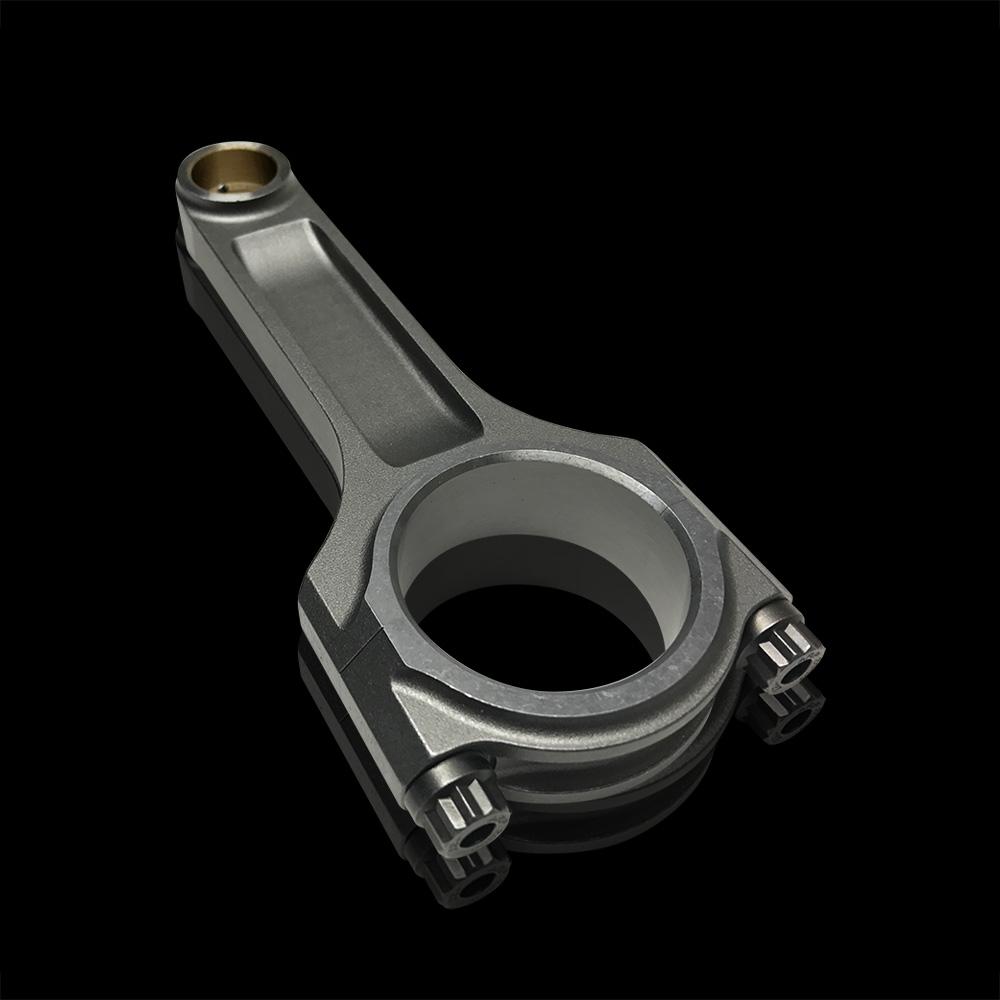
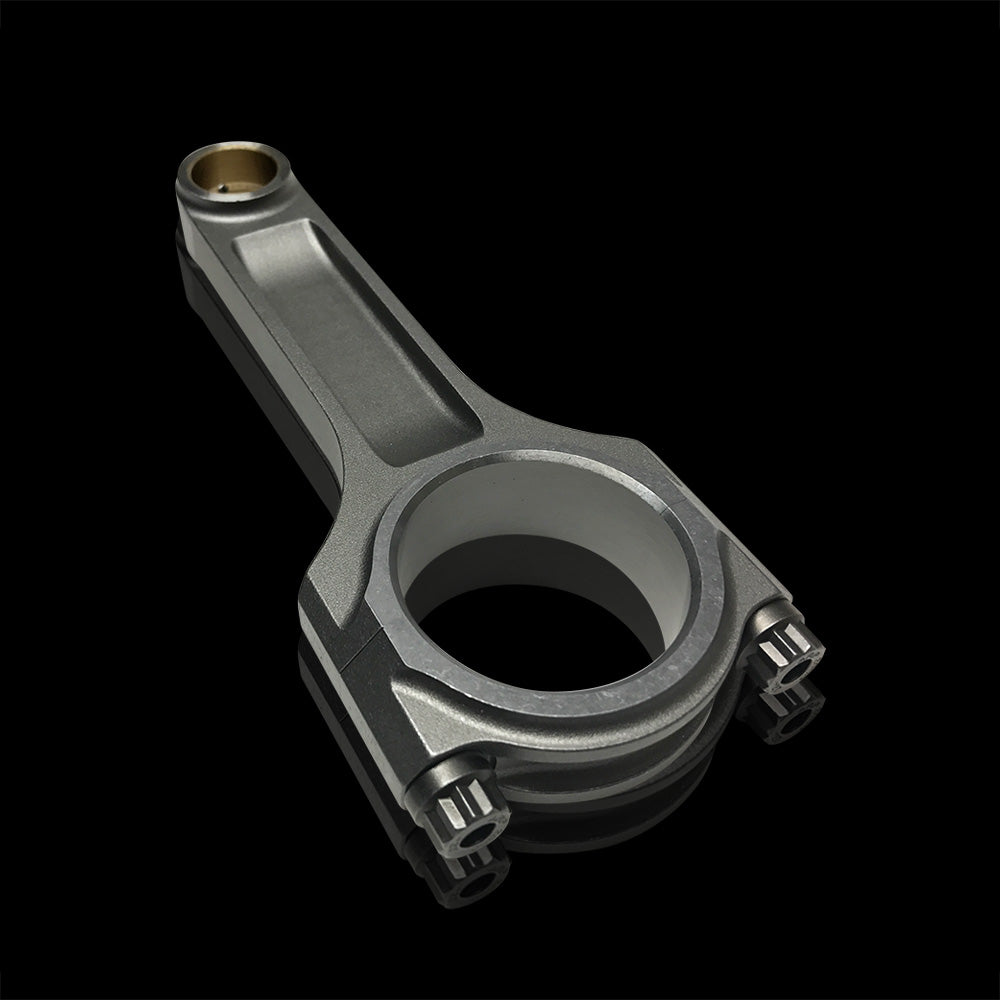
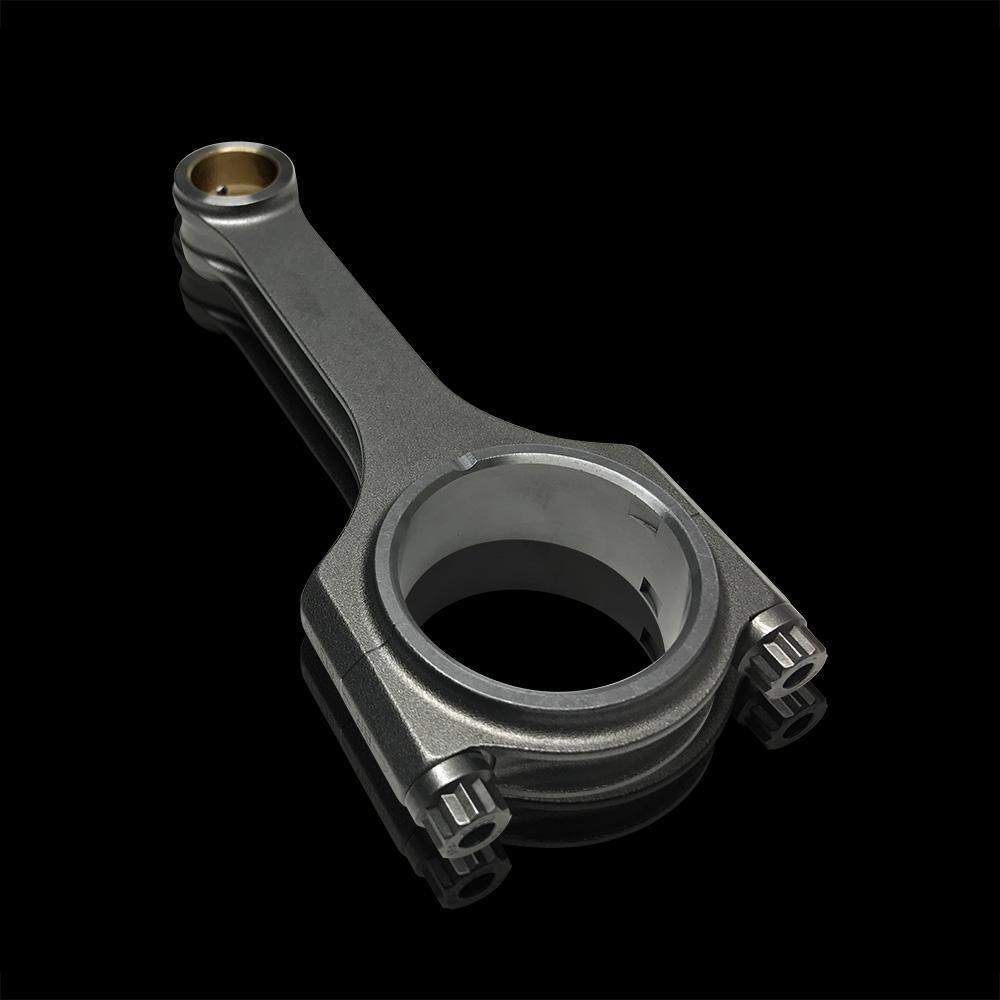
In the pursuit of extreme horsepower and relentless durability for the legendary 4G63 powerplant, the foundation of your rotating assembly is non-negotiable. The BC6117 I-Beam Connecting Rod Set from Brian Crower represents a calculated evolution in forced induction and high-RPM resilience. Engineered specifically for the second-generation, 7-bolt 4G63 engines found in DSM and Mitsubishi applications, these rods transform a critical weak point into a pillar of strength. Utilizing a forged 4340 chromoly steel I-beam construction and secured with premium ARP2000 fasteners, the BC6117 set is designed for builders who demand precision, repeatability, and absolute confidence at power levels well beyond factory limits. This is not merely an upgrade; it is a fundamental re-engineering of the connecting rod for the modern performance landscape, ensuring your 4G63’s bottom end is prepared for the stresses of aggressive turbocharging, high cylinder pressure, and sustained track use.
Engineering the I-Beam: A Structural Analysis for the 4G63
The I-beam design selected for the BC6117 rods is a result of meticulous mechanical engineering aimed at optimizing the strength-to-weight ratio under specific loading conditions. In a high-performance engine, connecting rods are subjected to immense compressive forces during the power stroke and even greater tensile loads during the exhaust and intake strokes as the piston changes direction at high velocity. The I-beam profile, with its wide flanges and centralized web, provides maximal resistance to column buckling under compression—a critical failure mode in boosted applications. Furthermore, this geometry offers exceptional bending stiffness, preventing rod flex that can lead to bearing wear, uneven cylinder loading, and ultimately, fatigue failure. For the 4G63, an engine renowned for its tuning potential but hampered by factory rod limitations, the transition to a true performance I-beam like the BC6117 is the single most effective step in safeguarding the rotating assembly against catastrophic failure under load.
Material Science: 4340 Chromoly Steel and Precision Forging
The choice of material is as critical as the design itself. Brian Crower specifies AISI 4340 chromoly steel for the BC6117 rods, a nickel-chromium-molybdenum alloy revered in aerospace and motorsport for its excellent combination of ultimate tensile strength, fatigue resistance, and fracture toughness. The “chromoly” designation indicates the presence of chromium and molybdenum, which enhance hardenability and strength at elevated temperatures. Each rod begins as a precision-forged blank, a process that aligns the metal’s grain structure to follow the contours of the rod, dramatically increasing its inherent strength compared to a machined billet. Following forging, the rods undergo a rigorous heat-treating and shot-peening process. Heat treatment sets the core hardness and material properties, while shot peening bombards the surface with small media to induce a layer of compressive stress. This process significantly improves fatigue life by helping to prevent the initiation and propagation of cracks, a essential characteristic for components facing millions of cyclic loads.
Fastener Integrity: The ARP2000 Advantage
A connecting rod is only as strong as its bolted joint. Brian Crower eliminates any compromise by outfitting the BC6117 set with genuine ARP2000 Wave-Loc fasteners. These are not merely “ARP-quality” but the industry-standard bolts renowned for their consistency and strength. The ARP2000 alloy is a proprietary material with a tensile strength exceeding 220,000 psi, engineered specifically for high-fatigue applications. The unique “Wave-Loc” undercut design on the bolt shank ensures a precise and consistent clamp load by eliminating stress concentrations at the thread run-out. Proper fastener installation and stretch is paramount; these bolts are designed to be torqued using the stretch method (using an ARP bolt stretch gauge is highly recommended for ultimate precision) to achieve a perfectly uniform clamping force across all rods. This attention to the fastener detail ensures the big end of the rod remains perfectly round and dimensionally stable under extreme operation, protecting your crankshaft journals and rod bearings.
- Forged 4340 Chromoly Steel Construction: Provides the ultimate foundation for strength, fatigue resistance, and durability under high horsepower and RPM.
- Precision I-Beam Design: Optimizes stiffness and resistance to buckling and bending forces inherent in high-output 4G63 applications.
- ARP2000 Wave-Loc Fasteners Included: Industry-leading rod bolts ensure a secure, reliable, and consistent big-end clamp for maximum bearing and journal protection.
- Weight-Matched & Blueprinted: Each set is weight-matched to a minimal tolerance and fully machined to blueprint specifications for perfect balance and drop-in fitment.
- 156mm Center-to-Center Length: Maintains standard engine geometry and compression height, ensuring compatibility with a wide range of aftermarket pistons.
- Shot-Peened & Heat-Treated: Advanced finishing processes enhance surface durability and long-term fatigue life for competition and street use.
- Direct OEM Replacement: Designed specifically for the 2nd Gen 7-bolt 4G63, requiring no block clearancing for a streamlined build process.
Vehicle Fitment & Application Notes
The BC6117 rod set is engineered as a direct replacement for a specific and critical era of the 4G63 engine. Correct fitment is essential for proper operation and performance.
Primary Application: Mitsubishi 4G63 2.0L DOHC Turbo Engine – Second Generation, 7-Bolt Configuration (1992.5-1999).
Vehicle Fitment Includes:
- Mitsubishi Eclipse GS-T & GSX (2G): 1995-1999
- Mitsubishi Eclipse Spyder GS-T & GSX: 1996-1999
- Mitsubishi Galant VR-4: 1992-1993 (7-bolt models)
- Eagle Talon TSi AWD & FWD (2G): 1995-1998
- Plymouth Laser RS Turbo AWD: 1992-1994 (7-bolt models)
- Various JDM Evolution I-III (CN9A, CP9A) Engines: Verify 7-bolt configuration. NOTE: Not for use with 1st Generation (6-bolt) 4G63 engines (1990-1992.5). The 6-bolt and 7-bolt crankshafts have different rod journal diameters and will not interchange.
Critical Installation Consideration: While these rods are a direct drop-in for the specified 7-bolt engines, professional installation is mandatory. This includes precise measurement of bore size, crankshaft journal diameters, and careful bearing selection. Always check for adequate clearancing between the rod bolts/beam and the cylinder block and crankshaft counterweights during mock-up assembly. For an in-depth technical discussion on connecting rod dynamics and harmonics in high-performance engines, refer to this authoritative resource from Engine Builder Magazine.
Technical Specifications: BC6117
| Specification | Detail |
|---|---|
| Part Number | BC6117 |
| Engine Application | Mitsubishi/DSM 4G63 2nd Gen, 7-Bolt |
| Center-to-Center Length | 156mm (Standard OEM Length) |
| Big End Bore (Diameter) | 50.0mm (Fits standard 7-bolt crank journal) |
| Small End Bore (Diameter) | 22.0mm (Standard for most aftermarket pistons) |
| Material | Forged AISI 4340 Chromoly Steel |
| Fasteners | ARP2000 Wave-Loc Rod Bolts & Nuts Included |
| Beam Design | Performance I-Beam |
| Finish | Shot-Peened, Heat-Treated |
| Quantity | Set of 4 (Complete for Inline-4 Engine) |
The Final Component in a Bulletproof 4G63 Build
Selecting the BC6117 I-Beam Connecting Rods is a definitive statement about the intent and integrity of your 4G63 build. They bridge the gap between the factory’s mass-production limitations and the exacting demands of serious performance. By addressing the core triumvirate of design, material, and fastener technology, Brian Crower has created a component that operates with authoritative precision in the engine’s most hostile environment. Whether your goal is a reliable 500whp street cruiser or a 1000+hp drag strip weapon, these rods provide the foundational security to explore the upper limits of the 4G63 platform with confidence. Install them with the same precision with which they were manufactured, pair them with quality pistons and bearings, and your engine’s lower end will cease to be a concern, allowing you to focus on tuning, boost, and performance.
Be the first to review “BC6117 – Mitsubishi/DSM 4G63 2nd Gen/7 Bolt – I-Beam Connecting Rods w/ARP2000 Fasteners – 156mm”
| Make | Model | Year |
|---|---|---|
| Eagle | Talon | 1995 - 1998 |
| Mitsubishi | Eclipse | 1995 - 1999 |
Related products
B18A / B18B - Connecting Rods
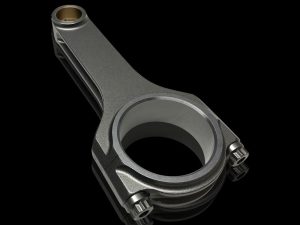
BC6029 – Acura B18A/B, Honda B20 – ProH625+ Connecting Rods w/ARP Custom Age 625+ Fasteners
$1,022.79
B16A / B18C - Connecting Rods
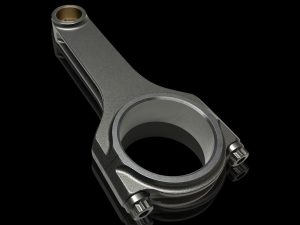
BC6018 – Honda B16A – ProH2K Connecting Rods w/ARP2000 Fasteners
$685.57
$1,022.79
B16A / B18C - Connecting Rods
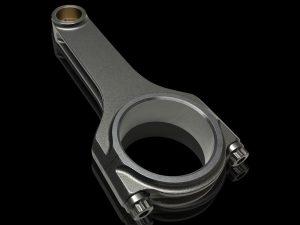
BC6025 – Honda/Acura B18C – ProH625+ Connecting Rods w/ARP Custom Age 625+ Fasteners
$1,022.79
B18A / B18B - Connecting Rods
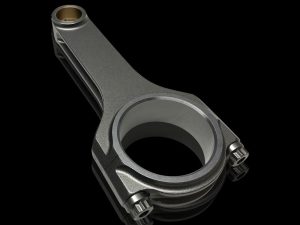
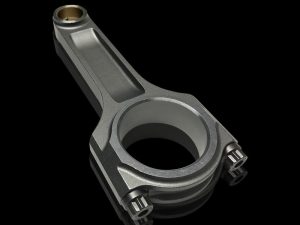
BC6017 – Acura B18A/B18B, B20 – I-Beam Connecting Rods w/ARP2000 Fasteners
$1,090.11
CONNECTING RODS
BC6068 – Honda F22C (’04-up) – ProH625+ Connecting Rods w/ARP Custom Age 625+ Fasteners
$1,022.79
Reviews
There are no reviews yet.