
No products in the cart.
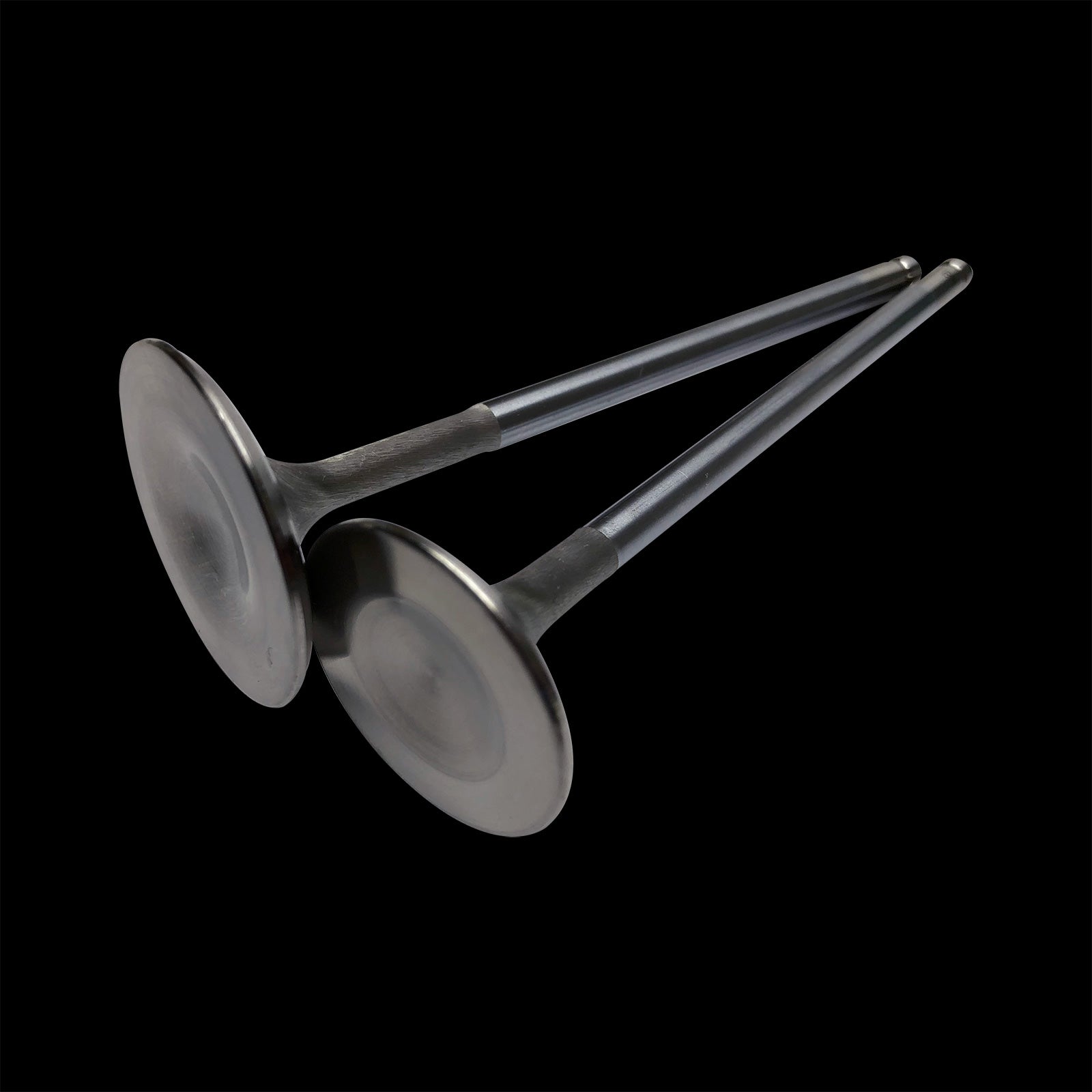
In the high-stakes world of performance off-road engineering, where every cubic centimeter of airflow and every gram of reciprocating mass translates directly to horsepower and reliability, the valve train stands as a critical frontier. For owners and builders of the Polaris Pro R (2021 and up), the BC3802-2 stainless steel intake valves are not merely a replacement part; they are a calculated, precision-engineered upgrade designed to redefine the engine’s volumetric efficiency and structural integrity. Manufactured by the renowned Brian Crower, these 38.8mm (+1mm oversize) valves are the result of advanced metallurgy and aerodynamic profiling, specifically developed to unlock the latent potential within the Pro R’s twin-cylinder powerplant. This description, crafted from the perspective of a master performance mechanic, will dissect the engineering, benefits, and exacting specifications of this component, providing the technical depth required for informed decision-making in pursuit of unparalleled performance.
Engineering and Design Philosophy of the BC3802-2 Valve
The primary function of an intake valve is to act as a precise, high-speed gatekeeper for the air-fuel mixture. The stock valvetrain in any production engine, including the Polaris Pro R, is designed for a balance of cost, emissions, and durability under typical use. The BC3802-2 valves are engineered from the ground up for performance environments where “typical” does not exist. The core philosophy hinges on increasing flow capacity while reducing inertial mass and enhancing thermal management. The +1mm oversize (38.8mm versus the stock 37.8mm) is a calculated increase that expands the minimum cross-sectional area of the intake port, reducing intake charge velocity restriction at high RPM. This is not a simple bore job; the valve head profile is meticulously shaped using computational fluid dynamics (CFD) to promote laminar flow and reduce turbulence as the charge enters the combustion chamber. The backside of the valve head is often undercut and streamlined to further improve flow around the valve stem, a detail critical for maximizing fill at elevated engine speeds where the Pro R is frequently operated.
Material Science: The Superiority of Forged Stainless Steel
Material selection is paramount for a component subjected to cyclical thermal stress exceeding 1300°F and repetitive impact loads measured in tons. Brian Crower utilizes a proprietary EV8+ stainless steel alloy for the BC3802-2 valves. This is not ordinary stainless steel; it is a chromium-nickel alloy that is vacuum-melted and forged, not cast. The forging process aligns the grain structure of the metal, creating a part with superior tensile strength, fatigue resistance, and density compared to cast or cheaper steel alternatives. The high nickel content provides exceptional corrosion resistance, crucial for engines that may see varied fuel qualities or occasional moisture ingestion. The thermal conductivity of this specific alloy is also optimized. It efficiently transfers heat from the valve head to the seat and into the cylinder head, mitigating hot spots that can lead to pre-ignition or valve tuliping. For a deeper dive into advanced valve metallurgy, refer to this authoritative SAE technical article on valve materials and design. The stems are precision ground and hardened, often utilizing a chrome-plated or nitrided surface treatment to reduce friction and wear in the guide, ensuring consistent valve timing and longevity.
Performance Benefits: Quantifying the Upgrade
Installing the BC3802-2 intake valves transforms the breathing characteristics of the Polaris Pro R engine. The benefits are systemic, affecting power output, reliability, and throttle response. Below is a detailed list of the key advantages engineered into this component.
- Increased Airflow & Volumetric Efficiency: The +1mm diameter and optimized profile directly increase the flow coefficient (Cf) of the intake port. This allows a greater mass of air-fuel charge to enter the cylinder per intake cycle, particularly in the mid-to-high RPM range (4500-8500 RPM), where the Pro R’s turbocharged system demands maximum flow. This is the foundational step for supporting increased boost pressure and larger fuel injectors.
- Enhanced Power and Torque: Improved volumetric efficiency directly correlates to increased cylinder pressure and more complete combustion. Users can expect measurable gains in peak horsepower and, more importantly, a broader, flatter torque curve. This translates to more responsive acceleration out of corners and stronger pull throughout the powerband.
- Superior Thermal and Fatigue Resistance: The forged EV8+ stainless steel construction provides a much higher safety margin against valve float, fatigue failure, and heat distortion. This is critical for sustained high-RPM operation, turbocharged applications, or when running aggressive ignition timing.
- Reduced Reciprocating Mass: Despite the larger diameter, advanced forging and precision machining allow these valves to be comparable in weight or even lighter than stock valves. Reduced valvetrain mass decreases the load on valve springs, allows for higher stable RPM limits, and reduces the risk of valve bounce.
- Long-Term Durability and Consistency: The combination of hardened stems, corrosion-resistant material, and robust construction ensures valve seat wear is minimized and valve lash remains stable over extended service intervals. This maintains engine compression and performance over time, reducing maintenance frequency.
Vehicle Fitment: Precision Application for the Polaris Pro R
The BC3802-2 valve set is engineered for a specific, direct-fit application. It is designed exclusively for the intake side of the Polaris Pro R model years 2021 and newer. This encompasses all factory variants and trims of the Pro R platform powered by the twin-cylinder, turbocharged engine. Proper installation is not a universal swap and requires precision machining and assembly by a qualified technician. The +1mm oversize necessitates a corresponding three-angle valve job to be performed on the cylinder head’s intake seats to match the new valve diameter and profile perfectly. Failure to do so will result in poor sealing, lost compression, and rapid valve and seat wear. Additionally, it is highly recommended to inspect and likely upgrade to corresponding high-performance valve springs (such as Brian Crower’s matched spring kits) to control the valve properly at higher RPMs. The stock valve guides must be in good condition, and stem-to-guide clearance should be verified during assembly. This valve set is the cornerstone for builds ranging from refined trail machines to full-race Pro R contenders.
Technical Specifications: BC3802-2 Detailed Data
The following table provides the exact technical specifications for the Brian Crower BC3802-2 intake valve set. These figures are critical for engine blueprinting, component matching, and ensuring correct installation geometry.
| Specification | Detail |
|---|---|
| Part Number | BC3802-2 |
| Valve Type | Intake |
| Head Diameter | 38.8 mm (+1.0mm oversize) |
| Stem Diameter | 6.0 mm (Precision ground to OEM specification) |
| Overall Length | 101.5 mm (Matches OEM length for correct rocker geometry) |
| Material | Forged EV8+ Stainless Steel |
| Stem Treatment | Hardened & Surface Treated for wear resistance |
| Lock Groove | Standard 3-groove (compatible with OEM and performance retainers/locks) |
| Fitment | Polaris Pro R (2021, 2022, 2023, 2024+) – Twin-Cylinder Turbo Engine |
| Quantity per Set | 2 Valves (One for each cylinder) |
In conclusion, the Brian Crower BC3802-2 stainless steel intake valves are a scientifically validated upgrade for the Polaris Pro R. They address the fundamental limitations of the stock valvetrain through advanced materials, precision engineering, and a performance-optimized design. For the mechanic or enthusiast committed to building a more powerful, reliable, and responsive machine, this component is not an option—it is an essential investment in the vehicle’s core mechanical architecture.
Be the first to review “BC3802-2 – Polaris Pro R (21-up) Stainless Steel Intake Valves – 38.8mm (+1mm)”
| Make | Model | Year |
|---|---|---|
| Can-Am | X3 |
Related products
Sale!
CLEARANCE / OVERSTOCK
BC3104S-8 – Mitsubishi 4G63/Evo Intake Valves (35mm / +1mm) – set/8
Original price was: $219.10.$190.52Current price is: $190.52.
Sale!
CLEARANCE / OVERSTOCK
BC3100S-8 – Mitsubishi 4G63/Evo Intake Valves (34mm / STD) – set/8
Original price was: $219.10.$190.52Current price is: $190.52.
CLEARANCE / OVERSTOCK
BC5429 – Ford Coyote, 4340 Billet 3.875″ Stroke w/1.888″ Crank Pin – Unbalanced
$3,565.00
Sale!
CLEARANCE / OVERSTOCK
BC3102S-8 – Mitsubishi 4G63/Evo Intake Valves (34.5mm / +.5mm) – set/8
Original price was: $219.10.$190.52Current price is: $190.52.
Sale!
CLEARANCE / OVERSTOCK
BC3366S-12 – Toyota 4AGE 20v Intake Valves (27.5mm) – set/12
Original price was: $219.10.$190.52Current price is: $190.52.
Sale!
CLEARANCE / OVERSTOCK
Original price was: $328.65.$285.78Current price is: $285.78.
Sale!
CLEARANCE / OVERSTOCK
Original price was: $219.10.$190.52Current price is: $190.52.
Reviews
There are no reviews yet.