
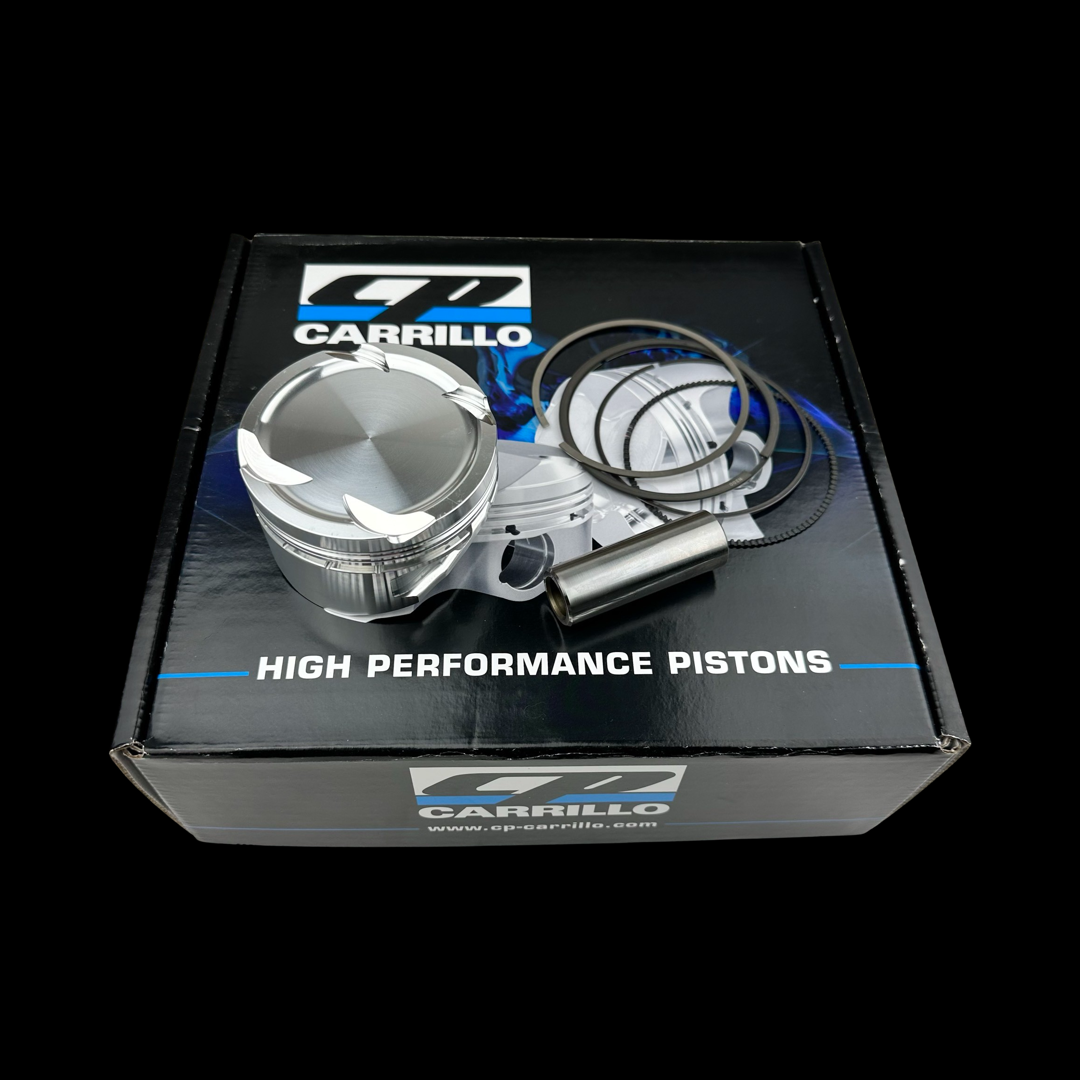
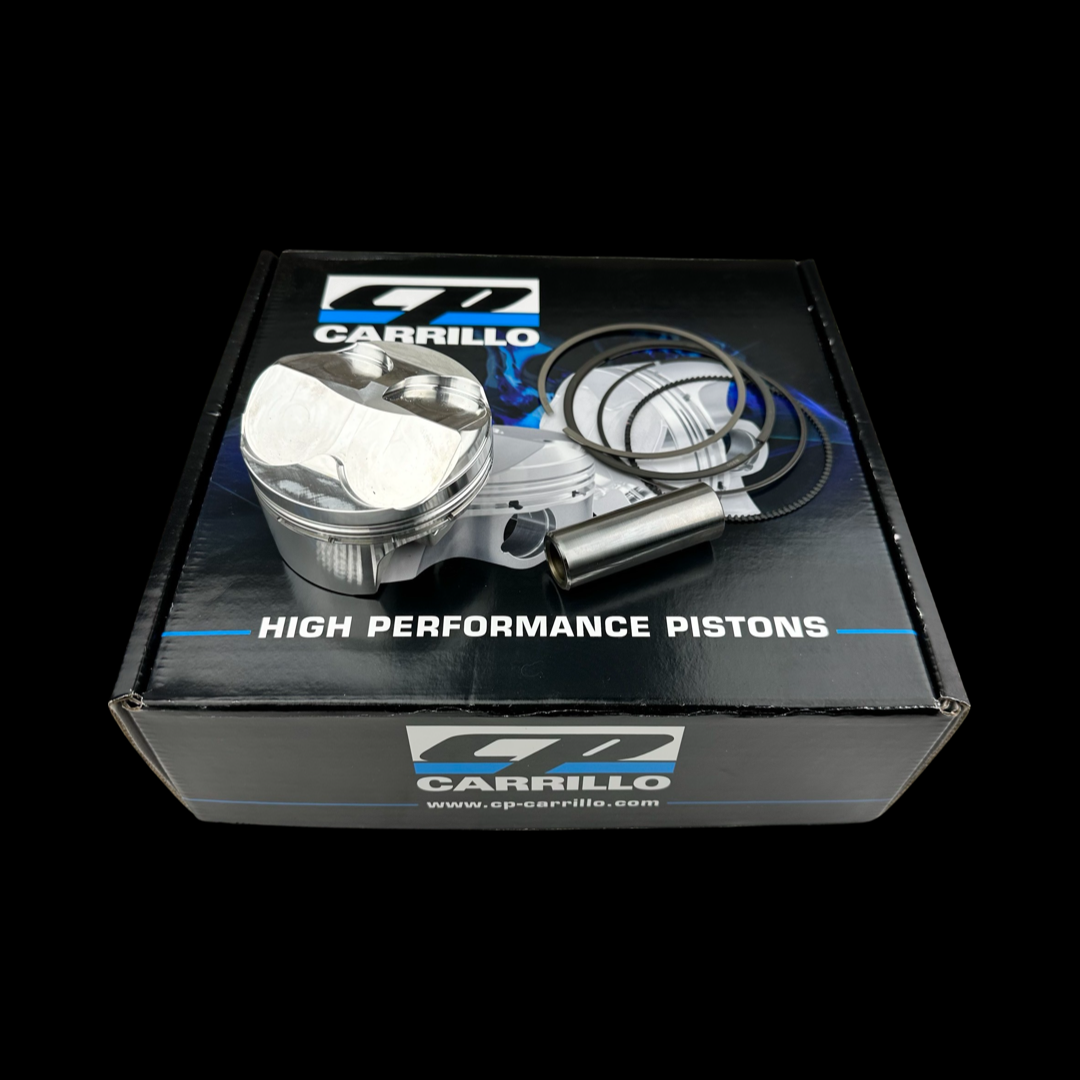
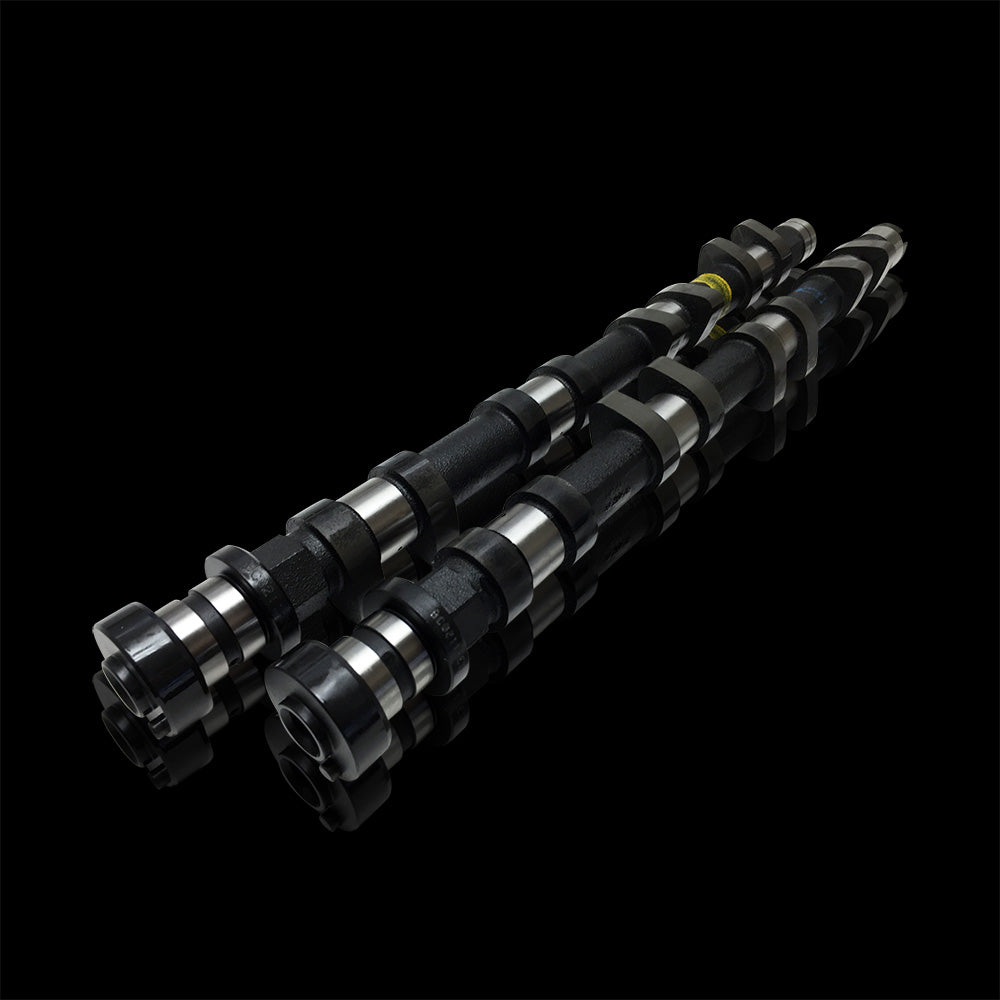
For the dedicated Nissan KA24DE and KA24DET builder, the pursuit of power transcends simple bolt-ons. It demands a strategic, calculated assault on the engine’s volumetric efficiency, targeting the precise control of the air-fuel charge—the very heart of internal combustion. This is where valvetrain engineering becomes paramount. Brian Crower’s BC0212 Stage 3 Camshafts are not merely components; they are a calibrated instrument for competition, engineered explicitly for naturally aspirated and forced-induction RWD applications where peak power and a broad, usable torque curve are non-negotiable. Designed with aggressive lobe profiles, these cams represent the culmination of advanced dyno and track testing, transforming the robust KA24 platform from a torque-focused workhorse into a high-RPM, power-dense performer. Their specification demands supporting valvetrain upgrades and expert tuning, delivering a transformative powerband for dedicated track, drift, and strip machines where compromise is not in the vocabulary.
Engineering Philosophy & Core Design
The BC0212 profile is engineered with a singular, uncompromising objective: maximize high-RPM airflow and power production in a rear-wheel-drive chassis. This RWD-specific focus influences the entire design ethos, favoring a powerband that builds aggressively into the mid-range and holds power steadfastly to redline. Unlike profiles adapted from FWD applications, which may prioritize low-end response for traction-limited scenarios, the BC0212 utilizes increased duration and lift to exploit the KA24’s head-flow potential at engine speeds where volumetric efficiency typically plummets. The lobe separation angle (LSA) is carefully selected to manage dynamic compression and cylinder pressure, a critical consideration for forced-induction (KA24DET) setups where controlling detonation is as crucial as making power. Each lobe is CNC-machined from premium-grade chromoly steel billet, then precision-hardened and micro-finished to provide not only exceptional strength under high spring pressures but also drastically reduced friction for improved longevity and consistent performance over grueling race cycles.
Performance Benefits & Application Profile
Installing the BC0212 camshafts fundamentally alters the personality and capability of the KA24 engine. They are the cornerstone for builds targeting significant horsepower gains, especially when paired with complementary breathing modifications like ported heads, larger valves, and appropriate intake/exhaust systems. The power delivery is characterized by a pronounced “kick” in the power curve as the engine crosses the threshold where the aggressive cam profile begins to efficiently fill the cylinders. This transformation is quantifiable and dramatic, shifting the engine’s effective powerband higher and widening it substantially.
- Maximized High-RPM Volumetric Efficiency: Extended duration and high lift keep the intake valves open longer and further, ramming a greater mass of air-fuel charge into the cylinder at engine speeds above 4,500 RPM.
- Broad, Usable Torque Curve for RWD Dynamics: Engineered to provide a strong, building mid-range that translates to controllable power delivery for drift and track-out acceleration, rather than a sudden, peaky power hit.
- Optimized Forced-Induction Performance: The profile and LSA work synergistically with turbocharger or supercharger systems, enhancing exhaust scavenging to reduce turbo lag and manage backpressure, leading to more efficient boost production and higher ultimate power ceilings. For a deep dive on camshaft timing effects in turbocharged engines, refer to this technical resource on turbo cam selection.
- Precision-Machined Durability: Manufactured from 8620 chromoly steel and finished to exacting tolerances, ensuring consistent lobe geometry and exceptional resistance to wear, even under the high spring pressures required for valve float prevention at elevated RPM.
- Foundation for Ultimate Power Goals: These cams are a prerequisite for builds exceeding 300+ horsepower on boost or seeking the highest possible NA output, acting as the critical control element for the engine’s breathing capacity.
Technical Specifications & Integration Requirements
Understanding the hard specifications of the BC0212 camshafts is crucial to planning a successful build. The figures below are not just numbers; they are a blueprint for the engine’s new operating regime. The significant increase in duration and lift over stock profiles necessitates a holistic upgrade approach. The factory hydraulic lash adjusters (HLAs) and valve springs are utterly incapable of managing this aggressive profile, leading to immediate valve float, lost power, and severe risk of valvetrain failure.
| Specification | Intake Cam | Exhaust Cam | Notes |
|---|---|---|---|
| Advertised Duration | 288° | 288° | Measured at 0.006″ lobe lift |
| Duration @ 0.050″ Lift | 240° | 240° | Industry-standard performance benchmark |
| Gross Valve Lift | 11.80mm (0.465 in) | 11.80mm (0.465 in) | With standard 1.6:1 rocker ratio |
| Lobe Separation Angle (LSA) | 112° | Critical for tuning cylinder pressure and overlap | |
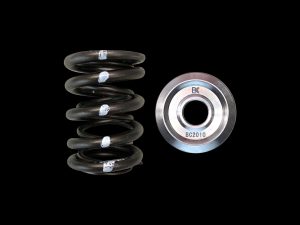
Mandatory Supporting Modifications: To operate safely and effectively, the BC0212 camshafts must be paired with Brian Crower or equivalent upgraded valve springs and titanium retainers (e.g., BC0209) designed to control the increased lift and RPM. Conversion to solid lifter buckets (shims) or the use of specialized, stiffer hydraulic lifters is strongly recommended for precise lash control and absolute RPM reliability. Finally, professional engine management tuning (e.g., Nistune, Haltech, MegaSquirt) is essential to recalibrate fuel delivery and ignition timing for the new airflow characteristics, especially to manage the increased overlap at idle and low rpm.
Vehicle Fitment & Platform Compatibility
The BC0212 camshafts are engineered for the specific architecture of the Nissan KA24DE and KA24DET engines found in popular RWD platforms. Correct fitment is vital, as cylinder head and timing cover configurations can vary. These cams are a direct bolt-in replacement for the factory camshafts, assuming all necessary supporting valvetrain components have been upgraded.
Primary Applications:
- Nissan 240SX (S13 & S14 Chassis) – 1991-1998 models equipped with the dual-overhead-cam (DOHC) KA24DE engine. The definitive choice for S-chassis drift and time-attack builds.
- Nissan D21 Hardbody Truck & Pathfinder WD21 – 1990-1997 models with the KA24DE engine. Enables high-performance torque builds for lightweight trucks.
- KA24DET Swap Applications – The premier cam choice for any custom turbocharged KA24DE build, regardless of host vehicle (e.g., 510, S30, AE86), where maximum forced-induction power is the goal.
Note: Always verify engine stamp and head casting numbers. These cams are not compatible with the single-cam KA24E engine. Installation requires precise timing alignment using factory or aftermarket timing marks and a quality timing chain kit.
Tuning Dynamics & Final Build Considerations
The installation of the BC0212 camshafts marks a point of no return for a KA24 build, committing the engine to a high-performance specification that rewards meticulous assembly and tuning. The aggressive overlap will typically result in a “lumpy” idle characteristic—a hallmark of a high-performance cam profile—which is a trade-off for the immense gains in the powerband. Tuning must address this increased overlap, ensuring stable idle quality through adjusted ignition timing and idle air control. For forced-induction applications, the tuner can leverage the cam’s exhaust profile to improve turbo spool characteristics and reduce exhaust backpressure, effectively making the turbo system more efficient. The ultimate success of this upgrade is measured on the dyno and the track, where the transformed powerband provides a measurable advantage in acceleration out of corners and high-speed pull, fully realizing the potential locked within the KA24DE(T) block and head.
Reviews
There are no reviews yet.