
No products in the cart.
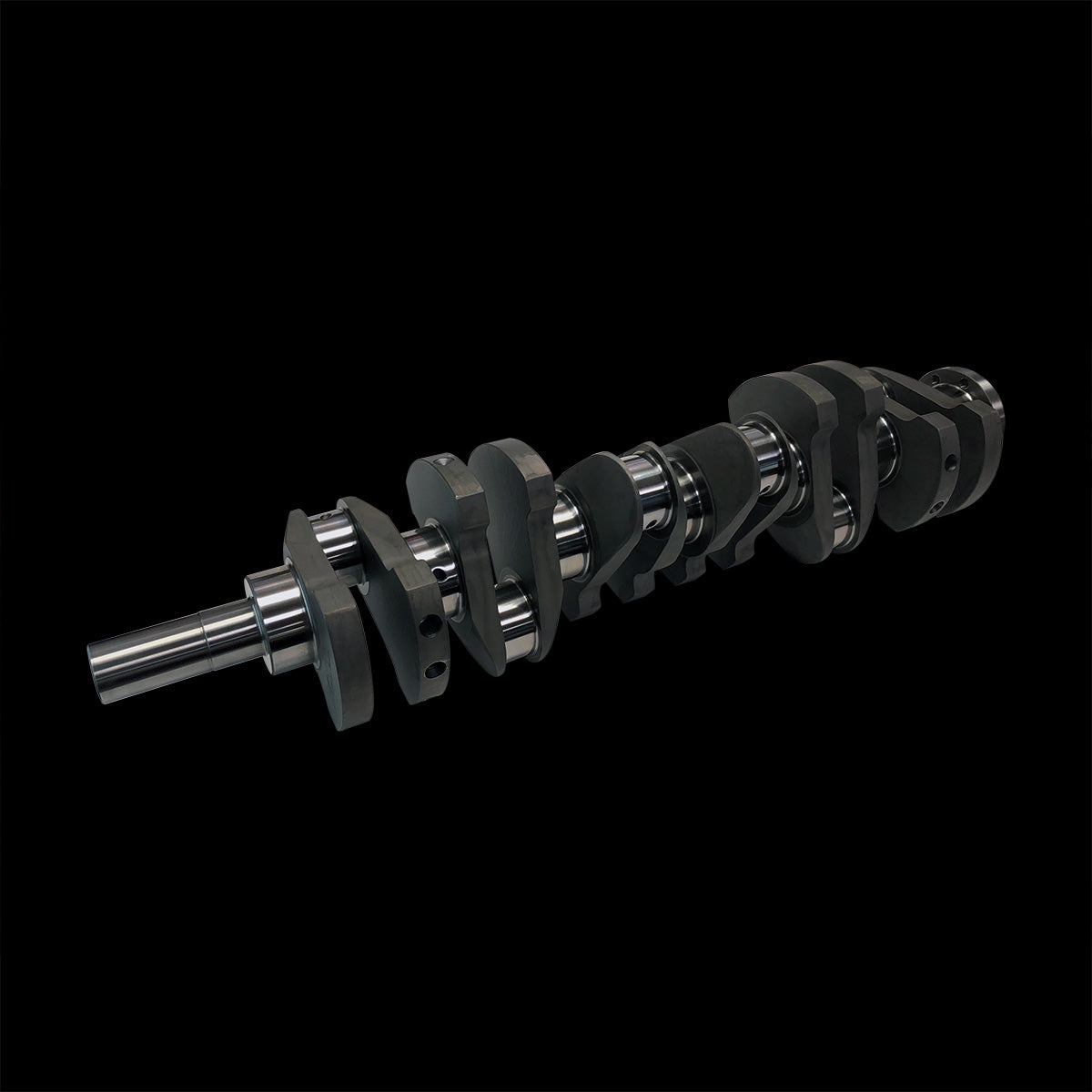
In the relentless pursuit of linear power and unshakable durability for the legendary Toyota 2JZ engine, compromise is not an option. The BC5308-90 Billet Crankshaft from Brian Crower represents the absolute pinnacle of rotating assembly design, engineered not merely as a component, but as the foundational cornerstone for a world-class performance build. This is not a reground or reworked OEM piece; it is a purpose-built, 90mm-stroke masterpiece machined from premium EN40B vacuum-remelt billet steel. Its most distinctive and performance-critical feature is the adoption of Honda-sized main and rod journals, a strategic engineering decision that unlocks superior oiling stability and opens the door to a vastly expanded universe of high-performance bearing and connecting rod options. Designed for the serious builder targeting robust power levels far beyond the limits of cast or even forged factory-style cranks, the BC5308-90 transforms a 3.0-liter 2JZ into a potent 3.2-liter stroker, increasing displacement for greater torque and horsepower potential while delivering the structural integrity required for forced induction applications exceeding 1,500 horsepower.
Material Science & Manufacturing Integrity: The EN40B Billet Advantage
Every high-stress performance component begins with its base material, and for the BC5308-90, that foundation is aerospace-grade EN40B (300M) vacuum-remelt billet steel. This material choice is a definitive declaration of intent. Unlike a forged crankshaft, which is shaped under tremendous pressure and can have grain flow inconsistencies, a billet crank is CNC-machined from a solid, homogeneous block of this premium alloy. This process allows for complete control over the grain structure in the most critical stress areas, such as the radius of each journal and the cheek transitions. EN40B itself is renowned for its ultimate tensile strength (typically 280-300 ksi), exceptional fatigue resistance, and high impact toughness. The vacuum remelting process further purifies the steel, eliminating oxides and inclusions that could become failure initiation points. Brian Crower’s CNC machining centers then transform this raw billet into a crankshaft with tolerances measured in ten-thousandths of an inch, ensuring perfect journal geometry, exact counterweight placement, and optimized balancing. The result is a component with a higher inherent safety margin and resistance to flex and harmonic distortion than any OEM-style offering, providing the stable, true-rotating platform essential for high-RPM, high-cylinder-pressure operation.
Strategic Engineering: The Honda Journal Conversion Explained
The defining technical characteristic of the BC5308-90 is its departure from Toyota’s standard journal diameters to those commonly used in Honda B-Series engines. This is a calculated engineering move with multifaceted benefits. The Honda main journals are reduced to 2.361″ (60mm) from the 2JZ’s standard 2.440″ (62mm), and the rod journals are decreased to 1.889″ (48mm) from the standard 1.970″ (50mm). This reduction in surface area and diameter accomplishes several critical goals. Primarily, it significantly reduces bearing surface speed and friction, lowering parasitic drag and operational temperatures. Secondly, it allows for a thicker, stronger crankshaft cheek design around the journals, increasing the component’s overall stiffness and resistance to torsional flex. Most importantly, from a builder’s perspective, it grants access to the enormous aftermarket support for Honda-sized components. High-performance bearings from companies like ACL, King, and Clevite are readily available in a wide range of clearances. Furthermore, this journal size opens the door to using a massive selection of off-the-shelf, high-quality Honda-pattern connecting rods, simplifying the assembly process and providing more options for rod length and beam design to achieve the desired piston positioning and compression height. For a deep dive into the advantages of journal sizing and oiling system dynamics in high-performance engines, refer to this authoritative resource on engine oiling principles at Engine Builder Magazine.
Key Performance Benefits & Build Objectives
- Substantial Displacement Increase: The 90mm stroke, combined with an appropriate bore, raises engine displacement from 3.0L to approximately 3.2L, generating more torque and horsepower across the entire powerband.
- Unmatched Structural Safety Margin: Machined from EN40B billet steel, this crankshaft offers superior tensile strength and fatigue resistance compared to forged or cast units, designed to reliably handle well over 1,500 horsepower.
- Optimized Bearing & Oiling Performance: The smaller Honda-sized journals reduce friction and bearing surface speed, promoting cooler oil temperatures and enhanced oil pressure stability under extreme loads.
- Expanded Component Compatibility: Unlocks the vast marketplace of performance bearings and connecting rods designed for Honda journal sizes, providing builders with superior parts selection and availability.
- Precision CNC Machining: Every specimen is machined to exacting tolerances, ensuring perfect journal roundness, taper-free surfaces, and optimal balance for smooth, high-RPM operation.
- Foundational Stability for High RPM: The increased stiffness and reduced flex provide a true-rotating centerline, critical for maintaining bearing clearances and piston alignment at sustained high rotational speeds.
Technical Specifications & Dimensional Data
The following table details the precise specifications and critical dimensions of the Brian Crower BC5308-90 crankshaft. These figures are essential for engine builders to correctly select matching components such as bearings, connecting rods, pistons, and to perform accurate clearance checks during assembly.
| Specification | Measurement / Detail |
|---|---|
| Part Number | BC5308-90 |
| Engine Application | Toyota 2JZ-GE, 2JZ-GTE |
| Stroke | 90mm (3.543″) |
| Main Journal Diameter | 2.361″ (60mm) – Honda B-Series |
| Rod Journal Diameter | 1.889″ (48mm) – Honda B-Series |
| Main Journal Width | Standard 2JZ |
| Rod Journal Width | Standard 2JZ |
| Construction Material | EN40B (300M) Vacuum Remelt Billet Steel |
| Estimated Displacement (w/ 86mm bore) | ~3.2 Liters |
| Counterweight Configuration | Fully Counterweighted for Optimal Balance |
| Finish | Micro-polished Journals, Nitrided Surface Treatment (Optional/May Vary) |
Vehicle Fitment & Build Compatibility
Direct Engine Applications
The BC5308-90 is engineered as a direct replacement crankshaft for the following Toyota engine blocks. It is imperative to use the corresponding Honda-sized main and rod bearings and to verify clearances during assembly. The crankshaft is internally balanced, but a complete rotating assembly balance is highly recommended.
- Toyota 2JZ-GTE (1993-2002): Found in the Toyota Supra (JZA80), Aristo (JZS161). The turbocharged engine’s robust block is the ideal foundation for a high-horsepower stroker build.
- Toyota 2JZ-GE (1991-2007): Found in the Toyota Supra (non-turbo), GS300, IS300, SC300. The naturally aspirated block is identical in core dimensions to the GTE, making it a perfect candidate for a turbocharged stroker conversion.
Required Complementary Components
To successfully implement this stroker crankshaft, the following parts must be selected specifically for its unique specifications:
- Main Bearings: Performance bearings sized for Honda B-Series main journals (60mm).
- Connecting Rods: Rods with Honda B-Series big ends (48mm journal). Brian Crower and other manufacturers offer specific “2JZ Stroker” rods with this configuration.
- Pistons: Custom stroker pistons with the correct compression height to accommodate the 90mm stroke and desired deck clearance. The wrist pin diameter must match the selected connecting rods.
- Engine Balancing: While the crank itself is machined to be balanced, the entire rotating assembly (crank, rods, pistons, pins, rings, and harmonic balancer/flywheel) must be balanced as a unit for smooth operation.
Installation Considerations & Final Build Philosophy
Installing the BC5308-90 is a task for a professional engine builder with precision measuring tools. Key steps include meticulously checking all main and rod bearing clearances with Plastigage or a micrometer, verifying crankshaft endplay, and ensuring proper thrust bearing alignment. The block’s main bearing bore alignment should also be confirmed. This crankshaft is the heart of an engine built for dominance—whether in a high-boost drag racing Supra, a road-racing/time-attack monster, or an ultra-high-power street application. It represents an investment in foundational strength, enabling the builder to focus on maximizing power output through turbocharger selection, head work, and fuel system design without concern for the rotating assembly’s limits. By choosing the BC5308-90, you are not just increasing displacement; you are installing a benchmark of mechanical integrity, engineered to provide the rotational stability and durability that separates championship-winning engines from the rest.
Be the first to review “BC5308-90 – Toyota 2JZGTE/GE Crank w/Honda Journal – EN40 Billet – 90mm Stroke”
| Make | Model | Year |
|---|---|---|
| Nissan | 240SX | 1989 - 1998 |
Related products
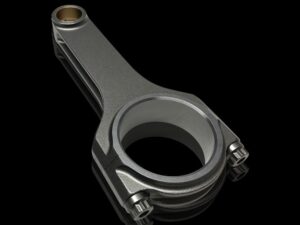
CONNECTING RODS
BC6208 – Nissan SR20DE(T) – ProH625+ Connecting Rods w/ARP Custom Age 625+ (17mm width bearing)
$1,022.79
Reviews
There are no reviews yet.