No products in the cart.
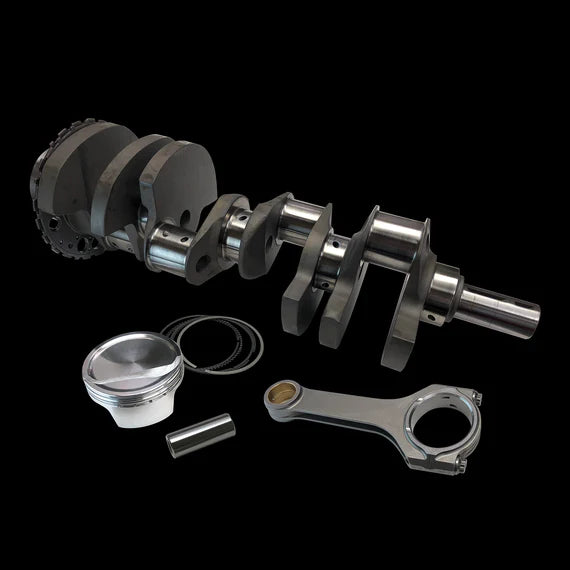
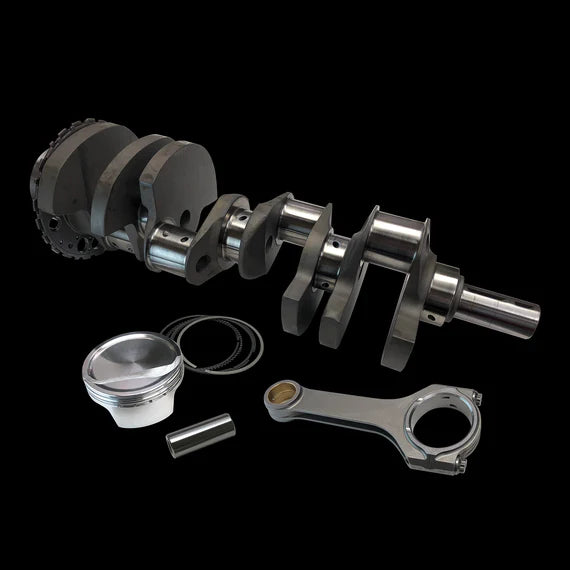
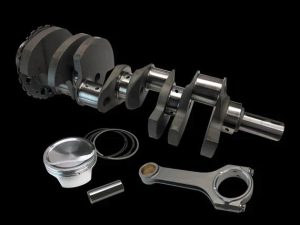
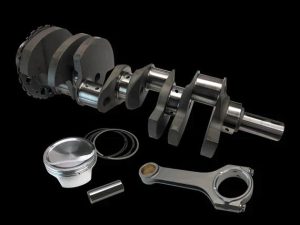
For the serious engine builder seeking to extract maximum displacement and performance from the GM LS platform, the assembly choice is the single most critical determinant of reliability and power. The Brian Crower BC0456 Stroker Kit represents a definitive solution, engineered not as a collection of parts but as a cohesive, precision-balanced system designed for severe duty. This kit transforms a standard 6.0L (LQ4/LQ9) or similar LS engine into a formidable 408 cubic inch stroker, utilizing a meticulously engineered 4.000-inch stroke crankshaft coupled with Brian Crower’s proprietary ProH2K connecting rods and shelf-stable CP Bullet forged pistons. Targeted at high-RPM, high-horsepower street, strip, and track applications, the BC0456 kit is built to withstand the immense cylinder pressures and inertial forces generated in a stroker configuration, offering a direct path to robust, repeatable performance without the extended lead times or compromise of mixed-component assemblies.
Core Component Analysis & Engineering Philosophy
The efficacy of any stroker kit lies in the symbiotic relationship between its rotating and reciprocating assembly. The BC0456 is engineered with a systems approach, where each component is selected and machined to work in harmony, reducing parasitic losses and stress concentrations that can plague kits assembled from disparate manufacturers.
The Foundation: 4340 Forged Steel Crankshaft
At the heart of the BC0456 is a 4340 chromoly steel forged crankshaft with a 4.000-inch stroke. This material is chosen for its superior fatigue strength and toughness compared to nodular iron or lower-grade steel. Brian Crower subjects each crank to a rigorous CNC machining and finishing process, ensuring journal tolerances are held within tenths of a thousandth of an inch. The key engineering feature here is the stroke-to-main-journal overlap. The 4.000″ stroke on a standard LS main journal diameter inherently creates a robust overlap, significantly increasing the crank’s torsional stiffness and resistance to flex under high load. Each unit is precision micro-polished to reduce friction and stress risers, then Magnaflux inspected for material integrity before receiving a nitride surface treatment for exceptional wear resistance and hardness.
The Critical Link: ProH2K 4340 Steel H-Beam Rods
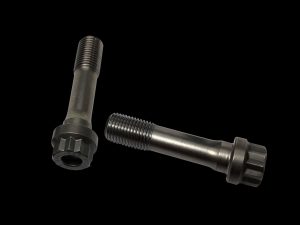
Connecting the increased stroke to the piston are Brian Crower’s flagship ProH2K connecting rods. Machined from 4340 chromoly steel billet—not a lesser-grade forging—these H-beam rods represent the optimal balance of weight, strength, and cross-sectional rigidity. The “H” beam design offers superior resistance to column buckling under the extreme compressive loads of high-boost or nitrous applications compared to I-beam designs. Each rod is shot-peened to enhance fatigue life, uses ARP 2000 cap screws as standard for precise clamp load and reusability, and features a bronze-bushed small end for positive pin oiling and durability. The machining precision ensures consistent center-to-center distance, which is paramount for maintaining uniform deck height and compression ratio across all cylinders.
Top-End Control: CP Bullet “Shelf” Forged Pistons
Completing the assembly are CP Bullet forged pistons, a benchmark in the industry. These are not generic blanks but CP’s specific “Bullet” shelf design tailored for popular LS stroker combinations. Manufactured from 2618 aluminum alloy, these pistons are engineered for high-horsepower, high-heat environments where thermal expansion management is critical. The 2618 alloy has a higher coefficient of thermal expansion than 4032 alloy, requiring slightly larger cold piston-to-wall clearance, but it offers dramatically greater tensile and fatigue strength at elevated temperatures. Key features include a protruding valve relief design that provides ample clearance for large-stroke, high-lift camshaft profiles without compromising quench area, a double-spiro-lock pin retaining system for absolute security, and a CNC-machined dome and ring lands optimized for modern thin, low-tension plasma-moly or ductile iron rings. The pistons come with weight-matching to within 2 grams, contributing to the kit’s inherent balance.
Performance Benefits & Application Scope
- Substantial Displacement Gain: Achieves a proven 408 cubic inches from a 6.0L block, providing a significant increase in torque and horsepower across the entire RPM band, particularly in the low-to-mid range where street-driven performance is most critical.
- Uncompromising Rotating Assembly Integrity: The forged 4340 steel crank and ProH2K billet rods are rated for power levels exceeding 1500+ HP, providing an immense safety margin for forced induction or nitrous applications.
- Optimized for High RPM & Boost: The combined strength and lightweight design of the components reduces reciprocating mass, allowing for higher, safer RPM limits and improved throttle response. The 2618 alloy pistons are specifically intended for high-boost or nitrous use.
- Pre-Balanced Configuration: Each kit is supplied with components that are weight-matched internally (rods, pistons, pins), drastically simplifying the final balancing process with the crank and damper/flywheel, reducing cost and turnaround time at the machine shop.
- Reliability-Driven Design: From the nitride-treated crank to the bushed small ends and ARP fasteners, every specification is chosen to maximize longevity and durability under severe operating conditions, minimizing the risk of catastrophic failure.
- Streamlined Procurement: Sourcing a fully compatible, high-quality rotating assembly from a single vendor (Brian Crower) ensures component harmony, simplifies warranty support, and avoids the engineering pitfalls of mixing and matching parts.
Vehicle & Engine Fitment Guidelines
Primary Block Compatibility: This BC0456 kit is engineered for GM LS-based engines utilizing a standard 4.000-inch cylinder bore. Its most common and direct application is in the GM 6.0L LQ4 and LQ9 truck engines (cast iron block, Gen III/IV). With appropriate machining and verification, it is also compatible with other LS-family blocks that can safely be bored to 4.000″, including LS1, LS6, LQ9, LQ4, LY6, and aftermarket blocks. Critical Note: Always confirm final deck height and piston-to-valve clearance with your chosen cylinder heads and camshaft. The use of a stroker crank and different rods will alter valve train geometry.
Additional Required Components: This is a rotating assembly kit. The builder must separately source and match:
Main and rod bearings (specific to crank journal sizes),
Piston rings (for 4.000″ bore),
A compatible harmonic balancer and flywheel/flexplate,
Head gaskets based on final deck height and bore,
Appropriate fasteners (head bolts, main studs/bolts recommended).
Professional machining (boring/honing, decking, crank balancing, clearancing) and assembly by a qualified engine builder is an absolute requirement.
Technical Specifications: BC0456 Stroker Kit
| Component | Specification |
|---|---|
| Part Number | BC0456 |
| Target Displacement | 408 Cubic Inches (6.7L) |
| Crankshaft Material | Forged 4340 Steel, Nitride Treated |
| Stroke | 4.000 Inches |
| Connecting Rods | Brian Crower ProH2K, 4340 Billet Steel, H-Beam |
| Rod Length | 6.125 Inches (Standard LS) |
| Rod Fasteners | ARP 2000 Cap Screws |
| Pistons | CP Bullet Forged, 2618 Aluminum Alloy |
| Piston Bore (Required) | 4.000 Inches |
| Compression Height | 1.125 Inches (Verify for final deck clearance) |
| Wrist Pins | CP Grade, Full-Floating with Spiro Locks |
| Primary Application | LS 6.0L (LQ4/LQ9) based 408ci Stroker Build |
Installation Considerations & Final Build Notes
Implementing the BC0456 stroker kit is not a bolt-in procedure; it is a blueprint for a professional engine build. Block clearancing is frequently required for the longer 4.000″ stroke, particularly at the cylinder pan rails and potentially between the rods and block webbing. A dry-fit assembly to check for binding and measure final deck height and quench is non-negotiable. The choice of bearing clearances (typically slightly larger for high-performance builds), ring end gap (must be set specifically for forced induction or nitrous if used), and final balancing with the dampener and flywheel are all processes that dictate the assembly’s longevity. For a deeper understanding of the principles behind building a resilient high-performance LS engine, including clearance strategies and metallurgy considerations, refer to this authoritative resource on LS engine block and rotating assembly fundamentals.
In summation, the Brian Crower BC0456 Stroker Kit is a turn-key, high-caliber solution for transforming a ubiquitous LS platform into a displacement-on-demand powerhouse. It eliminates the guesswork from component selection, providing a balanced, battle-ready assembly where every piece is purpose-built to complement the others. For the builder whose end goal is not just peak horsepower but a broad, usable powerband backed by unshakeable reliability under punishment, this kit establishes the mechanical foundation upon which legendary engines are built.
Be the first to review “BC0456 – Chevrolet LS Series Wet Sump Stroker Kit – 4.000″ Stroke/ProH2K Rods, CP Bullet Shelf Pistons”
| Make | Model | Year |
|---|---|---|
| Cadillac | CTS-V | 2004 - 2007 |
| Cadillac | Escalade | 2000 - 2023 |
| Chevrolet | Camaro | 2010 - 2023 |
| Chevrolet | Corvette | 1997 - 2023 |
| Chevrolet | Silverado | 1999 - 2023 |
| Chevrolet | SS | 2014 - 2017 |
| Chevrolet | Suburban | 2000 - 2023 |
| Chevrolet | Tahoe | 2000 - 2023 |
| Chevrolet | Trailblazer SS | 2006 - 2009 |
| Pontiac | Firebird Trans Am | 2001 - 2002 |
| Pontiac | GTO | 2004 - 2006 |
Related products
Automotive Parts
BC5308LW-90 – Toyota 2JZGTE/GE Crank w/Honda Journal – EN40 Billet LightWeight – 90mm Stroke
$4,945.00
$4,945.00
Reviews
There are no reviews yet.