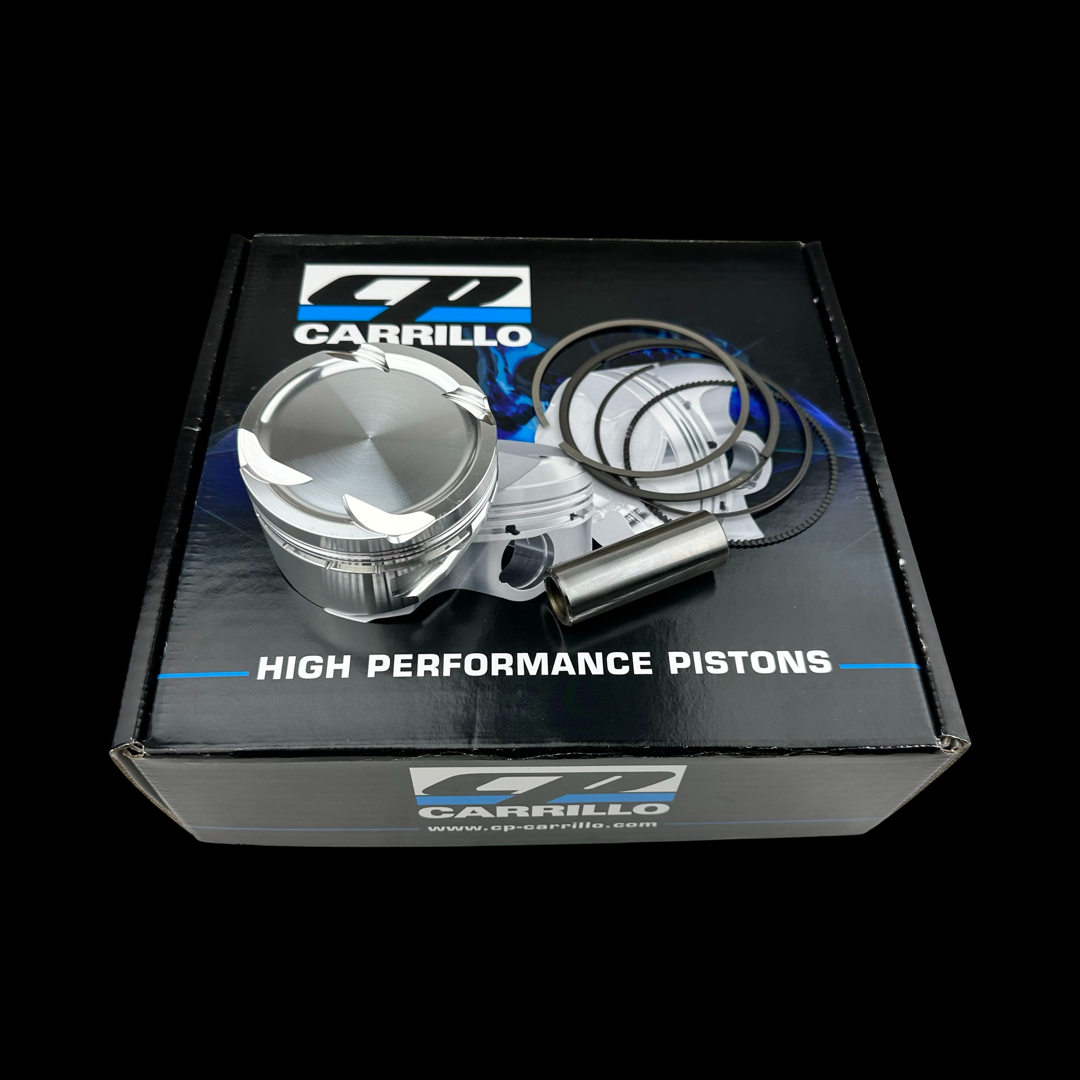
In the realm of high-performance Honda K-series engine building, component selection is not merely a choice—it is a calculated decision that defines the character, reliability, and ultimate potential of the powerplant. For the engineer or builder seeking a foundation for forced induction, aggressive nitrous, or a high-RPM naturally aspirated setup, the CP7040 Shelf Piston Set for Honda K20A2 and K20Z3 engines represents a definitive solution. These are not generic pistons; they are a purpose-engineered, shelf-available component package designed to transform the factory rotating assembly into a race-proven, billet-like foundation. With a specification of 86.0mm bore and a calculated 9.0:1 static compression ratio, this kit provides the essential upgrade path for turbocharged, supercharged, or high-compression builds seeking absolute durability without the extended lead time of a custom order. This analysis will dissect the engineering, application, and tangible benefits of the CP7040, providing the technical clarity required for a professional build decision.
Engineering Philosophy: The Shelf Advantage with Billet-Level Precision
The term “shelf piston” can be misleading, suggesting a compromise. In CP’s lexicon, it signifies an optimized, readily available design that has been validated across countless successful competition and street builds. The CP7040 is engineered from the outset for the specific dynamic environment of the K20A2 and K20Z3 cylinder heads and blocks. CP Pistons begins with a proprietary 2618 forged aluminum alloy, a material chosen for its superior ultimate tensile strength and fatigue resistance compared to the more common 4032 alloy. While 2618 alloy has a slightly higher thermal expansion rate, this is meticulously accounted for in the piston-to-wall clearance specification, ensuring optimal sealing and longevity once at operating temperature. The forging process aligns the metal’s grain structure, creating a component that is fundamentally stronger and more resistant to the detonative forces common in high-output forced induction applications. Every CP7040 piston is then machined to exacting tolerances on state-of-the-art CNC equipment, resulting in a final product with the consistency and precision one would expect from a custom, billet-machined component, but with immediate availability.
Material Science and Construction Details
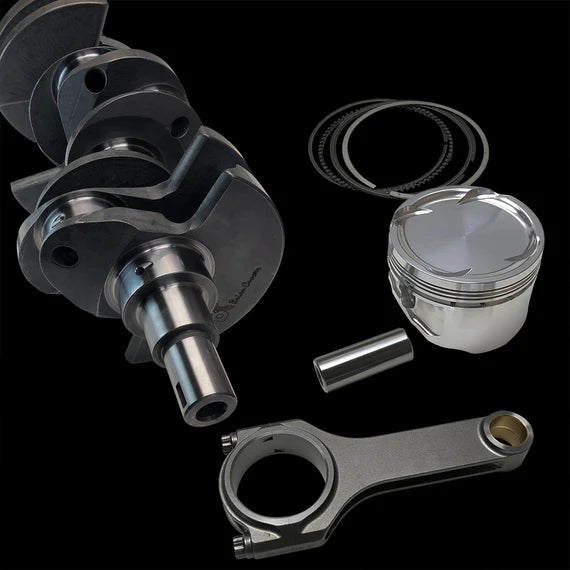
Delving deeper into the construction, the CP7040’s design features are all business. The piston crown is designed with a robust, strategic geometry that provides exceptional strength directly over the wrist pin, the area of highest mechanical load. The valve reliefs are CNC-machined to perfectly accommodate the stock or aftermarket valve angles and lift of the K20A2/Z3 head, providing critical clearance for aggressive camshaft profiles. The barrel-shaped skirt profile is engineered to maintain optimal contact with the cylinder wall under the piston’s changing angles throughout the stroke, minimizing friction and wear while controlling piston rock. Furthermore, the machining includes a nitride-treated 4130 steel wrist pin of the highest grade, offering immense strength and reduced weight. The pin is fully floating, retained by premium Spiro-lox or equivalent locks, a design that promotes even wear and allows for easier assembly and disassembly. The inclusion of all necessary hardware—pins, locks, and sometimes even ring sets in complete kits—ensures compatibility and simplifies the procurement process for the builder.
Performance Benefits and Build Outcomes
Integrating the CP7040 piston set into a K20A2/Z3 build delivers a cascade of measurable performance and reliability advantages. The primary benefit is the establishment of an absolute, non-negotiable foundation for increased cylinder pressure.
- Unmatched Forged Durability: The 2618 alloy forging provides a dramatic increase in resistance to detonation and mechanical failure compared to hypereutectic or even 4032 forged pistons, making these pistons ideal for high-boost turbo or high-nitrous applications.
- Optimized Compression Ratio: The 9.0:1 static compression ratio is a strategically chosen value. It lowers dynamic compression compared to the factory piston, allowing for more aggressive timing and boost pressure on pump gas with forced induction, while still providing a strong base for efficient combustion in naturally aspirated builds using higher-octane fuel.
- Reduced Rotating Mass: Through careful design and machining, CP controls the weight of each piston, contributing to a reduction in reciprocating mass. This lowers the stress on the connecting rods and crankshaft, improves throttle response, and allows the engine to rev more freely and reliably to elevated RPM limits.
- Improved Ring Seal and Consistency: The precise CNC machining of the ring lands ensures perfect perpendicularity and surface finish for the piston rings. This promotes a faster and more reliable seal during break-in and maintains superior cylinder sealing under extreme loads, directly translating to consistent power output and controlled blow-by.
- Thermal Management and Stability: The alloy and design efficiently manage and dissipate heat from the combustion chamber, reducing the thermal load on the piston crown and rings. This stability is critical for maintaining clearances and preventing hot spots that can lead to pre-ignition.
Vehicle Fitment and Application Specifics
The CP7040 is not a universal piston. It is a direct-fit, application-specific component designed for a targeted range of Honda engines, primarily those utilizing the K20A2 and K20Z3 blocks. Correct fitment is paramount for achieving the intended performance and reliability.
Primary Engine Fitment:
- Honda K20A2 (2002-2006 Acura RSX Type-S, 2002-2004 Honda Civic Si (EP3))
- Honda K20Z3 (2006-2011 Honda Civic Si (FA5/FG2))
Critical Installation Notes: It is the responsibility of the engine builder to verify all clearances. The 86.0mm bore size is a nominal dimension. A professional cylinder bore and hone to match the final pistons is absolutely mandatory. The pistons must be measured at the specified location by the machinist, and the cylinders must be honed to achieve the piston manufacturer’s recommended piston-to-wall clearance, typically in the range of 0.0035″ to 0.0045″ for this 2618 alloy in a street/performance application. Furthermore, valve clearance must be checked with the intended camshafts and head gasket thickness, and deck height must be measured to ensure proper quench and compression ratio calculation. The 9.0:1 ratio is based on a standard combustion chamber volume and deck height; final ratio may vary and must be calculated for your specific assembled engine. For a deeper technical understanding of how compression ratio interacts with forced induction strategy, refer to this foundational article on choosing compression ratio for forced induction from the experts at EngineLabs.
Technical Specifications Table
| Specification | Detail |
|---|---|
| Part Number | CP7040 |
| Bore Size | 86.0mm (3.386″) |
| Compression Height | Approx. 29.6mm (Consult CP data sheet for exact spec) |
| Static Compression Ratio | 9.0:1 (Nominal with standard chamber & deck) |
| Piston Material | Forged 2618 Aluminum Alloy |
| Wrist Pin | Nitride-Treated 4130 Steel, Full-Floating |
| Pin Diameter | 21.0mm (Standard Honda K-series) |
| Ring Pack (if included/specified) | Typically CP’s own ductile iron/steel top ring, Napier second, standard oil (Confirm with supplier) |
| Primary Application | Honda K20A2, K20Z3 |
Conclusion: The Rational Choice for a Built K20
The CP7040 shelf piston set eliminates guesswork for the performance builder targeting the Honda K20A2 and K20Z3 platforms. It delivers the material strength, precision manufacturing, and application-specific design of a custom piston, but with the critical advantage of immediate availability. By selecting the CP7040, you are not just purchasing pistons; you are investing in the core structural integrity of your engine. This component allows you to confidently pursue elevated boost levels, higher nitrous shots, or sustained high-RPM operation, knowing the piston assembly is the least of your concerns. For any build where the objective is to push the limits of power and reliability on a proven platform, the CP7040 is not an upgrade—it is a necessary foundation. The path to a formidable, dependable K-series engine begins with this uncompromising component.
Be the first to review “CP7040 – Honda K20A2/Z3 CP Shelf Pistons w/All Hardware – 86.0mm x 9.0:1”
| Make | Model | Year |
|---|---|---|
| Chevrolet | Camaro | 1998 - 2002 |
| Chevrolet | Corvette | 1997 - 2004 |
Related products
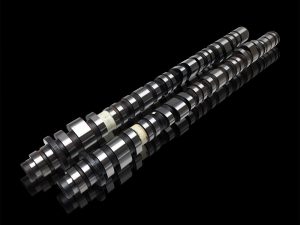
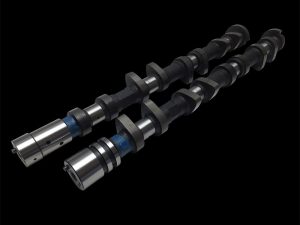
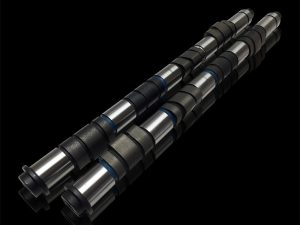
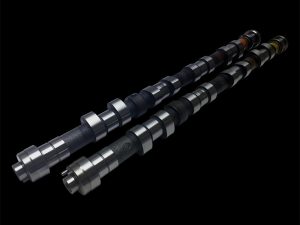
B18A / B18B - Camshafts
BC0022 – Honda/Acura B18A/B Stage 2 Camshafts – Normally Aspirated Spec
$562.28
Reviews
There are no reviews yet.