
No products in the cart.
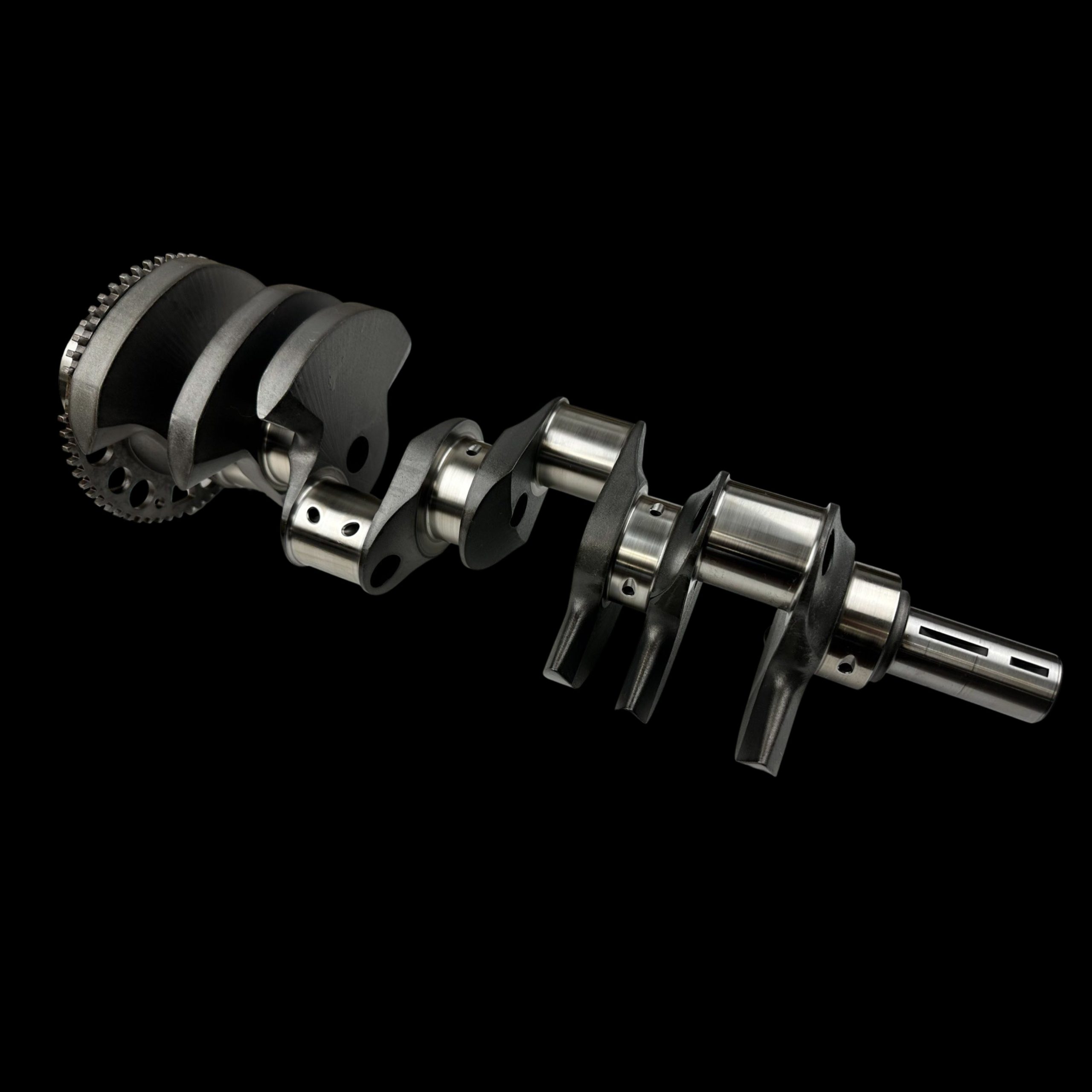
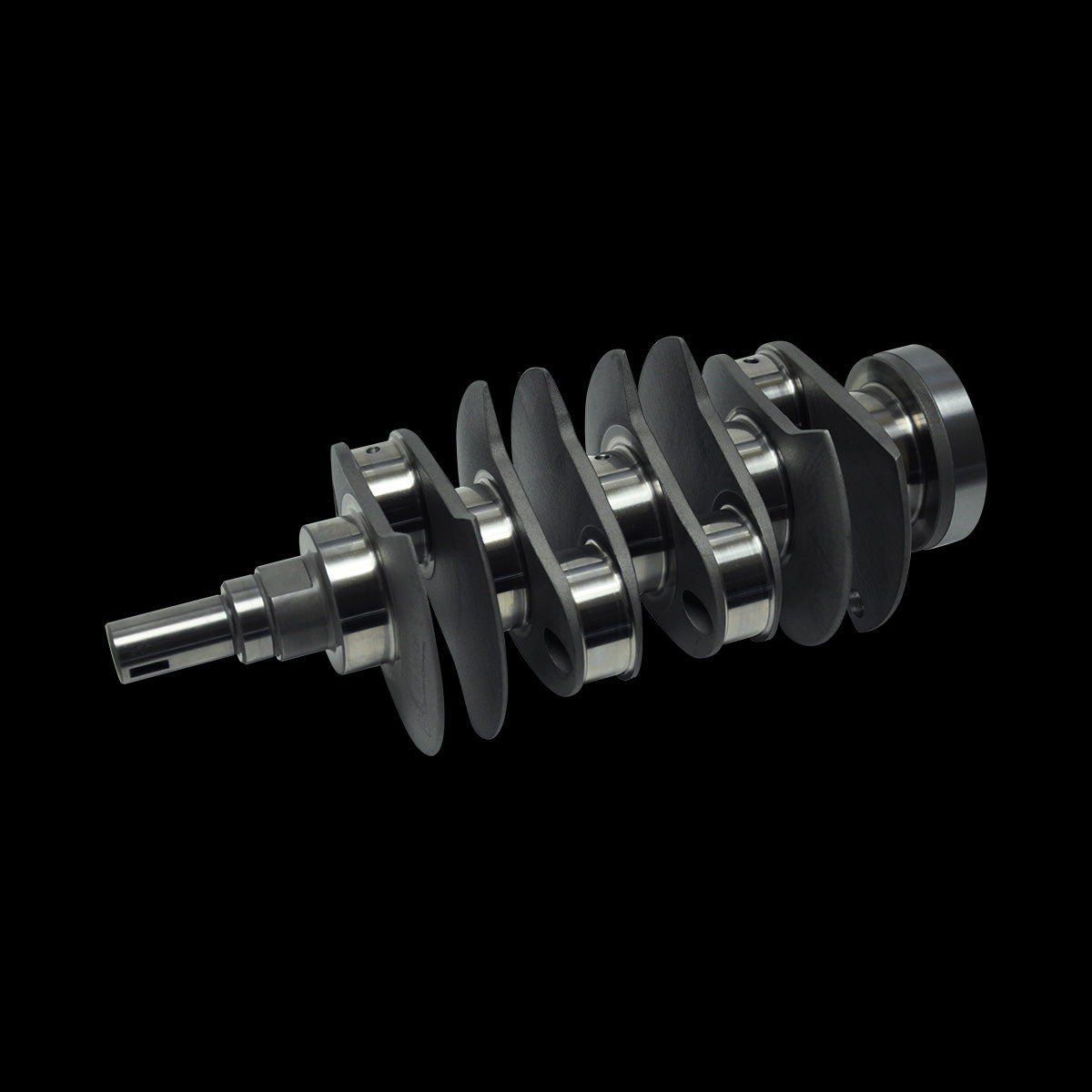
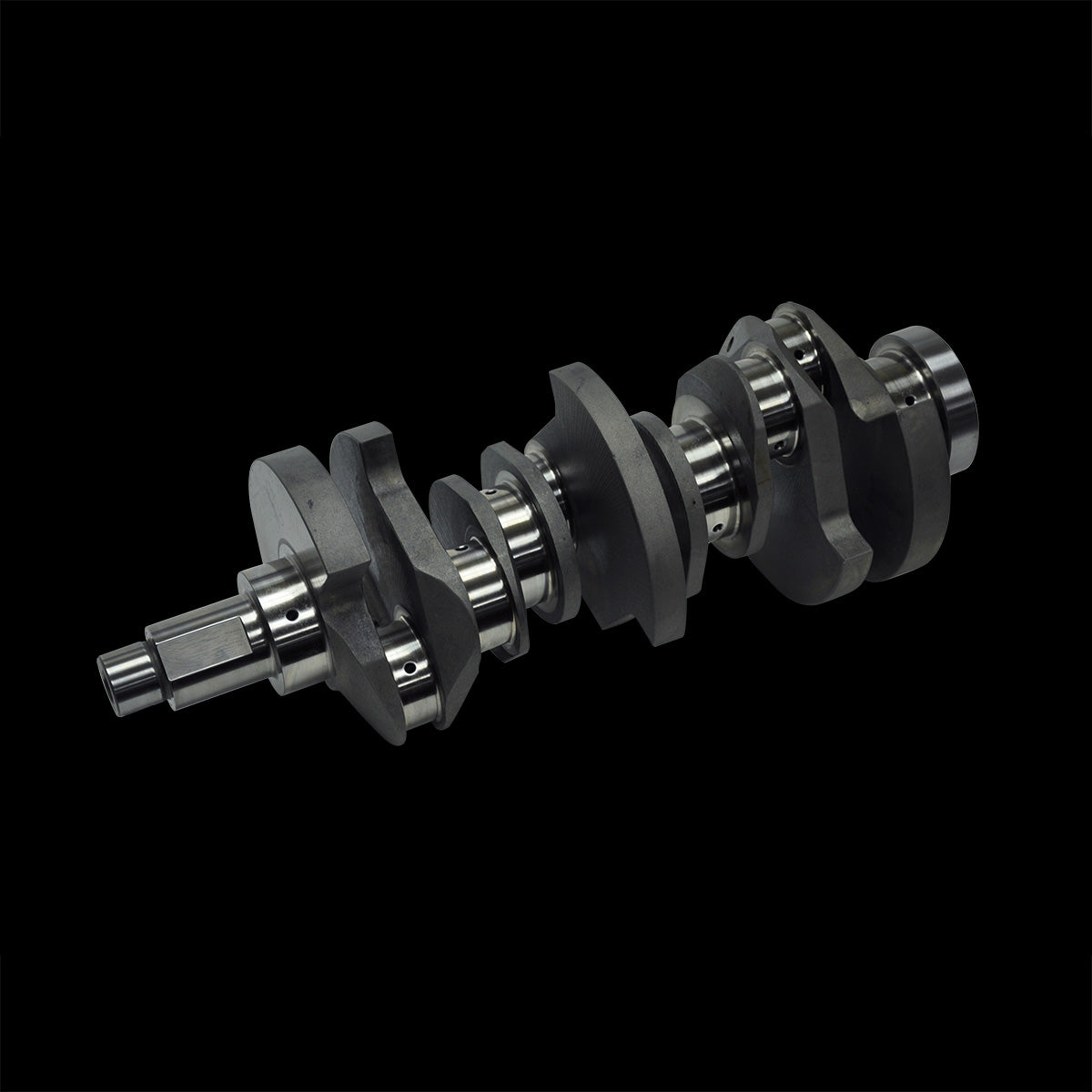
In the realm of high-performance LS engine builds, the rotating assembly is the heart of power and reliability. Selecting its cornerstone—the crankshaft—is a decision that defines the engine’s character, capability, and longevity. The Brian Crower BC5458 crankshaft represents a pinnacle of metallurgical science and precision engineering, designed for the serious builder who demands unwavering strength and perfect harmonic control. This is not merely a component; it is the foundational keystone for a wet-sump LS powerplant engineered to withstand the brutal forces of extreme RPM, high cylinder pressure, and relentless track abuse. Crafted from a premium 4340 alloy steel forging and featuring a substantial 4.125-inch stroke, the BC5458 transforms displacement and durability from abstract goals into tangible, installed reality.
Engineering the Foundation: Metallurgy & Forging Process
The BC5458’s performance pedigree begins at the atomic level with its material composition. Brian Crower utilizes aircraft-quality AISI 4340 nickel-chrome-moly steel, a material revered in motorsport for its exceptional strength-to-weight ratio and fatigue resistance. This alloy’s inherent toughness is unlocked through a meticulous forging process. The steel billet is heated and subjected to immense pressure within closed dies, aligning the grain flow to follow the complex contours of the crankshaft’s journals and counterweights. This directional grain structure, superior to the random orientation found in cast or billet-machined units, creates a part that is significantly more resistant to crack propagation and torsional flex. Following forging, each BC5458 undergoes a precise thermal cycling heat treatment to achieve an optimal core hardness, ensuring the crankshaft remains dimensionally stable under thermal load while the journals maintain a surface hardness ideal for bearing life. The result is a component with a tensile strength exceeding 180,000 PSI, providing a massive safety margin for forced induction and nitrous applications where cylinder pressures can surpass 2,000 PSI.
Stroke Geometry & Rotational Mass Optimization
The 4.125-inch stroke of the BC5458 is a strategic specification for builders targeting a specific displacement envelope, typically around 427 cubic inches when paired with common bore sizes. This stroke length increases lever arm, thereby increasing torque production. However, a longer stroke also increases piston speed and inertial stress. Brian Crower counters this through intelligent counterweight design and profiling. The crankshaft is internally balanced (“self-balanced”), meaning the counterweights are precisely sized and positioned to neutralize the rotating and reciprocating forces of a specific bobweight, eliminating the need for external balance weights on the harmonic damper and flywheel. This self-balancing design simplifies assembly, reduces potential points of failure, and contributes to a cleaner, more efficient rotating package. The counterweights themselves are strategically undercut and profiled to minimize windage and parasitic oil drag within the wet-sump oiling environment, a critical detail for maintaining horsepower at elevated RPM.
Precision Machining & Harmonic Control
Dimensional perfection is non-negotiable. Every journal on the BC5458 is machined to a mirror finish with a tolerance of ±0.0001″, ensuring perfect oil film integrity and bearing conformity. The thrust surfaces are meticulously squared to the centerline to maintain critical crank endplay. A key feature for late-model LS engines is the integrated 58-tooth reluctor wheel, precision-machined as one piece with the crankshaft. This eliminates the reliability concerns associated with pressed-on or welded tone wheels, guaranteeing absolute signal accuracy for the engine’s crankshaft position sensor—a vital factor for stable ignition and fuel injection timing at high RPM. Perhaps most critically, the crankshaft is engineered with a specific harmonic damping profile. While the harmonic balancer handles primary vibrations, the crankshaft’s own stiffness and mass distribution are tuned to mitigate destructive torsional harmonics that can lead to bearing failure or even a snapped crank. This is where the integrity of the 4340 forging proves indispensable, as its inherent damping characteristics surpass those of lesser materials. For a deeper understanding of the material science behind this, consider reading this technical analysis on the properties of 4340 alloy steel.
Oiling System Compatibility & Journal Specifications
Designed explicitly for wet-sump applications, the BC5458 features standard LS main and rod journal diameters: 2.559″ for the mains (machined for standard LS1/LS6-style bearings) and 2.100″ for the rod journals. This maintains compatibility with a vast ecosystem of high-performance connecting rods and main bearing sets. The oil passages are CNC-drilled and chamfered to exacting specifications, promoting consistent oil flow to the main and rod bearings under all engine attitudes and G-forces. The surfaces of these oil holes are meticulously deburred and polished to prevent stress risers—microscopic points where cracks can initiate—and to ensure smooth oil transition without turbulence. This attention to subsurface detail is a hallmark of a component built for endurance, not just peak power numbers.
Performance Benefits & Application Synergy
Installing the Brian Crower BC5458 crankshaft is a transformative upgrade that delivers a cascade of performance and reliability advantages. It is the core enabler for a robust, high-displacement LS build.
- Ultimate Tensile & Fatigue Strength: The 4340 forging provides a monumental safety factor, making it the definitive choice for high-boost, big-nitrous, or sustained high-RPM operation where lesser crankshafts may yield or fail.
- Simplified Internal Balance Assembly: The self-balancing design streamlines the balancing process, reduces rotating assembly weight, and enhances overall package reliability by eliminating external balance weights.
- Integrated 58-Tooth Reluctor Wheel: Ensures flawless OEM-level signal generation for engine management systems, critical for modern ECU strategies and RPM-limit accuracy.
- Optimized for Wet-Sump Power: The counterweight design prioritizes oil control and reduced windage loss, directly translating to more usable horsepower and better oil pressure stability in performance street and track cars.
- Displacement Foundation: The 4.125″ stroke is the ideal step for creating a true 427ci LS engine, offering an excellent balance of torque-producing leverage and manageable piston speed.
- Precision Fitment: CNC machining to ultra-tight tolerances guarantees seamless integration with quality bearings and connecting rods, reducing break-in time and ensuring long-term durability.
Vehicle Fitment & Installation Considerations
The BC5458 is engineered for the GM LS-series engine platform utilizing a wet-sump oiling system. Specific fitment requires attention to complementary components to achieve a balanced, functional rotating assembly.
Primary Engine Applications: LS1, LS6, LS2, LS3, L92, LQ4, LQ9, and other Gen III/IV variants with a standard rear crankshaft flange. Always verify block clearance for the 4.125″ stroke, as some early blocks may require minor grinding of the cylinder walls or block webbing.
Critical Companion Parts:
- Connecting Rods: Must be specified for a 2.100″ rod journal and the desired pin diameter. Rod length must be chosen in conjunction with piston compression height to achieve proper deck clearance and quench.
- Pistons: Must be ordered specifically for a 4.125″ stroke crankshaft. The piston pin height will be shorter than stock to accommodate the longer stroke.
- Balancing: While internally balanced, the entire rotating assembly (crankshaft, rods, pistons, pins, rings, and bearings) must be dynamically balanced by a qualified machinist to the specified bobweight.
- Harmonic Balancer & Flywheel/Flexplate: Must be for an internally balanced LS engine. Do not use components for an externally balanced engine (e.g., standard 5.3L/6.0L truck items).
- Clearance Checking: Mandatory dry assembly and rotation check for rod-to-cam, rod-to-block, and piston-to-valve clearance is required before final assembly.
Technical Specifications: BC5458 Crankshaft
| Specification | Detail |
|---|---|
| Part Number | BC5458 |
| Engine Family | GM LS Series, Wet Sump |
| Material | AISI 4340 Forged Steel |
| Stroke | 4.125 Inches |
| Balance Type | Internal (Self-Balanced) |
| Reluctor Wheel | Integrated 58-Tooth |
| Main Journal Diameter | 2.559″ |
| Rod Journal Diameter | 2.100″ |
| Main Journal Width | Standard LS |
| Thrust Bearing Location | #5 Main (Rear) |
| Flange Type | Standard LS (8-Bolt) |
In conclusion, the Brian Crower BC5458 4.125″ stroke crankshaft is a tool for transcending generic performance. It is a calculated investment in the absolute integrity of your engine’s rotating assembly. By combining the peerless strength of a 4340 forging with a purpose-designed stroke, integrated timing component, and wet-sump-optimized geometry, it delivers not just power, but predictable, reliable, and repeatable performance. For the build where compromise is not an option, the BC5458 provides the unshakable rotating foundation upon which legendary engines are made.
Be the first to review “BC5458 – Chevrolet LS Series Wet Sump Crankshaft – 4340 Forging – 4.125″ Stroke, Self Balance w/58 Tooth Wheel”
| Make | Model | Year |
|---|---|---|
| Chevrolet | Corvette | 1997 - 2013 |
Related products
Sale!
Original price was: $3,252.34.$2,828.12Current price is: $2,828.12.
2JZGE/GTE VVT-i
BC5309LW-86 – Toyota 2JZGTE/GE – 4340 Billet LightWeight Crankshaft 86mm Stroke w/Honda Journal
$5,851.73
$4,396.57
Sale!
Original price was: $5,422.64.$4,715.34Current price is: $4,715.34.
Reviews
There are no reviews yet.