
No products in the cart.
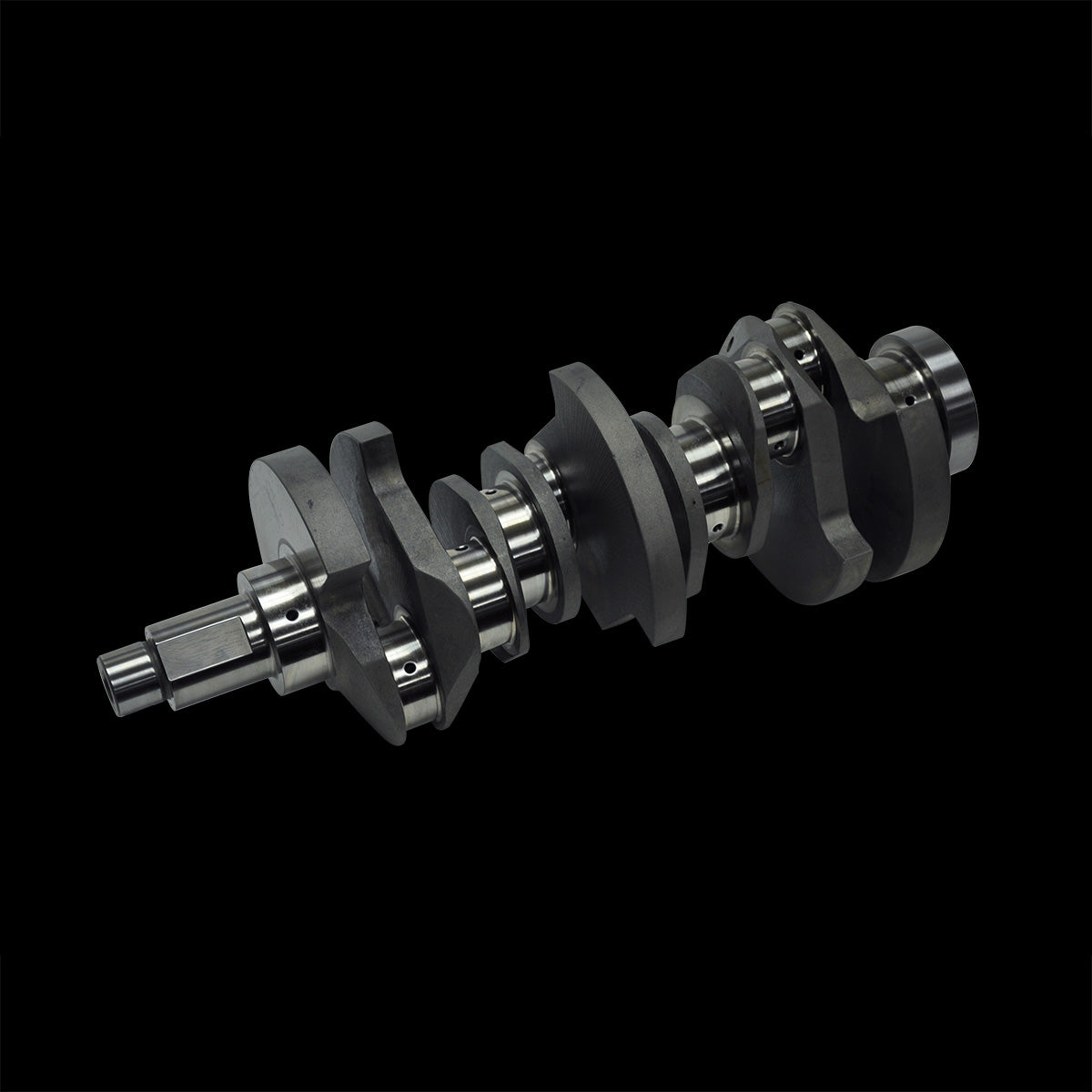
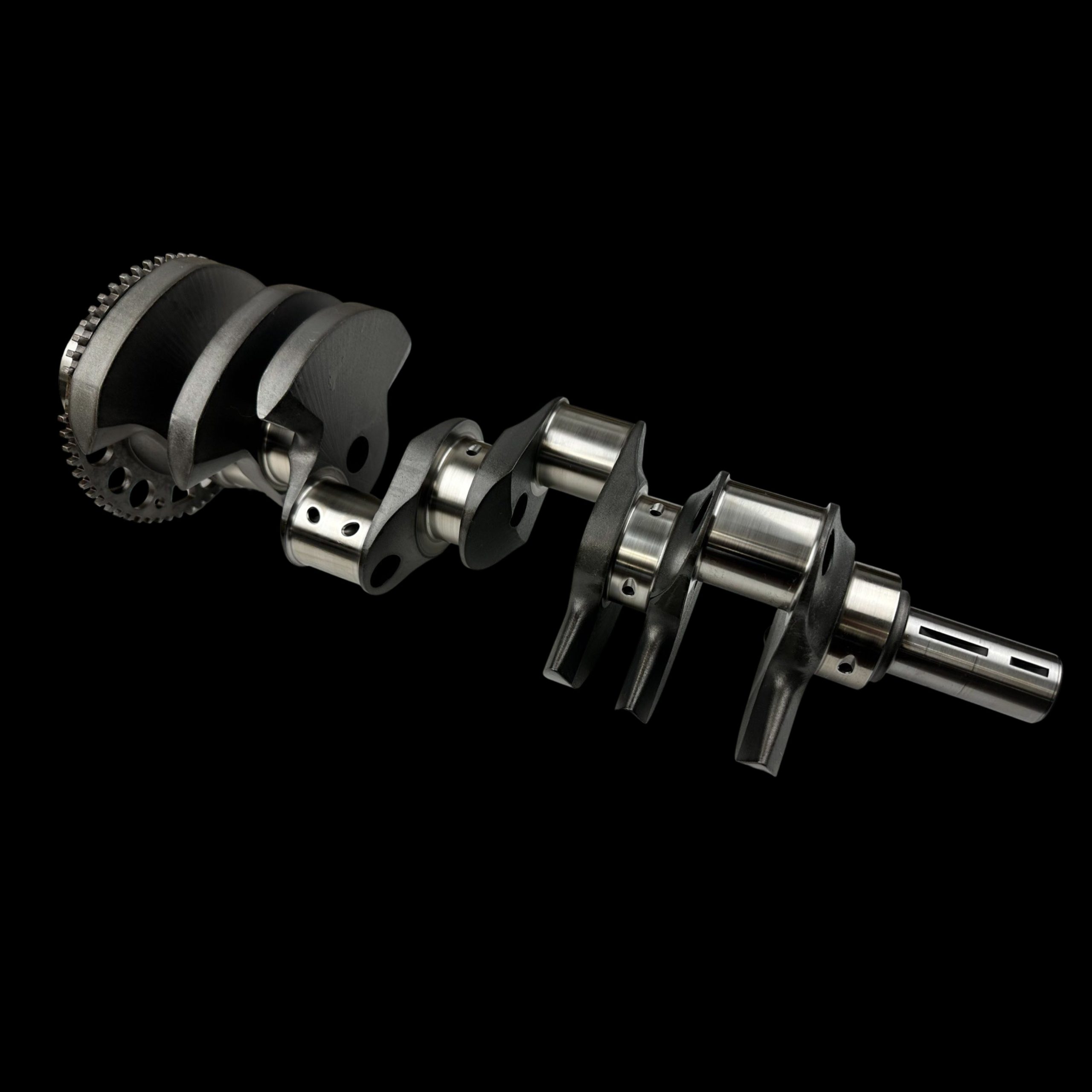
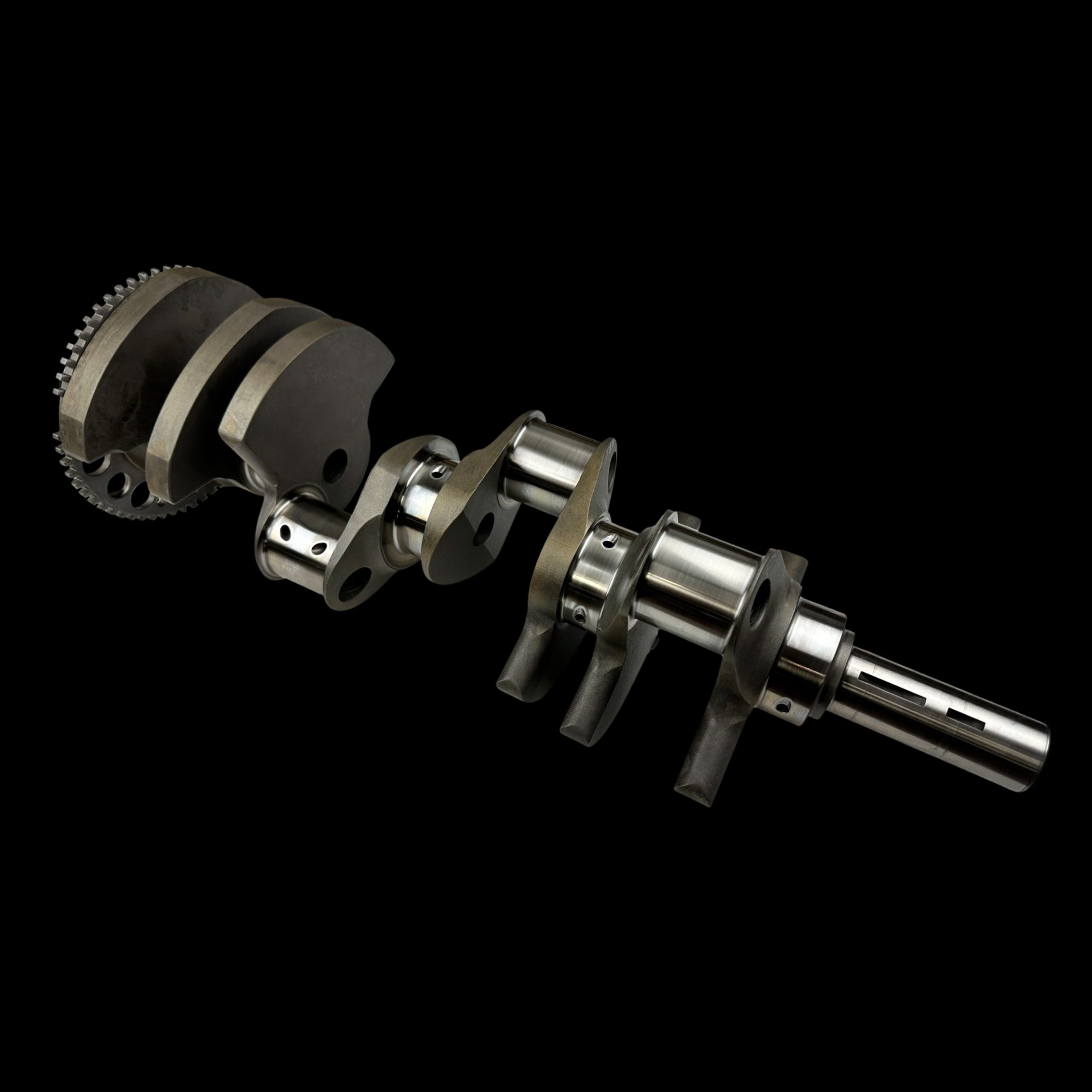
BC5509U: The Definitive 4340 Billet Crankshaft for the Hyundai G6DA V6
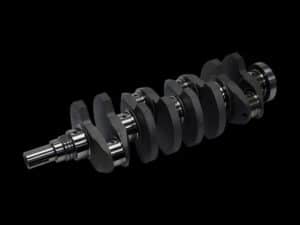
In the realm of forced induction and high-RPM horsepower, the factory rotating assembly is often the first point of catastrophic failure. For builders of the Hyundai G6DA V6 engine—found in platforms like the Genesis Coupe 3.8L and Kia Stinger—the quest for absolute bottom-end integrity ends with the Brian Crower BC5509U crankshaft. This is not a modified OEM casting or a forged alternative; this is a purpose-built, CNC-machined from a 4340 billet steel blank, representing the pinnacle of metallurgical and engineering precision. Designed explicitly for boost, nitrous, and sustained high-revving duty, the BC5509U transforms the G6DA’s foundation from a potential liability into its greatest asset. With its strategic 93mm stroke and delivered self-balanced, it is the cornerstone for any serious build targeting reliable power well beyond the four-digit mark.
Metallurgical Superiority: 4340 Aircraft-Quality Billet Steel
The core of the BC5509U’s unyielding strength lies in its material. Brian Crower starts with a pre-hardened 4340 chromoly nickel steel billet, the benchmark for high-stress performance components. Unlike forging, which involves shaping heated metal under pressure, billet machining removes material from a solid, homogeneous block. This process guarantees optimal grain flow continuity and eliminates the potential for internal voids or inclusions that can occur in cast or even some forged pieces. 4340 steel’s composition provides an exceptional balance of tensile strength, fatigue resistance, and toughness. The crankshaft is heat-treated using a precise thermal cycling process to achieve a core hardness optimal for withstanding the tremendous bending and torsional loads generated by high cylinder pressure, without becoming brittle. This results in a component with a fatigue life exponentially greater than the factory nodular iron crank, offering peace of mind when containing the explosive force of modern turbocharging or progressive nitrous systems.
Engineering the Power Stroke: 93mm Stroke & Optimal Throw Design
Stroke is a fundamental determinant of an engine’s displacement and torque characteristics. The BC5509U retains the factory 93mm (3.661-inch) stroke, ensuring direct compatibility with standard displacement builds (3.8L) and avoiding unnecessary complications with piston pin height and rod angularity. However, Brian Crower’s engineering scrutiny is applied to every aspect of the throw geometry and journal design. Each crankpin and main journal is micro-polished to a mirror finish, drastically reducing surface friction and providing an ideal surface for bearing conformity and oil film retention. The fillet radii at the critical junctions between journals and counterweights are meticulously sized and rolled, a process that induces compressive stresses to combat crack initiation—the primary failure point in high-horsepower applications. This attention to detail ensures that the power potential of aftermarket cylinder heads, forced induction systems, and aggressive camshafts can be fully realized without the specter of crankshaft flex or failure.
The Brian Crower Manufacturing Process: Precision from Blank to Balance
Every BC5509U crankshaft is a product of stringent, controlled manufacturing. The journey from raw billet to finished component involves state-of-the-art 5-axis CNC machining, allowing for tolerances measured in ten-thousandths of an inch. This level of precision ensures that every critical dimension—from journal diameters and widths to counterweight placement and overall indexing—is exact, guaranteeing perfect compatibility with your engine block and rotating assembly. Following machining, the component undergoes the aforementioned heat treatment before final polishing and balancing. Perhaps most critically for the installer, the BC5509U is delivered as a “self-balanced” unit. This means Brian Crower has internally balanced the crankshaft itself to a zero-neutral state, significantly simplifying the assembly process. When paired with a properly balanced Brian Crower piston and rod assembly, the result is a silky-smooth rotating mass that reduces harmonic vibrations, minimizes bearing wear, and enhances longevity. For a deeper technical dive into the importance of rotating assembly balance, consult this resource on engine balancing fundamentals.
Technical Specifications & Direct Benefits
The BC5509U is defined by its exacting specifications, each chosen to maximize performance and reliability for the G6DA platform.
| Specification | Detail |
|---|---|
| Part Number | BC5509U |
| Engine Application | Hyundai G6DA 3.8L V6 |
| Construction | 4340 Billet Steel, CNC Machined |
| Stroke | 93mm (3.661 in) |
| Main Journal Diameter | Stock OEM Dimension |
| Rod Journal Diameter | Stock OEM Dimension |
| Balance | Internally Balanced (Self-Balanced) |
| Finish | Micro-Polished Journals |
| Primary Use | High-HP Turbo, Supercharged, Nitrous, and High-RPM Applications |
Key Performance Benefits:
- Unmatched Tensile & Fatigue Strength: 4340 billet construction provides the ultimate defense against crankshaft flex, snaping, or failure under extreme cylinder pressures.
- Precision Fitment: CNC machining to exacting tolerances ensures perfect alignment with main bearing bores and seamless integration with the rest of your rotating assembly.
- Reduced Frictional Losses: Micro-polished journals enhance oil film strength and reduce parasitic drag, contributing to horsepower gains and improved bearing life.
- Simplified Assembly: The internally balanced (“self-balanced”) design significantly eases the final balancing process when used with matched components.
- Extended Engine Life: Superior material and reduced harmonics decrease stress on main and rod bearings, leading to greater overall engine durability.
- Foundation for Extreme Power: The essential upgrade for G6DA builds aiming for 800+ horsepower, safely containing the forces generated by large turbochargers or high-shot nitrous systems.
Vehicle Fitment & Application Notes
Direct Fitment:
The BC5509U is engineered as a direct replacement for the OEM crankshaft in the following vehicles and engines. It is compatible with both manual and automatic transmissions.
- Hyundai Genesis Coupe (BK) – 2010-2016 | 3.8L G6DA V6
- Hyundai Genesis Sedan (DH) – 2009-2014 | 3.8L G6DA V6
- Kia Stinger (CK) – 2018-2021 | 3.3L T-GDi (Lambda II) – Note: The G6DA is the foundational architecture for this engine. Specific clearancing for turbo oil/water lines may be required. Consultation with your builder is essential.
- Hyundai Grandeur/Azera (TG) – 2011-2016 | 3.8L G6DA V6
- Kia Cadenza (VG) – 2010-2016 | 3.8L G6DA V6
Installation & Builder Considerations:
While a direct fit, installing a billet crankshaft is a precision operation. It is imperative to have the engine block’s main bearing bores align-honed with the main bearing caps torqued to specification to ensure perfect geometry. Always use a matched set of performance main and rod bearings with proper clearance. Final balancing of the entire rotating assembly (crankshaft, pistons, pins, rods, and flywheel/flexplate) by a professional shop is non-negotiable for achieving optimal smoothness and longevity, even with a “self-balanced” crank. This crankshaft is the heart of a build designed for severe duty; pairing it with connecting rods and pistons of equivalent quality (such as Brian Crower’s BC6259+ rods and BC5508 pistons) is strongly recommended to create a truly bulletproof rotating assembly.
The Non-Negotiable Upgrade for Serious G6DA Builds
The Brian Crower BC5509U 4340 Billet Crankshaft is not an incremental upgrade; it is a fundamental re-engineering of the G6DA’s most critical component. It replaces the factory casting’s inherent limitations with the absolute certainty of billet steel strength and precision manufacturing. For any build where horsepower targets exceed the safe capabilities of the OEM crank, where reliability under sustained boost is paramount, or where engine speed will consistently brush against the rev limiter, this crankshaft is the mandatory starting point. It provides the unshakable foundation upon which legendary, reliable power is built. Don’t just increase boost pressure—fortify the architecture that must contain it.
Be the first to review “BC5509U – Hyundai G6DA V6 Crankshaft – 4340 Billet – 93mm Stroke, Self Balanced”
| Make | Model | Year |
|---|---|---|
| Hyundai | Genesis Coupe | 2010 - 2016 |
Related products
$4,626.45
$5,341.72
Sale!
Original price was: $3,252.34.$2,828.12Current price is: $2,828.12.
$2,779.72
$5,851.73
2JZGE/GTE VVT-i
BC5309LW-86 – Toyota 2JZGTE/GE – 4340 Billet LightWeight Crankshaft 86mm Stroke w/Honda Journal
$5,851.73
Reviews
There are no reviews yet.