No products in the cart.
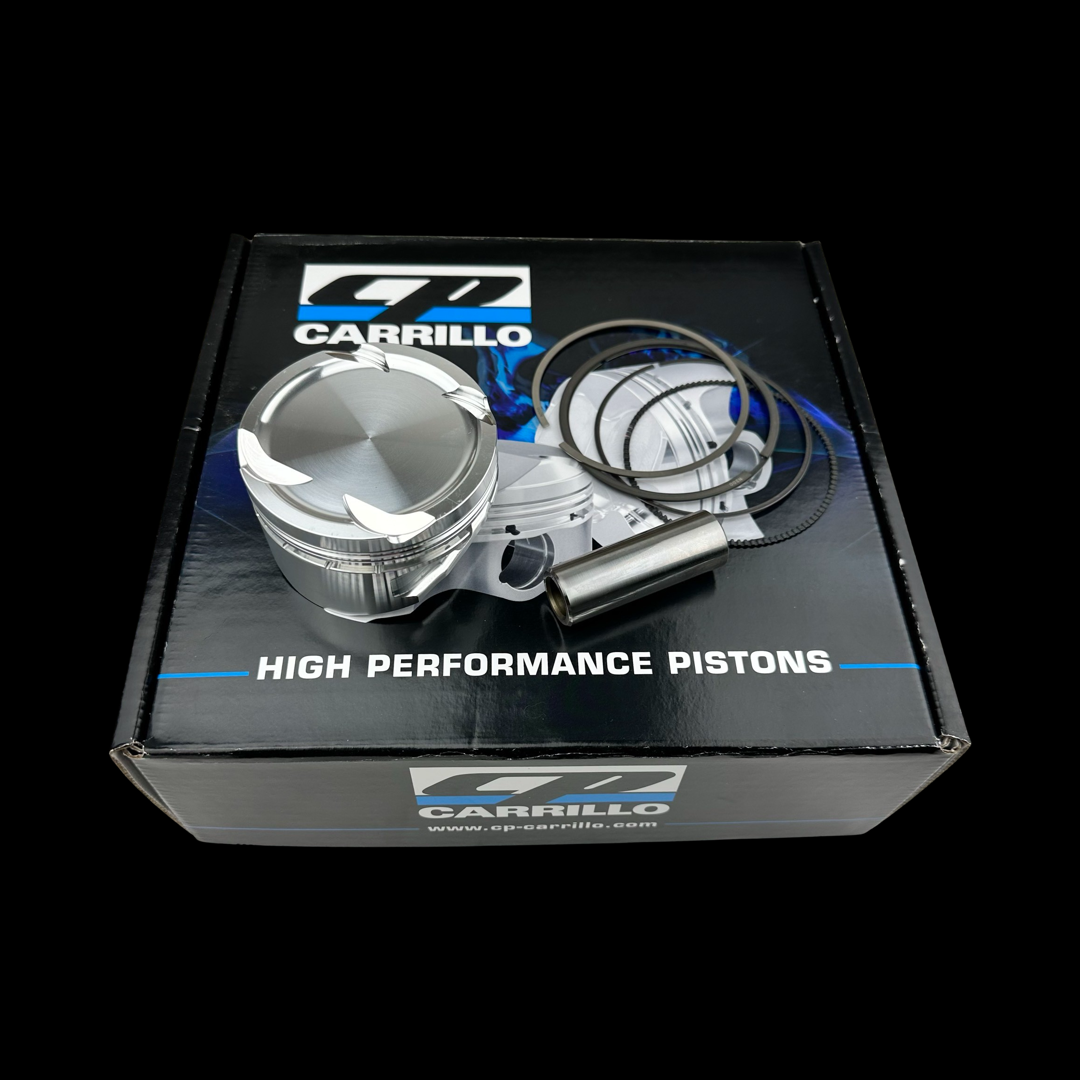
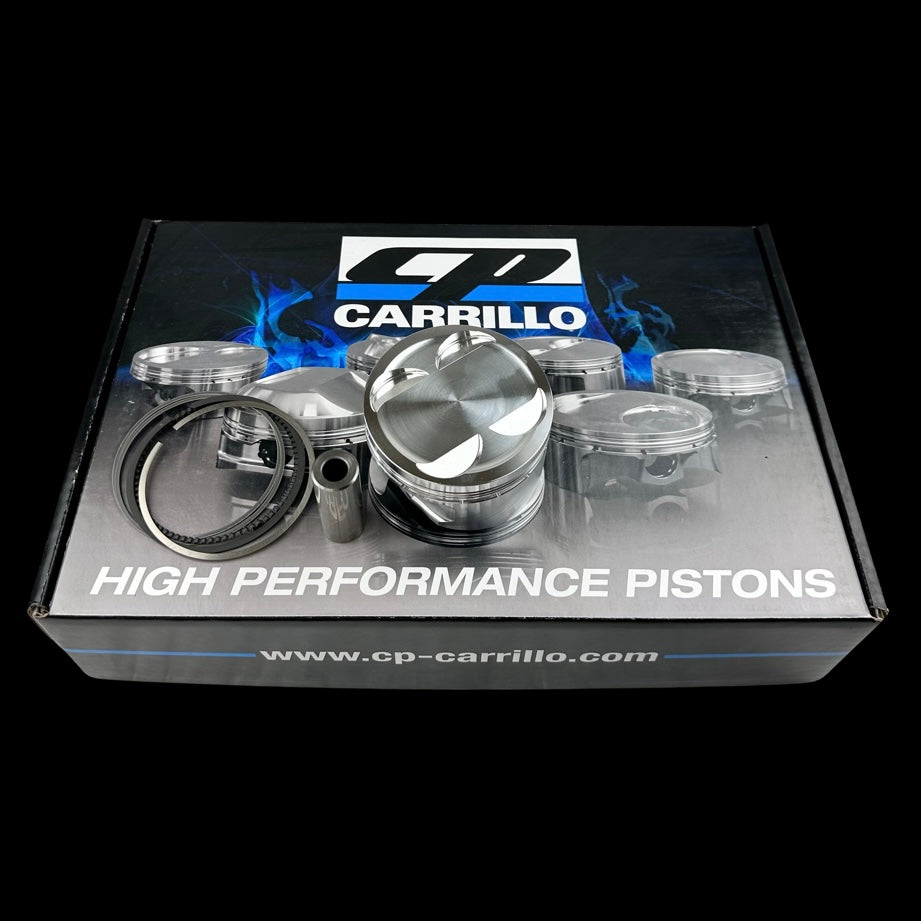
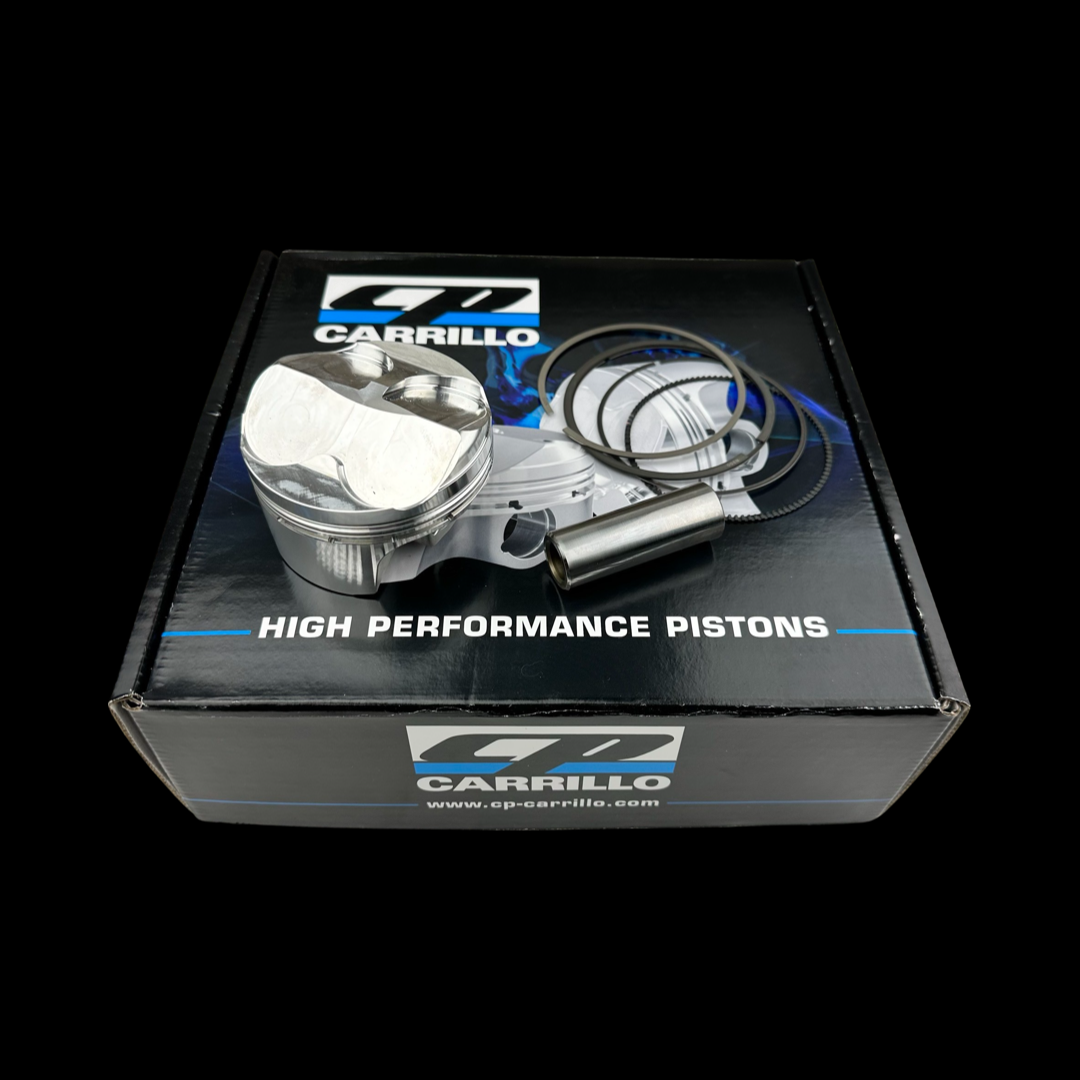
In the pantheon of high-performance four-cylinder engines, the Honda B16A stands as a monument to engineering brilliance. Its legacy is built on the iconic VTEC system and a fiercely responsive, high-revving character. To extract the next echelon of power and reliability from this platform, the foundation—the rotating assembly—must be uncompromising. The CP7111 shelf pistons from CP-Carrillo, offered through Brian Crower, represent this exact standard: a direct, no-compromise upgrade engineered for those who understand that real power is built from the bottom up. This 81.5mm forged piston set is not merely a component; it is a calculated intervention into the B16A’s combustion chamber, designed to elevate static compression to an aggressive 11.0:1 ratio and withstand the immense forces of sustained high-RPM and forced-induction abuse.
Engineering Analysis: The CP Forged Advantage
CP Pistons, a division of the legendary Carrillo group, manufactures its components to motorsport tolerances. The CP7111 for the B16A begins as a billet of 2618 forged aluminum alloy. This specific alloy possesses a superior fatigue life and tensile strength compared to the more common 4032 alloy, particularly in high-heat, high-stress environments common in turbocharged or high-compression naturally aspirated builds. The forging process aligns the metal’s grain structure, creating a component that is significantly stronger and more resistant to shock loading than a cast or even a hypereutectic piston.
Precision Design for the B-Series Combustion Chamber
Every contour of the CP7111 piston is a function of performance. The 81.5mm bore size provides a reliable overbore from the stock 81.0mm, allowing for cylinder wall cleanup and a slight displacement increase. The crown is meticulously machined to achieve the target 11.0:1 compression ratio when paired with the standard B16A cylinder head and head gasket. This ratio is ideal for aggressive naturally aspirated builds leveraging high-octane fuel, or as a robust foundation for moderate boost applications where controlling dynamic compression is key. The valve reliefs are CNC-machined with precision depth and orientation to provide ample clearance for aggressive camshafts without unnecessarily compromising squish area or combustion efficiency.
Performance Benefits & Application Spectrum
The installation of CP7111 pistons transforms the B16A’s short block from a production component into a race-ready assembly. The benefits are systemic and tangible.
- Ultimate Tensile Strength & Fatigue Resistance: The 2618 forging can withstand detonation events and cylinder pressures far beyond the limits of OEM pistons, which is the primary failure point in tuned engines.
- Optimized Thermal Management: The alloy and design manage heat more effectively, reducing the risk of hot spots that lead to pre-ignition.
- Precision Weight Matching: Each piston set is weight-matched to an extremely tight tolerance, eliminating reciprocating mass imbalance for smoother operation at extreme RPM.
- Proven Ring Package: The pistons come fitted with a performance-grade ductile iron top ring and Napier-style second ring, optimized for quick seal and excellent oil control.
- Direct Bolt-In Reliability: As a “shelf” piston, they are engineered for the B16A’s specific deck height, pin bore, and ring spacing, ensuring correct geometry without custom machining in most applications.
These pistons are the cornerstone for builds ranging from high-compression, ITB-fed N/A monsters revving to 9,000+ RPM, to responsive turbocharged setups making reliable daily power in the 400-500whp range. For a deeper technical understanding of the metallurgy and manufacturing processes behind forged pistons like the CP7111, resources such as this Engine Labs analysis provide excellent context.
Technical Specifications & Component Details
| Specification | Detail |
|---|---|
| Part Number | CP7111 |
| Bore Size | 81.5mm |
| Compression Height | 29.5mm |
| Target Compression Ratio | 11.0:1 (with standard B16A head/gasket) |
| Pin Diameter | 21.0mm |
| Pin Type | Floating (requires press tool for installation) |
| Top Ring | 1.2mm Ductile Iron |
| Second Ring | 1.2mm Napier Style |
| Oil Ring | 2.8mm Standard Tension |
| Material | Forged 2618 Aluminum Alloy |
| Included Hardware | Pistons, Pins, SpiroLocks, Rings (Full Set) |
Vehicle Fitment & Compatibility Notes
Primary Application: Honda B16A engine blocks. This includes vehicles such as the:
- Honda Civic/CRX SiR (EF/ED chassis)
- Honda Civic/CRX VTi (EG/EH chassis)
- Honda Integra RSi/XSi (DA chassis)
- Honda Integra Type R (DC2 chassis – JDM B16A)
Critical Compatibility Considerations: The 81.5mm bore requires the engine block to be bored and honed by a professional machinist using torque plates to simulate head clamping force. This ensures perfect cylinder geometry. The target 11.0:1 compression ratio is calculated using the standard B16A cylinder head chamber volume (approx. 42.7cc) and a standard head gasket thickness. Any modification to the head (milling, larger valves) or the use of a different head gasket will alter the final, assembled compression ratio and must be calculated prior to assembly. These pistons are compatible with the stock B16A connecting rods when used with the supplied 21mm wrist pins.
Installation Protocol & Final Recommendations
Installing CP7111 pistons is a commitment to precision. The process is non-negotiable: the block must be thermally cleaned, inspected for core shift, and then bored and honed to 81.5mm with specific piston-to-wall clearance as recommended by CP (typically 0.003-0.0035″ for 2618 alloy in a street/performance application). Piston rings must be gapped according to the intended use—more aggressive gap for forced induction, tighter for N/A. Always use a fresh set of rod bolts and have the rotating assembly balanced. The result of this meticulous process is an engine that is fundamentally stronger, capable of supporting significant power increases, and delivering a visceral, responsive powerband that honors and expands upon the B16A’s legendary heritage. The CP7111 is not an upgrade you feel in a seat-of-the-pants dyno run; it is the insurance policy and enabling factor that makes every other performance modification viable and reliable.
Be the first to review “CP7111 – Honda B16A CP Shelf Pistons w/All Hardware – 81.5mm x 11.0:1”
| Make | Model | Year |
|---|---|---|
| Nissan | 240SX | 1989 - 1998 |
Related products
CONNECTING RODS
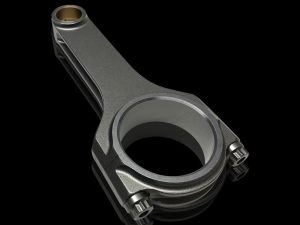
BC6209 – Nissan SR20DE(T) – ProH2K Connecting Rods w/ ARP2000 Fasteners (17mm width bearing)
$685.57
Reviews
There are no reviews yet.